Posted on — Leave a comment

American Akita vs German Shepherd: A Breeder’s Honest Comparison

American Akita from Apexx Akitas standing in show stance, used in a breed comparison guide between American Akitas and German Shepherds

American Akita vs German Shepherd: A Breeder's Honest Comparison

20+Years Breeding
American Akitas
150+Nationwide
Placements
10AKC Champions
Produced
100%OFA Health
Tested

The American Akita and the German Shepherd are both large, powerful, intelligent breeds with strong guardian instincts. That is where the similarities end. These two breeds think differently, bond differently, move through a household differently, and require completely different types of owners. This guide compares them honestly across every category that matters to a family making a decision, written from over 20 years of breeding American Akitas and placing them with families, including many who came to us specifically because they had owned a German Shepherd first and wanted something different.

The Short Answer: Who Each Breed Is For

The German Shepherd is for the owner who wants a working partner. A dog that thrives on tasks, obedience training, structured activities, and constant engagement. The GSD wants to be told what to do. It wants a job. Without one, it gets anxious, destructive, and vocal.

The American Akita is for the owner who wants a calm, independent guardian. A dog that watches, assesses, and acts on its own judgment. The Akita does not need a job to be happy. It needs a family to protect, a stable routine, and an owner who respects its intelligence without trying to micromanage it.

If you want a dog that follows you from room to room and hangs on your every word, get the German Shepherd. If you want a dog that sits quietly in the corner of the room, watches everything that moves, and only gets up when something actually requires its attention, get the Akita.

Size and Build: The Physical Differences

Large male American Akita from Apexx Akitas standing next to a person showing the breed's size, typically 26 to 28 inches tall and 100 to 130 pounds

American Akita male showing breed standard size next to handler

The American Akita is a substantially larger dog than the German Shepherd. Males stand 26 to 28 inches tall and weigh 100 to 130 pounds. Females stand 24 to 26 inches and weigh 70 to 100 pounds. The build is broad, heavy boned, and powerful with a large bear like head and thick double coat. You can read the full size breakdown in our guide: How Big Do American Akitas Get.

The German Shepherd is narrower and lighter. Males stand 24 to 26 inches and weigh 65 to 90 pounds. Females stand 22 to 24 inches and weigh 50 to 70 pounds. The build is athletic and angular, designed for speed and agility in working roles.

This size difference matters in practical terms. The Akita takes up more space, eats more food, and requires a stronger handler on leash. But the Akita's lower energy indoors means it often feels like less dog in the house despite being physically bigger. The German Shepherd's constant motion and engagement seeking can make it feel larger in a home than its actual weight suggests.

Temperament: This Is Where Everything Changes

American Akita from Apexx Akitas lying calmly indoors showing the breed's quiet, independent indoor temperament compared to the higher energy German Shepherd

Quiet, independent indoor temperament is the Akita's defining trait

The German Shepherd is a herding breed at its core. It was developed to work all day alongside a handler, responding to commands, anticipating direction, and staying in constant communication with its person. That heritage shows up in every aspect of daily life. The GSD follows you around the house. It watches you for cues. It vocalizes frequently. It wants engagement, and when it does not get it, it tells you.

The American Akita is a guardian breed. It was developed to work independently, making its own decisions about threats and responses without waiting for human direction. That heritage shows up just as clearly. The Akita chooses a vantage point in the house and settles there. It watches doors and windows rather than watching you. It rarely barks without reason. It does not need you to entertain it or direct it every moment of the day.

This difference is not about one breed being smarter than the other. Both are highly intelligent. The difference is in what they do with that intelligence. The German Shepherd uses its intelligence to please you. The American Akita uses its intelligence to protect you. One takes direction. The other makes decisions.

You can read more about how Akita temperament works in our guide: The Truth About American Akita Temperament.

With Children and Families

American Akita from Apexx Akitas with a child showing the breed's protective yet gentle temperament with young family members

American Akita showing gentle, steady guardianship with a child

Both breeds can be excellent family dogs. Both can be terrible family dogs. The outcome depends entirely on breeding, socialization, and the match between dog and household.

The German Shepherd tends to be active and mouthy with children, especially as a puppy. It herds. It nips. It plays at high energy levels. It means well, but the herding instinct can overwhelm small children who do not understand why the dog keeps circling them and pushing them with its nose. With training and maturity, most GSDs settle into reliable family companions.

The American Akita, when well bred, is different with children. It tends to be still. It positions itself near the children rather than engaging them in high energy play. It watches. Multiple families who have come to us after owning German Shepherds describe the Akita as a "calmer presence" around their kids. Not less protective. Not less bonded. Just quieter about it. The Akita guards without the herding behavior, the nipping, or the constant motion.

This is one of the most important distinctions for families with young children. The GSD expresses its bond through activity and engagement. The Akita expresses its bond through proximity and watchfulness. Both are genuine. They just look completely different in a home with a toddler.

For more on this topic: Are American Akitas Good With Children.

Independence vs Clinginess: The Biggest Lifestyle Difference

This is the comparison point that every former GSD owner brings up first. The German Shepherd is, by nature, a velcro dog. It wants to be in physical contact with you. It follows you to the bathroom. It lies on your feet. It watches the door when you leave and loses its composure when you come back. For some owners this is endearing. For others it becomes exhausting.

The American Akita is independent. It loves its family deeply but it does not need to be physically attached to you at all times. It will be in the same room as you, but it will be on its own terms, in its own spot, watching its own things. It greets you when you come home but it does not fall apart when you leave. It is loyal without being needy.

"Several families who switched from German Shepherds to American Akitas have told me the same thing. The Akita is a quieter dog, more independent, far less clingy, but at the same time extremely loyal and protective of the family, especially the young children."

Ron Durant, Apexx Akitas

This is not a better or worse distinction. It is a lifestyle match question. If you work from home and want a dog glued to your side all day, the GSD fits that desire. If you want a dog that keeps you company without demanding your attention, the Akita is the better fit.

Guarding and Protection: Two Completely Different Approaches

American Akita from Apexx Akitas in an alert posture showing the breed's natural guardian instinct, a key difference from the German Shepherd's trained protection work

Natural guardian instinct requires no specialized training

The German Shepherd is the world's most popular police and military dog for a reason. It excels at trained protection work. It can be taught to bite on command, release on command, track suspects, and perform complex scenarios under pressure. That trainability is the GSD's greatest asset in professional settings.

The American Akita does not work that way. Its protective instinct is not trained. It is innate. The Akita assesses situations on its own, determines whether its family is at risk, and responds accordingly. You do not teach an Akita to protect your home. You do not need to. The breed was developed for exactly this purpose over centuries, and the instinct is hardwired.

For a family that wants a natural deterrent and a dog that will instinctively position itself between a stranger and a child, the Akita provides that without any specialized training. For someone who wants a dog that can be trained to perform specific protection commands on cue, the German Shepherd is the clear choice.

Energy and Exercise Requirements

The German Shepherd is a high energy dog that needs 60 to 90 minutes of vigorous exercise daily, plus mental stimulation through training, puzzle toys, or structured activities. Without it, the GSD becomes restless, vocal, and destructive. This is a dog that needs a committed, active owner who is willing to provide that level of engagement every single day, rain or shine, for 10 to 13 years.

The American Akita has moderate exercise needs. A 30 to 45 minute walk once or twice daily, combined with yard time, is typically sufficient for an adult Akita. The Akita is not a marathon dog. It does not need fetch sessions, agility courses, or constant physical challenges. It is content with a structured routine and access to outdoor space. This makes the Akita a realistic choice for owners who value a calm household but do not have the time or desire for intensive daily exercise commitments.

One thing to be honest about: the Akita's lower exercise needs do not mean it is a lazy dog. It is alert and active when something requires its attention. It simply does not manufacture energy for the sake of it the way a GSD does.

Coat and Grooming

American Akita from Apexx Akitas outdoors showing the breed's thick double coat, broader build, and bear like head compared to the German Shepherd's sloped back and thinner coat

The Akita's thick double coat is denser and heavier than the GSD's

Both breeds have double coats and both breeds shed. A lot. But the shedding profiles are different.

The German Shepherd sheds consistently year round with two heavier seasonal blows. The hair is medium length, tends to stick to furniture and clothing, and seems to find its way into everything. Daily brushing helps but does not eliminate the issue.

The American Akita also sheds year round with two seasonal blows, but the undercoat is denser and the hair comes out in larger clumps during blow coat rather than a constant scatter. Many Akita owners find the shedding easier to manage because the hair tends to tumble into collectible clumps rather than embedding itself in fabric. The Akita's coat is also naturally odor resistant, which means less bathing is required compared to the GSD.

For a detailed breakdown of Akita coat care: American Akita Shedding Guide.

Training: Two Different Philosophies

The German Shepherd is one of the most trainable breeds in the world. It learns quickly, retains commands reliably, and is eager to repeat behaviors that earn approval. If you have ever trained a GSD, you know the feeling of a dog that is almost trying too hard to get it right.

The American Akita is intelligent but it is not eager to please in the same way. The Akita understands what you are asking. It simply decides whether the request is worth complying with. This is not stubbornness. It is independence. Training an Akita requires patience, consistency, and an understanding that this is a thinking dog that will not blindly repeat a command 50 times because you asked it to.

First time dog owners often do better with a German Shepherd because the training feedback loop is more immediate and rewarding. Experienced owners who have already trained other breeds often prefer the Akita because the relationship feels more like a partnership than a command structure.

For training guidance specific to the breed: How to Train an American Akita.

Health and Lifespan

The German Shepherd has significant breed wide health challenges. Hip and elbow dysplasia rates are among the highest of any breed. Degenerative myelopathy, a progressive spinal condition, is common. Bloat, pancreatic insufficiency, and allergies are also prevalent. The average lifespan is 9 to 13 years, but many GSDs from poorly tested lines develop mobility issues by age 7 or 8.

The American Akita faces its own health challenges including hip dysplasia, autoimmune disorders, and bloat. However, in a program that performs full OFA testing on every breeding dog (hips, elbows, eyes, thyroid, cardiac), the incidence of these conditions drops significantly. At Apexx Akitas, Sheba from our bloodline lived 15 years and 8 months. Average lifespan for the breed is 10 to 13 years.

The key takeaway is that health in both breeds is determined by the breeder's testing practices, not by the breed itself. A health tested Akita from a responsible program will likely outlive an untested GSD from a puppy mill, and vice versa. Always verify OFA results regardless of which breed you choose.

For detailed health information: OFA Health Testing for American Akitas and 7 Critical Health Problems in American Akitas.

What Families Who Switched Actually Say

Over 20 years I have placed American Akitas with dozens of families who previously owned German Shepherds. The pattern in their feedback is consistent enough to report here.

The most common observation is that the Akita is a quieter dog in the home. Not quieter as in timid or withdrawn, but quieter as in calm, settled, and not constantly seeking stimulation. GSD owners are often surprised by how little noise an Akita makes. The barking is minimal. The whining is nearly nonexistent. The pacing and restlessness that they had normalized with their GSD simply is not there.

The second most common observation is about the independence. Former GSD owners consistently describe the Akita as "less clingy" while being "equally or more protective." They note that the Akita gives them space without giving up its watchfulness. It does not follow them from room to room, but it always knows where they are and where the children are.

The third observation is about the Akita's behavior with young children specifically. Multiple families have told me that their Akita is gentler and more patient with toddlers than their GSD was. Not because the GSD was aggressive, but because the GSD's herding energy and mouthiness created friction with small children that the Akita's calm, stationary guardianship does not.

Multi Dog Households

Two American Akitas from Apexx Akitas coexisting peacefully, demonstrating successful multi dog household management

Successful multi dog households require proper matching and introduction

German Shepherds are generally more tolerant of other dogs and can integrate into multi dog households with less friction. Their pack oriented herding instinct makes them relatively flexible around other breeds and sizes.

American Akitas are more selective. Same sex aggression is a real consideration in the breed, and not every Akita will coexist peacefully with every other dog. Successful multi dog Akita households require careful matching, proper introductions, and an owner who understands the breed's social dynamics.

This is an area where the German Shepherd has a genuine advantage for families who already have dogs or plan to add more. If a multi dog household is a priority, that factor should weigh into your breed decision. For guidance on how Akitas handle multi dog homes: Are Akitas Good Family Dogs.

Which Breed Is Right for You

Choose the American Akita if you want a quiet, independent, naturally protective companion that does not need constant direction or stimulation. If you value a calm household, if you appreciate a dog that thinks for itself, and if you want a guardian that provides security through presence rather than performance, the Akita is your dog.

Choose the German Shepherd if you want an active working partner that thrives on training, obedience, and structured engagement. If you enjoy daily training sessions, if you want a dog that responds instantly to commands, and if you prefer a breed that is openly affectionate and constantly engaged with you, the GSD is your dog.

Neither breed is better. They are different dogs built for different lives. The right choice depends entirely on the life you actually live, not the one you imagine.

American Akita vs German Shepherd: Quick Reference

CategoryAmerican AkitaGerman Shepherd
Height (Males)26 to 28 inches24 to 26 inches
Weight (Males)100 to 130 pounds65 to 90 pounds
TemperamentIndependent, calm, reservedEager to please, active, vocal
Energy LevelModerateHigh
Exercise Needs30 to 45 minutes daily60 to 90 minutes daily
BarkingMinimalFrequent
TrainabilityIntelligent but independentHighly trainable, eager
Guarding StyleInnate, instinctualTrainable, command based
With ChildrenCalm, watchful guardianActive, playful, may herd
IndependenceHighLow (velcro dog)
Multi Dog HomesSelective, requires matchingGenerally adaptable
Lifespan10 to 13 years9 to 13 years
SheddingHeavy (seasonal clumps)Heavy (constant scatter)
AKC Colors AcceptedAll colorsLimited palette

American Akita vs German Shepherd FAQ

Is an American Akita bigger than a German Shepherd?
Yes. American Akita males weigh 100 to 130 pounds and stand 26 to 28 inches tall. German Shepherd males weigh 65 to 90 pounds and stand 24 to 26 inches. The Akita is a broader, heavier, more powerfully built dog.
Are American Akitas calmer than German Shepherds?
Yes. American Akitas are significantly calmer indoors than German Shepherds. The Akita is a quiet, independent breed that does not require constant stimulation or engagement. German Shepherds are high energy dogs that need structured activities and attention throughout the day.
Which is a better family dog, an Akita or a German Shepherd?
Both can be excellent family dogs when well bred and properly socialized. Families who prefer a calm, quiet guardian that watches over children without high energy herding behavior tend to prefer the Akita. Families who want an active, engaged companion that participates in play and training activities tend to prefer the German Shepherd.
Are American Akitas good guard dogs compared to German Shepherds?
Both breeds are excellent guardians but in different ways. The German Shepherd excels at trained protection work with commands and structured responses. The American Akita is a natural guardian whose protective instincts are innate and do not require specialized training. For families wanting a natural home deterrent, the Akita's instinctual approach requires no professional training to be effective.
Do American Akitas bark less than German Shepherds?
Yes. American Akitas are known for being a quiet breed that rarely barks without reason. German Shepherds are more vocal and bark more frequently in response to sounds, visitors, excitement, and boredom. For owners who value a quiet household, the Akita's minimal barking is a significant advantage.
Are Akitas harder to train than German Shepherds?
Akitas are not harder to train, but they require a different approach. German Shepherds are eager to please and respond well to repetitive command based training. Akitas are independent thinkers that understand commands but decide whether to comply based on their own assessment. Training an Akita requires patience, consistency, and mutual respect rather than repetition and treats.
Which breed needs more exercise, the Akita or the German Shepherd?
The German Shepherd needs significantly more exercise. GSDs require 60 to 90 minutes of vigorous daily exercise plus mental stimulation. American Akitas are content with 30 to 45 minutes of daily walking plus yard access. The Akita's moderate exercise needs make it a more realistic choice for owners who cannot commit to intensive daily exercise.
Can an American Akita live with a German Shepherd?
It is possible but requires careful management. American Akitas can be selective about other dogs, particularly same sex pairs. An opposite sex pairing with proper introductions and supervision has a higher chance of success. Both breeds should be well socialized and the household should have an experienced owner who understands the dynamics of multi breed management.
Which breed lives longer, the American Akita or the German Shepherd?
Both breeds have similar average lifespans of 10 to 13 years, though German Shepherds from poorly tested lines often develop mobility issues earlier. In health tested programs, American Akitas can exceed 13 years. Sheba from the Apexx Akitas bloodline lived 15 years and 8 months.
Why do people switch from German Shepherds to American Akitas?
The most common reasons cited by families who switched include wanting a quieter, calmer indoor dog, needing a less clingy companion that still provides strong protection, preferring a dog that is gentle and still with young children rather than active and mouthy, and wanting a lower maintenance exercise commitment while keeping the size and guardian presence of a large breed.
The Bottom Line

The American Akita and the German Shepherd are both exceptional breeds. They are not interchangeable. The German Shepherd is a working dog that needs a job, an active lifestyle, and an owner who enjoys daily training. The American Akita is a guardian that needs a family to watch over, a stable routine, and an owner who respects its independence. The right choice is the one that matches the life you actually live. If you are considering an American Akita and want to learn more about what daily life with this breed looks like, start with our guide: Is an American Akita Right for You.
Posted on — Leave a comment

Are Akitas Aggressive?

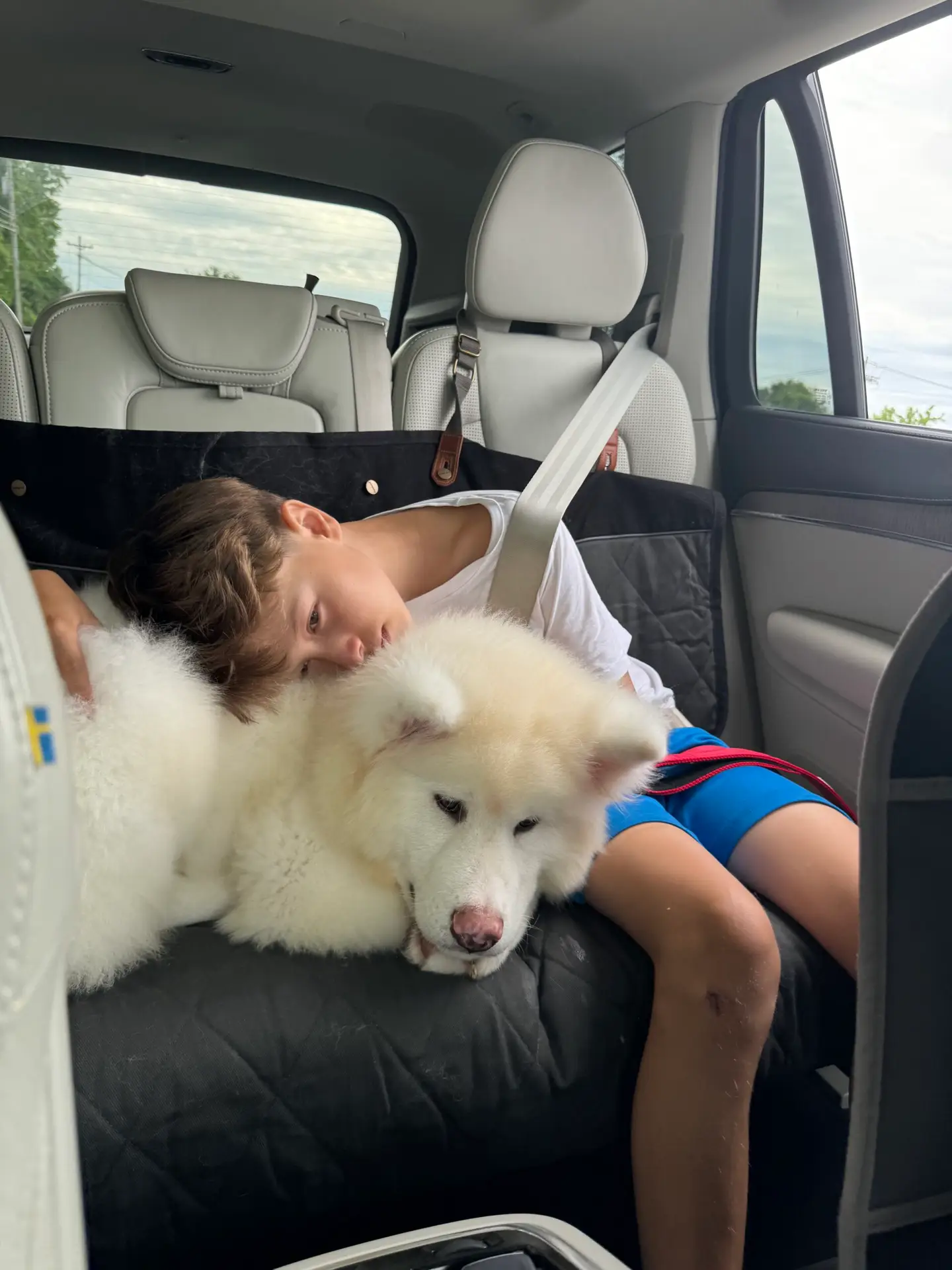
Blizzard, a calm and confident white American Akita male from Apexx Akitas, riding home with his adolescent companion, showing the stable temperament of a well-bred guardian breed

Are Akitas Aggressive? An Honest Answer From a 20 Year Breeder

No, well-bred American Akitas are not naturally aggressive. The American Akita is a powerful, intuitive guardian breed with strong protective instincts, and those instincts are often mistaken for aggression by people who do not understand what they are looking at. A well-bred Akita from a serious program is calm, watchful, deeply bonded to family, and naturally reserved with strangers rather than reactive or dangerous. However, a poorly bred Akita raised by an inexperienced owner can absolutely develop into a dangerous dog. The same is true of any large guardian breed. The real question is whether the dog in front of you came from a program that selected for stable temperament and whether the owner is doing the work the breed requires.

Blizzard, a calm and confident white American Akita male from Apexx Akitas, riding home with his adolescent companion
Blizzard, an Apexx Akitas white male, on his ride home with his adolescent companion. Calm, observant, completely at ease. This is what sound temperament looks like in the breed.

This is probably the most common question I get from people researching the breed. Are American Akitas aggressive? Are they dangerous? Should I be worried about bringing one into my home?

I have been breeding American Akitas in Sussex County, New Jersey for over twenty years, and I am going to give you a direct answer.

No. American Akitas are not naturally aggressive. They are a powerful, intuitive guardian breed with strong protective instincts, and those instincts are often mistaken for aggression by people who do not understand what they are looking at.

That said, this is not the whole answer, because the breed is not for everyone. A poorly bred Akita raised by an inexperienced owner can absolutely develop into a dangerous dog. The same is true of any large guardian breed. The question is not really whether Akitas are aggressive. The question is whether the dog in front of you came from a serious breeding program and whether the owner is doing the work the breed requires.

What Aggression Actually Looks Like, and What It Doesn't

Most of what gets labeled aggression in this breed is something else entirely. Let me walk you through what people misread, because this matters.

Look at the dog in the photo above. Blizzard is a full grown white Apexx Akita male, riding home in a car with his adolescent companion. There is nothing tense in his body. His eyes are soft. He is paying attention to his surroundings the way Akitas always do, but he is completely relaxed in the presence of his person. That is the breed. That is what we breed for.

An American Akita watching a stranger walk up to your front door with calm, focused attention is not aggressive. That is the breed doing its job. Akitas were developed in Japan as guardians, and that watchful presence is the entire reason the breed exists.

An American Akita that does not run up to strange dogs at the park wagging its tail is not aggressive. That is the breed showing the same-sex selectivity and dignified reserve that has always been part of its character. Akitas tend to prefer the company of their family over the company of unknown dogs. That is a feature, not a flaw.

An American Akita that signals discomfort when a strange child reaches over its head or hugs it tightly is not aggressive. That is a dog using the only language it has to tell you it is uncomfortable, and a smart owner reads that signal and adjusts.

Actual aggression looks like a dog that bites without warning, attacks family members, or shows persistent unprovoked reactivity in normal situations. In twenty years of breeding, I have never produced a dog like that, because the breeding decisions I make are designed to prevent it.

Where Akita Aggression Actually Comes From

When you do see a dangerously aggressive Akita, it almost always traces back to one or more of these failures:

  • Poor breeding decisions. Breeding dogs with unstable temperaments to other dogs with unstable temperaments produces puppies that inherit the problem. Reputable breeders screen for temperament as rigorously as they screen for health.
  • No early socialization. The window between 8 and 16 weeks is when the dog learns whether the world is a safe place. A puppy raised in isolation during that window will be a fearful, reactive adult.
  • Backyard breeders and puppy mills. Volume breeders selling Akitas as a product have no incentive to select for temperament. The dogs that come out of those programs are a coin flip at best.
  • Inexperienced owners. An Akita placed with an owner who cannot be the calm, consistent leader the breed needs will struggle. Akitas do not respond well to chaos, harsh corrections, or unpredictable handling.
  • Mistaken rescue placements. Rescue Akitas often come with unknown histories, unknown genetics, and unaddressed fear. Calling that aggression and blaming the breed is not fair to the breed.

I explain this in more depth in Why Temperament Starts Before the Puppy, which covers exactly how the breeding decision is the temperament decision.

The Difference a Serious Breeding Program Makes

At Apexx Akitas, every breeding pair is selected for temperament first. Not coat. Not size. Not pedigree alone. Temperament. The dogs I keep in my program have to demonstrate the calm, stable, family-suitable disposition that defines the breed at its best. The ones that do not, no matter how impressive they look on paper, do not get bred.

That selection process compounds. Each generation of Apexx Akitas inherits stable temperament from both sides, and that inheritance shows up in every puppy I produce. Combine that genetic foundation with eight weeks of in-home raising, daily handling, exposure to children, exposure to normal household noise, and the result is a puppy that arrives at its new family already wired for stability.

This is why families with toddlers, school-age children, and other dogs can confidently bring an Apexx Akita into their home. The dog is not a guess. The dog is the product of two decades of decisions designed to produce exactly the temperament their family needs.

Are Akitas Good With Children?

Yes, when the dog comes from sound genetics and is introduced to the children correctly. This is one of the questions where the gap between a well-bred Apexx Akita and a poorly bred dog from an irresponsible breeder is the widest. A properly bred American Akita is one of the most devoted child guardians you will ever own. A poorly bred one is a liability.

I cover the full answer to this question in Are American Akitas Good With Children? A Breeder's Honest Answer, including how to handle the first introduction between your new puppy and your child.

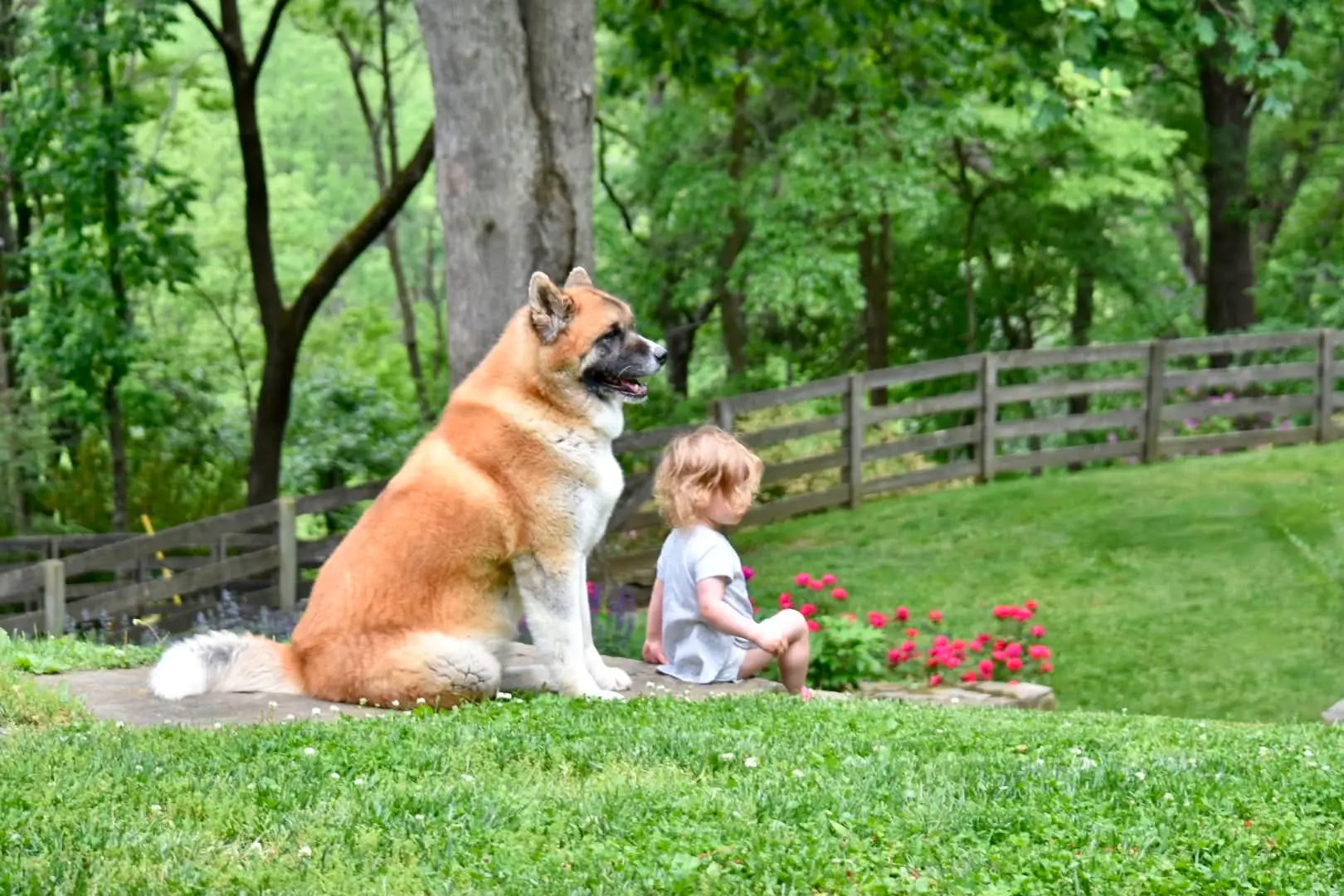
Sadie the Guardian, a 10-year-old American Akita from Apexx Akitas, sitting watchfully behind her young charge in the garden, demonstrating the calm protective nature of the breed
Sadie the Guardian, an Apexx Akita at 10 years old, watching over her young charge in the garden. This is what a well-bred American Akita's protective instinct actually looks like. Watchful, present, calm.

Are Akitas Aggressive With Other Dogs?

This is the one area where the breed's reputation has some truth behind it, and I will be honest about it. American Akitas can show same-sex selectivity, especially between two females or two intact males in the same household. It is in the breed's history as a hunting dog, and even careful breeding does not eliminate it entirely.

What this means practically is that a well-bred Akita is usually fine with the family dog it grew up with, fine with the dogs it meets on a leashed walk, and fine in supervised public settings. The friction tends to show up in two specific situations. Two same-sex dogs sharing a home, and unsupervised interactions with unfamiliar dogs.

This is a manageable trait, not a dealbreaker. A serious breeder will be honest with you about your specific household and whether a particular puppy is the right match for it.

What Owning an American Akita Actually Requires

I am going to be direct with you here, because I would rather you walk away than buy a dog from me you cannot live with for the next twelve years. American Akitas are not the breed for everyone. They require:

  • Calm, consistent leadership from the adults in the home
  • An owner who can read body language and respect the dog's signals
  • Commitment to early socialization in the first four months of life
  • A home that is not chaotic, loud, or full of constant unpredictable activity
  • Willingness to supervise interactions with unfamiliar people and dogs
  • An honest understanding that this is a guardian breed, not a Labrador

If you can offer those things, the American Akita will give you back loyalty, protection, and dignity that no other breed can match. If you cannot, please look at a different breed. Both you and the dog will be better off.

The Bottom Line on Akita Aggression

Are Akitas aggressive? No. They are a powerful guardian breed with strong instincts, and those instincts demand respect from the people who own them. In the wrong hands and from the wrong breeder, any large guardian breed can become dangerous. In the right hands and from a serious breeding program, the American Akita is one of the most stable, trustworthy, and loyal family dogs you will ever own.

That is the honest answer. Twenty years in the breed has not changed it, and twenty more will not either.

Frequently Asked Questions About Akita Aggression

Are American Akitas dangerous?

A well-bred American Akita from a serious breeding program is not dangerous. They are large, powerful, protective dogs that require calm, consistent leadership from their owners, but stable temperament is the standard in responsible breeding programs. Danger arises when a poorly bred Akita is raised by an inexperienced owner without socialization or structure. That combination can make any large guardian breed dangerous, not just the American Akita.

Do American Akitas bite their owners?

A well-bred, properly raised American Akita does not bite its owner. In over 20 years of breeding, we have never produced a dog that bit its family. The Akita is naturally deeply loyal and protective of its household. When bites do occur, they almost always trace back to poor breeding, no early socialization, an inexperienced owner missing warning signals, or an environment that is chaotic or unpredictable. Bites are not a breed trait, they are a breakdown in one of those areas.

Are Akitas aggressive with other dogs?

American Akitas can show same-sex selectivity, especially between two females or two intact males in the same household. This trait comes from the breed's history as a hunting and guardian dog, and even careful breeding does not eliminate it entirely. A well-bred Akita is usually fine with the family dog it grew up with, fine with dogs on leashed walks, and fine in supervised public settings. Same-sex dogs sharing a home and unsupervised interactions with unfamiliar dogs are the two specific situations that require honest evaluation and careful matching by the breeder.

Why do American Akitas have an aggressive reputation?

The breed's reputation comes from a combination of misread breed traits (protective watchfulness misinterpreted as aggression), poorly bred dogs from irresponsible programs, undersocialized rescues with unknown histories, and inexperienced owners who could not provide the calm consistent leadership the breed requires. A properly bred, well-raised American Akita from a serious breeding program looks nothing like the reputation. Judging the entire breed by its worst representatives is not fair to the many families who have owned stable, family-oriented Apexx Akitas without a single incident.

Can Akita aggression be trained out?

Genuine aggression in an adult American Akita is very difficult to train out, which is why the answer lies in prevention rather than correction. Aggression prevention starts with the breeder selecting for stable temperament across generations, continues through early socialization during the 8 to 16 week window, and requires ongoing calm consistent leadership from the owner throughout the dog's life. Working with a genuinely aggressive adult Akita requires a highly experienced trainer and honest evaluation of whether the dog can be safely rehabilitated. Choosing a well-bred puppy from a serious breeding program is the far better path.

Are female Akitas less aggressive than males?

Neither sex is more aggressive than the other in a well-bred American Akita. Females tend to be slightly smaller and often bond more intensely with one primary caretaker, while males tend to be larger with more openly protective instincts. Stable temperament is the goal for both sexes in responsible breeding. Where sex does matter is in same-sex living situations. Female-female and male-male combinations in the same household require more careful matching than male-female combinations because of natural same-sex selectivity in the breed.

Are American Akitas safe around babies and toddlers?

A well-bred American Akita from a serious breeding program can be a devoted and gentle companion to babies and young children in its family, as long as introductions are handled correctly and interactions between young children and any large dog are always supervised. The gap between a properly bred Apexx Akita and a poorly bred dog from an irresponsible breeder is wide, and it matters most in this exact situation. Never assume a large guardian breed is safe with a small child without doing full due diligence on the breeder first.

How can I tell if a specific Akita puppy has aggressive tendencies?

A young puppy does not reliably show adult aggression tendencies during the 8 to 12 week evaluation window. What you can and should evaluate is the temperament of both parents, the multi-generational track record of the breeding program, the breeder's early socialization protocols, and honest documentation of any temperament issues in offspring across previous litters. A serious breeder should be able to speak specifically about the dogs they have produced, where they went, and how those dogs turned out as adults. This is why the breeder matters more than any individual puppy assessment.

If you are still researching the breed, read The Truth About American Akita Temperament, Are American Akitas Good With Children?, and Are Akitas Good Family Dogs? next.

When you are ready to talk seriously about a puppy from a breeder who selects for temperament first, our Available Dogs page is the place to start.