American Akita vs German Shepherd: A Breeder's Honest Comparison
American Akitas
Placements
Produced
Tested
The American Akita and the German Shepherd are both large, powerful, intelligent breeds with strong guardian instincts. That is where the similarities end. These two breeds think differently, bond differently, move through a household differently, and require completely different types of owners. This guide compares them honestly across every category that matters to a family making a decision, written from over 20 years of breeding American Akitas and placing them with families, including many who came to us specifically because they had owned a German Shepherd first and wanted something different.
The Short Answer: Who Each Breed Is For
The German Shepherd is for the owner who wants a working partner. A dog that thrives on tasks, obedience training, structured activities, and constant engagement. The GSD wants to be told what to do. It wants a job. Without one, it gets anxious, destructive, and vocal.
The American Akita is for the owner who wants a calm, independent guardian. A dog that watches, assesses, and acts on its own judgment. The Akita does not need a job to be happy. It needs a family to protect, a stable routine, and an owner who respects its intelligence without trying to micromanage it.
If you want a dog that follows you from room to room and hangs on your every word, get the German Shepherd. If you want a dog that sits quietly in the corner of the room, watches everything that moves, and only gets up when something actually requires its attention, get the Akita.
Size and Build: The Physical Differences

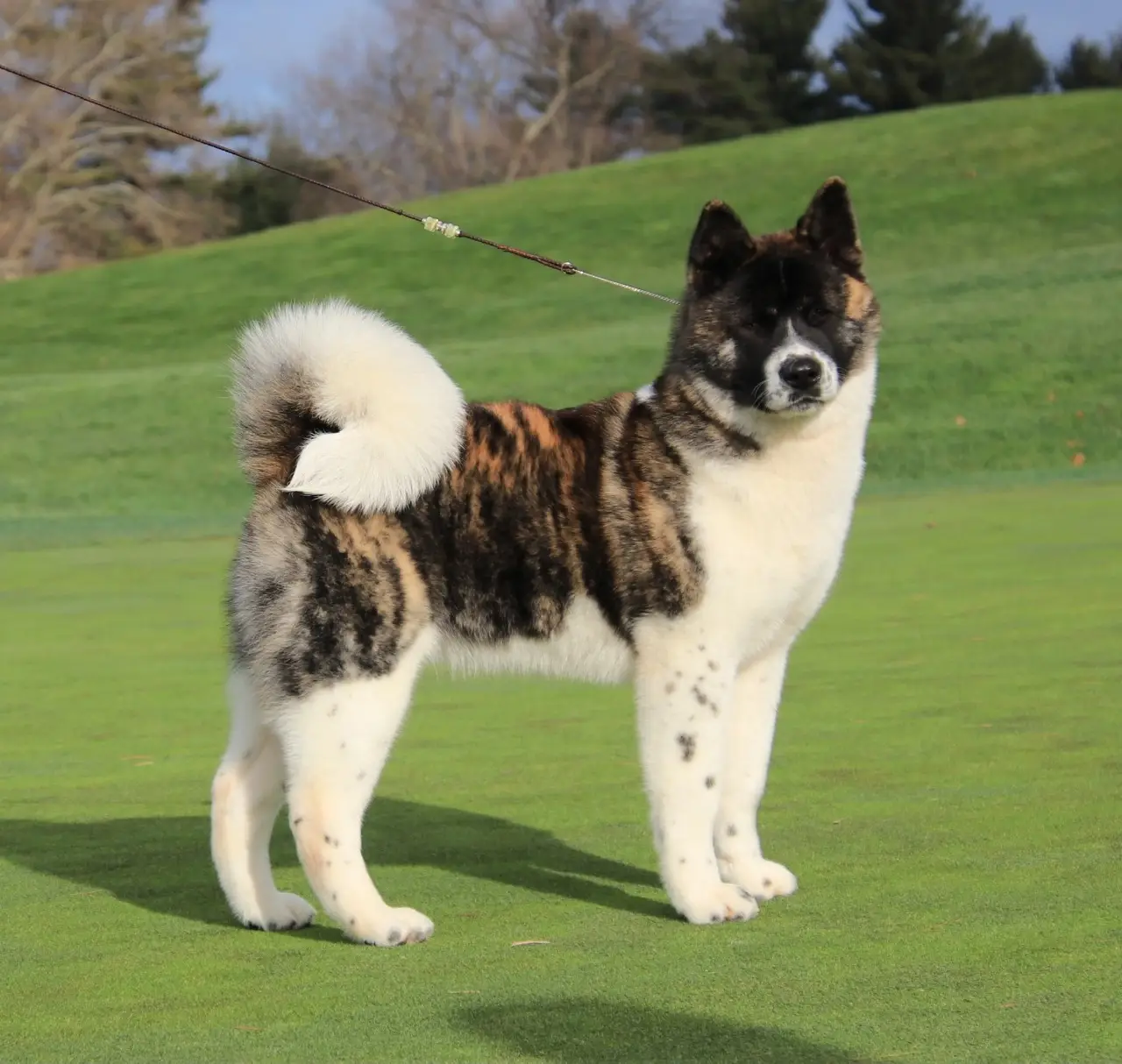
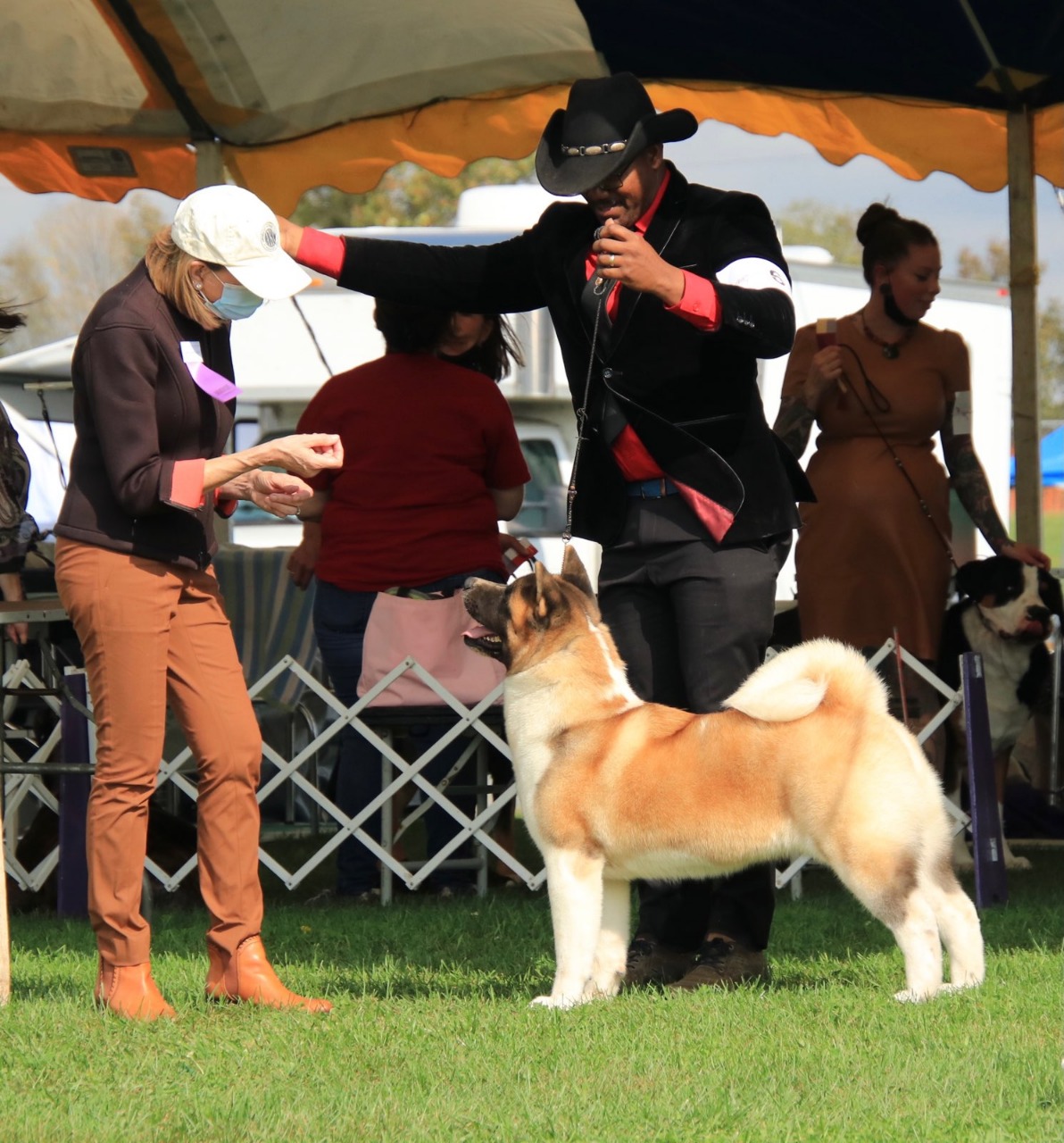
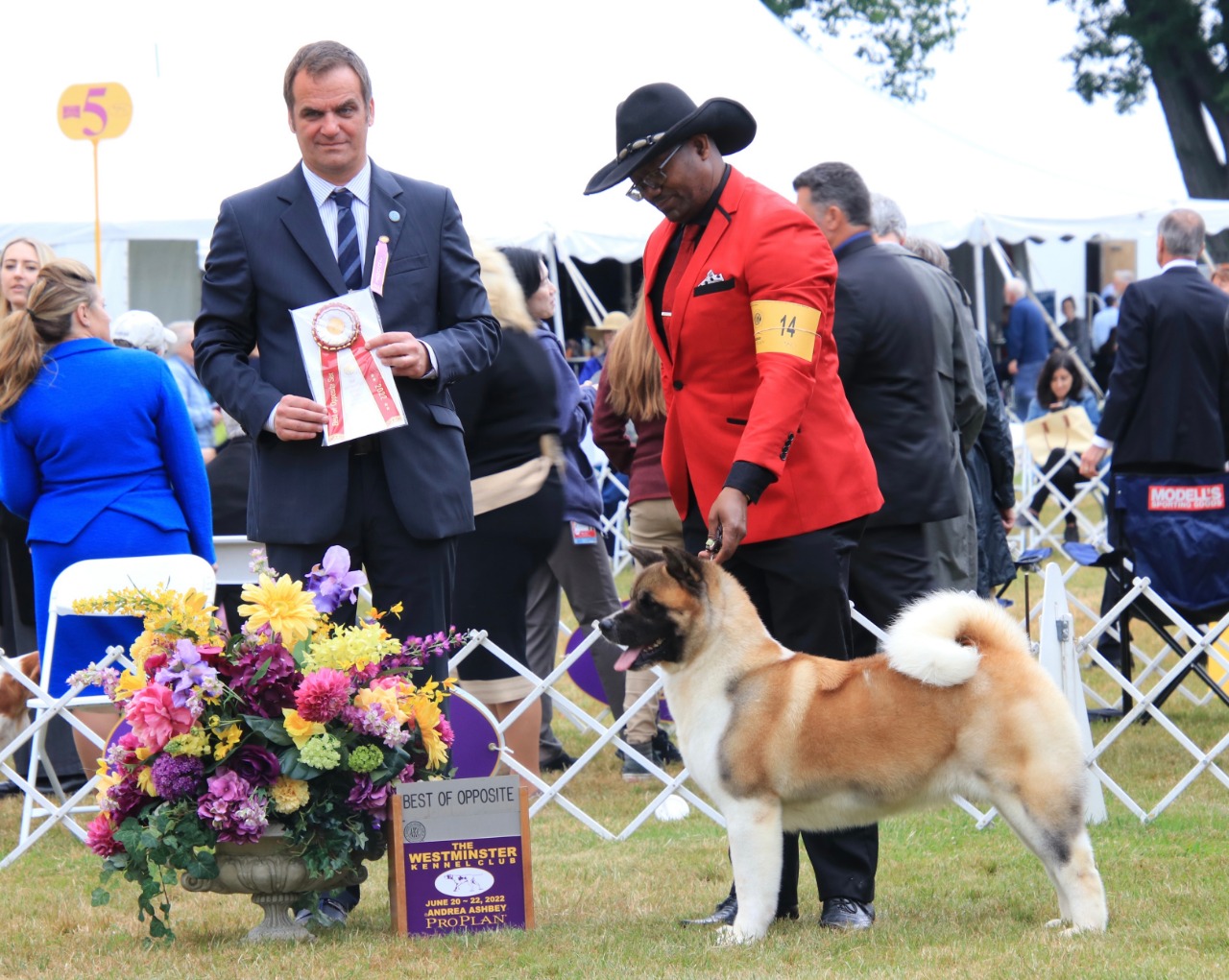
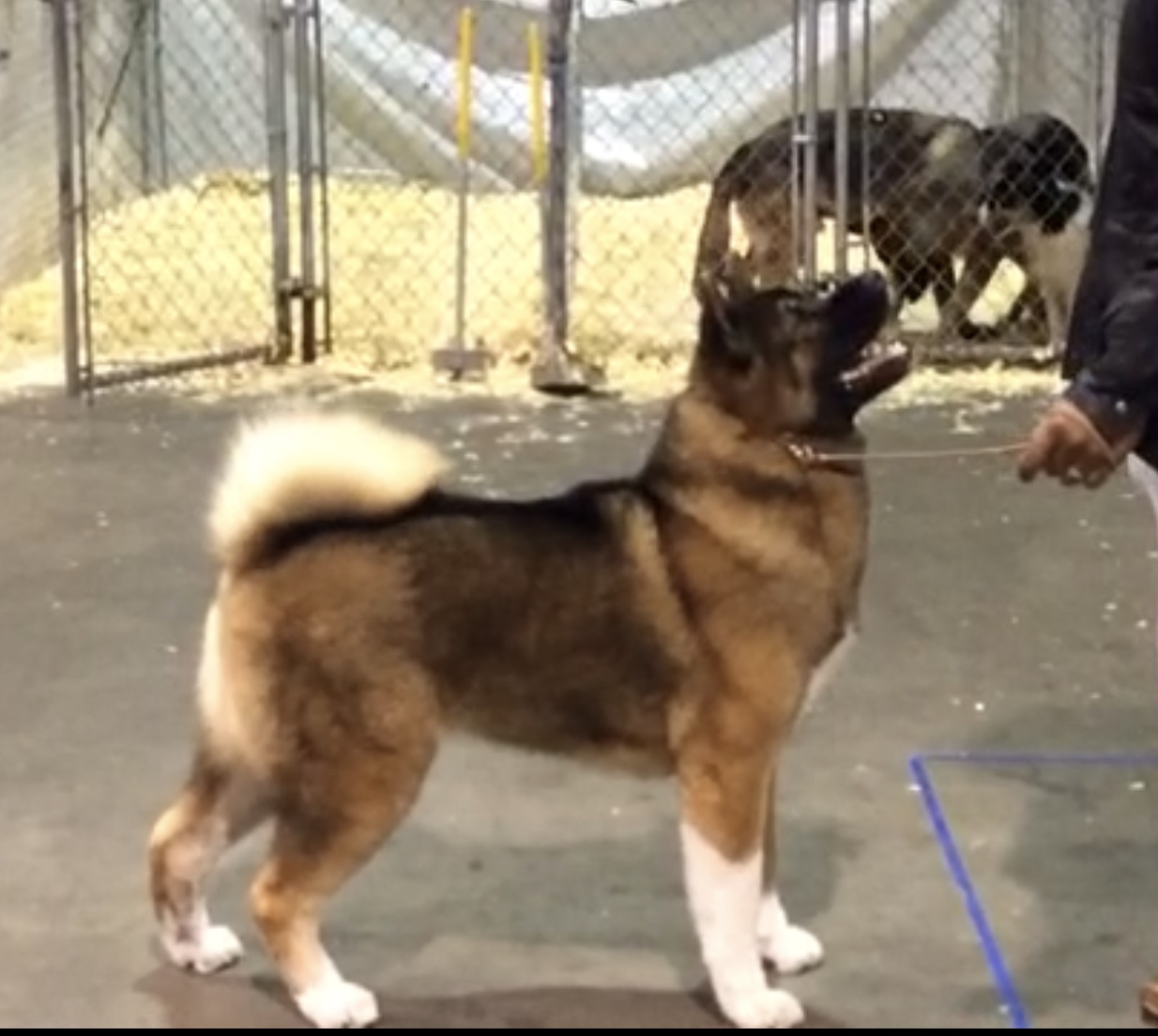
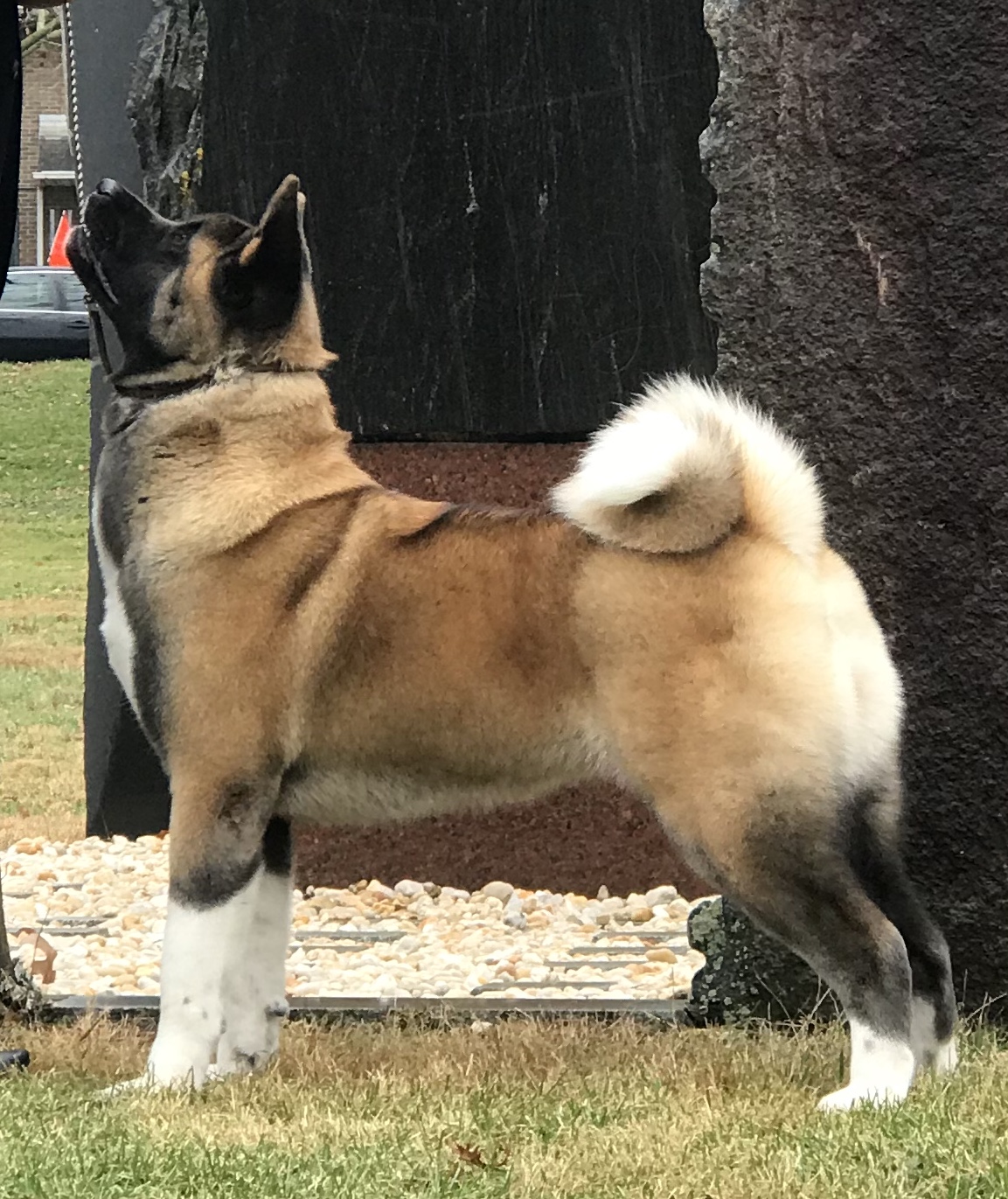
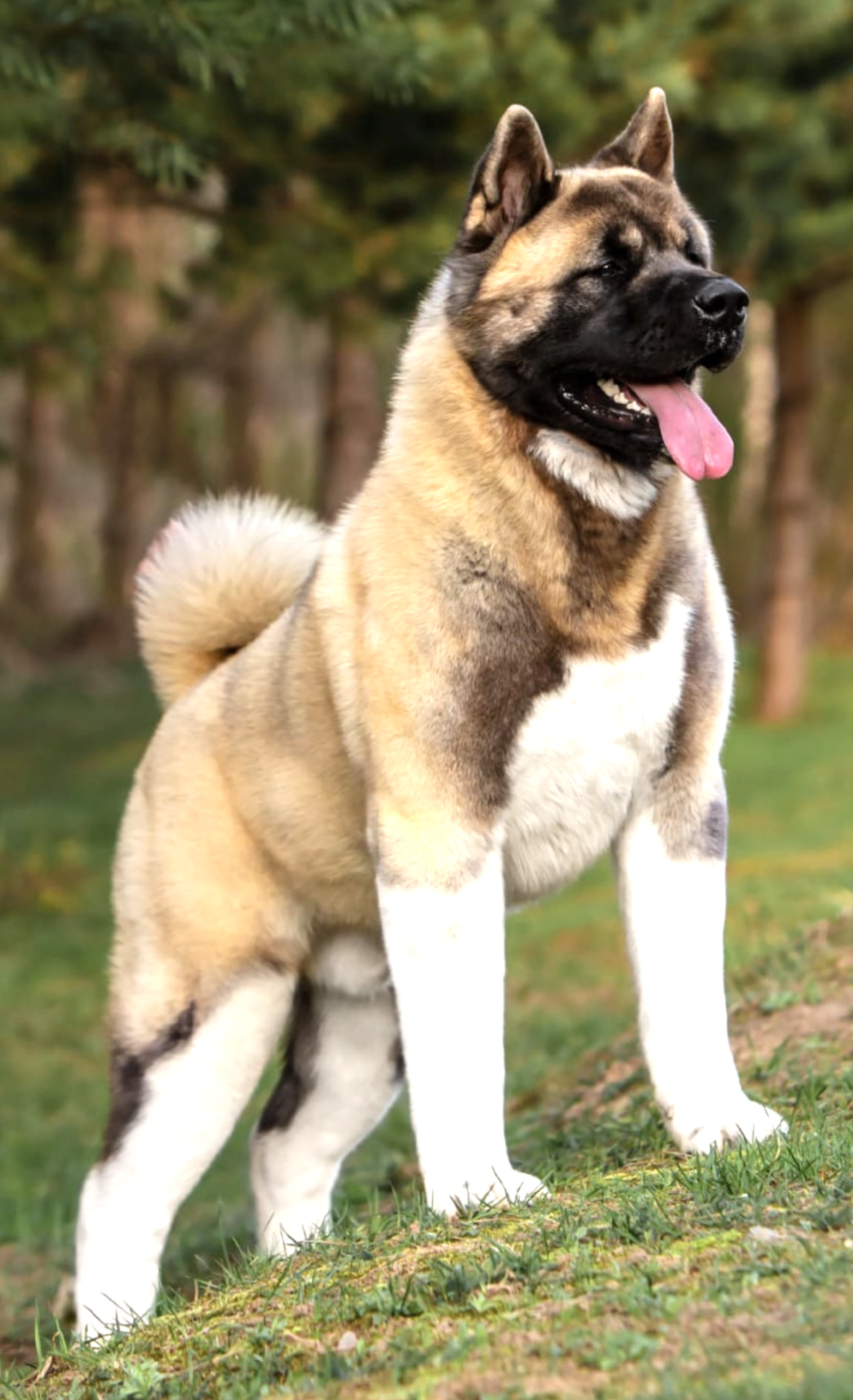
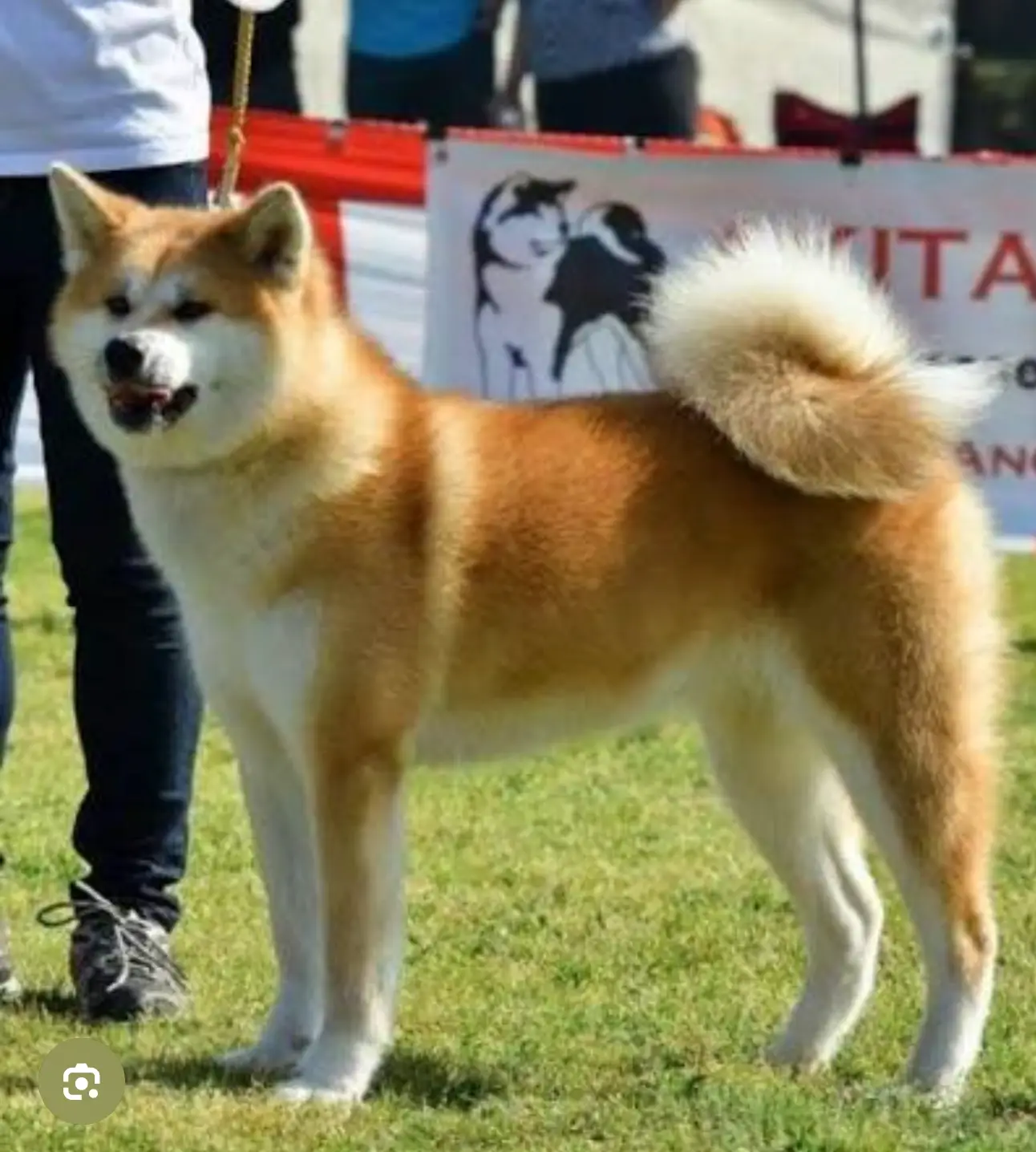
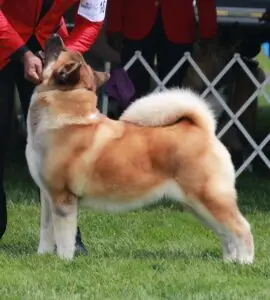
American Akita male showing breed standard size next to handler
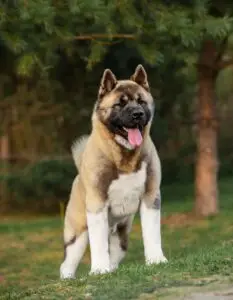
The American Akita is a substantially larger dog than the German Shepherd. Males stand 26 to 28 inches tall and weigh 100 to 130 pounds. Females stand 24 to 26 inches and weigh 70 to 100 pounds. The build is broad, heavy boned, and powerful with a large bear like head and thick double coat. You can read the full size breakdown in our guide: How Big Do American Akitas Get.
The German Shepherd is narrower and lighter. Males stand 24 to 26 inches and weigh 65 to 90 pounds. Females stand 22 to 24 inches and weigh 50 to 70 pounds. The build is athletic and angular, designed for speed and agility in working roles.
This size difference matters in practical terms. The Akita takes up more space, eats more food, and requires a stronger handler on leash. But the Akita's lower energy indoors means it often feels like less dog in the house despite being physically bigger. The German Shepherd's constant motion and engagement seeking can make it feel larger in a home than its actual weight suggests.
Temperament: This Is Where Everything Changes

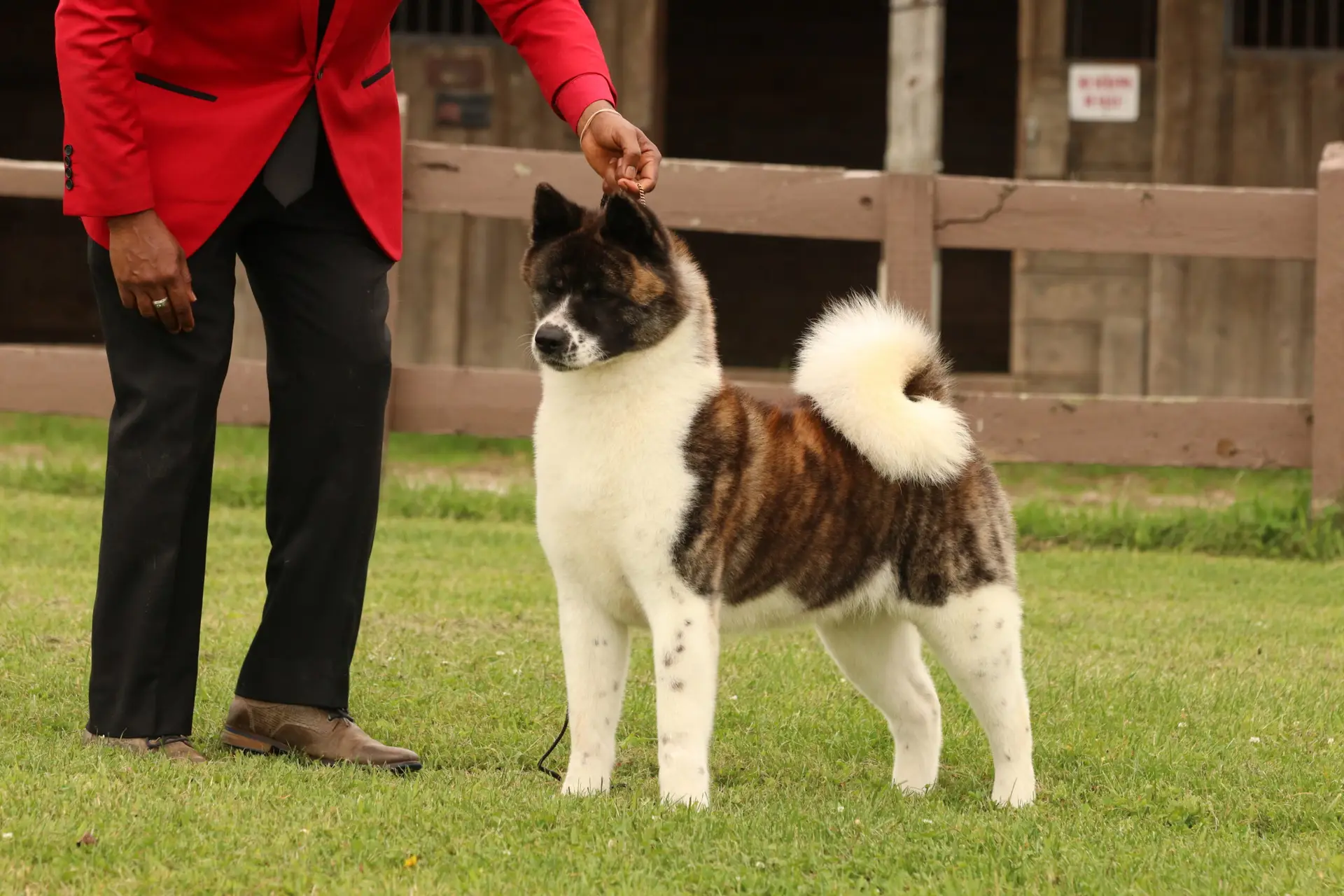
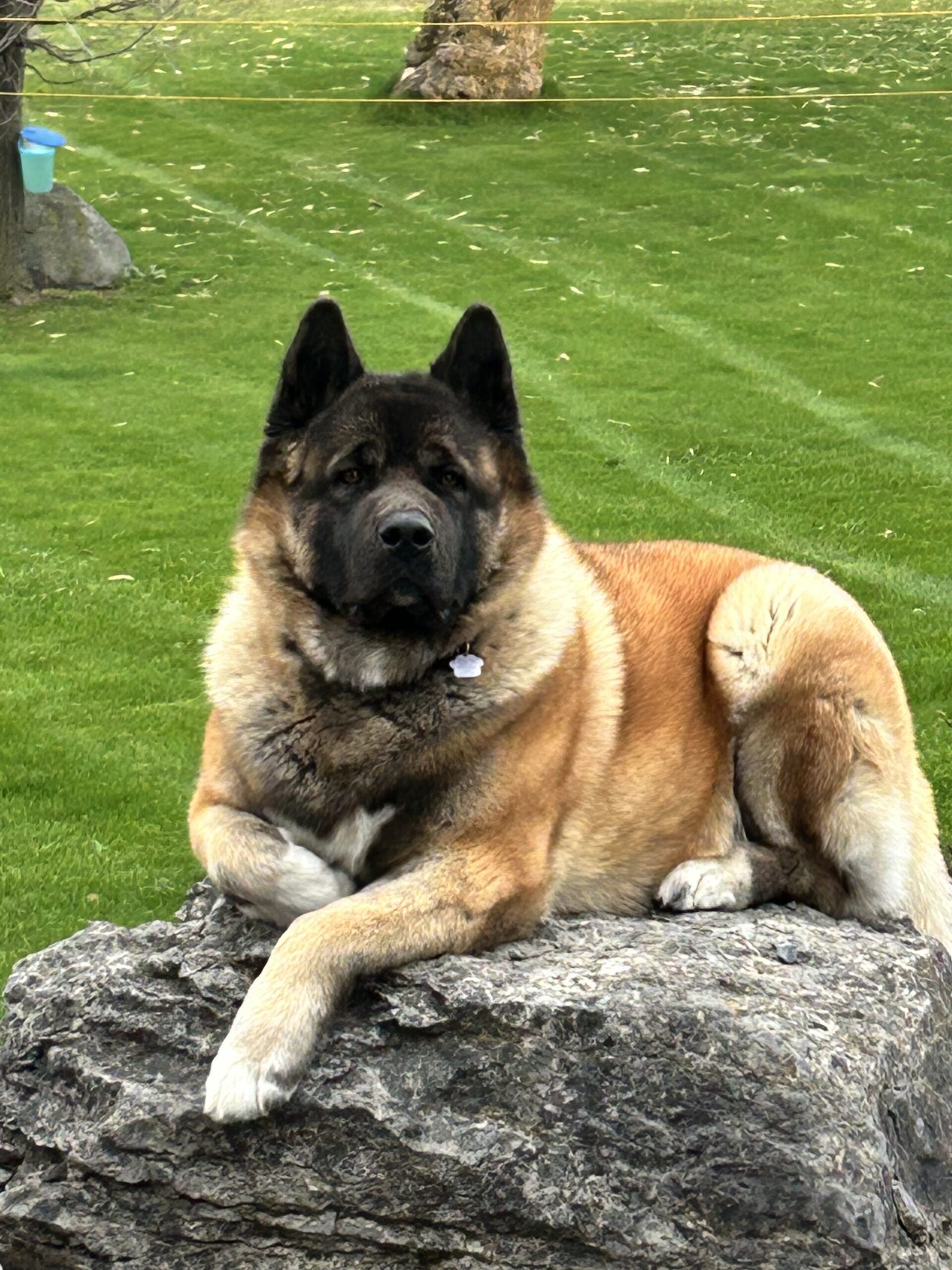
Quiet, independent indoor temperament is the Akita's defining trait
The German Shepherd is a herding breed at its core. It was developed to work all day alongside a handler, responding to commands, anticipating direction, and staying in constant communication with its person. That heritage shows up in every aspect of daily life. The GSD follows you around the house. It watches you for cues. It vocalizes frequently. It wants engagement, and when it does not get it, it tells you.
The American Akita is a guardian breed. It was developed to work independently, making its own decisions about threats and responses without waiting for human direction. That heritage shows up just as clearly. The Akita chooses a vantage point in the house and settles there. It watches doors and windows rather than watching you. It rarely barks without reason. It does not need you to entertain it or direct it every moment of the day.
This difference is not about one breed being smarter than the other. Both are highly intelligent. The difference is in what they do with that intelligence. The German Shepherd uses its intelligence to please you. The American Akita uses its intelligence to protect you. One takes direction. The other makes decisions.
You can read more about how Akita temperament works in our guide: The Truth About American Akita Temperament.
With Children and Families

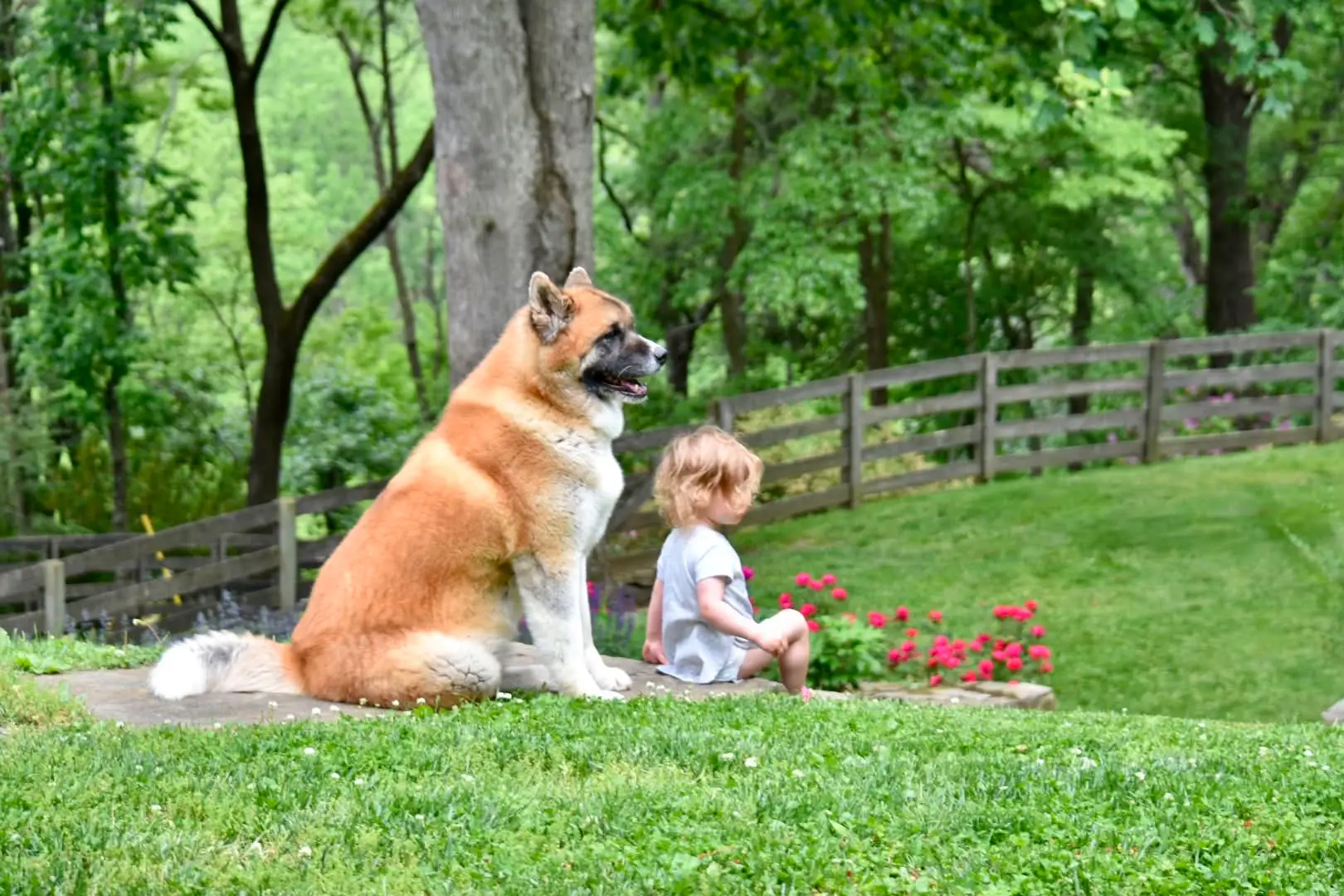
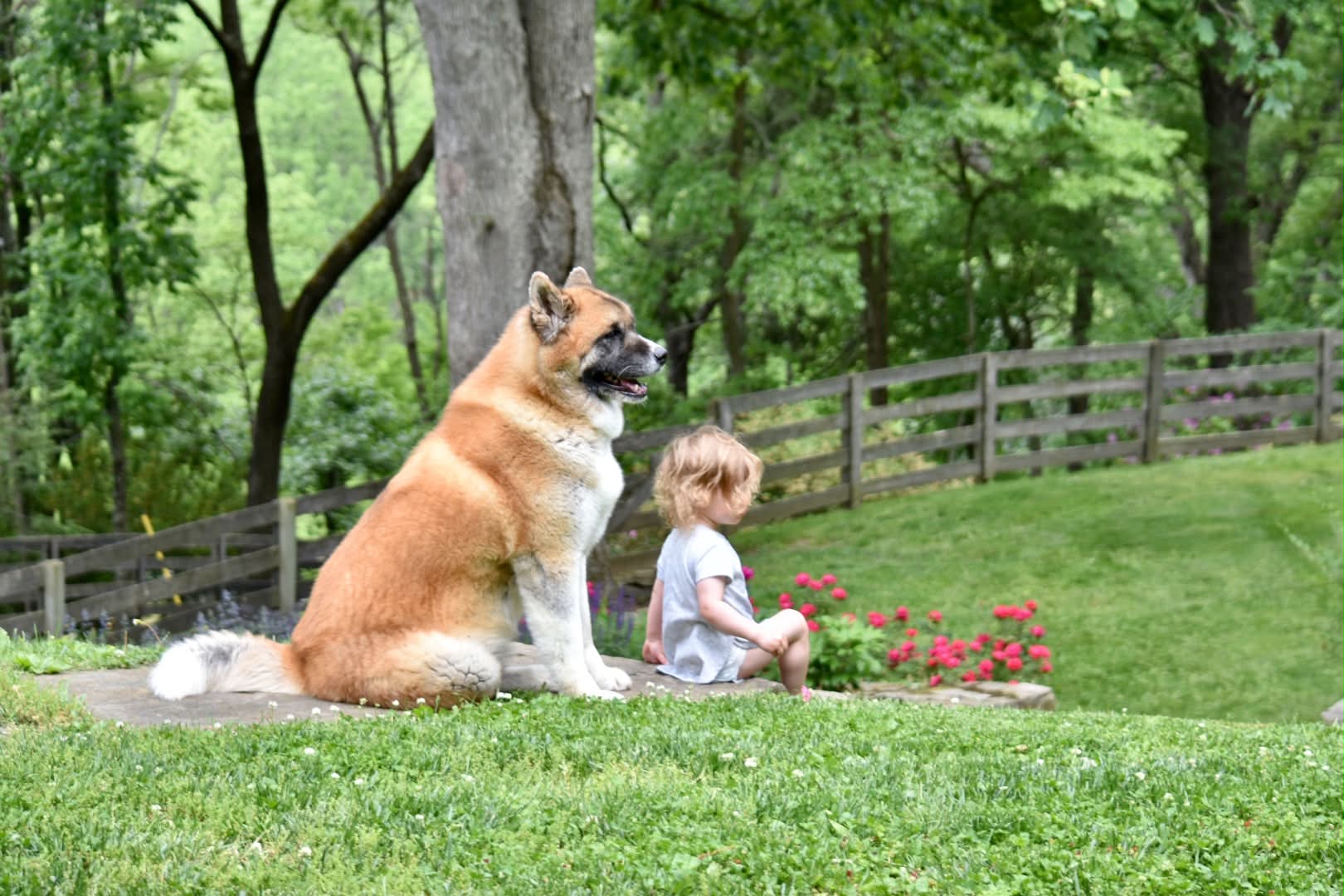
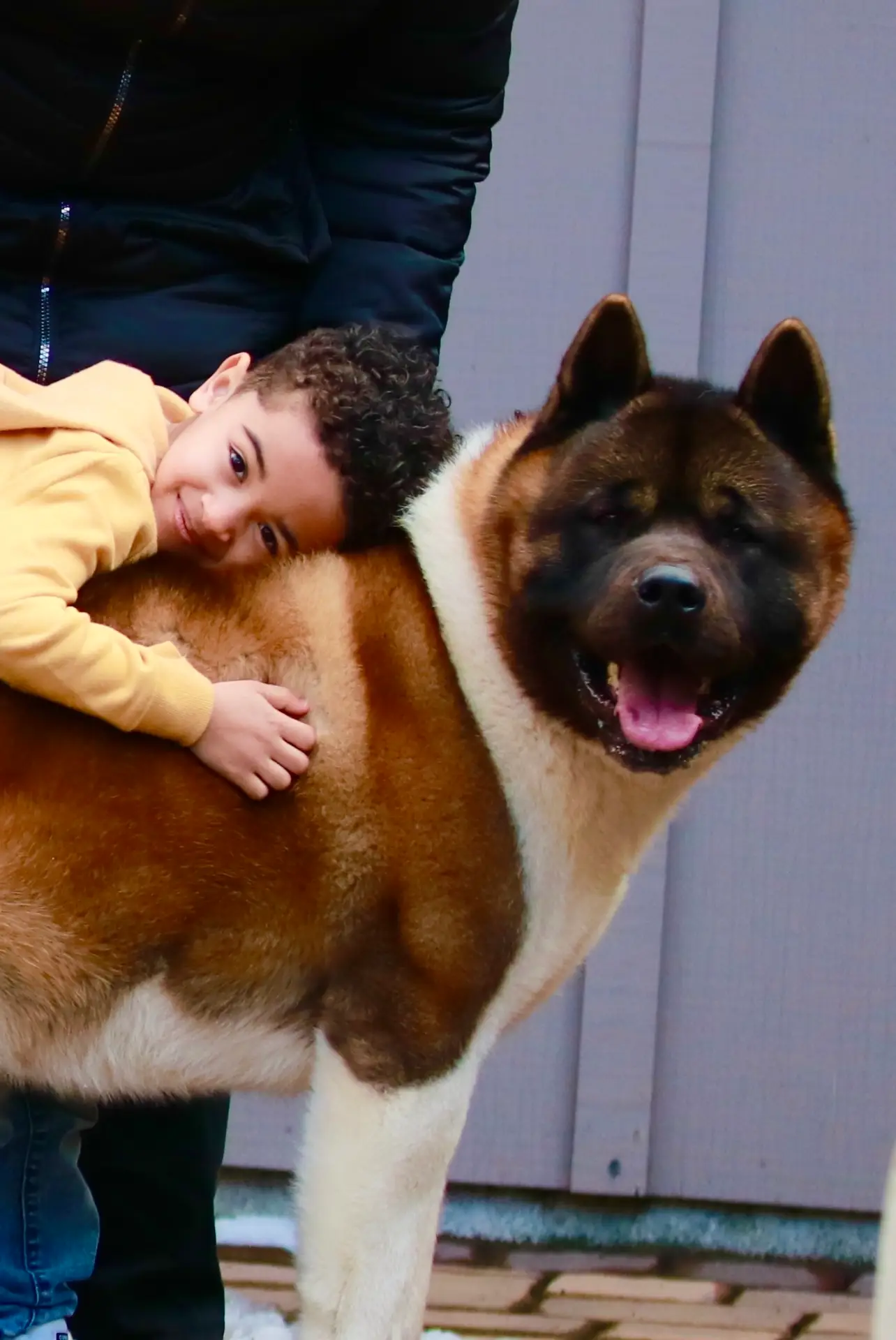
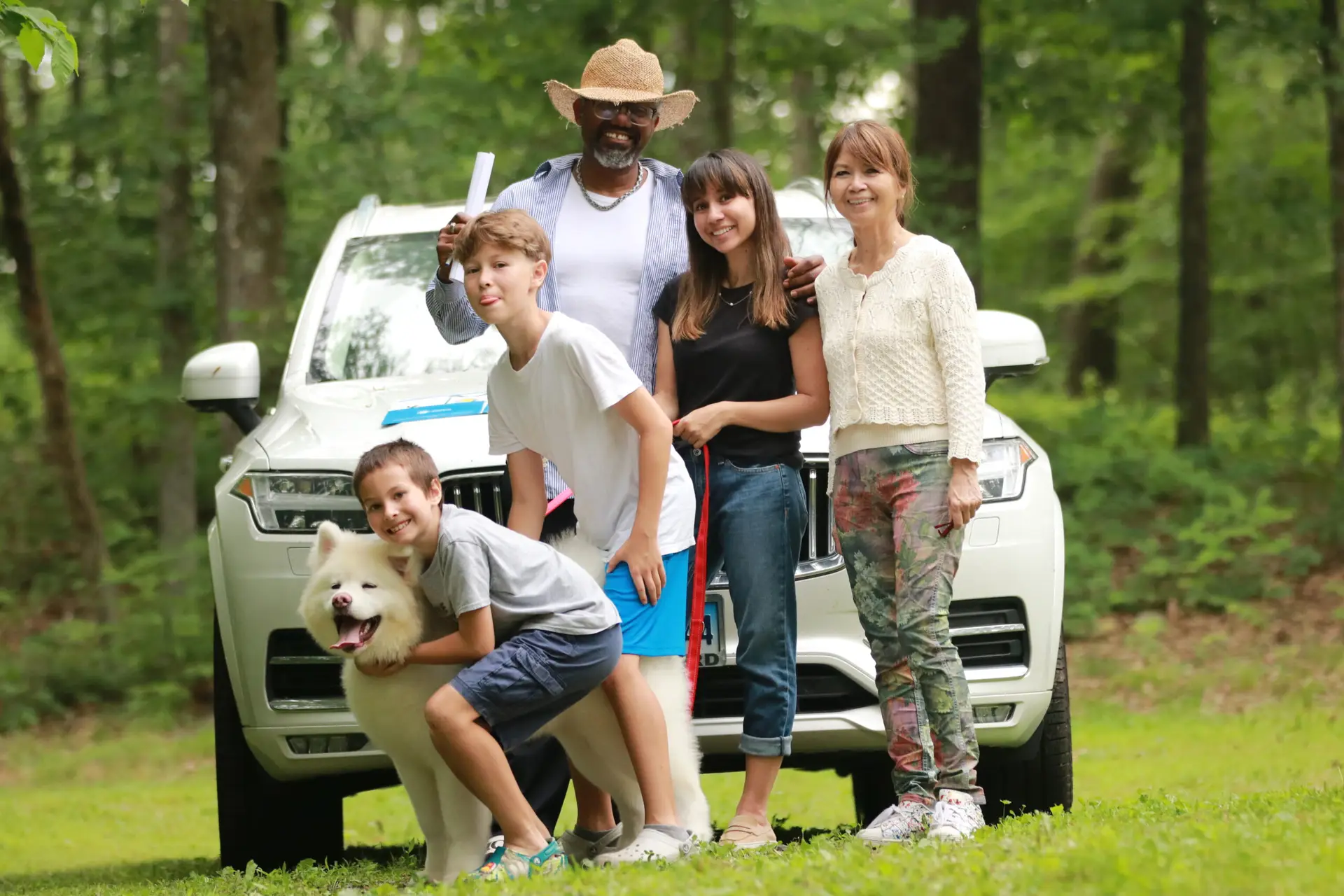
American Akita showing gentle, steady guardianship with a child
Both breeds can be excellent family dogs. Both can be terrible family dogs. The outcome depends entirely on breeding, socialization, and the match between dog and household.
The German Shepherd tends to be active and mouthy with children, especially as a puppy. It herds. It nips. It plays at high energy levels. It means well, but the herding instinct can overwhelm small children who do not understand why the dog keeps circling them and pushing them with its nose. With training and maturity, most GSDs settle into reliable family companions.
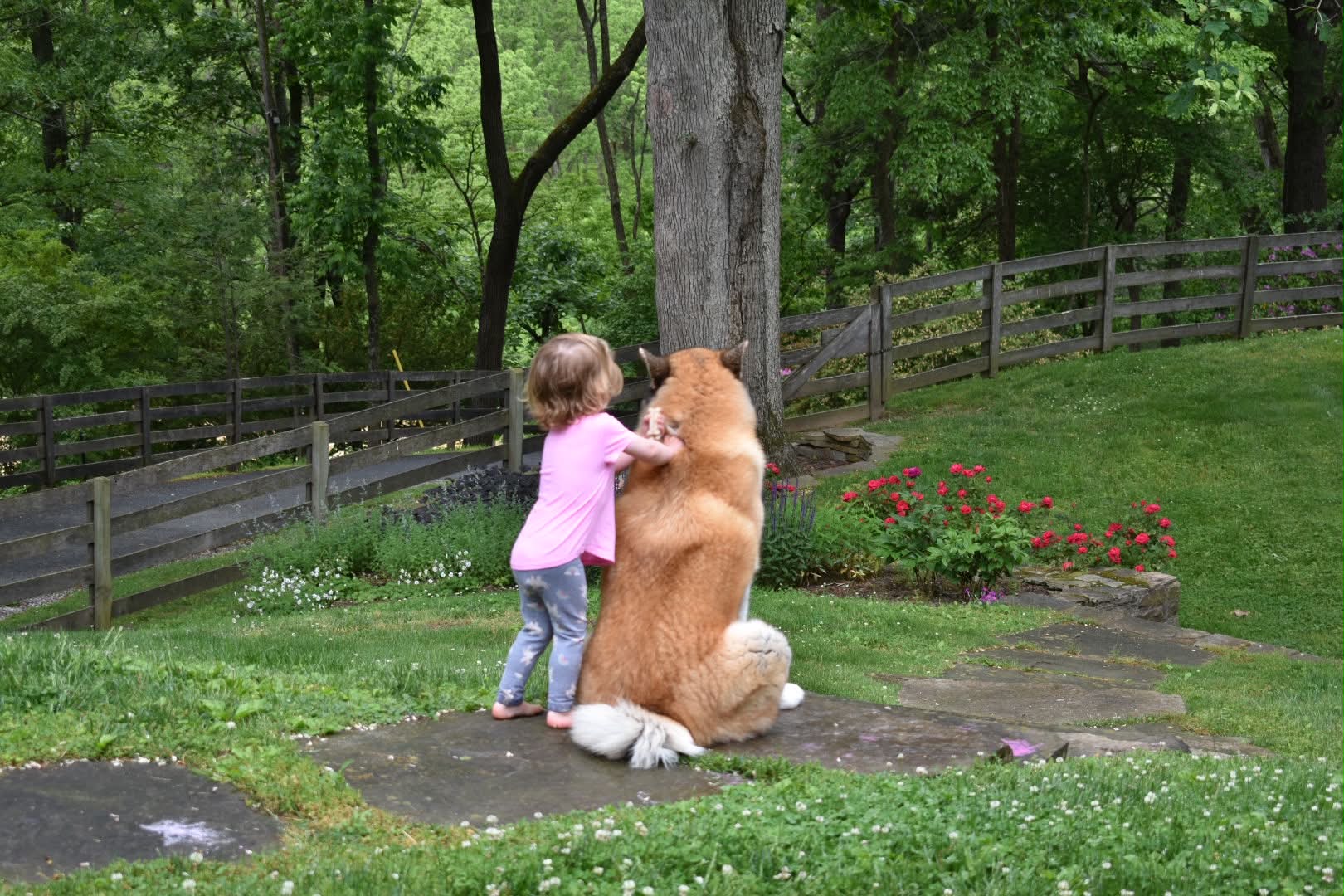
The American Akita, when well bred, is different with children. It tends to be still. It positions itself near the children rather than engaging them in high energy play. It watches. Multiple families who have come to us after owning German Shepherds describe the Akita as a "calmer presence" around their kids. Not less protective. Not less bonded. Just quieter about it. The Akita guards without the herding behavior, the nipping, or the constant motion.
This is one of the most important distinctions for families with young children. The GSD expresses its bond through activity and engagement. The Akita expresses its bond through proximity and watchfulness. Both are genuine. They just look completely different in a home with a toddler.
For more on this topic: Are American Akitas Good With Children.
Independence vs Clinginess: The Biggest Lifestyle Difference
This is the comparison point that every former GSD owner brings up first. The German Shepherd is, by nature, a velcro dog. It wants to be in physical contact with you. It follows you to the bathroom. It lies on your feet. It watches the door when you leave and loses its composure when you come back. For some owners this is endearing. For others it becomes exhausting.
The American Akita is independent. It loves its family deeply but it does not need to be physically attached to you at all times. It will be in the same room as you, but it will be on its own terms, in its own spot, watching its own things. It greets you when you come home but it does not fall apart when you leave. It is loyal without being needy.
"Several families who switched from German Shepherds to American Akitas have told me the same thing. The Akita is a quieter dog, more independent, far less clingy, but at the same time extremely loyal and protective of the family, especially the young children."
Ron Durant, Apexx AkitasThis is not a better or worse distinction. It is a lifestyle match question. If you work from home and want a dog glued to your side all day, the GSD fits that desire. If you want a dog that keeps you company without demanding your attention, the Akita is the better fit.
Guarding and Protection: Two Completely Different Approaches

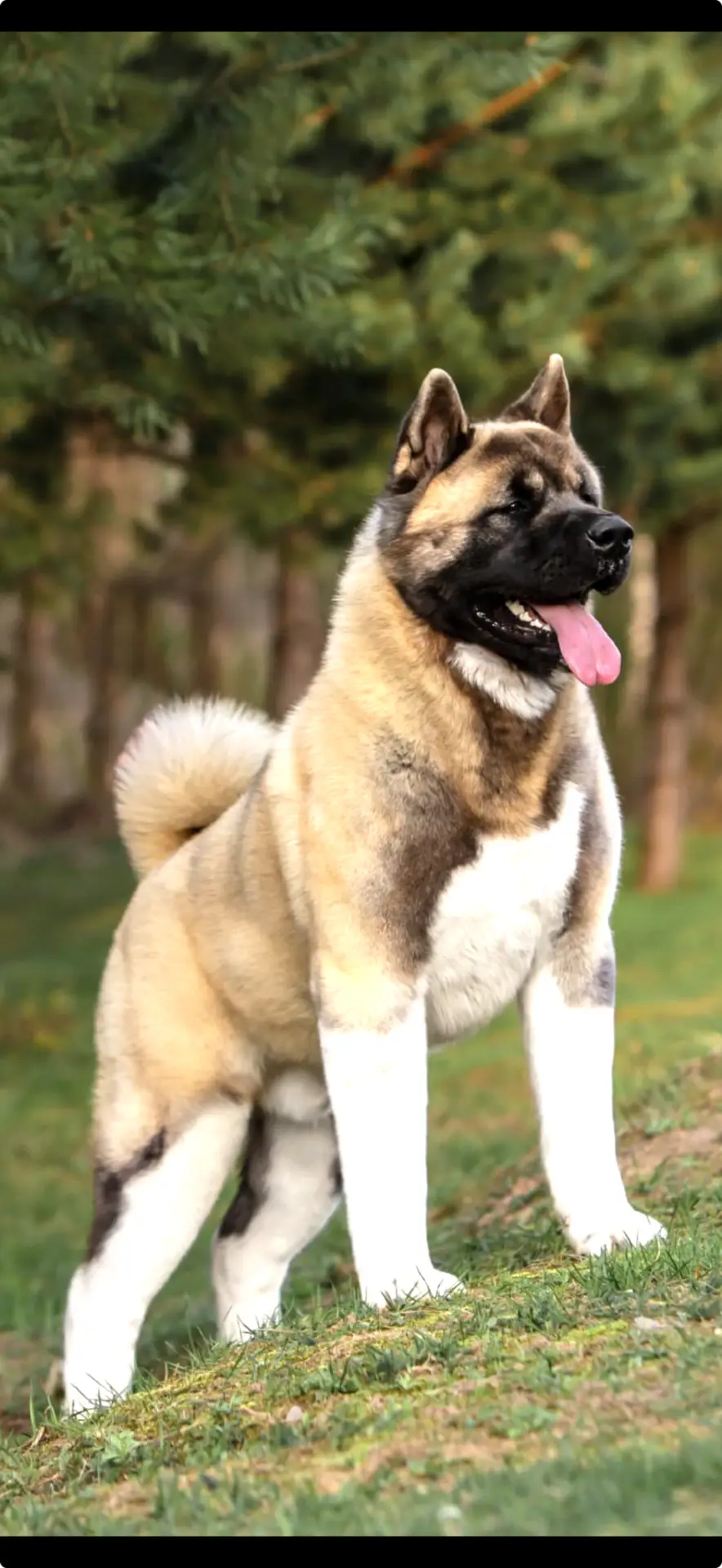
Natural guardian instinct requires no specialized training
The German Shepherd is the world's most popular police and military dog for a reason. It excels at trained protection work. It can be taught to bite on command, release on command, track suspects, and perform complex scenarios under pressure. That trainability is the GSD's greatest asset in professional settings.
The American Akita does not work that way. Its protective instinct is not trained. It is innate. The Akita assesses situations on its own, determines whether its family is at risk, and responds accordingly. You do not teach an Akita to protect your home. You do not need to. The breed was developed for exactly this purpose over centuries, and the instinct is hardwired.
For a family that wants a natural deterrent and a dog that will instinctively position itself between a stranger and a child, the Akita provides that without any specialized training. For someone who wants a dog that can be trained to perform specific protection commands on cue, the German Shepherd is the clear choice.
Energy and Exercise Requirements
The German Shepherd is a high energy dog that needs 60 to 90 minutes of vigorous exercise daily, plus mental stimulation through training, puzzle toys, or structured activities. Without it, the GSD becomes restless, vocal, and destructive. This is a dog that needs a committed, active owner who is willing to provide that level of engagement every single day, rain or shine, for 10 to 13 years.
The American Akita has moderate exercise needs. A 30 to 45 minute walk once or twice daily, combined with yard time, is typically sufficient for an adult Akita. The Akita is not a marathon dog. It does not need fetch sessions, agility courses, or constant physical challenges. It is content with a structured routine and access to outdoor space. This makes the Akita a realistic choice for owners who value a calm household but do not have the time or desire for intensive daily exercise commitments.
One thing to be honest about: the Akita's lower exercise needs do not mean it is a lazy dog. It is alert and active when something requires its attention. It simply does not manufacture energy for the sake of it the way a GSD does.
Coat and Grooming

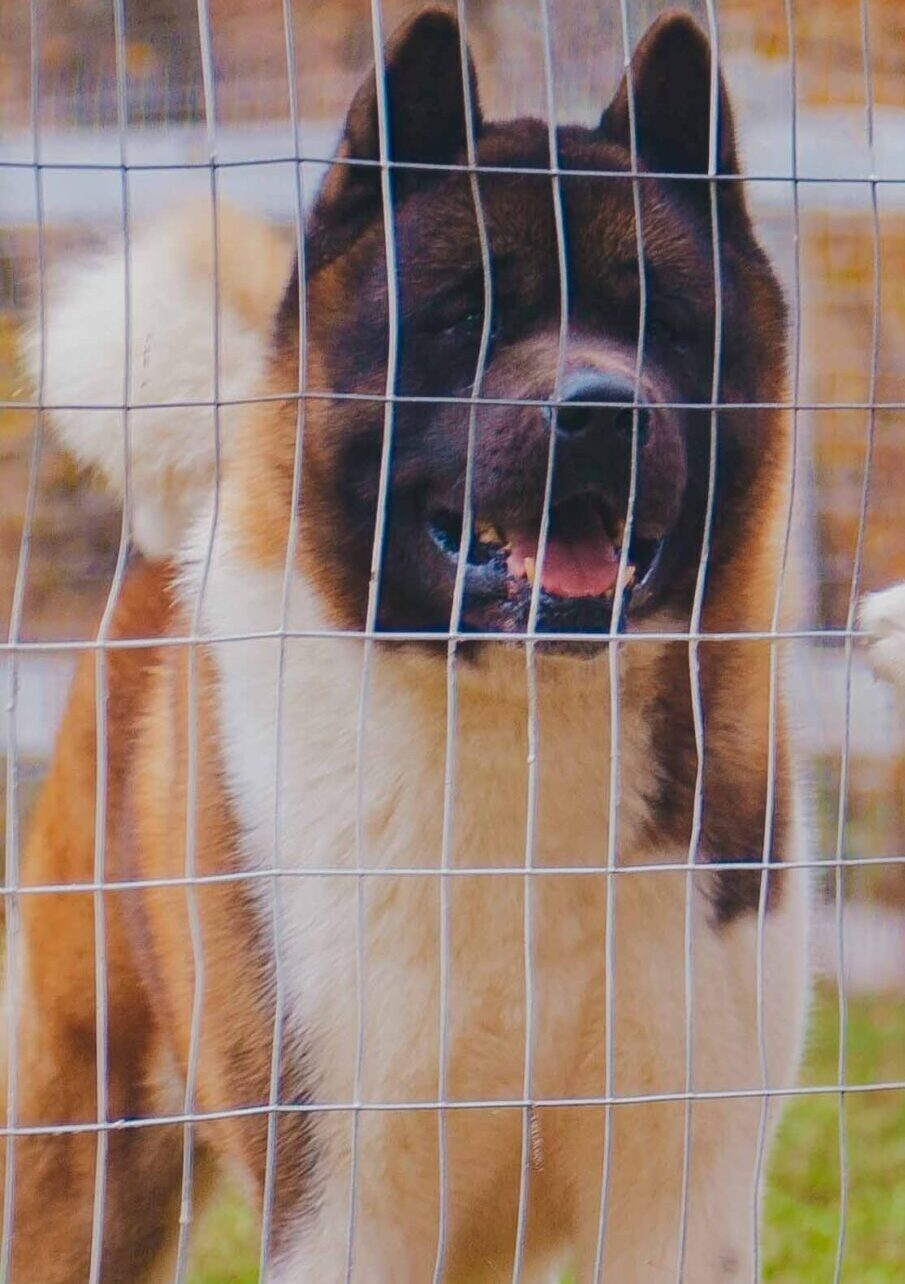
The Akita's thick double coat is denser and heavier than the GSD's
Both breeds have double coats and both breeds shed. A lot. But the shedding profiles are different.
The German Shepherd sheds consistently year round with two heavier seasonal blows. The hair is medium length, tends to stick to furniture and clothing, and seems to find its way into everything. Daily brushing helps but does not eliminate the issue.
The American Akita also sheds year round with two seasonal blows, but the undercoat is denser and the hair comes out in larger clumps during blow coat rather than a constant scatter. Many Akita owners find the shedding easier to manage because the hair tends to tumble into collectible clumps rather than embedding itself in fabric. The Akita's coat is also naturally odor resistant, which means less bathing is required compared to the GSD.
For a detailed breakdown of Akita coat care: American Akita Shedding Guide.
Training: Two Different Philosophies
The German Shepherd is one of the most trainable breeds in the world. It learns quickly, retains commands reliably, and is eager to repeat behaviors that earn approval. If you have ever trained a GSD, you know the feeling of a dog that is almost trying too hard to get it right.
The American Akita is intelligent but it is not eager to please in the same way. The Akita understands what you are asking. It simply decides whether the request is worth complying with. This is not stubbornness. It is independence. Training an Akita requires patience, consistency, and an understanding that this is a thinking dog that will not blindly repeat a command 50 times because you asked it to.
First time dog owners often do better with a German Shepherd because the training feedback loop is more immediate and rewarding. Experienced owners who have already trained other breeds often prefer the Akita because the relationship feels more like a partnership than a command structure.
For training guidance specific to the breed: How to Train an American Akita.
Health and Lifespan
The German Shepherd has significant breed wide health challenges. Hip and elbow dysplasia rates are among the highest of any breed. Degenerative myelopathy, a progressive spinal condition, is common. Bloat, pancreatic insufficiency, and allergies are also prevalent. The average lifespan is 9 to 13 years, but many GSDs from poorly tested lines develop mobility issues by age 7 or 8.
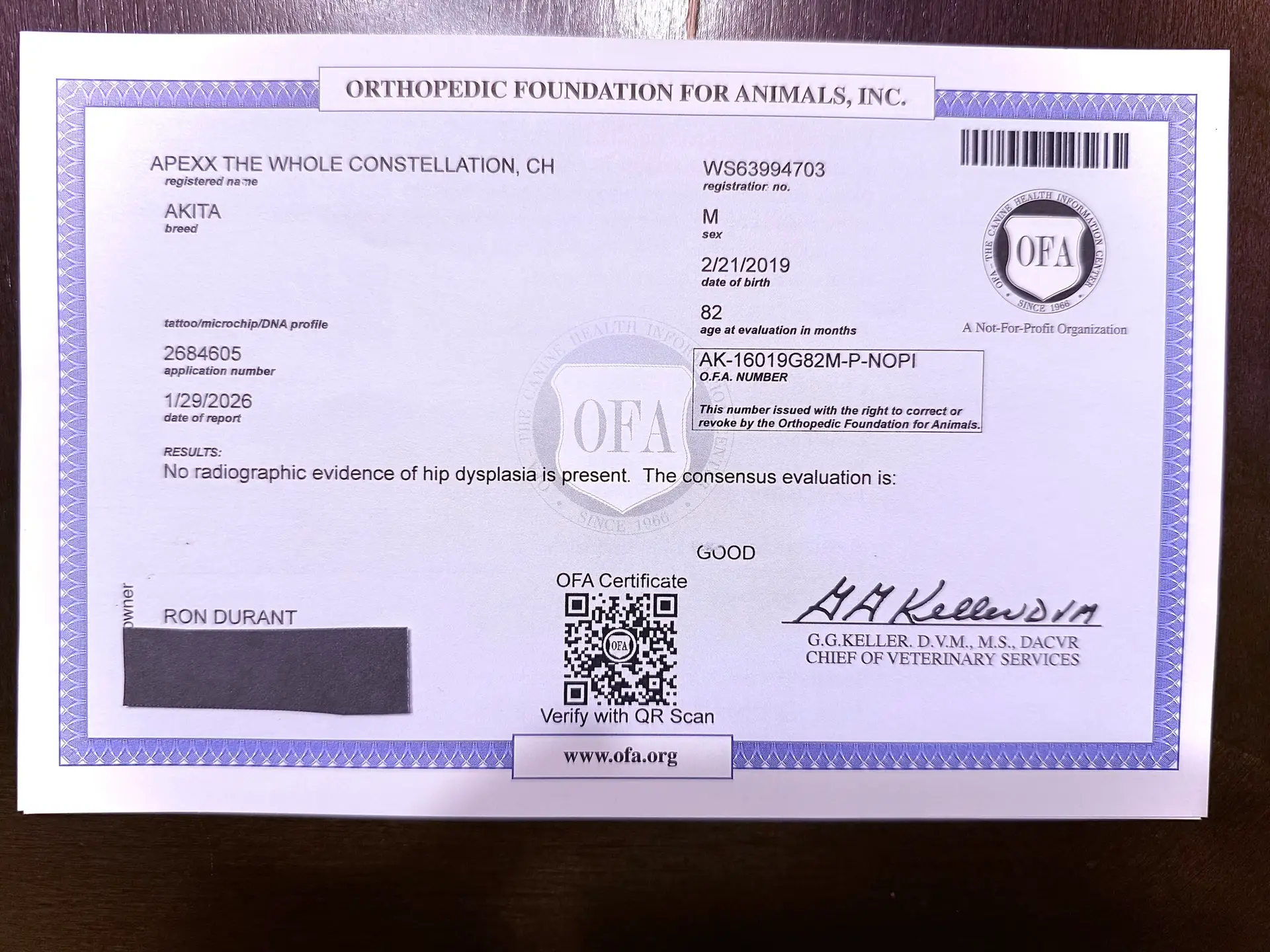
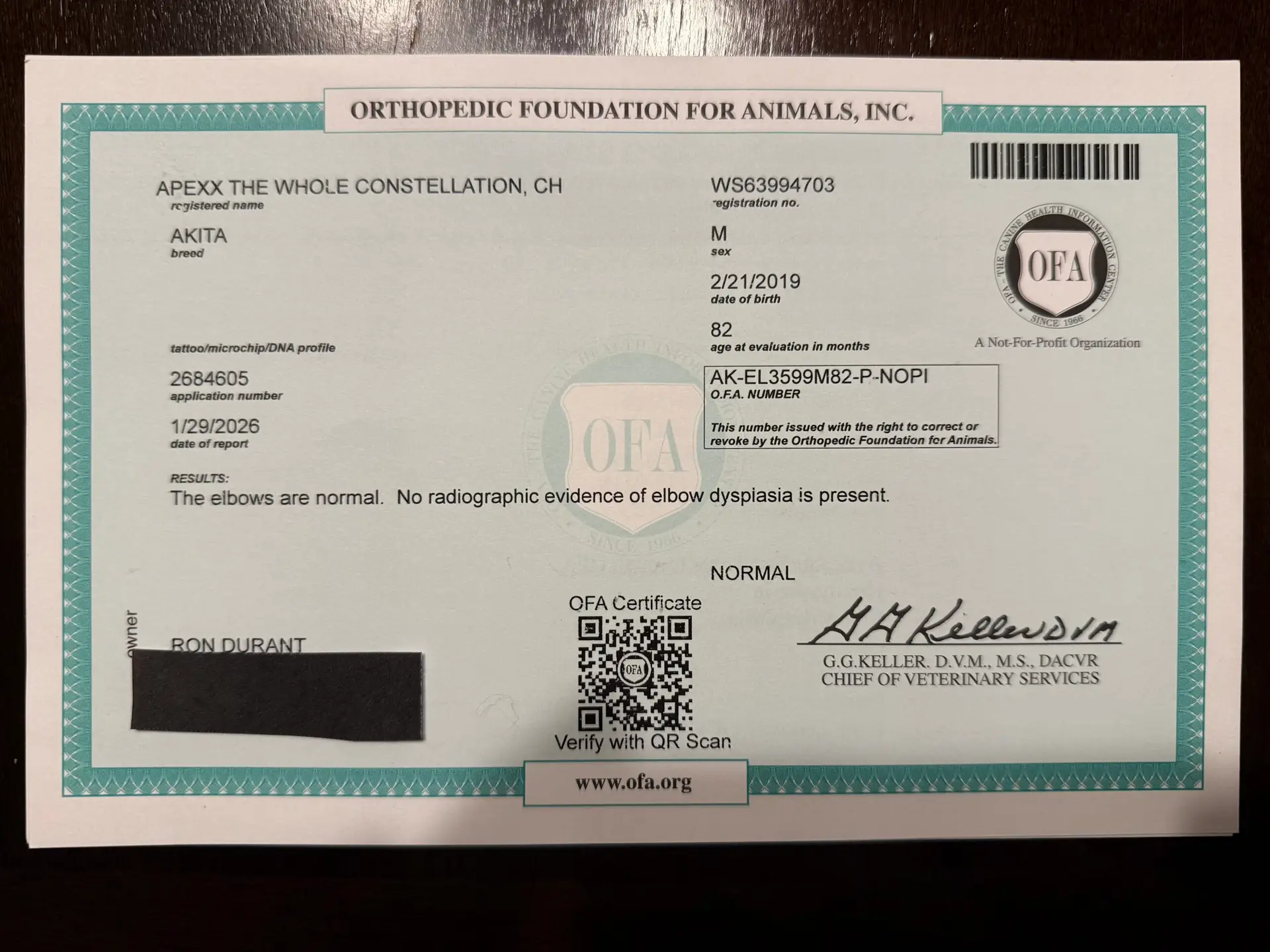
The American Akita faces its own health challenges including hip dysplasia, autoimmune disorders, and bloat. However, in a program that performs full OFA testing on every breeding dog (hips, elbows, eyes, thyroid, cardiac), the incidence of these conditions drops significantly. At Apexx Akitas, Sheba from our bloodline lived 15 years and 8 months. Average lifespan for the breed is 10 to 13 years.
The key takeaway is that health in both breeds is determined by the breeder's testing practices, not by the breed itself. A health tested Akita from a responsible program will likely outlive an untested GSD from a puppy mill, and vice versa. Always verify OFA results regardless of which breed you choose.
For detailed health information: OFA Health Testing for American Akitas and 7 Critical Health Problems in American Akitas.
What Families Who Switched Actually Say
Over 20 years I have placed American Akitas with dozens of families who previously owned German Shepherds. The pattern in their feedback is consistent enough to report here.
The most common observation is that the Akita is a quieter dog in the home. Not quieter as in timid or withdrawn, but quieter as in calm, settled, and not constantly seeking stimulation. GSD owners are often surprised by how little noise an Akita makes. The barking is minimal. The whining is nearly nonexistent. The pacing and restlessness that they had normalized with their GSD simply is not there.
The second most common observation is about the independence. Former GSD owners consistently describe the Akita as "less clingy" while being "equally or more protective." They note that the Akita gives them space without giving up its watchfulness. It does not follow them from room to room, but it always knows where they are and where the children are.
The third observation is about the Akita's behavior with young children specifically. Multiple families have told me that their Akita is gentler and more patient with toddlers than their GSD was. Not because the GSD was aggressive, but because the GSD's herding energy and mouthiness created friction with small children that the Akita's calm, stationary guardianship does not.
Multi Dog Households

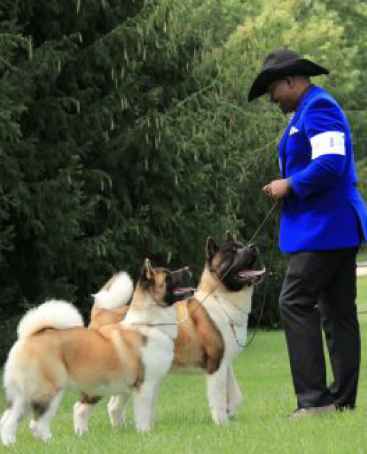
Successful multi dog households require proper matching and introduction
German Shepherds are generally more tolerant of other dogs and can integrate into multi dog households with less friction. Their pack oriented herding instinct makes them relatively flexible around other breeds and sizes.
American Akitas are more selective. Same sex aggression is a real consideration in the breed, and not every Akita will coexist peacefully with every other dog. Successful multi dog Akita households require careful matching, proper introductions, and an owner who understands the breed's social dynamics.
This is an area where the German Shepherd has a genuine advantage for families who already have dogs or plan to add more. If a multi dog household is a priority, that factor should weigh into your breed decision. For guidance on how Akitas handle multi dog homes: Are Akitas Good Family Dogs.
Which Breed Is Right for You
Choose the American Akita if you want a quiet, independent, naturally protective companion that does not need constant direction or stimulation. If you value a calm household, if you appreciate a dog that thinks for itself, and if you want a guardian that provides security through presence rather than performance, the Akita is your dog.
Choose the German Shepherd if you want an active working partner that thrives on training, obedience, and structured engagement. If you enjoy daily training sessions, if you want a dog that responds instantly to commands, and if you prefer a breed that is openly affectionate and constantly engaged with you, the GSD is your dog.
Neither breed is better. They are different dogs built for different lives. The right choice depends entirely on the life you actually live, not the one you imagine.
American Akita vs German Shepherd: Quick Reference
| Category | American Akita | German Shepherd |
|---|---|---|
| Height (Males) | 26 to 28 inches | 24 to 26 inches |
| Weight (Males) | 100 to 130 pounds | 65 to 90 pounds |
| Temperament | Independent, calm, reserved | Eager to please, active, vocal |
| Energy Level | Moderate | High |
| Exercise Needs | 30 to 45 minutes daily | 60 to 90 minutes daily |
| Barking | Minimal | Frequent |
| Trainability | Intelligent but independent | Highly trainable, eager |
| Guarding Style | Innate, instinctual | Trainable, command based |
| With Children | Calm, watchful guardian | Active, playful, may herd |
| Independence | High | Low (velcro dog) |
| Multi Dog Homes | Selective, requires matching | Generally adaptable |
| Lifespan | 10 to 13 years | 9 to 13 years |
| Shedding | Heavy (seasonal clumps) | Heavy (constant scatter) |
| AKC Colors Accepted | All colors | Limited palette |
American Akita vs German Shepherd FAQ
The American Akita and the German Shepherd are both exceptional breeds. They are not interchangeable. The German Shepherd is a working dog that needs a job, an active lifestyle, and an owner who enjoys daily training. The American Akita is a guardian that needs a family to watch over, a stable routine, and an owner who respects its independence. The right choice is the one that matches the life you actually live. If you are considering an American Akita and want to learn more about what daily life with this breed looks like, start with our guide: Is an American Akita Right for You.