Are American Akitas Good With Children? A Breeder's Honest Answer | Apexx Akitas
Are American Akitas Good With Children? A Breeder's Honest Answer
I get asked this question almost every week. Are American Akitas good with children? Can I bring one into a house with a toddler? Are they safe around kids?
I have been breeding American Akitas in Sussex County, New Jersey for over twenty years, and the honest answer is yes, with conditions. A well-bred American Akita from a serious breeding program, raised correctly and introduced to children the right way, becomes one of the most loyal and protective family dogs you will ever own. But the breed is not for everyone, and the dog you get is only as good as the breeder behind it and the family that raises it. Let me walk you through what that actually looks like.
What a Well-Bred American Akita Brings to a Family
A well-bred American Akita is naturally watchful. Our dogs come from generations selected for stable temperament, OFA health clearances, and champion bloodlines. The temperament you want around children is built into the dog before it is ever born, and then reinforced through how it is raised in the first eight weeks of life.
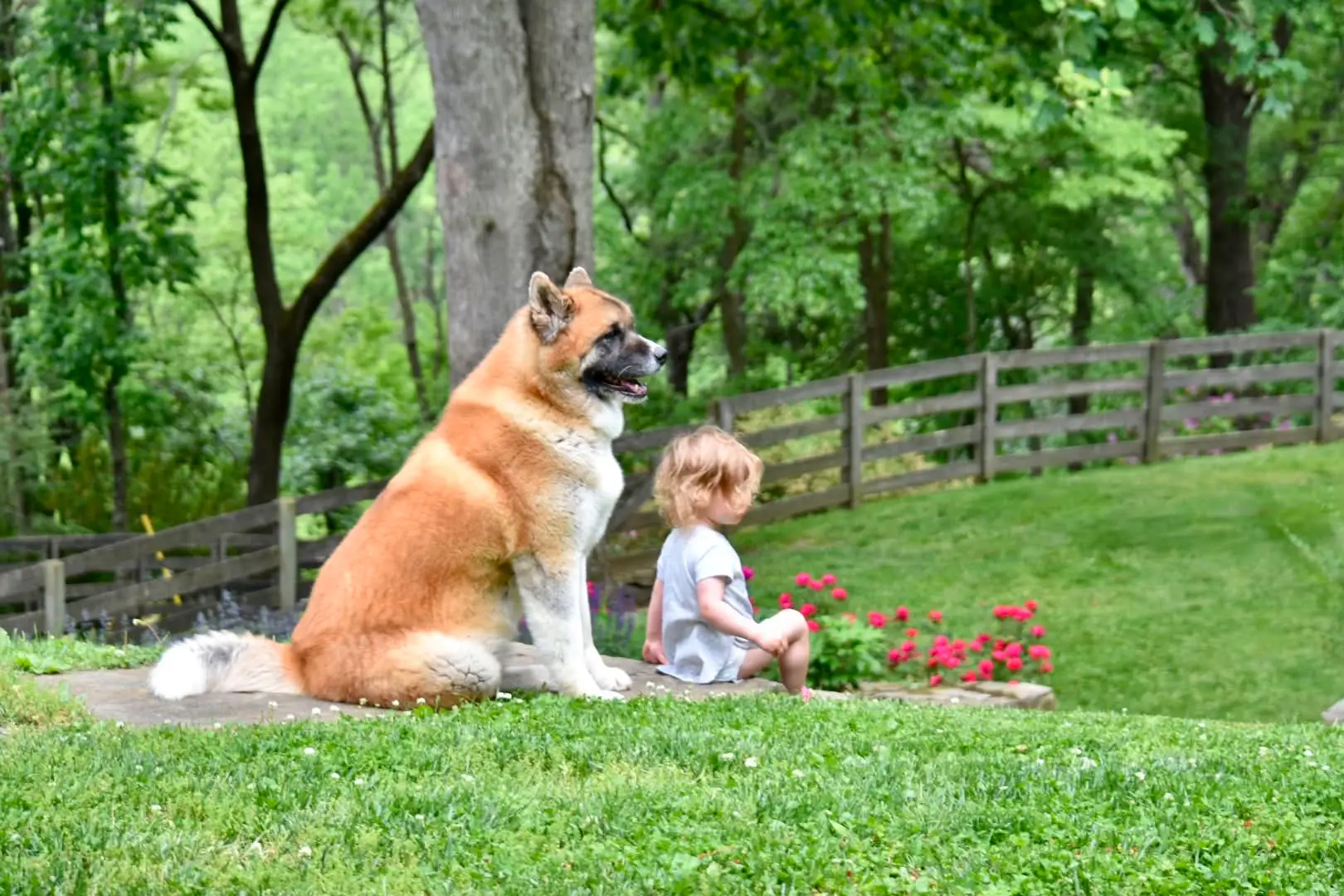
The picture above is Sadie. She is a 120 pound American Akita female, ten years old, one of the foundation dogs of our breeding program. The toddler in this picture is playing with her hair, and Sadie is doing exactly what a properly bred American Akita does in this situation. Nothing. She is letting him be a kid, and she is watching the room. That is the dog you are buying when you buy an Apexx Akita.
This is the breed at its best. Calm, present, protective without being reactive, tolerant of the small humans in its family while staying aware of everything else happening around it.
The Honest Caveats Every Parent Should Hear
Now the part most breeders will not tell you. American Akitas are not Labradors. They are a powerful, primitive guardian breed with strong instincts. They are not the right dog for a household that wants a happy go lucky family pet who loves everyone. They are not the right dog for a family that is not prepared to be the leader in the relationship.
What makes them extraordinary with the children in their family is the same thing that demands respect from the adults in the family. An Akita bonds deeply and selectively. They will defend the kids they grow up with. That defense is not theoretical. It means the dog has opinions about who comes near its family, and you as the owner need to be the one shaping how those opinions get expressed.
If you are not willing to be the leader, train consistently, and supervise interactions between dog and child for the first year, this is not the breed for you. If you are willing to do that work, there is no more loyal family dog on the planet.
Your Apexx Akita's First Meeting With Your Child
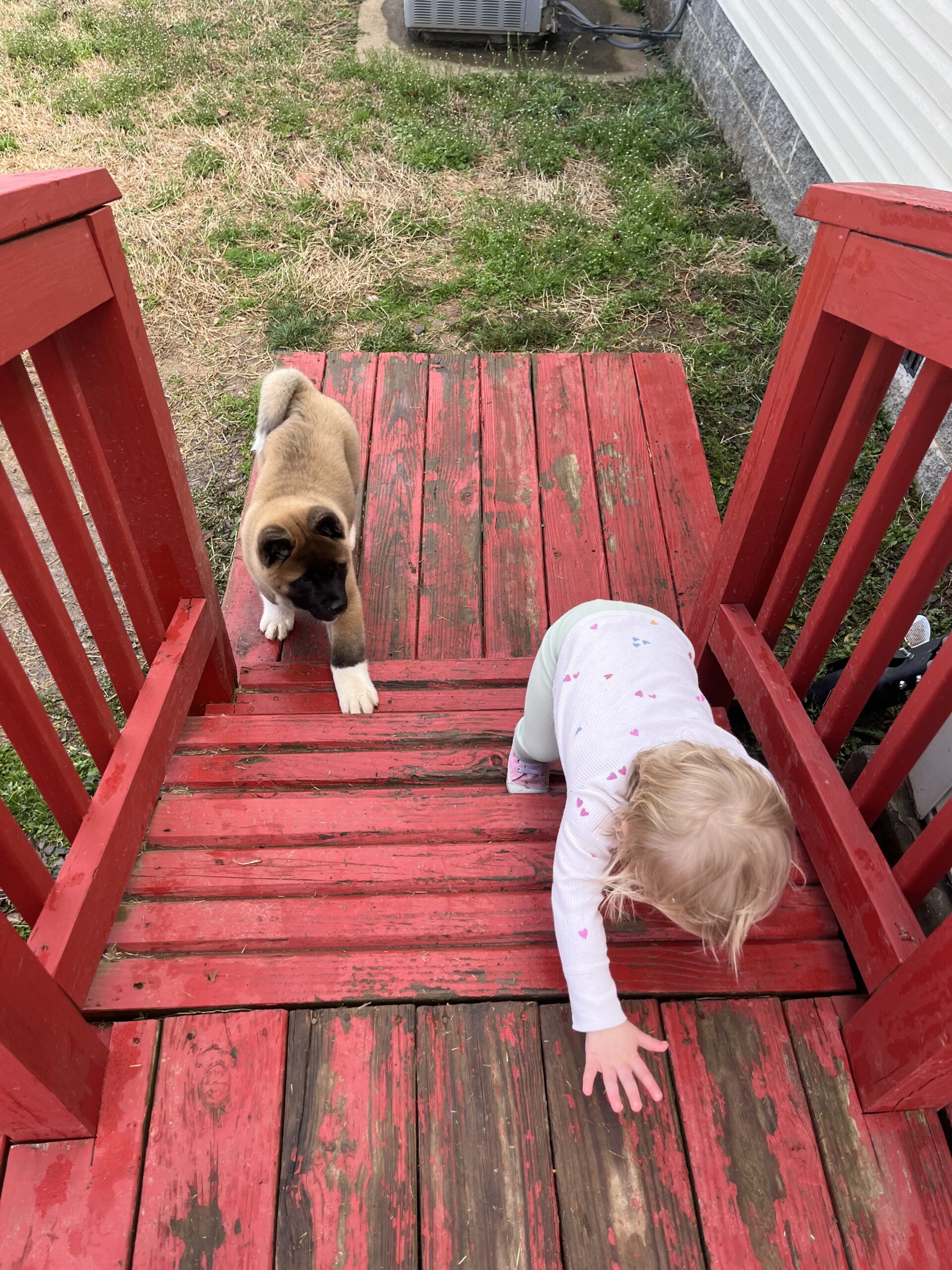
When you bring your Apexx Akita home, that first introduction to your child is one of the most important moments in your dog's life. I tell every new owner the same thing. Slow it down. Let the dog set the pace. The first hour shapes the next ten years.
Your puppy is reading everything. The smell of your child, the pitch of their voice, how fast they move, whether the adults in the room are calm or anxious. All of it is going into the file the dog is building about this small human.
Set the Stage Before the Puppy Walks In
Have your child sit on the floor before the puppy is brought into the room. No standing over the dog. No reaching. No squealing. The room should be quiet and the adults should be relaxed, because your puppy will mirror the energy around it.
This is where the work we have already done at Apexx pays off. Our puppies are raised in the home, handled daily, and exposed to the normal noise and movement of family life before they ever leave us. So when your child sits down on the floor and waits, you are not asking the puppy to do something new. You are asking the puppy to do what it already knows how to do, with a new person it has never met.
Let the Puppy Approach First
Let the puppy come over on its own terms and sniff. A confident American Akita pup will usually move in with a soft body and a curious face, maybe a tail wag, maybe a careful lick. That is exactly what you want to see. Praise quietly. Then let your child offer a flat palm with a small treat resting on it.
What you are watching for in this first moment is the puppy choosing the child. Not tolerating, not enduring, choosing. When the puppy follows the child, leans in, settles next to them on the floor, you are seeing the beginning of a bond that will last the dog's entire life.
The Three Rules Every Child in the House Must Learn
What you do not want is the child chasing, hugging, or grabbing. Akitas tolerate a great deal from the kids in their family once the bond is built, but trust is earned in the first weeks, not assumed on day one. Teach your child three rules from the start:
The puppy's crate and bed are off limits
You never disturb a sleeping dog
Gentle hands and a quiet voice, every time
I tell parents this directly. The breed's reputation for loyalty to children is real, but it is built on respect flowing in both directions. A child who learns to read a dog's body language and respect its space is a child an Akita will defend with its life. A child who climbs, pulls, and corners is a child the dog has to manage, and that is not a position you ever want to put a dog in.
Older Puppies and Adolescents Bond Just as Deeply
People sometimes assume the only way to build a strong bond is to bring home an eight week old puppy. That is not true with this breed. American Akitas form deep attachments at any age, and an adolescent placed into the right family can bond just as completely as a young puppy.
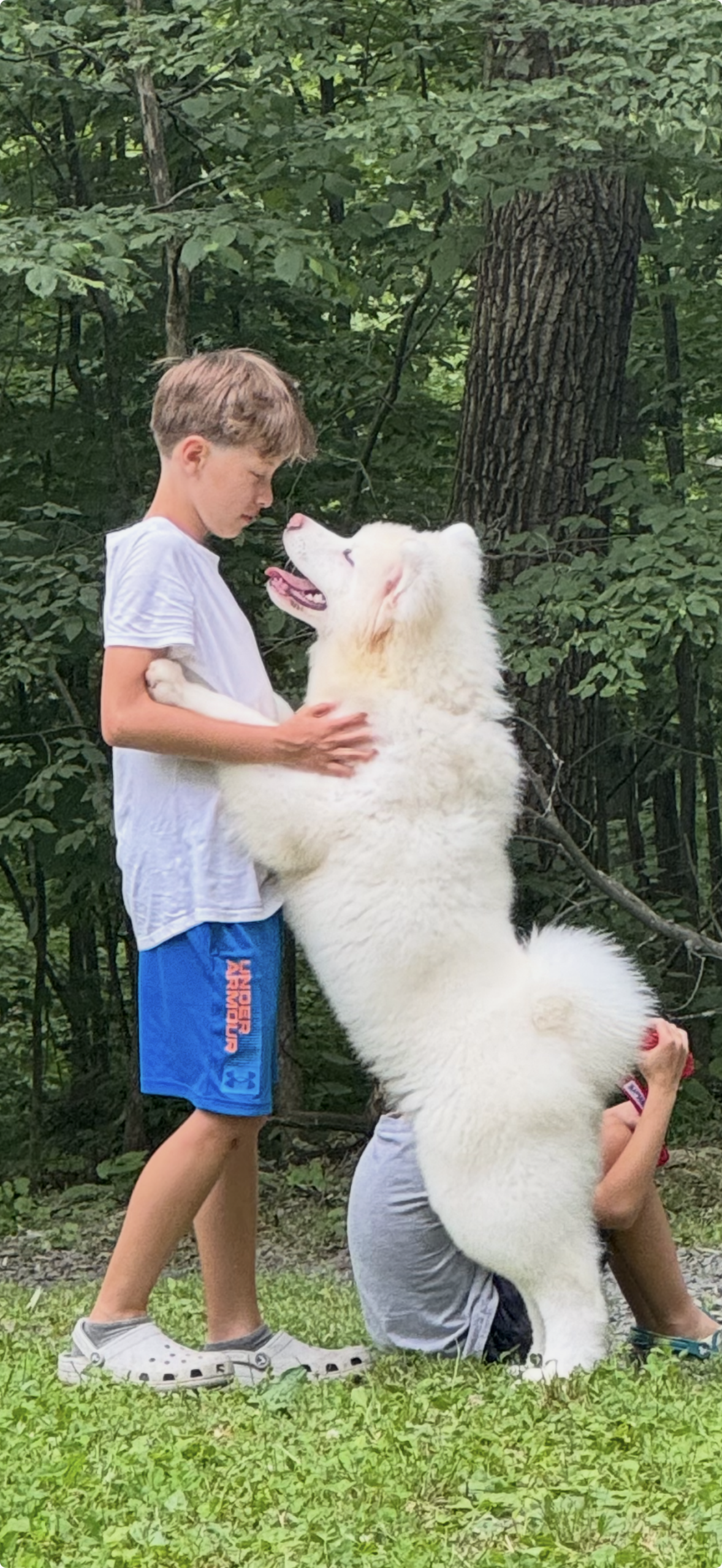
The dog in this picture is an adolescent male meeting his young owner on pickup day. Watch what is happening. The dog is calm, soft eyed, and physically close. The boy is relaxed. Neither one is forcing anything. That kind of immediate trust does not happen by accident. It happens because the dog was bred and raised for it, and because the family did everything right in the first introduction.
So Are American Akitas Good With Children? Yes, If You Do This Right
The honest answer to the question is yes. American Akitas are extraordinary with the children in their family, when the dog comes from a serious breeding program and the family is willing to do the work in the early weeks.
The bond does not start at ten years old, when you see a calm female like Sadie watching over a toddler. It starts on day one, in the first calm, respectful meeting between your puppy and your child. It is built through twenty years of selecting for temperament in the breeding program, eight weeks of home raising before the puppy ever leaves us, and a family that understands what kind of dog they are bringing home.
Get that right, and you will have a guardian for your children that you cannot buy at any other price.
How Much Does an American Akita Cost? A Breeder's Honest Answer
RD
Ron Durant
Founder & Head Breeder, Apexx Akitas · Sussex County, NJ · 20+ Years Breeding American Akitas
A well-bred American Akita puppy from a reputable breeder costs $3,500 to $5,000. That range reflects fully health-tested parents, champion bloodlines, OFA certifications, and weeks of structured early development before a puppy ever goes home. Puppies priced below $1,500 almost always reflect missing health tests, unproven bloodlines, or inadequate early development. Producing one responsibly raised American Akita litter costs the breeder $7,000 to $15,000 or more before any puppy leaves home. Here is what your money pays for, from a breeder with more than twenty years in the program.
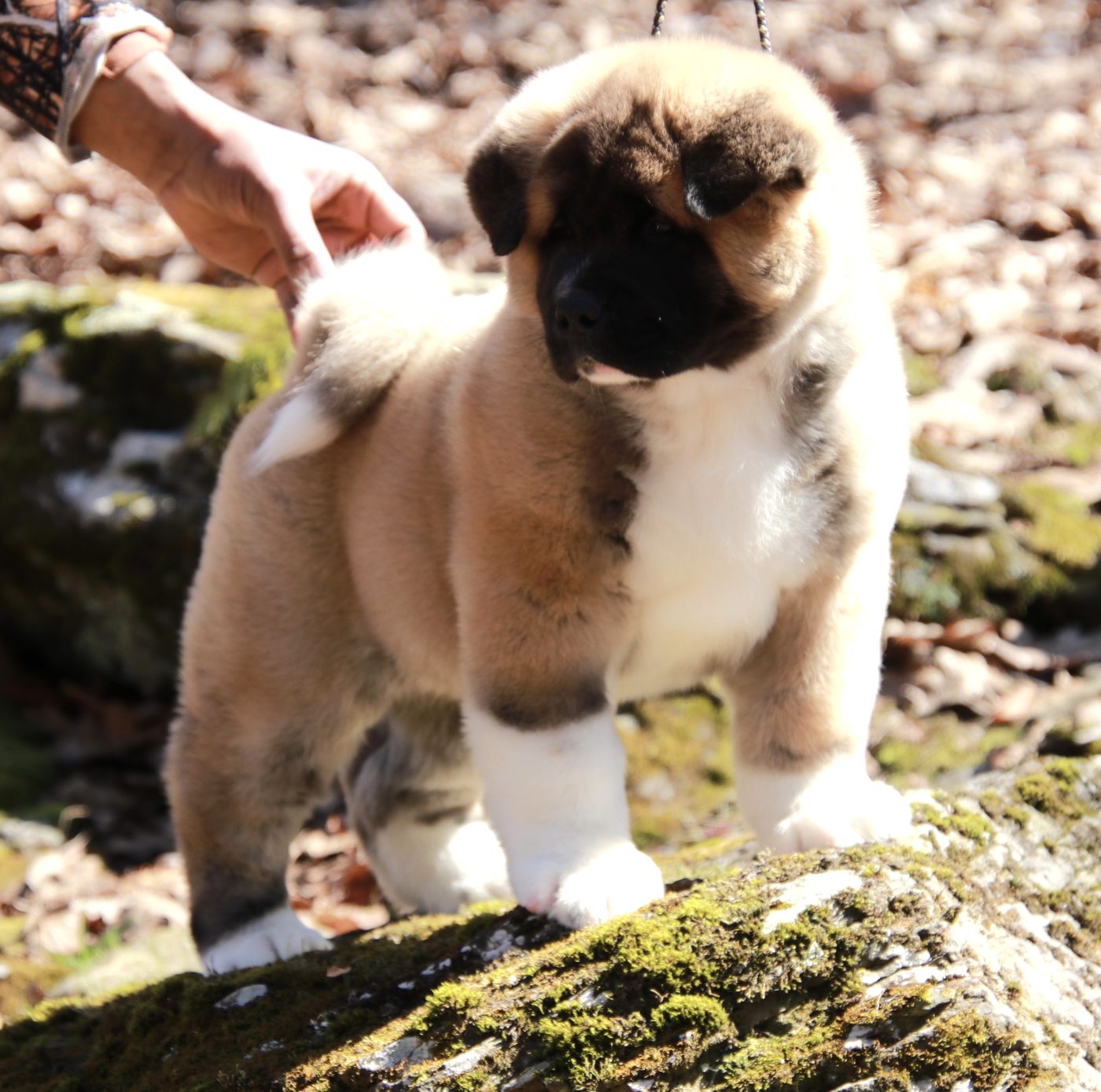
An elite red American Akita puppy with black mask and white markings, from champion bloodlines at Apexx Akitas.
Families ask me about price more than almost anything else, and they deserve a straight answer instead of a vague range from a website that has never raised a litter. So let me give you the real numbers, and then show you what actually stands behind them.
A reputable American Akita puppy costs $3,500 to $5,000. Anything significantly below that range almost always means corners were cut on health testing, genetics, or early development. Those savings rarely survive the veterinary and behavioral costs that follow.
American Akita Price Ranges, Explained
Not every price tag means the same thing. Here is how to read what you are seeing when you shop for an American Akita.
The cheapest puppy is almost never the least expensive. A poorly bred Akita can cost you many thousands of dollars in veterinary care, behavioral training, and heartbreak over the dog's lifetime. Many of the most common American Akita health problems trace directly back to parents who were never properly tested. When you buy from a responsible breeder, you are paying to avoid those outcomes, not just to take a puppy home.
What You Are Actually Paying For
People rarely see the work and expense that go into a healthy litter long before a single puppy is available. When done correctly, producing one responsibly raised American Akita litter costs the breeder $7,000 to $15,000 or more, before any puppy leaves home. Here is where that goes.
Health testing the parents
This is the first non-negotiable expense and the foundation of everything else. Every Apexx Akitas breeding dog is evaluated for OFA hips and elbows, cardiac health, ophthalmologist eye certification, thyroid function, and full genetic screening for breed-relevant conditions.
Cost: $1,000 to $2,500 per dog.
This is the single biggest difference between a sound Akita and one that develops painful, expensive problems later. Buyers regularly tell me their own vet has remarked on how clean their Apexx Akita's hips and structure are. That is the result of testing, not luck.
Reproductive timing and management
Successful, healthy litters depend on precise timing. This includes progesterone testing through the cycle, ultrasound confirmation, and guidance from a reproductive veterinarian.
Cost: $500 to $1,200 per cycle.
Stud fees for proven genetics
A quality sire adds far more than good looks. He brings stable temperament, correct structure, health, and decades of consistent ancestry behind him. I select sires based on proven temperament, titles, breed type, and genetic compatibility.
Cost: $2,000 to $6,000.
Prenatal care and delivery
Healthy puppies start with a healthy, well-supported mother. This covers ultrasounds, prenatal checkups, supplements, and emergency veterinary availability, including a possible C-section.
Cost: ultrasounds and prenatal care, plus $1,000 to $4,000 if a C-section becomes necessary.
Whelping and neonatal care
The first two weeks are the most fragile. Proper equipment and protocols save lives. I keep a full whelping setup ready: a whelping box, safe heat sources, medical and sanitation supplies, milk replacer, and detailed weight tracking. One winter litter included a small male who needed hand-feeding for his first 48 hours. He thrived because the tools and the plan were already in place.
Cost: $500 to $1,000.
Premium nutrition
A nursing mother and growing large-breed puppies have demanding nutritional needs that directly affect bone development, immune strength, and coat quality.
Cost: $400 to $900 per litter.
Early development, the Apexx Akitas difference
This is one of the most defining parts of my program. Every puppy is raised through Early Neurological Stimulation, Early Scent Introduction, sound and texture exposure, confidence-building work, early handling and grooming, introductory leash and crate conditioning, and supervised time around stable adult Akitas. This often exceeds 200 hours of work per litter.
Cost: $300 to $1,000 in supplies and curriculum, plus a great deal of hands-on time.
The payoff is a puppy that settles into a new home with confidence instead of fear. Families often tell me their puppy walked in, looked around, and acted like he had lived there for months. That is early development doing its job.
Veterinary care for the whole litter
Before any puppy goes home, each one receives first vaccinations, a deworming series, microchipping, a physical exam, fecal testing, and health documentation.
Cost: $700 to $1,500 per litter.
Registration, documentation, and take-home kits
Final costs include AKC registration, microchip registration, contracts, a puppy starter kit, and professional documentation so each family receives a fully prepared puppy rather than a rushed handoff.
Cost: $200 to $400.
The Real Cost of a Responsible Litter
Add it up and producing one healthy, responsibly raised American Akita litter runs $7,000 to $15,000 or more, before a puppy ever leaves my home. That figure does not even include show campaigns and titles, importing world-class bloodlines, the year-round care of the breeding adults, or the hundreds of hours of my own time that go into every litter.
That is why an ethically bred American Akita is priced at $3,500 to $5,000. The price is not a markup. It is the honest reflection of what it takes to do this right.
What You Receive From Apexx Akitas
When a family brings home an Apexx Akita, they receive far more than a puppy. They get a stable, confident dog with proven, health-tested genetics, raised through structured socialization, and backed by a breeder who stands behind his program for the life of the dog. That is the difference between responsible breeding and every shortcut in the industry.
The Bottom Line on American Akita Pricing
A well-bred American Akita from a health-tested, champion-bloodline program costs $3,500 to $5,000. That price reflects real investment: OFA-certified parents, proven genetics, structured early development, and full veterinary care before the puppy ever leaves the breeder's home.
Puppies priced below $1,500 almost always come from programs that skipped the testing and the work. The savings at purchase rarely survive contact with the veterinary costs and behavioral challenges that follow.
If you are serious about an American Akita, buy once and buy right. The price of a responsible breeder is the least expensive version of this decision over the life of the dog.
If you are researching American Akita prices and want to learn about our process, temperament goals, and upcoming litters, I would be glad to talk with you.
A reputable American Akita puppy typically costs between $3,500 and $5,000. That price reflects OFA health-tested parents, champion bloodlines, structured early socialization, and full veterinary care before the puppy goes home. Anything significantly below that range almost always means corners were cut on health testing or early development.
What is the average price of an American Akita puppy in 2026?
The average price of an American Akita puppy from a reputable, health-testing breeder in 2026 is $3,500 to $5,000. Prices at the higher end of that range typically reflect champion or Grand Champion parents, Westminster-level bloodlines, or waitlist demand. Prices below $1,500 usually indicate a backyard breeder who has skipped OFA health testing and structured early development, which creates significantly higher long-term veterinary and behavioral costs.
Why are Akita puppies so expensive?
Producing one responsibly bred American Akita litter costs a breeder $7,000 to $15,000 or more before a single puppy leaves home. That covers OFA health testing on both parents, reproductive management, prenatal care, early neurological stimulation, and full veterinary workups for every puppy. The price you pay as a buyer reflects that investment, not a markup.
Is a $1,000 Akita puppy a red flag?
Yes. Akita puppies priced under $1,500 almost always come from breeders who have skipped OFA health testing, genetic screening, or structured early development. Those initial savings often result in thousands of dollars in veterinary costs and behavioral challenges over the dog's lifetime. The cheapest puppy is rarely the least expensive one in the long run.
Are American Akitas more expensive than Japanese Akita Inu?
American Akita and Japanese Akita Inu prices from reputable breeders are similar, typically ranging from $3,500 to $5,000 in the United States. Japanese Akita Inu imports directly from Japan or from top international bloodlines can cost significantly more, sometimes $5,000 to $10,000 or higher due to import fees, translated pedigrees, and quarantine costs. Both breeds require the same level of health testing to be responsibly bred.
What is the lifetime cost of owning an American Akita?
Over a 10 to 13 year lifespan, the total cost of owning an American Akita typically runs $25,000 to $45,000. This includes premium food (approximately $80 to $120 per month for a large-breed adult), routine veterinary care, preventive medications, grooming supplies, training, boarding, insurance, and end-of-life care. Poorly bred Akitas often add $10,000 or more in additional veterinary and behavioral costs due to preventable health and temperament issues, which is why investing in a health-tested, well-bred puppy up front is the least expensive path over the dog's life.
What is included in the price of an Apexx Akitas puppy?
Every Apexx Akitas puppy comes from OFA-certified, champion-bloodline parents, with complete vaccination and deworming records, microchip, AKC registration, a take-home starter kit, and lifetime breeder support from Ron Durant. Puppies are also raised through Early Neurological Stimulation, Early Scent Introduction, and structured socialization protocols before placement.
Do American Akita breeders ship puppies?
Yes. Apexx Akitas places puppies with families across the United States and Canada. Puppies travel by ground transport for shorter distances and by professional in-cabin flight nanny for longer routes, never as cargo. Delivery cost is coordinated separately based on distance and method. Placement decisions are based on fit and household readiness, not proximity.
Do American Akita prices vary by state?
American Akita prices from reputable breeders are relatively consistent nationally, typically $3,500 to $5,000 regardless of state. Regional variation comes primarily from delivery costs when buyers are far from the breeder. Puppies advertised at significantly lower prices in any state should be evaluated carefully for missing health testing, unproven bloodlines, or online scam listings. State does not change the underlying cost of producing a well-bred litter.
How to Buy an American Akita Online Safely: Scams, Fake Reviews, and the Red Flags Every Buyer Needs to Know
By Ron Durant Founder, Apexx Akitas 20+ Years Breeding Champion American Akitas Sussex County, New Jersey
Dr. Zev with his male American Akita from Apexx Akitas. This is what a confident, well-bred dog looks like with his person.
There has never been more information available about American Akitas than there is today. There has also never been more noise, more misinformation, and more deliberate manipulation designed to confuse buyers and steer them away from reputable breeders.
I have been breeding American Akitas for over 20 years. In that time I have placed more than 150 dogs into families across the country. I have also watched the online landscape for this breed become increasingly polluted. Puppy mills dressed up as legitimate operations. Scam websites built to steal deposits. Competitors who use anonymous online forums to systematically damage the reputations of breeders they see as threats.
This post is about all of it. How to identify a genuine breeder when you are searching online. How to recognize when reviews have been manipulated. How to verify every claim a breeder makes before a single dollar changes hands. And how to protect yourself from the scams that have already cost other Akita buyers thousands of dollars and months of heartbreak.
If you are serious about bringing an American Akita into your home, read this first.
The Online Akita Market Is Not What It Appears to Be
Most people begin their search for an American Akita the same way they begin everything else: with a Google search. What they find looks reassuring. Websites with professional photography, glowing testimonials, OFA certificates displayed prominently, contact pages with phone numbers and addresses. The problem is that many of these signals are easy to fake.
The Better Business Bureau has documented this specifically in the dog breeding space. Scam breeders build convincing websites using stolen photos, fabricated health certificates, and invented testimonials. Buyers pay deposits, sometimes thousands of dollars, for puppies that do not exist. When they try to follow up, the website disappears.
American Akitas are a specific target for these operations because they are a relatively uncommon breed. Families searching for American Akita puppies for sale often encounter this manipulation before they ever make contact with a real breeder. They may not have a local reference point, and they are often willing to work with someone at a distance. Scammers know this and exploit it.
Real case on record: A Texas buyer paid nearly $700 for an Akita from a fraudulent website, drove hours to pick up the dog, and arrived to find no breeder and no puppy at the address provided. The website, the photos, and the so-called breeder were entirely fabricated. Cases like this have been reported to the BBB, news outlets, and consumer protection agencies across the country.
This is the most extreme version of online fraud. But there are subtler forms of manipulation that are just as damaging and far more common.
The Problem With Online Reviews of Akita Breeders
Before I explain how to evaluate a breeder, you need to understand something important about online reviews in the dog breeding world: they are not a reliable measure of a breeder's quality. In many cases, they are the opposite.
Reddit, Facebook groups, and online forums give the impression of organic community feedback. In reality, many of these spaces are controlled or heavily influenced by people with a financial interest in who appears trustworthy and who does not. In the American Akita community specifically, it is not uncommon for breeders to use anonymous accounts to post negative reviews of competitors, control which comments survive in certain threads, and coordinate efforts to suppress positive feedback from satisfied buyers.
I know this firsthand. Customers of mine have attempted to post their positive experiences in threads discussing my kennel, only to have those comments deleted repeatedly by whoever controls the thread. The negative content remains. The positive content disappears. The result is a manufactured impression that has nothing to do with the actual experience of actual families who bought dogs from me.
This is not rare. It is a tactic, and it is used specifically because it works. Buyers trust peer reviews. They trust the apparent consensus of strangers on the internet. They do not know the consensus is being engineered.
What this means for you: Do not make a final decision about an American Akita breeder based on forum posts or Reddit threads. These can be and often are manipulated. The only reviews worth trusting are verifiable: direct contact with named, placed families, cross-referenced with documented health results you can check yourself.
Watch: Temperament Reinforcement at Apexx Akitas
Ron Durant working with four American Akitas at the Apexx Akitas facility. This is what deliberate temperament reinforcement looks like in practice, and exactly what you should be asking to see from any breeder you are seriously considering.
How to Verify a Breeder's Claims
Everything a reputable breeder claims about their program is verifiable. That is not a coincidence. It is the point. Here is the complete framework I recommend to every buyer, whether they are considering Apexx Akitas or any other program.
Start with OFA
Go to ofa.org and search the registered names of both parents. A breeder should give you these names without hesitation. OFA results are public record. If you find the dogs in the database and the results match what the breeder told you, that is a green flag. If the dogs are not there, or if the breeder is reluctant to provide names, stop the conversation.
A complete OFA health panel for American Akitas includes hip and elbow evaluations, thyroid testing, annual CERF eye exams, and cardiac evaluation. If a breeder mentions only hips, or hips and elbows, they are not performing complete health testing regardless of what their website says.
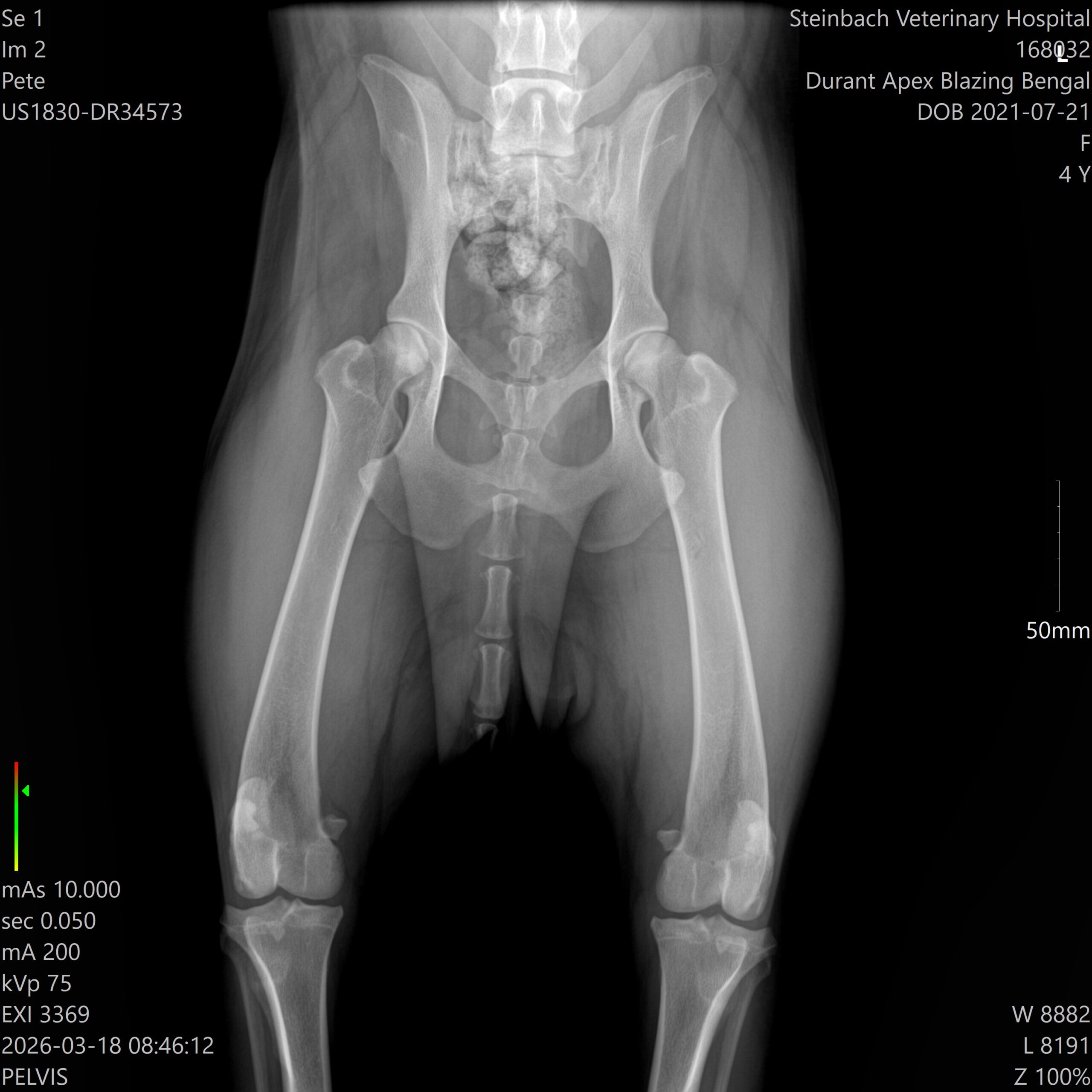
OFA hip X-ray, Apexx Blazing Bengal. Steinbach Veterinary Hospital, March 2026. Results publicly verifiable at ofa.org.
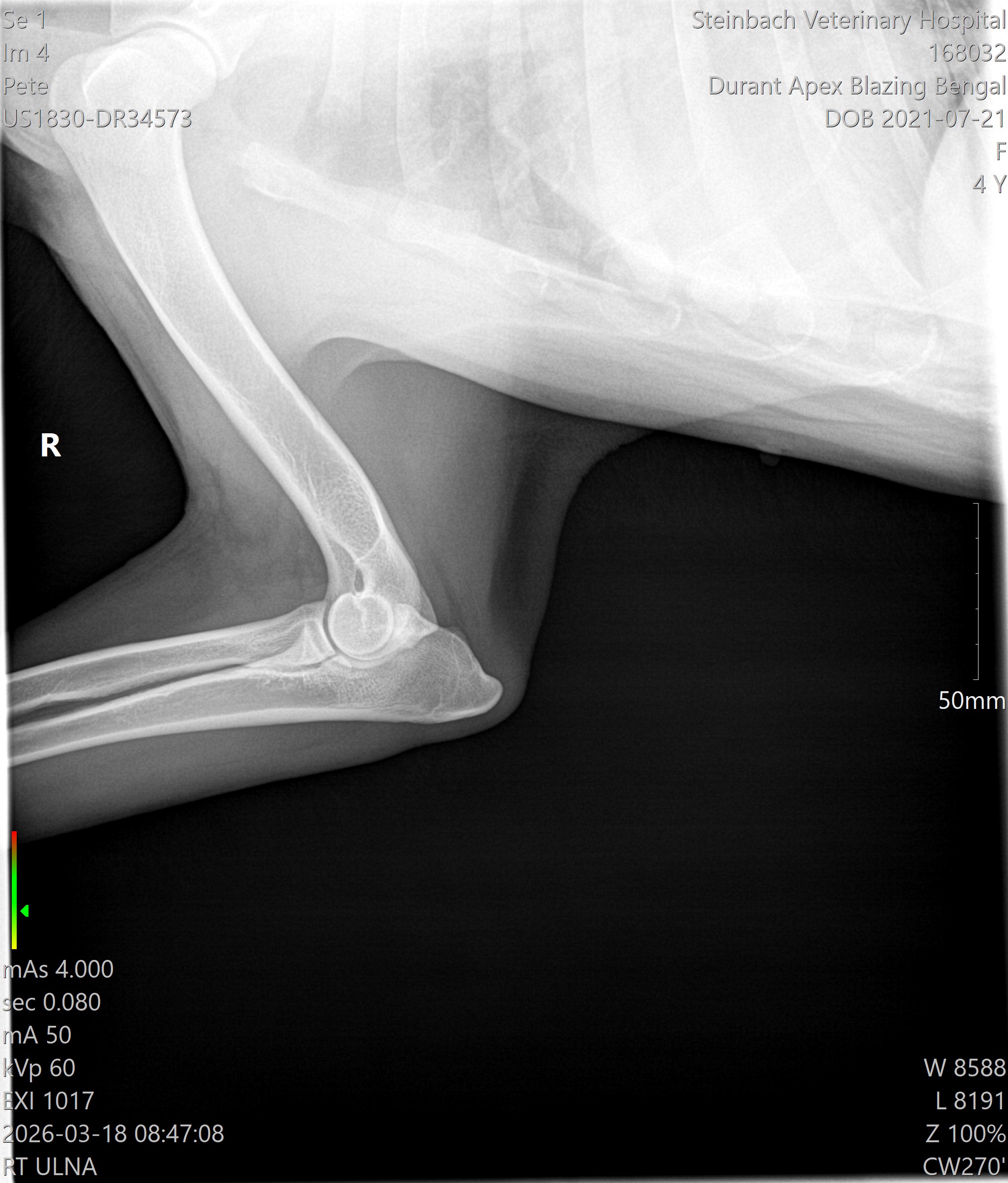
OFA elbow X-ray, Apexx Blazing Bengal. Same evaluation date. Both results on file and verifiable.
Those are actual OFA radiographs from one of my breeding dogs, taken at Steinbach Veterinary Hospital in March 2026. Every breeder you speak to should be able to show you documentation at this level, and you should be able to verify it yourself at ofa.org using the dog's registered name. If they cannot produce this, move on.
Verify AKC Registration
Ask for the AKC registration numbers for the sire and dam and verify them at the AKC registration lookup. Legitimate breeders register their dogs. If registration paperwork is described as "pending" or "coming soon" after a litter is born, that is a red flag.
Request References and Actually Contact Them
Any legitimate breeder with five or more years of experience should be able to give you direct contact information for multiple placed families. Not just names. Not just emails. Phone numbers for people willing to speak with you. If a breeder cannot or will not provide this, ask yourself why.
When you contact references, ask specific questions: How long have you had the dog? Have there been any health issues? Did the breeder follow up after placement? Would you use this breeder again? The answers to those questions will tell you more than any forum thread ever could.
Insist on a Video Call Before Any Payment
Scam operations cannot survive a video call. A legitimate breeder will always be willing to show you their facility, introduce you to their dogs, and have a real conversation with you on camera before any money changes hands. If a breeder avoids video calls, makes excuses, or tells you they prefer to communicate only by text or email, walk away.
Read the Contract Before You Sign Anything
A reputable breeder's contract protects both parties. It will specify health guarantee terms, what happens if a hereditary condition is diagnosed, and a lifetime return-to-breeder clause. That last point matters more than most buyers realize. Responsible breeders accept their dogs back at any point in the dog's life rather than allow them to end up in rescue or rehoming. If a breeder's contract does not include a return clause, they are not fully committed to the dogs they produce.
Red Flags That Should End the Conversation
Any one of these should give you serious pause. Multiple together should end the inquiry completely.
Puppies always available with no waitlist and no screening process
OFA results mentioned but not verifiable at ofa.org
Pressure to pay a deposit quickly before the puppy is gone
Shipping only with no option to visit and no video call offered
Vague or dismissive answers to health testing questions
No written contract or a contract with no health guarantee
No references from placed families or references who do not respond
Website with no physical address or a phone number that goes unanswered
Communication only through a contact form or a single email address
What a Legitimate American Akita Breeder Looks Like
In contrast to the red flags above, here is what you should expect from a reputable program.
Full OFA clearances on all breeding dogs, verifiable at ofa.org
An application process that takes your lifestyle and experience seriously
A waitlist, because responsible breeders do not produce litters on demand
Willingness to video call and welcome a visit
References from placed families willing to speak openly
A detailed written contract with a health guarantee and lifetime return clause
Ongoing contact and support after placement
Transparent answers to every question you ask
No pressure of any kind
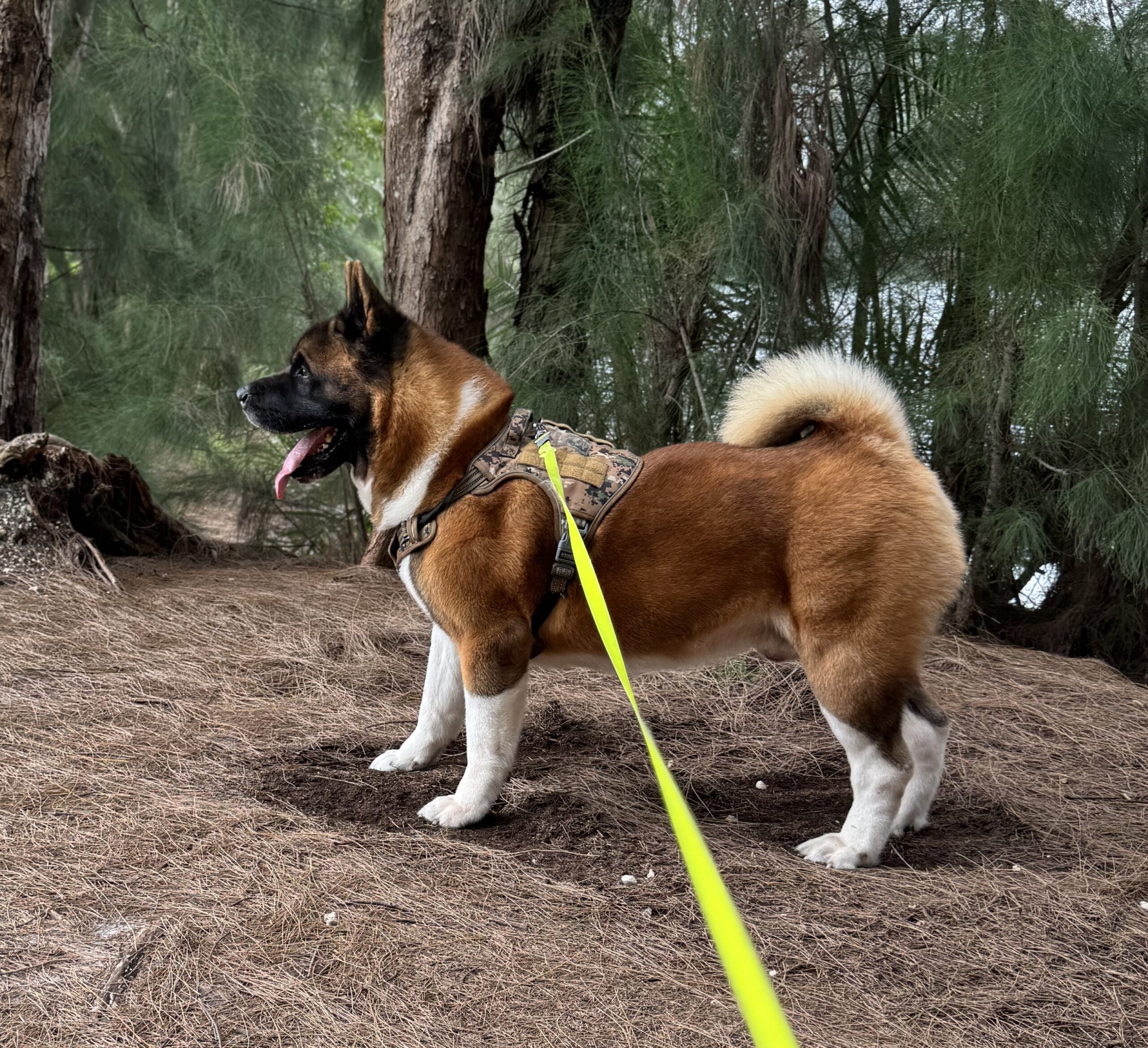
Dr. Zev's orange red male from Apexx Akitas, shown here standing naturally in the field. Correct structure is not staged for a photo. It is bred in.
On Protecting Yourself From Review Manipulation
Given what I described earlier about review manipulation, here is a practical approach to evaluating online feedback about any breeder.
Discount anonymous sources heavily. Forum posts, Reddit comments, and Facebook group threads from accounts with no history or no verifiable identity are not reliable data points. They cost nothing to create and nothing to coordinate.
Look for patterns. If a thread shows consistent positive comments being removed while negative ones remain, that is a sign of active management, not organic community feedback.
Go directly to Google Business reviews, which are harder to manipulate because they require a real Google account. They are not perfect, but they carry more weight than anonymous forum posts.
Most importantly, prioritize direct contact over everything. One phone call with a placed family who gives you their name, tells you about their dog, and answers your questions honestly is worth more than a hundred anonymous posts on either side.
Why This Matters More With Akitas Than Most Breeds
The American Akita is a serious dog. Large, powerful, deeply loyal, and genuinely difficult in the wrong hands or from the wrong gene pool. A poorly bred Akita with an unstable temperament is not a minor inconvenience. It is a 100-pound responsibility that will be with your family for the next 10 to 13 years.
The stakes of choosing the wrong breeder are higher with this breed than with almost any other. An Akita from a breeder who skips health testing, overlooks temperament, and sells to anyone who pays is a genuine problem. For the dog, for the buyer, and for the breed.
This is why I have written this guide, and why I put the same information in front of every family that applies to Apexx Akitas regardless of whether they eventually buy from me. Informed buyers make better decisions. Better decisions produce better outcomes for the dogs.
Watch: A Family Meets Their Apexx Akitas Puppy
A family meeting their Apexx Akitas puppy for the first time. The temperament you see here is the result of deliberate breeding decisions, not luck.
Ready to Start the Right Way?
Every Apexx Akitas puppy comes from fully OFA-cleared parents. Every family goes through a personal review by Ron Durant. Every dog we place carries lifetime support.
How do I know if an American Akita breeder is legitimate?
A legitimate American Akita breeder will have verifiable OFA health clearances for both parents covering hips, elbows, thyroid, eyes, and cardiac. Verify at ofa.org using the dog's registered name. They will use a real application process, provide a written contract, offer a lifetime return policy, and encourage you to video call or visit before any money changes hands.
Are online reviews of American Akita breeders reliable?
Not always. Reviews on Reddit, Facebook groups, and breeder forums can be manipulated. Competing breeders have been documented controlling threads and deleting positive customer comments while leaving negative ones visible. Always verify by contacting placed families directly and cross-referencing with OFA records and AKC registration.
What are the biggest red flags when buying an American Akita puppy online?
Major red flags include: no verifiable OFA health testing, puppies always available with no waitlist, pressure to pay quickly, refusal to video call or allow a visit, unusually low prices, shipping-only arrangements, and breeders who cannot provide references from past buyers.
How can I verify that an American Akita breeder's health claims are true?
Go to ofa.org and search the registered name of both the sire and dam. A legitimate breeder will give you these names upfront. OFA results are public record. If a breeder's dogs are not in the database, or the results do not match what they told you, that is a disqualifying red flag.
Is it safe to buy an American Akita from a breeder in another state?
Yes, if you do your due diligence. Most responsible Akita buyers work with breeders at a distance because there are so few ethical programs nationally. Verify OFA records, confirm AKC registration, speak directly with placed families, and complete a video call before paying anything. Distance is not a barrier to verification. It is only an excuse to skip it.
Ron Durant, Founder, Apexx Akitas
Over 20 years breeding champion American Akitas in Sussex County, New Jersey. Every breeding dog carries full OFA clearances. Every puppy is placed through a personal application review. Every family receives lifetime support. apexxakitas.com 732-850-5435
15 Questions to Ask an American Akita Breeder Before You Buy
The exact questions every serious buyer should ask, what good answers sound like, which responses should end the conversation, and how to verify every claim a breeder makes.
Ron DurantFounder, Apexx AkitasSussex County, New JerseyMarch 2026
15
Questions to Ask Every Breeder
20+
Years Breeding American Akitas
10
Red Flag Responses Listed
5
OFA Health Clearance Types
Most buyers go into breeder conversations without knowing what to ask. They look at puppies, hear the word “healthy,” and make a decision that shapes the next 12 years of their life. This guide changes that.
These 15 questions are designed to do two things. First, they extract the information you actually need to evaluate a breeding program. Second, they reveal a breeder’s character. Responsible breeders answer these questions with enthusiasm. Careless ones get defensive, deflect, or disappear.
For each question you will find why it matters, what a good answer sounds like, and what responses should end the conversation. Use this list on every breeder you contact before committing to anything. You can also find all our buyer guides in one place on the American Akita Resources page.
These questions are not meant to be confrontational. They are meant to be thorough. A breeder who bristles at being asked to verify their health testing documentation is telling you something important about how they operate.
Health Testing Questions: The Non-Negotiables
These five questions must be answered with verifiable documentation. Not verbal assurances. Not vet certificates. Actual OFA registration numbers you can look up yourself at ofa.org. For a full explanation of what each test covers see our OFA Health Testing Guide.
01
Can you give me the OFA hip certification numbers for both parents so I can verify them myself?
Why it matters
Hip dysplasia affects nearly 1 in 4 American Akitas according to OFA data. It is the most expensive inherited condition in the breed, with bilateral hip replacement costing $10,000 to $14,000. OFA results are publicly posted at ofa.org and verifiable by anyone. A breeder who cannot hand you the registration number either has not tested or has results they do not want you to see.
Good Answer
Immediately provides OFA numbers like AKIT-1234G24F-VPI. Encourages you to verify at ofa.org. Can explain what the rating means.
Red Flag
“The vet said their hips are fine” or “We do our own x-rays” or “I can send you a certificate” without an OFA number.
02
What are the OFA elbow certification numbers for both parents?
Why it matters
Elbow dysplasia affects 15.3 percent of American Akitas and typically manifests between 4 and 12 months of age. Hip and elbow x-rays are almost always taken the same day, so both results should share a test date. A breeder who has hip results but no elbow results on the same date is testing selectively and cutting corners. See our health problems guide for what this condition costs to treat.
Good Answer
Provides elbow OFA numbers with the same test date as the hip results. Both parents, Normal rating on both elbows.
Red Flag
Has hip results but no elbow results. Or provides elbow results with a different test date. Or says elbows “look fine” without OFA certification.
03
When was the last thyroid panel run on each parent and does it include TgAA testing?
Why it matters
Autoimmune thyroiditis is inherited and affects an estimated 7 to 10 percent of American Akitas. A standard thyroid panel measuring T3 and T4 alone is not sufficient. The thyroglobulin antibody (TgAA) test is required to identify dogs that are positive for autoimmune thyroiditis. A dog can have normal hormone levels while being TgAA positive, meaning it will pass standard thyroid screening but still pass the condition to offspring. Thyroid panels must be current within 12 months.
Good Answer
Panel completed within the last 12 months. Includes TgAA antibody testing. Can provide documentation. Both parents tested, both negative.
Red Flag
“They have great energy so thyroid is fine” or a panel older than 12 months or a panel that does not include TgAA.
04
When was the last CAER eye examination on each parent, and who performed it?
Why it matters
American Akitas are predisposed to Progressive Retinal Atrophy, entropion, and uveitis as a component of VKH syndrome. CAER certifications expire annually. The examination must be performed by a board-certified veterinary ophthalmologist, not a general practice veterinarian. A certificate from a regular vet exam is not CAER certification.
Good Answer
Current CAER exam within the last 12 months. Performed by a board-certified veterinary ophthalmologist. Can provide documentation with the examiner’s credentials.
Red Flag
“Our vet checked their eyes” or a certificate older than 12 months or an exam not performed by a boarded ophthalmologist.
05
Has cardiac evaluation been performed on both parents and by whom?
Why it matters
Cardiac evaluation screens for congenital heart conditions that affect longevity and quality of life. The OFA number suffix tells you the level of examiner: C for cardiologist, S for specialist, P for general practitioner. A board-certified cardiologist provides the strongest evaluation. This is often the most overlooked health test in American Akita breeding programs.
Good Answer
Cardiac evaluation completed on both parents. Can provide OFA certification number. Ideally performed by a board-certified cardiologist.
Red Flag
No cardiac evaluation performed. Or “the vet listened to their heart.” Or cardiac performed but no OFA submission.
Accountability Questions: What Happens After the Sale
Health testing tells you what a breeder does before breeding. These questions tell you what they do after. The answers reveal whether this is a transaction or a lifetime relationship.
06
Will you take the dog back at any point in its life if I cannot keep it?
Why it matters
A lifetime return policy is the single strongest signal that a breeder views their dogs as a permanent responsibility. It means they are invested in the outcome of every placement. It also means they track where their dogs go and what happens to them, which is essential for any serious health and temperament tracking program. If a breeder does not want their dogs back, they do not care what happens to them.
Good Answer
Absolutely, unconditionally, for the lifetime of the dog. No questions about the reason. Policy is written into the contract.
Red Flag
“We can help you rehome it” or “That has never happened” or a return policy limited to the first year only.
07
How do you track the long-term health of dogs from your breeding program?
Why it matters
Breeding decisions can only be truly evaluated by their long-term outcomes. A breeder who does not maintain contact with placed families cannot know whether their program is producing healthy dogs over a 10 to 13 year lifespan. This question separates breeders who are genuinely invested in their program from those who are finished at the point of sale. Read reviews from Apexx Akitas placed families to see what long-term relationships look like in practice.
Good Answer
Describes a specific tracking system. Maintains contact with a high percentage of placed families. Uses health outcome data to inform future breeding decisions.
Red Flag
“Families let us know if there are problems” or no structured follow-up process at all.
08
Can I read the full puppy contract before placing a deposit?
Why it matters
A puppy contract defines the entire relationship. It should specify the health guarantee terms including which conditions are covered and for how long, the return to breeder policy, spay or neuter requirements for pet placements, and how disputes are resolved. A legitimate breeder provides this without hesitation. Breeders who will not share the contract before a deposit are hiding terms you would not agree to if you saw them first.
Good Answer
Provides the full contract immediately and encourages you to review it carefully. Answers any questions about specific terms.
Red Flag
Delays providing the contract until after a deposit. Or provides a vague one-page document with no specific health guarantee terms.
09
Can I speak with three or more families who purchased dogs from you in the last three to five years?
Why it matters
Website testimonials are not references. You need to speak with real people who will tell you honestly about their experience including health outcomes, temperament, and whether the breeder remained accessible after placement. Ask specifically about dogs that are now 3 years old or older so you can ask about late-onset health conditions like autoimmune disorders and thyroid disease.
Good Answer
Provides contact information for multiple families and encourages you to ask them anything. References include families with adult dogs at least 3 years old.
Red Flag
“All our families are private” or provides only written testimonials rather than real contacts you can call.
10
Have any health conditions appeared in dogs from your breeding program and what did you do about it?
Why it matters
The correct answer to this question is never “no.” No breeder who has been producing dogs for more than a few years has had zero health issues appear in any placed dog. A breeder who claims a perfect record is either not tracking outcomes or not being honest. Transparency about health issues is a sign of accountability, not a weakness. What matters is what they did when problems appeared. Did they remove affected dogs from the breeding program? Did they notify other families from the same lines?
Good Answer
Shares a specific example of a health issue that appeared, explains how they responded, and what changes they made to the breeding program as a result.
Red Flag
“We have never had a single problem” or becomes defensive when asked. Either answer means they are not tracking or not telling the truth.
Breeding Program Questions: Standards and Experience
These questions reveal the depth and seriousness of the breeding program. Experience, show involvement, and deliberate selection criteria separate preservation breeders from people producing puppies for the market. For more context on what a serious program looks like see the Apexx Akitas breeding program.
11
Are you involved in AKC conformation or performance events and do your dogs hold titles?
Why it matters
Breeders who participate in AKC conformation have their dogs evaluated publicly by qualified judges against the breed standard. This is external accountability that hobby breeders with no show involvement simply do not have. It does not mean show breeders are perfect, but it does mean they subject their dogs to independent evaluation. Titles earned by parents and dogs in the pedigree indicate a commitment to breed standard beyond personal opinion.
Good Answer
Active in AKC conformation. Can name specific titles held by breeding dogs. Involved in the breed community beyond just producing litters.
Red Flag
No show involvement. No titles. No external evaluation of their dogs by anyone outside their own operation.
12
How many litters do you produce per year and how many dogs are in your breeding program?
Why it matters
Volume and quality are incompatible. A breeder producing six or more litters per year across multiple females cannot provide the individual attention, early development, and placement screening that responsible breeding requires. The number of breeding dogs also matters. A program with 10 or more breeding females is a production operation regardless of what the breeder calls it. Understanding why responsible breeding costs more helps put litter volume in financial context.
Good Answer
Limited litters per year. Small number of carefully selected breeding dogs. Often has a waitlist rather than always having puppies available.
Red Flag
Multiple litters at once or at any time. Always has puppies available immediately. Large number of breeding females. Cannot remember exact litter count.
13
What early development protocol do you use with your puppies before placement?
Why it matters
Temperament in an American Akita is partly inherited and partly shaped in the first eight weeks of life. Responsible breeders implement structured early development protocols including Early Neurological Stimulation, deliberate handling, exposure to sounds and surfaces, and controlled socialization. A puppy that leaves at eight weeks without this foundation is starting behind before you ever bring it home. Ask specifically about ENS and what the puppy has been exposed to.
Good Answer
Describes specific protocols by name such as ENS or Puppy Culture. Can explain what each phase involves and what the puppies have been exposed to before placement.
Red Flag
“We let the mother raise them” or no structured handling or socialization program of any kind.
14
Why did you pair these two specific dogs for this litter?
Why it matters
This question reveals the depth of breeding decision-making. A responsible breeder can articulate the specific reasons for every pairing in terms of health results, structural complementarity, temperament, pedigree, and contribution to the breed. A careless breeder pairs dogs based on availability, proximity, or because both are registered. Understanding the differences in American Akita breed type helps you evaluate whether a breeder understands what they are producing. The answer to this question separates intentional stewardship from casual production.
Good Answer
Can explain specific structural, health, temperament, and pedigree reasoning for the pairing. Has a clear vision for what the litter is meant to achieve.
Red Flag
“They are both great dogs” or “the timing worked out” or any answer that does not address health results and structural goals.
15
Is the American Akita the right breed for my situation and would you tell me honestly if it is not?
Why it matters
This is the most revealing question on the list. A responsible breeder will give you an honest, sometimes uncomfortable answer about whether the American Akita is the right fit for your household, experience level, lifestyle, and long-term plans. They will ask you hard questions about your dog experience, living situation, children, and other pets. A breeder who tells every prospective buyer that yes, an Akita is perfect for them is interested in making a sale, not a responsible placement. For an honest assessment of whether this breed is right for you see Are Akitas Good Family Dogs? and Are Akitas Aggressive?
Good Answer
Asks detailed questions about your situation before answering. Shares honest concerns about breed challenges. Has declined placements when the fit was not right.
Red Flag
Immediately says yes without knowing anything about your situation. Does not ask any questions about your household, experience, or lifestyle.
Quick Reference: All 15 Questions and What to Listen For
#
Question
Category
Instant Red Flag
01
OFA hip certification numbers for both parents
Health
Cannot provide OFA numbers
02
OFA elbow certification numbers for both parents
Health
Has hips but no elbows
03
Thyroid panel with TgAA within 12 months
Health
No TgAA or outdated panel
04
CAER eye exam within 12 months by specialist
Health
Regular vet eye check only
05
Cardiac evaluation on both parents
Health
No cardiac evaluation
06
Lifetime return to breeder policy
Accountability
Limited window or no policy
07
Long-term health tracking system
Accountability
No structured follow-up
08
Full contract before deposit
Accountability
Contract delayed until after deposit
09
Three or more references with adult dogs
Accountability
Written testimonials only
10
Health issues in the program and response
Accountability
Claims zero problems ever
11
AKC conformation involvement and titles
Program
No show involvement at all
12
Litters per year and number of breeding dogs
Program
Always has puppies available
13
Early development protocol used
Program
No structured ENS or socialization
14
Specific reason for this pairing
Program
Vague or convenience-based answer
15
Honest breed fit assessment for your situation
Program
Immediate yes without questions
How Apexx Akitas Answers Every One of These Questions
Every question on this list has a clear answer at Apexx Akitas because every standard it represents is already part of how the program operates.
OFA hip and elbow certification numbers for every breeding dog are available for verification at ofa.org. Thyroid panels including TgAA are run annually. CAER eye examinations are completed yearly by board-certified veterinary ophthalmologists. Cardiac evaluation is performed on every breeding dog before any pairing is considered.
The lifetime return policy is written into every contract without exception. We maintain contact with approximately 80 percent of placed families and track health outcomes throughout each dog’s life. References from families with adult dogs are available immediately. The full puppy contract is provided before any deposit is requested.
Every pairing is intentional and documented. We can explain the structural, health, temperament, and pedigree reasoning for every breeding decision we have made. And we ask every prospective family hard questions about their situation before discussing placement, because a good match matters more than a completed sale.
Frequently Asked Questions: Buying an American Akita Puppy
How do I verify an American Akita breeder’s OFA health results?
Go to ofa.org, click Search, and enter the registered name or AKC number of the sire or dam. All normal OFA results from dogs 24 months or older are posted publicly. Check the test date, the rating, and the age of the dog at evaluation. Both parents, every test type. If results do not appear the dog has either not been tested or the results were abnormal.
What is the difference between a vet check and OFA certification?
A veterinary wellness exam confirms that a dog appears healthy at that moment. It evaluates nothing about inherited structural or genetic conditions. OFA certification requires specific radiographic evaluation by a veterinary radiologist or specialist and involves submission to the OFA for independent review and public posting. These are completely different things and no responsible breeder conflates them.
How many litters should a reputable American Akita breeder produce per year?
There is no fixed number but the principle is deliberate limitation. A breeder who consistently has puppies available immediately regardless of when you inquire is producing volume rather than quality. Waitlists, planned litters with specific pairings, and limited annual production are all signs of a serious program. Volume and responsible breeding are incompatible.
Should I buy an American Akita puppy from out of state?
Yes, if the breeder meets every standard on this list. The American Akita is an uncommon breed and limiting your search geographically significantly increases the probability of compromising on standards. Responsible breeders place puppies nationwide and can coordinate safe transport. The quality of the breeding program follows your dog for its entire life. Choose the best breeder and solve the logistics second. See our full discussion in the reputable breeder guide.
What should an American Akita puppy contract include?
A legitimate puppy contract should specify the health guarantee terms including which genetic conditions are covered and for how long, a lifetime return to breeder clause, spay or neuter requirements for pet placements, AKC registration terms, and a clear dispute resolution process. Any contract that does not address health guarantees with specific terms or omits a return policy is not protecting you adequately.
Apply Today
Ready for an Apexx Akitas Puppy?
Every breeding dog carries full verifiable OFA clearances. Every placement is backed by a lifetime return policy and ongoing support. Applications are reviewed personally by Ron Durant.
A complete framework for evaluating any American Akita breeder from first contact through final decision. Every point drawn from 20-plus years of hands-on experience.
Ron DurantFounder, Apexx AkitasSussex County, New JerseyMarch 2026
20+
Years Breeding American Akitas
150+
Nationwide Placements
10
Checklist Items to Verify
9
Red Flags to Avoid
Why Finding the Right Breeder Is the Most Important Decision You Will Make
Every major outcome for your American Akita was determined before you ever met the puppy. It was determined by the breeder’s decisions about which dogs to pair, which tests to run, and which standards to hold.
Whether the dog develops hip dysplasia, whether the temperament is stable, whether it lives 10 years or 13, whether it integrates into your family or becomes a liability. All of it traces back to the breeding program. A responsible program and a careless one produce fundamentally different dogs even when both describe themselves the same way online.
The good news is that responsible breeders are not hard to identify once you know what to look for. They are distinguished not just by what they do, but by how transparently and consistently they can document it.
American Akita puppy · Apexx Akitas
The American Akita is a large, powerful, potentially dominant breed with a lifespan of 10 to 13 years. The breeder you choose shapes every one of those years. There is no decision you will make about this dog that matters more.
What a Reputable American Akita Breeder Actually Does
Before you evaluate anyone else, you need a clear picture of what responsible American Akita breeding looks like in practice. These are not aspirational standards. They are observable, verifiable practices that any legitimate breeder should be able to document without hesitation. See our own Health Testing and Breeding Standards as an example of what full transparency looks like.
Comprehensive OFA health testing on every breeding dog
This is the single most important marker of a responsible program. Every dog used for breeding should have completed and verifiable OFA clearances for hips, elbows, thyroid, eyes, and cardiac function before being paired. Not some dogs. Every dog. Not preliminary results. Final certifications at 24 months or older.
You can verify any breeder’s OFA results yourself at ofa.org by searching the dog’s registered name. If the results are not in the public database, they either do not exist or were abnormal. For a complete explanation of what each OFA test covers, see our OFA Health Testing Guide.
Intentional, limited litters
Responsible breeders produce a small number of litters each year. They plan each pairing carefully based on health results, structural compatibility, temperament, and pedigree. Volume and quality are incompatible in serious breeding programs. For a full breakdown of what responsible breeding costs and why it affects price, see How Much Does an Akita Puppy Cost? If a breeder consistently has puppies available immediately whenever you call, that is a production signal, not a quality one.
Temperament selection and early development
Temperament in an American Akita is partly inherited and partly shaped in the first eight weeks of life. Responsible breeders select breeding stock for nerve strength and environmental confidence. For more on how breeding decisions shape temperament, see Are Akitas Good Family Dogs?, and they implement structured early development protocols including Early Neurological Stimulation and deliberate handling.
Transparency and verifiable documentation
Reputable breeders share documentation freely and encourage you to verify it. They provide AKC registration numbers, OFA certification numbers, pedigrees going back multiple generations, and health guarantee terms in writing. If a breeder hesitates to share any of these, that hesitation is information.
Lifetime accountability
The relationship with a responsible breeder does not end at placement. They require you to return the dog to them if you can no longer keep it at any point in the dog’s life. They maintain contact with placed families. They track health outcomes. They are invested in what happens to every dog they produce.
Honest breed assessment
A reputable breeder will tell you directly if the American Akita is not the right breed for your situation. They will ask you hard questions about your experience, your household, and your long-term plans. They are not trying to sell you a puppy. They are trying to make a placement that works for the next decade.
The Reputable Breeder Checklist: What to Verify Before Committing
Use this checklist on every breeder you evaluate. Every item should produce a confirmed yes with supporting documentation.
01
OFA hip clearance on both sire and dam
Rating of Fair or better. Dog 24 months or older at time of evaluation. Verify the OFA number yourself at ofa.org. Do not accept “vet checked” as a substitute.
02
OFA elbow clearance on both sire and dam
Normal rating required. Hip and elbow x-rays are taken the same day, so both results should share a test date. A missing elbow result when hips are present is a significant red flag.
03
Current thyroid panel with TgAA on both parents
Completed within the past 12 months. Must include thyroglobulin antibody testing. Learn more in our OFA Health Testing Guide.
04
Current CAER eye examination on both parents
Completed within the past 12 months by a board-certified veterinary ophthalmologist. Eye certifications expire annually. A two-year-old certificate is not current clearance.
05
Cardiac evaluation on both parents
Performed by a qualified veterinarian. A board-certified cardiologist is the higher standard.
06
AKC registration papers for both parents
Verifiable with the AKC using the registration number. Legitimate breeders register all breeding stock and all litters. Unregistered parents are an immediate disqualifier.
07
Written health guarantee with specific terms
Specific conditions covered, duration, and defined remedies. Vague guarantees that promise “healthy puppies” with no defined conditions or obligations are not meaningful protection.
08
Return to breeder policy at any age
Every responsible breeder accepts returns unconditionally for the lifetime of the dog. This is the single strongest signal that a breeder views their dogs as lifetime responsibilities rather than transactions.
09
References from placed families you can actually contact
Not testimonials on a website. Real families you can call or message. You can read verified reviews from our own placed families on our Testimonials page.
10
A real puppy application or screening process
Responsible breeders screen buyers. See our own Puppy Application as an example of a genuine screening process.
Red Flags That Should End the Conversation
The following are not minor concerns. Each one is a reason to stop and move on.
Always has puppies available
Responsible breeders plan limited litters. If a breeder consistently has puppies ready immediately regardless of when you inquire, they are producing volume rather than quality.
Cannot or will not provide OFA registration numbers
Every normal OFA result is posted publicly. A breeder who claims to health test but cannot hand you registration numbers to verify is either not testing or not sharing results they do not want you to see.
Uses “vet checked” as a substitute for OFA testing
A veterinary wellness exam confirms a dog appears healthy at that moment. It evaluates nothing about inherited structural or genetic conditions.
Breeds primarily for rare or unusual colors
Breeders who market puppies around rare colors are selecting for appearance over health and structure. Color-focused breeding almost always involves cutting corners elsewhere.
Sells puppies before eight weeks of age
Eight weeks is the developmental minimum for healthy placement. Breeders who place earlier are prioritizing turnover over puppy welfare.
No contract or a vague one-line guarantee
A legitimate breeder uses a detailed written contract specifying health guarantee terms, return policy, spay or neuter requirements, and both parties’ obligations.
Pressure to decide quickly or lose the puppy
Responsible breeders want you to make the right decision. Artificial urgency is a sales tactic.
Unwilling to let you meet the parents or see the facility
You should be able to see the dam and understand the environment your puppy was raised in. Breeders who deflect these requests have something to hide.
No show involvement or community accountability
Read Are Akitas Aggressive? for an honest temperament assessment. Breeders with no show involvement have no external accountability and no external standard to meet.
Responsible Breeder vs Backyard Breeder: Side by Side
What to Look For
Responsible Breeder
Backyard Breeder
OFA health testing
Full clearances, verifiable at ofa.org
“Vet checked” or no testing at all
Puppy availability
Waitlist, limited litters per year
Always has puppies available
AKC registration
All breeding stock and litters registered
Often unregistered or incomplete papers
Health guarantee
Detailed written contract with specific terms
Vague verbal promise or no guarantee
Return policy
Accepts returns at any age, lifetime
No return policy or limited window only
Buyer screening
Application required, meaningful questions asked
Anyone with the purchase price gets a puppy
Placement age
Eight weeks minimum, often later
Sometimes as early as five or six weeks
Breed knowledge
Deep expertise, honest about challenges
Minimal knowledge, sells the breed without caveats
Post-placement support
Ongoing, lifetime relationship
Ends at sale
Show or performance involvement
Active in breed community
None or minimal
Where to Search for a Reputable Breeder
GoodDog.com
GoodDog screens breeders for health testing compliance before listing them. One of the more reliable online starting points because of that vetting layer. Still verify everything independently since a listing is a signal, not a guarantee.
AKC Marketplace
The AKC Marketplace lists breeders of AKC-registered dogs. AKC registration is a baseline requirement, not a quality endorsement. Use it as a starting point, then apply the full checklist from this guide to evaluate each breeder.
Better Breeder Directory
The Better Breeder Institute maintains a directory of breeders committed to a code of ethics emphasizing health testing, breeding to the standard, and ethical placement. A useful secondary resource.
Dog show results and AKC records
Breeders active in AKC conformation produce dogs evaluated publicly against the breed standard. Searching AKC records for American Akita show results identifies breeders whose dogs have been assessed by qualified judges.
Veterinarian and trainer referrals
The most reliable referral source is a veterinarian or professional trainer who has worked with multiple Akitas over time. They see the real long-term outcomes of breeding decisions and their recommendations carry significant weight.
What to avoid
Craigslist, Facebook Marketplace, and generic puppy listing sites that accept payment without vetting breeders are not reliable sources.
How to Verify Any Breeder’s Claims in Five Steps
Verify OFA results at ofa.org. Ask for the registered names or AKC numbers of both parents. Search at ofa.org and review all evaluations on file. Check test dates, ratings, and age at evaluation. Both parents, every test type.
Verify AKC registration. Ask for the AKC registration numbers for sire and dam and confirm they are actively registered at akc.org. Litters should also be properly recorded.
Call the references. Get contact information for three or more placed families and actually call them. Ask specifically about long-term health outcomes and whether the breeder has remained accessible.
Search the breeder’s name online. Look for reviews, community forum mentions, and any history of disputes. Dog breeding communities are small and word travels.
Read the full contract before paying anything. Ask for the puppy contract before placing a deposit. A legitimate breeder provides this without hesitation.
Does Location Matter? The Truth About Buying Out of State
Location should not be a primary factor in choosing an American Akita breeder. The American Akita is a relatively uncommon breed. If you are still deciding between the American and Japanese type, read our American Akita vs Japanese Akita comparison before continuing your breeder search. There are not enough responsible breeders in every region for buyers to find a top-quality program within driving distance.
Responsible breeders place puppies across the country routinely. Safe, well-managed transport options including in-cabin flight nanny services and coordinated ground transport make long-distance placement straightforward when done correctly.
Choose the best breeder, then solve the logistics. Never choose a nearby breeder over a better distant one because travel seems inconvenient. The quality of the breeding program follows your dog for its entire life. The inconvenience of transport lasts one day.
How Apexx Akitas Meets These Standards
At Apexx Akitas, every standard in this guide is a description of how our program already operates.
Every breeding dog in our program has completed OFA hip and elbow evaluations, thyroid panels including TgAA, CAER eye examinations, and cardiac evaluation before being considered for any pairing. We verify clearances on both sides of every breeding decision and do not breed dogs whose results fall outside acceptable ranges regardless of other qualities they may possess.
We limit our litters deliberately. Every pairing is planned based on health, structure, temperament, and pedigree compatibility. We implement Early Neurological Stimulation and structured early development with every litter. We maintain contact with our placed families, track health outcomes across our dogs’ lifetimes, and have accepted returns at every age without exception.
Our puppy contract is detailed and specific. Our application process is real. We place puppies across the United States and coordinate every transport personally to ensure puppy welfare comes first.
Every OFA registration number for our breeding dogs is available for your verification. We expect buyers to check.
The Bottom Line
A reputable American Akita breeder is not hard to find once you know what to look for. What makes the search difficult is that the language of responsible breeding has been adopted widely by people who do not practice it. Every breeder claims to health test. Every breeder claims to produce stable temperaments.
The difference is in the documentation. Responsible breeders can prove every claim they make. They hand you OFA numbers, encourage you to verify, give you references who will actually talk to you, and put everything in writing. The ones who cannot or will not do those things are telling you something important.
Take the time to verify. Apply this checklist to every breeder you consider. The American Akita is a decade-long commitment. The time you spend verifying a breeder’s credentials is the most valuable investment you will make in that relationship.
Frequently Asked Questions: Finding a Reputable American Akita Breeder
How do I find a reputable American Akita breeder?
A reputable American Akita breeder will have full OFA health clearances on both parents including hips, elbows, thyroid, eyes, and cardiac evaluation. They use a puppy application process, provide a written health guarantee, accept lifetime returns, and encourage you to verify all health results at ofa.org.
What questions should I ask an American Akita breeder?
Ask for OFA registration numbers for both parents so you can verify them at ofa.org. Ask how old the parents were when tested, when the thyroid panel was last run, when the most recent eye exam was completed, who performed the cardiac evaluation, and whether they track long-term health outcomes in placed dogs.
What are red flags when buying an American Akita puppy?
Red flags include a breeder who always has puppies available, cannot provide OFA registration numbers, uses vet checks instead of OFA testing, breeds for rare colors, sells puppies before eight weeks, has no written contract, pressures you to decide quickly, or is unwilling to let you meet the parents.
Does location matter when choosing an American Akita breeder?
No. Location should not be a primary factor. The American Akita is a relatively uncommon breed and there are not enough responsible breeders in every region. Choose the best breeder based on health testing, standards, and accountability, then arrange transport. Responsible breeders place puppies nationwide safely.
What is the difference between a responsible breeder and a backyard breeder?
A responsible breeder completes full OFA health testing on all breeding dogs, produces limited intentional litters, has a real screening process for buyers, provides a detailed written contract, accepts lifetime returns, and maintains contact with placed families. A backyard breeder typically lacks health testing documentation, always has puppies available, and ends their involvement at the point of sale.
Apply Today
Ready for an Apexx Akitas Puppy?
Every breeding dog carries full verifiable OFA clearances. Every placement is backed by a lifetime return policy and ongoing support. Applications are reviewed personally by Ron Durant.
A well-bred American Akita puppy raised with early socialization and responsible breeding standards.
Akita Puppies for Sale: How to Find a Healthy, Well-Bred Akita Puppy in the United States
Searching for Akita puppies for salecan feel overwhelming. A single Google search returns hundreds of listings, directories, and breeder ads, many of which look legitimate at first glance. Unfortunately, not all Akita puppies are bred with health, temperament, or long-term responsibility in mind.
This guide is written from the perspective of an experienced American Akita breeder, with one goal: to help you understand how to identify a well-bred Akita puppy, avoid costly mistakes, and confidently choose a breeder who stands behind their dogs for life. Whether you are looking for a family companion, a future show prospect, or a loyal guardian, understanding what separates ethical breeders from mass listings is critical.
Are “Akita Puppies for Sale Near Me” Always the Best Choice?
Many buyers start with “Akita puppies for sale near me,” assuming proximity equals quality. While local breeders can be excellent, distance alone tells you nothing about breeding standards.
A reputable Akita breeder prioritizes:
Proven health testing
Stable, predictable temperament
Structured early development
Proper placement not impulse sales
Well-bred Akita puppies are often worth traveling for or safely transporting. Ethical breeders place puppies nationwide and focus on the right home, not the fastest sale.
How Much Do Akita Puppies Cost?
One of the most common questions buyers ask is price and it’s also where misinformation spreads fastest.
This pricing reflects real investments, including:
Orthopedic and genetic health testing
Carefully selected breeding pairs
Veterinary prenatal care
Early neurological stimulation
Quality nutrition and socialization
Lifetime breeder support
Listings offering Akita puppies far below this range often cut corners leading to higher long-term costs in veterinary bills, behavioral issues, or heartbreak.
What Makes a Reputable Akita Breeder?
A truly reputable breeder does not rely on vague claims or flashy listings. They document their program clearly and transparently.
Mass marketplaces and directory sites may look authoritative, but they often operate as advertising platforms and not quality control systems.
Common issues with large listing sites:
Minimal breeder verification
No enforcement of health testing standards
Limited accountability after placement
Puppies treated as inventory rather than lives.
Available Akita Puppies at Apexx Akitas
Apexx Akitas is a dedicated American Akita breeding program based in the United States, focused on producing dogs with sound structure, stable temperament, and long-term health.
Our program emphasizes:
Purpose-bred pairings
Health-tested parents
Early neurological development
Careful family placement
Ongoing breeder support
If you are researching Akita puppies for sale and want transparency, education, and accountability not just a listing you can view available Akita puppies for sale directly through our program.
Choosing the Right Akita Puppy for Your Lifestyle
Akitas are not a “one-size-fits-all” breed. A responsible breeder helps match puppies to homes based on:
Household structure
Experience level
Activity expectations
Long-term goals
A good breeder may decline a placement if the match isn’t right. This is a sign of integrity and not inconvenience.
Frequently Asked Questions About Akita Puppies for Sale
Are Akitas Aggressive? An Honest Answer From a 20 Year Breeder
RD
Ron Durant
Founder & Head Breeder, Apexx Akitas · Sussex County, NJ · 20+ Years Breeding American Akitas
No, well-bred American Akitas are not naturally aggressive. The American Akita is a powerful, intuitive guardian breed with strong protective instincts, and those instincts are often mistaken for aggression by people who do not understand what they are looking at. A well-bred Akita from a serious program is calm, watchful, deeply bonded to family, and naturally reserved with strangers rather than reactive or dangerous. However, a poorly bred Akita raised by an inexperienced owner can absolutely develop into a dangerous dog. The same is true of any large guardian breed. The real question is whether the dog in front of you came from a program that selected for stable temperament and whether the owner is doing the work the breed requires.
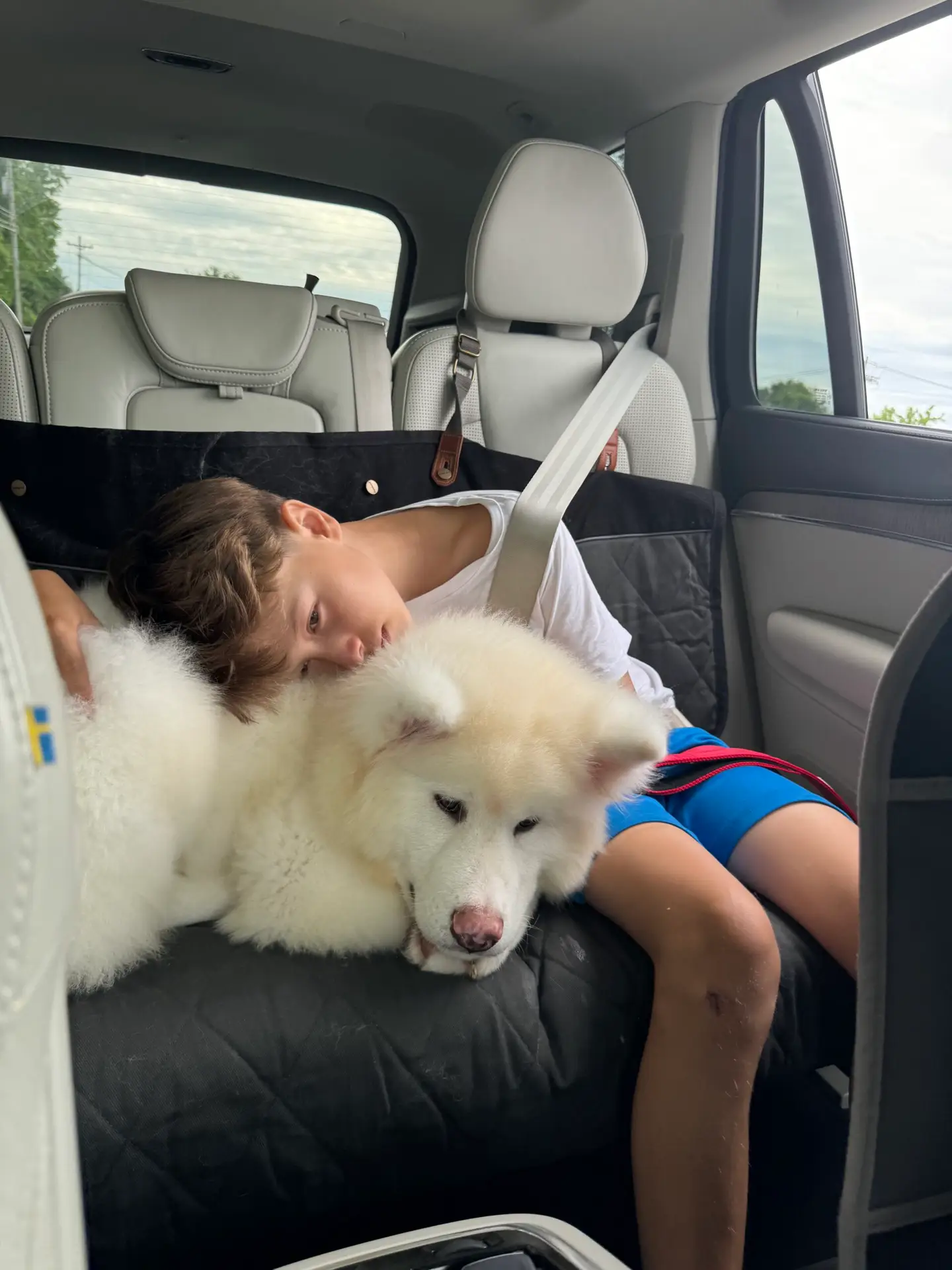
Blizzard, an Apexx Akitas white male, on his ride home with his adolescent companion. Calm, observant, completely at ease. This is what sound temperament looks like in the breed.
This is probably the most common question I get from people researching the breed. Are American Akitas aggressive? Are they dangerous? Should I be worried about bringing one into my home?
I have been breeding American Akitas in Sussex County, New Jersey for over twenty years, and I am going to give you a direct answer.
No. American Akitas are not naturally aggressive. They are a powerful, intuitive guardian breed with strong protective instincts, and those instincts are often mistaken for aggression by people who do not understand what they are looking at.
That said, this is not the whole answer, because the breed is not for everyone. A poorly bred Akita raised by an inexperienced owner can absolutely develop into a dangerous dog. The same is true of any large guardian breed. The question is not really whether Akitas are aggressive. The question is whether the dog in front of you came from a serious breeding program and whether the owner is doing the work the breed requires.
What Aggression Actually Looks Like, and What It Doesn't
Most of what gets labeled aggression in this breed is something else entirely. Let me walk you through what people misread, because this matters.
Look at the dog in the photo above. Blizzard is a full grown white Apexx Akita male, riding home in a car with his adolescent companion. There is nothing tense in his body. His eyes are soft. He is paying attention to his surroundings the way Akitas always do, but he is completely relaxed in the presence of his person. That is the breed. That is what we breed for.
An American Akita watching a stranger walk up to your front door with calm, focused attention is not aggressive. That is the breed doing its job. Akitas were developed in Japan as guardians, and that watchful presence is the entire reason the breed exists.
An American Akita that does not run up to strange dogs at the park wagging its tail is not aggressive. That is the breed showing the same-sex selectivity and dignified reserve that has always been part of its character. Akitas tend to prefer the company of their family over the company of unknown dogs. That is a feature, not a flaw.
An American Akita that signals discomfort when a strange child reaches over its head or hugs it tightly is not aggressive. That is a dog using the only language it has to tell you it is uncomfortable, and a smart owner reads that signal and adjusts.
Actual aggression looks like a dog that bites without warning, attacks family members, or shows persistent unprovoked reactivity in normal situations. In twenty years of breeding, I have never produced a dog like that, because the breeding decisions I make are designed to prevent it.
Where Akita Aggression Actually Comes From
When you do see a dangerously aggressive Akita, it almost always traces back to one or more of these failures:
Poor breeding decisions. Breeding dogs with unstable temperaments to other dogs with unstable temperaments produces puppies that inherit the problem. Reputable breeders screen for temperament as rigorously as they screen for health.
No early socialization. The window between 8 and 16 weeks is when the dog learns whether the world is a safe place. A puppy raised in isolation during that window will be a fearful, reactive adult.
Backyard breeders and puppy mills. Volume breeders selling Akitas as a product have no incentive to select for temperament. The dogs that come out of those programs are a coin flip at best.
Inexperienced owners. An Akita placed with an owner who cannot be the calm, consistent leader the breed needs will struggle. Akitas do not respond well to chaos, harsh corrections, or unpredictable handling.
Mistaken rescue placements. Rescue Akitas often come with unknown histories, unknown genetics, and unaddressed fear. Calling that aggression and blaming the breed is not fair to the breed.
At Apexx Akitas, every breeding pair is selected for temperament first. Not coat. Not size. Not pedigree alone. Temperament. The dogs I keep in my program have to demonstrate the calm, stable, family-suitable disposition that defines the breed at its best. The ones that do not, no matter how impressive they look on paper, do not get bred.
That selection process compounds. Each generation of Apexx Akitas inherits stable temperament from both sides, and that inheritance shows up in every puppy I produce. Combine that genetic foundation with eight weeks of in-home raising, daily handling, exposure to children, exposure to normal household noise, and the result is a puppy that arrives at its new family already wired for stability.
This is why families with toddlers, school-age children, and other dogs can confidently bring an Apexx Akita into their home. The dog is not a guess. The dog is the product of two decades of decisions designed to produce exactly the temperament their family needs.
Are Akitas Good With Children?
Yes, when the dog comes from sound genetics and is introduced to the children correctly. This is one of the questions where the gap between a well-bred Apexx Akita and a poorly bred dog from an irresponsible breeder is the widest. A properly bred American Akita is one of the most devoted child guardians you will ever own. A poorly bred one is a liability.
Sadie the Guardian, an Apexx Akita at 10 years old, watching over her young charge in the garden. This is what a well-bred American Akita's protective instinct actually looks like. Watchful, present, calm.
Are Akitas Aggressive With Other Dogs?
This is the one area where the breed's reputation has some truth behind it, and I will be honest about it. American Akitas can show same-sex selectivity, especially between two females or two intact males in the same household. It is in the breed's history as a hunting dog, and even careful breeding does not eliminate it entirely.
What this means practically is that a well-bred Akita is usually fine with the family dog it grew up with, fine with the dogs it meets on a leashed walk, and fine in supervised public settings. The friction tends to show up in two specific situations. Two same-sex dogs sharing a home, and unsupervised interactions with unfamiliar dogs.
This is a manageable trait, not a dealbreaker. A serious breeder will be honest with you about your specific household and whether a particular puppy is the right match for it.
What Owning an American Akita Actually Requires
I am going to be direct with you here, because I would rather you walk away than buy a dog from me you cannot live with for the next twelve years. American Akitas are not the breed for everyone. They require:
Calm, consistent leadership from the adults in the home
An owner who can read body language and respect the dog's signals
Commitment to early socialization in the first four months of life
A home that is not chaotic, loud, or full of constant unpredictable activity
Willingness to supervise interactions with unfamiliar people and dogs
An honest understanding that this is a guardian breed, not a Labrador
If you can offer those things, the American Akita will give you back loyalty, protection, and dignity that no other breed can match. If you cannot, please look at a different breed. Both you and the dog will be better off.
The Bottom Line on Akita Aggression
Are Akitas aggressive? No. They are a powerful guardian breed with strong instincts, and those instincts demand respect from the people who own them. In the wrong hands and from the wrong breeder, any large guardian breed can become dangerous. In the right hands and from a serious breeding program, the American Akita is one of the most stable, trustworthy, and loyal family dogs you will ever own.
That is the honest answer. Twenty years in the breed has not changed it, and twenty more will not either.
Frequently Asked Questions About Akita Aggression
Are American Akitas dangerous?
A well-bred American Akita from a serious breeding program is not dangerous. They are large, powerful, protective dogs that require calm, consistent leadership from their owners, but stable temperament is the standard in responsible breeding programs. Danger arises when a poorly bred Akita is raised by an inexperienced owner without socialization or structure. That combination can make any large guardian breed dangerous, not just the American Akita.
Do American Akitas bite their owners?
A well-bred, properly raised American Akita does not bite its owner. In over 20 years of breeding, we have never produced a dog that bit its family. The Akita is naturally deeply loyal and protective of its household. When bites do occur, they almost always trace back to poor breeding, no early socialization, an inexperienced owner missing warning signals, or an environment that is chaotic or unpredictable. Bites are not a breed trait, they are a breakdown in one of those areas.
Are Akitas aggressive with other dogs?
American Akitas can show same-sex selectivity, especially between two females or two intact males in the same household. This trait comes from the breed's history as a hunting and guardian dog, and even careful breeding does not eliminate it entirely. A well-bred Akita is usually fine with the family dog it grew up with, fine with dogs on leashed walks, and fine in supervised public settings. Same-sex dogs sharing a home and unsupervised interactions with unfamiliar dogs are the two specific situations that require honest evaluation and careful matching by the breeder.
Why do American Akitas have an aggressive reputation?
The breed's reputation comes from a combination of misread breed traits (protective watchfulness misinterpreted as aggression), poorly bred dogs from irresponsible programs, undersocialized rescues with unknown histories, and inexperienced owners who could not provide the calm consistent leadership the breed requires. A properly bred, well-raised American Akita from a serious breeding program looks nothing like the reputation. Judging the entire breed by its worst representatives is not fair to the many families who have owned stable, family-oriented Apexx Akitas without a single incident.
Can Akita aggression be trained out?
Genuine aggression in an adult American Akita is very difficult to train out, which is why the answer lies in prevention rather than correction. Aggression prevention starts with the breeder selecting for stable temperament across generations, continues through early socialization during the 8 to 16 week window, and requires ongoing calm consistent leadership from the owner throughout the dog's life. Working with a genuinely aggressive adult Akita requires a highly experienced trainer and honest evaluation of whether the dog can be safely rehabilitated. Choosing a well-bred puppy from a serious breeding program is the far better path.
Are female Akitas less aggressive than males?
Neither sex is more aggressive than the other in a well-bred American Akita. Females tend to be slightly smaller and often bond more intensely with one primary caretaker, while males tend to be larger with more openly protective instincts. Stable temperament is the goal for both sexes in responsible breeding. Where sex does matter is in same-sex living situations. Female-female and male-male combinations in the same household require more careful matching than male-female combinations because of natural same-sex selectivity in the breed.
Are American Akitas safe around babies and toddlers?
A well-bred American Akita from a serious breeding program can be a devoted and gentle companion to babies and young children in its family, as long as introductions are handled correctly and interactions between young children and any large dog are always supervised. The gap between a properly bred Apexx Akita and a poorly bred dog from an irresponsible breeder is wide, and it matters most in this exact situation. Never assume a large guardian breed is safe with a small child without doing full due diligence on the breeder first.
How can I tell if a specific Akita puppy has aggressive tendencies?
A young puppy does not reliably show adult aggression tendencies during the 8 to 12 week evaluation window. What you can and should evaluate is the temperament of both parents, the multi-generational track record of the breeding program, the breeder's early socialization protocols, and honest documentation of any temperament issues in offspring across previous litters. A serious breeder should be able to speak specifically about the dogs they have produced, where they went, and how those dogs turned out as adults. This is why the breeder matters more than any individual puppy assessment.