Posted on Leave a comment

American Akita Shedding: What 20 Years of Living With This Breed Has Taught Me About Coat Care
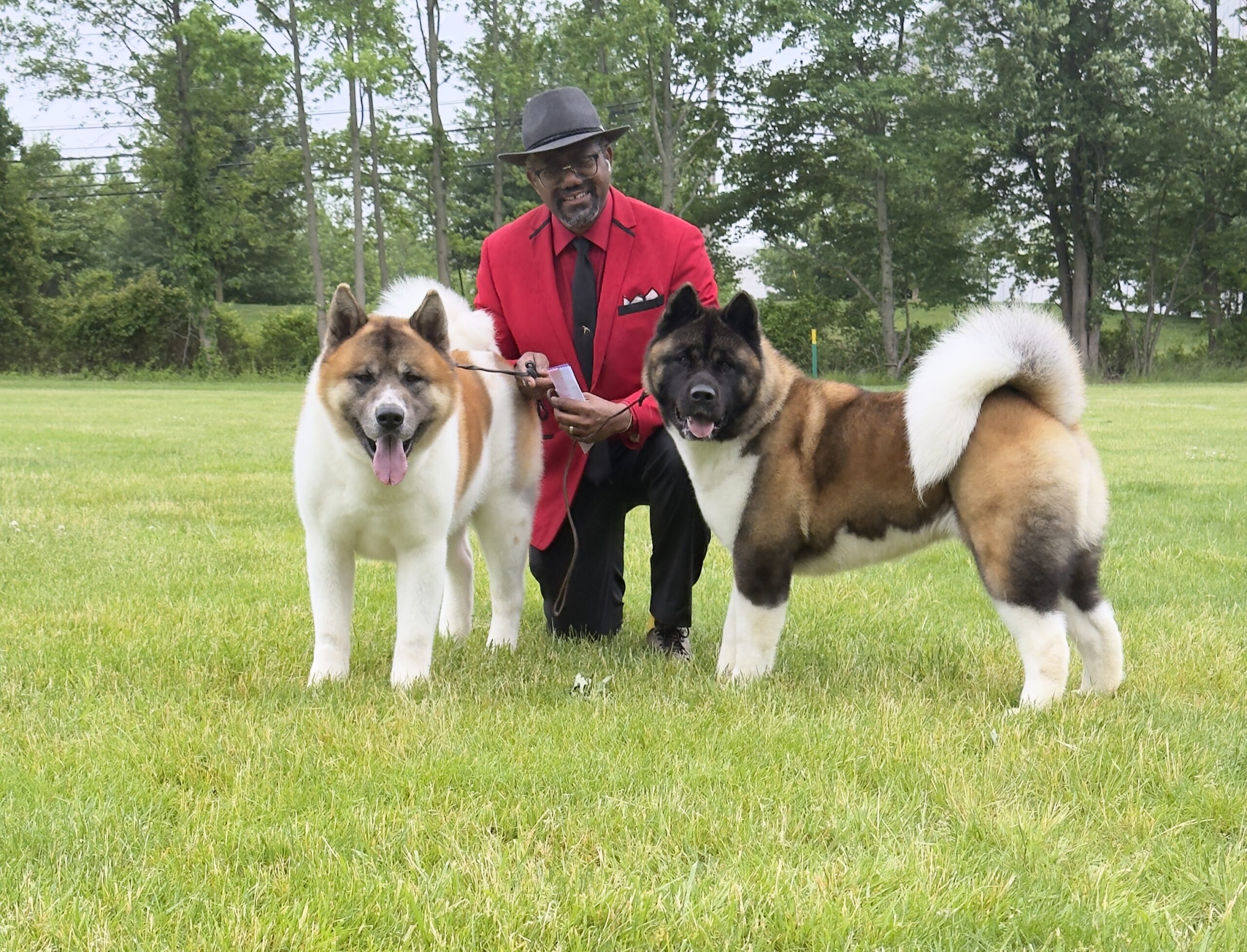
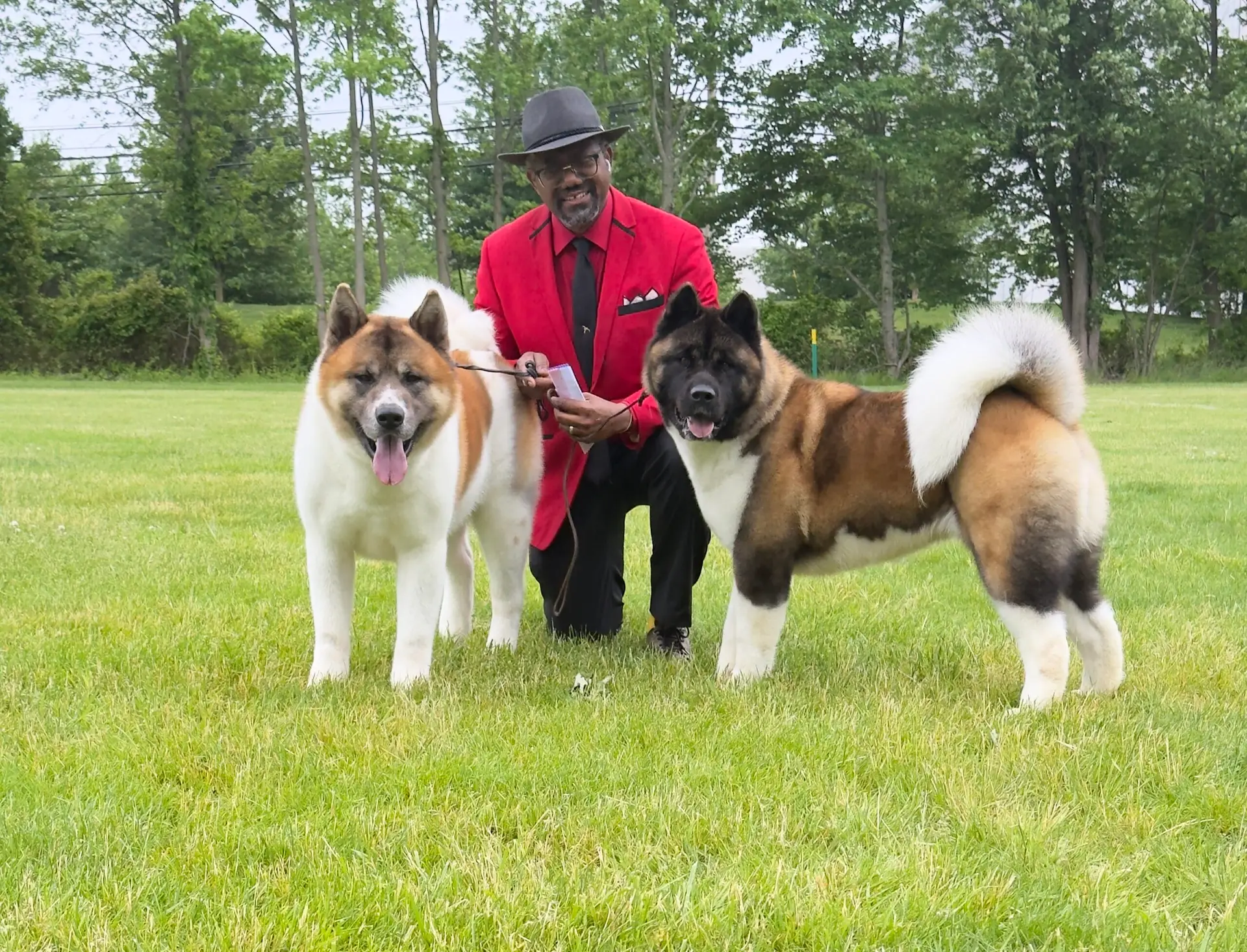
Ron Durant of Apexx Akitas in a field with Toro and Astra, two adult American Akitas, photographed after a full grooming and deshedding session, showing the clean healthy coat that results from a consistent routine

American Akita Shedding: What 20 Years of Living With This Breed Has Taught Me About Coat Care

Ron Durant of Apexx Akitas in a field with Toro and Astra, two adult American Akitas, photographed after a full grooming and deshedding session, showing the clean healthy coat that results from a consistent routine
With Toro and Astra in the field after a full grooming and deshedding session. Twenty years of breeding for coat quality, combined with the right routine, produces dogs who stand calmly through the work and look like this when it is done.

If you are researching the American Akita as a family dog, one of the first practical questions you should ask is about the coat. How much do they shed? How often do you need to brush them? What is "blow coat" and how bad is it really? Will my house be covered in fur all year long?

I have been breeding American Akitas in Sussex County, New Jersey for over twenty years, and I live with these dogs daily. I am going to give you the honest answer about shedding, because most articles online either underplay it to sell puppies or overhype it to scare people away. The truth is in the middle, and once you understand how this coat works, it is completely manageable.

Yes, American Akitas shed. Daily, year round, with two heavier shedding periods per year called "blow coat." But with the right brush, a consistent ten-minute routine, and an honest understanding of what to expect, this coat is one of the easier double coats to manage. The breed is not the cleanup nightmare some articles claim.

Let me walk you through exactly what to expect, how to manage it, and what twenty years of daily experience has taught me about keeping an Akita coat clean, healthy, and looking the way it should.

Understanding the American Akita Double Coat

To manage shedding, you have to understand what you are managing. The American Akita has a double coat. That means two distinct layers of hair doing two different jobs.

The outer coat is straight, slightly coarse, and stands off the body. It is the layer you see when you look at the dog. Its job is weather protection. Rain rolls off, snow does not penetrate, and dirt brushes out easily because the texture repels rather than absorbs.

The undercoat is short, dense, and soft. It looks like cotton or wool when you part the outer coat with your fingers. Its job is insulation. In winter it traps body heat. In summer it actually does the opposite job and insulates the dog against external heat. This is why you should never shave an Akita. You destroy the temperature regulation system the coat is designed to provide.

The shedding you see day to day is primarily the undercoat releasing in small amounts. The major shedding events twice a year are when the undercoat releases all at once. This is what coat blow means.

Daily Shedding: What to Expect Most of the Year

For approximately ten months of the year, an American Akita sheds at a rate that is consistent and predictable. You will find fur on your floors, on furniture if the dog has access, and on your clothes if you pet them frequently.

The amount is moderate compared to breeds like the Siberian Husky or the German Shepherd. It is more than a Labrador. About the same as a Golden Retriever in terms of volume, but the texture and color of Akita fur makes it more visible on dark surfaces.

What controls daily shedding levels:

  • Brushing frequency. A dog brushed two to three times a week sheds noticeably less around the house than a dog brushed once a week. The fur comes out either way. The question is whether it comes out into your brush or onto your floor.
  • Diet quality. A high-quality diet with adequate fatty acids supports coat health and reduces excessive shedding. Cheap kibble correlates with dry coat and more shedding.
  • Bathing schedule. Too-frequent bathing strips natural oils and causes the coat to shed more. Once every six to eight weeks is the sweet spot for most Apexx Akitas.
  • Stress and health. Stressed or unhealthy dogs shed more. A calm, stable dog in a calm home sheds at the breed's baseline rate.

The honest answer is that you will own a vacuum and you will use it more than friends with short-coated breeds. That is the trade. In exchange, you get one of the most beautiful and weather-resistant coats in the dog world on a breed that needs almost no professional grooming.

The Two Blow Coat Periods: What Really Happens Twice a Year

This is the part most articles get wrong. Blow coat is not gradual. It is a defined event that happens roughly twice a year, lasts two to three weeks each time, and produces an astonishing amount of fur in a short window.

In Sussex County where my dogs live, the spring blow coat typically happens in March through April as the dog prepares for warmer weather. The fall blow coat happens in September through October as the dog gets ready to grow in the heavier winter undercoat. Your timing may vary slightly depending on your climate and your dog's individual cycle, but the pattern is reliable.

During blow coat, the undercoat releases in clumps. You can run your fingers through the coat and pull out handfuls of soft, cotton-like fur. The dog often looks slightly disheveled during this period as the old undercoat works its way out and the new one grows in.

What blow coat looks like in practice:

  • Volume. A single brushing session during peak blow coat can fill a gallon-sized bag. I am not exaggerating. Expect to see this.
  • Duration. Two to three weeks of heavy shedding per blow coat period. Sometimes a few days shorter, sometimes a few days longer.
  • Daily brushing required. The two to three times per week routine is not enough during blow coat. Daily brushing for fifteen to twenty minutes is the right approach until the heavy shedding subsides.
  • The dog feels different. Once the undercoat is fully released, the coat sits differently against the body and the dog often acts more comfortable, especially in warmer spring temperatures.

A few things to know if you are a first-time Akita owner approaching your first blow coat. It looks worse than it is. The dog is not sick. The amount of fur coming out is normal. You are not doing anything wrong. Just brush every day, get through the two to three weeks, and the coat returns to its baseline.

Starting Young: Why Puppies Need to Learn Grooming Early

The dog who tolerates a full grooming session as an adult is the dog who learned to tolerate it as a puppy. This is one of the most important parts of the first weeks home that new owners underestimate.

At eight weeks old, the puppy has almost nothing to actually groom. The coat is still soft puppy fluff that does not require real maintenance. But the eight-week-old puppy still needs to be introduced to the experience of being handled, brushed, blow dried, and standing still for it. The grooming you do at this age is not really about the coat. It is about building tolerance and trust for a routine the dog will go through hundreds of times over its life.

An eight week old Apexx Akita puppy standing hesitantly through his first blow drying session. This is the work that pays off for the rest of the dog's life. The puppy learns now that grooming is calm and normal, so the adult does not fight it.

If you want a dog who stands calmly through grooming sessions like Toro and Astra do, start the work at eight weeks. Short sessions, lots of praise, no pressure. The puppy does not need to be perfect. The puppy just needs to learn that being handled, brushed, and dried is part of normal life.

The Tools That Actually Work

I have tried most of the tools sold for double-coated breeds over twenty years. Some are excellent. Some are gimmicks. Here is what I actually use and recommend.

  • Undercoat rake. This is the single most important tool for the breed. The teeth are spaced and shaped to pull the loose undercoat out without damaging the outer coat. Use this for the bulk of daily and blow-coat brushing.
  • Slicker brush. For finishing work and for removing the last layer of loose hair from the outer coat. Use this after the rake.
  • Pin brush. For daily light maintenance brushing on weeks when the coat is not heavily shedding. Gentler than the slicker, good for keeping the coat lying naturally.
  • Metal comb. For checking finished work. Run the comb through the coat after brushing and any tangles or missed undercoat will catch on the teeth.

What I do not recommend:

  • Furminator and similar de-shedding tools. They cut the outer coat in addition to removing undercoat. Over time this damages the outer coat's protective function and changes the coat's texture. Avoid.
  • Razor combs and stripping tools. Same problem. They alter the coat structure rather than just removing what is naturally releasing.
  • Professional shaving. Never shave an Akita unless medically required. The coat does not always grow back correctly and you destroy the dog's temperature regulation.

A good undercoat rake costs around twenty dollars and lasts years. That is the entire core tool investment for managing an Akita coat. The grooming budget for this breed is genuinely small compared to breeds that need professional cuts every six to eight weeks.

A Real Pre-Show Grooming Session: Toro and Astra in Freehold

If you want to see what a complete grooming session actually looks like on an adult American Akita, here is footage of Toro and Astra being groomed before a show in Freehold, New Jersey. This is the same routine I use at home, just with the polish of pre-show preparation added.

Toro and Astra being groomed and deshedded before a show in Freehold, NJ. Notice how calm both dogs are throughout the process. This is the payoff for the work we did when they were puppies.

Watch the body language of both dogs in that video. Neither one is fighting the process. Both are standing calmly through brushing, blow drying, and handling. That tolerance was built when they were eight-week-old puppies going through their first blow drying sessions. The same routine, just on bigger dogs.

The Brushing Routine That Actually Works

Here is the routine I follow with my own dogs and recommend to every Apexx Akita family. It takes ten minutes a session, two to three times a week during normal shedding periods, and daily during blow coat.

  1. Start at the head and work back. Brush the head, then the neck, then the shoulders, working in the direction the coat naturally lies. This gets the dog used to the session before you reach the more sensitive areas.
  2. Use the undercoat rake first. Pull the rake through the coat in the direction of hair growth. Apply moderate pressure. You will see undercoat come out immediately if there is any to remove.
  3. Pay attention to high-density areas. The neck, the rear pants, the tail, and the ruff around the shoulders hold the most undercoat. Spend extra time on these areas.
  4. Switch to the slicker brush. Once the rake stops pulling out significant amounts of undercoat, switch to the slicker to finish the outer coat and smooth everything down.
  5. Comb through to verify. Run the metal comb through the entire coat. If the comb glides through without catching, you are done. If it catches, return to the rake on those spots.
  6. Reward and release. End every session positively. A treat, some praise, and the dog learns to associate brushing with calm one-on-one time.

Ten minutes. That is the entire commitment outside of blow coat. The dogs I have raised with this routine from puppyhood actually enjoy brushing sessions because they associate them with attention and calm time with their person.

Bathing: Less Is More With This Breed

The American Akita is one of the cleanest dog breeds you will ever own. The outer coat naturally repels dirt and moisture. A healthy Akita rarely develops the "dog smell" that many breeds produce. They are almost cat-like in their cleanliness.

This means bathing is needed far less often than people assume. Over-bathing actually causes problems. It strips natural oils, dries out the skin, and triggers more shedding rather than less.

My recommendations for bathing:

  • Frequency. Every six to eight weeks under normal conditions. Sooner only if the dog gets into something genuinely dirty.
  • Shampoo. A high-quality dog shampoo formulated for double coats. Avoid harsh detergents and human products. Oatmeal-based shampoos work well for routine baths.
  • Pre-brush. Always brush thoroughly before bathing. Wet undercoat that has not been brushed out turns into a tangled mess.
  • Dry completely. The undercoat traps moisture. A dog that is not dried thoroughly can develop hot spots underneath the coat. Towel dry, then air dry or use a low heat dryer until the undercoat feels dry to the touch.

If you brush regularly and only bathe when needed, you can own an Akita for a decade with minimal grooming costs and a coat that always looks the way it should.

What Affects Coat Quality Most

The visible quality of an Akita's coat reflects what is happening internally. A dull, brittle, or excessively shedding coat is almost always a sign of something else. The factors that matter most:

  • Genetics. A well-bred Apexx Akita comes from generations selected for coat quality alongside temperament and health. The structural quality of the coat is bred in before you ever brush it.
  • Diet. Adequate protein, omega-3 fatty acids, and overall nutrition show up directly in coat condition. A premium diet pays for itself in coat health.
  • Health. Underlying health issues, parasites, thyroid problems, or allergies all show up first in the coat. A sudden change in coat quality is worth a vet visit. Read more about 7 Critical Health Problems in American Akitas for a deeper look at what to watch for.
  • Bathing and grooming practices. As covered above, over-bathing and the wrong tools damage the coat over time.
  • Hydration. Dogs that do not drink enough water have drier, duller coats. Make sure fresh water is always available.

If your Akita's coat suddenly changes character, becomes patchy, or sheds far more than the breed baseline, those are signals worth investigating. The coat is one of the body's early-warning systems for the dog's overall health.

The Honest Trade-Off of Owning a Double-Coated Breed

Let me give you the straight assessment. Owning an American Akita means:

  • Fur on your floors most days of the year
  • Two annual periods of heavier shedding that require daily attention for two to three weeks
  • A vacuum that gets used more than your neighbor's with a Labrador
  • Ten minutes of brushing two to three times a week
  • Bathing once every six to eight weeks
  • Approximately twenty dollars in tool investment

In exchange you get a dog that is naturally clean, almost odorless, weather-resistant in any climate, and beautifully coated for the entire decade or more of its life. The coat is also one of the breed's most striking features and a major part of why people fall in love with the American Akita in the first place.

If shedding is a deal-breaker for your household, this is not the breed for you. If it is something you can manage with ten minutes a few times a week, the coat becomes one of the easier aspects of owning an Akita rather than a burden.

The Bottom Line on American Akita Shedding

American Akitas shed daily and they blow coat twice a year. But with the right brush, a simple routine, and an honest understanding of what to expect, the coat is completely manageable. Most owners describe it as a small price for one of the most beautiful and functional coats in the dog world.

What you should not do is over-bathe, shave, or use damaging tools. What you should do is brush regularly, feed well, monitor health, and prepare for blow coat twice a year with daily brushing during those periods.

That is the honest answer twenty years of living with this breed has taught me. Manage the coat correctly and it will be a source of pride rather than a frustration for the entire life of your dog.

For more practical guidance on living with an American Akita, read First 30 Days With Your American Akita Puppy and Are Akitas Good Family Dogs? next.

When you are ready to talk seriously about a puppy from a breeder who selects for coat quality alongside temperament and health, our Available Dogs page is the place to start.
Posted on Leave a comment

First 30 Days with an American Akita Puppy: The Complete Owner’s Guide

Ownership Guide  ·  Apexx Akitas

First 30 Days with an American Akita Puppy: The Complete Owner’s Guide

Everything you need to know for your puppy’s first month home. Feeding, crating, sleep, leash introduction, socialization, grooming, and first vet visit, all from 20-plus years of breeding and placing champion American Akitas.

Ron Durant Founder, Apexx Akitas Sussex County, New Jersey April 2026
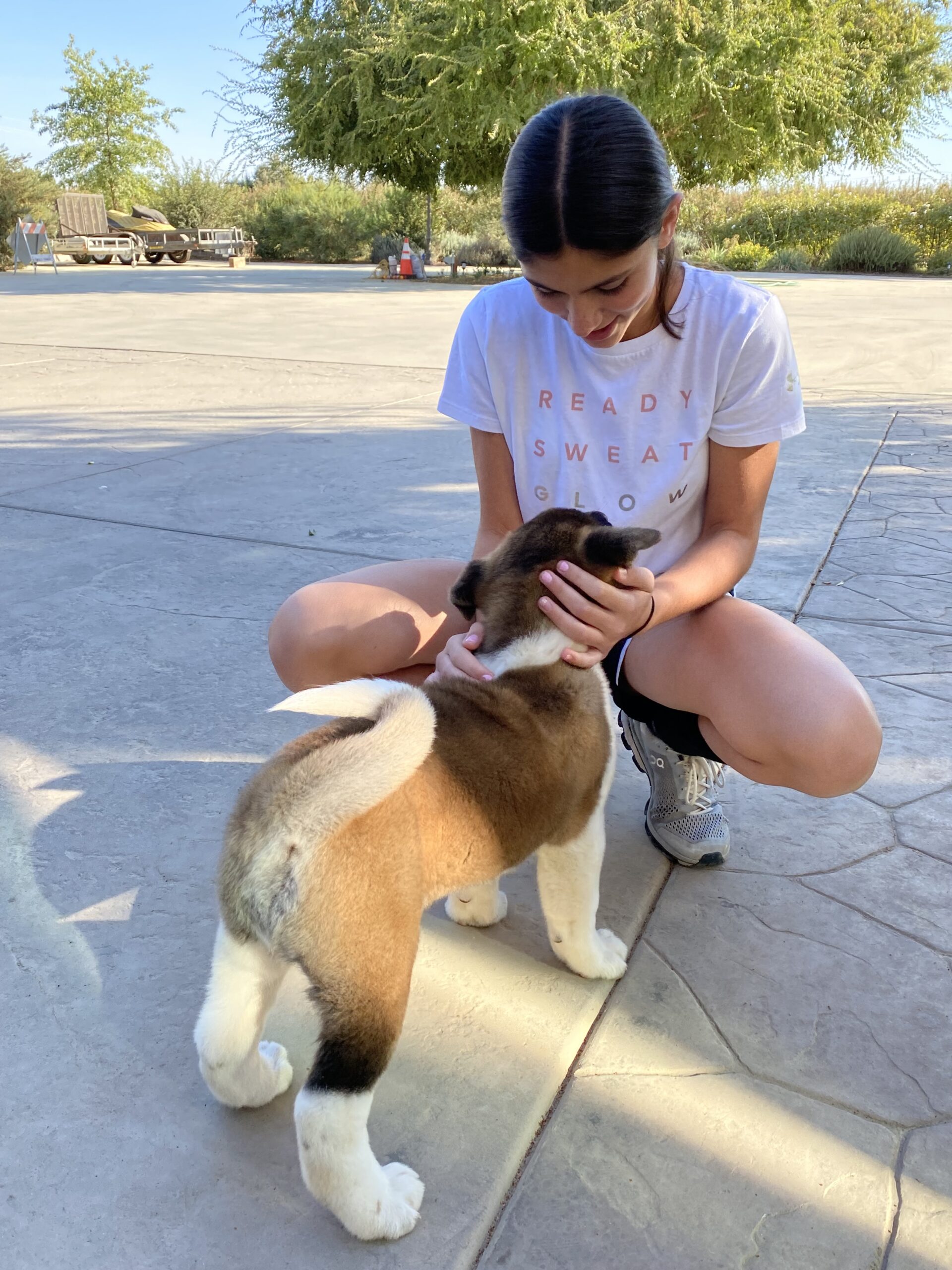
American Akita puppy from Apexx Akitas meeting its new owner for the first time demonstrating calm confident temperament
Apexx Akitas puppy meeting its new owner · Sussex County, NJ
30
Days Covered
in This Guide
11
Topics
Covered
8
Weeks Old
at Placement
20+
Years Breeding
American Akitas

The first 30 days with your American Akita puppy are the most important of the next 12 years. The habits, routines, boundaries, and trust you establish in this window shape everything that follows. Getting this period right does not require perfection. It requires consistency, patience, and a clear understanding of what your puppy needs at each stage.

This guide covers everything you will encounter in your puppy’s first month home, organized by topic so you can find exactly what you need when you need it. Before your puppy arrives, read it from start to finish. After arrival, use it as a reference. If you are still deciding whether the American Akita is right for you, start with our guide Is an American Akita Right for You? All our guides are available on the American Akita Resources page.

Every Apexx Akitas puppy arrives with a foundation already in place. Early Neurological Stimulation, deliberate handling, sound exposure, and leash introduction all begin here before your puppy comes home. Your job in the first 30 days is to build on that foundation consistently. Learn more about our early development program.

Before the Puppy Arrives: What to Prepare

The most common mistake new owners make is not preparing before pickup day. Walking into the first week without the right setup in place makes everything harder for both you and your puppy. Here is everything to have ready before your Apexx Akitas puppy comes home.

Essential supplies checklist

  • Crate , Heavy duty wire or plastic crate. For a full budget breakdown see How Much Does an Akita Puppy Cost? For an adult male American Akita you need a 48-inch crate minimum. Buy the adult size now and use a divider to make it smaller for the puppy. This saves money and avoids transitioning to a new crate mid-training.
  • Food and water bowls , Stainless steel, heavy enough not to tip. Elevated feeders are not recommended for large breeds due to bloat risk.
  • Puppy food , Ask your breeder what food the puppy has been eating. Our OFA Health Testing Guide explains the full health foundation behind every Apexx Akitas puppy. Continue the same food for at least the first two weeks to avoid digestive upset during the transition period.
  • Leash and collar , A flat buckle collar sized for a puppy and a 6-foot leash. No retractable leashes for training.
  • ID tag , On the collar before pickup day with your phone number.
  • Baby gate , To limit the puppy to specific areas of the home during the first weeks.
  • Enzymatic cleaner , For accidents. Regular cleaners do not fully eliminate the scent markers that encourage repeat accidents in the same spot.
  • Chew toys , Durable rubber toys such as Kongs, bully sticks, and rope toys. Avoid anything that can be torn into small pieces and swallowed.
  • Puppy pads , Optional but useful for the first nights if the puppy cannot hold through the night.

Prepare the home environment

Decide before pickup day which areas of the home the puppy will have access to and which areas are off limits. Establish this boundary and stick to it from day one. Changing the rules mid-training creates confusion. Puppies learn faster when boundaries are clear and consistent from the start.

Identify where the crate will live permanently. The crate should be in a quiet area but not isolated. Many owners place it in the bedroom for the first weeks so the puppy can hear and smell the family at night, which reduces separation anxiety significantly.


The First 24 Hours: Arrival and Settling In

The first 24 hours set the emotional tone for the weeks ahead. Your puppy has just left its mother, littermates, and the only environment it has ever known. Everything is new. Your role in this window is to be calm, predictable, and present without overwhelming the puppy with excitement, new people, or new experiences.

The pickup moment

Keep the energy calm at pickup. Excited, loud energy from humans transfers directly to the puppy and makes the transition harder. Speak quietly, move calmly, and give the puppy time to approach you on its own terms rather than reaching for it immediately. The image at the top of this guide shows exactly the right energy at a first meeting: calm, low, and patient.

The car ride home

Have a second person in the car to hold the puppy on the way home, or bring a crate with familiar bedding. Do not let the puppy roam loose in the vehicle. Motion sickness is common in young puppies. Bring a towel and enzymatic cleaner just in case.

Arriving home

Take the puppy directly to its designated toilet area before going inside. Stay there until the puppy eliminates, then praise calmly. This establishes the toilet area from the very first moment. Then bring the puppy inside and let it explore the accessible areas of the home at its own pace without forcing interaction.

First night

The first night is often the hardest. Your puppy will likely cry. This is normal and not an indication that something is wrong. Do not take the puppy into your bed in response to crying. This establishes a pattern that is very difficult to undo. Instead, place the crate near your bed so the puppy can hear and smell you. A warm water bottle wrapped in a blanket and a piece of clothing with your scent in the crate both help significantly.

Resist the urge to invite family and friends over in the first 48 hours. Give the puppy time to bond with its immediate household first. New people, new dogs, and high excitement in the first days create stress that works against the settling-in process.

Feeding: Schedule, Amounts, and Nutrition

Continue the breeder’s food

For the first two weeks feed exactly what your breeder was feeding, in the same amounts, at the same times. A puppy experiencing a transition in environment, social group, and routine does not also need a food transition. Digestive upset during the first weeks is stressful for both the puppy and the owner and is largely avoidable.

If you want to transition to a different food, begin the transition after the puppy has settled, using a gradual 7 to 10 day changeover mixing the new food in increasing proportions with the old.

Feeding schedule

At 8 weeks, American Akita puppies should eat three times per day at consistent times. A sample schedule:

  • Morning , 7:00 AM
  • Midday , 12:00 PM
  • Evening , 5:00 PM

Consistent feeding times make housetraining significantly easier because elimination follows eating on a predictable schedule. At around 12 weeks you can transition to two meals per day. At 6 months two meals per day is sufficient for most American Akita puppies.

How much to feed

Follow the guidelines on your specific food packaging as a starting point, adjusted for your puppy’s actual body condition. You should be able to feel the puppy’s ribs easily without pressing hard but not see them. If ribs are clearly visible, increase the portion. If you cannot feel them at all, reduce it. Your veterinarian will assess body condition at the first visit and can provide specific guidance.

Water

Fresh water should be available at all times except in the hour before crating for the night, when limiting water access reduces overnight accidents. Never restrict water during the day.

What not to feed

No table scraps, no bones except raw meaty bones specifically appropriate for puppies, no grapes, raisins, onions, garlic, chocolate, xylitol, or macadamia nuts. These are toxic to dogs. Establish from day one that the puppy does not receive food from the table or from human plates.


Crate Training: The Foundation of a Settled Dog

Crate training is one of the most valuable things you can do for your American Akita in the first 30 days. A dog that is comfortable in its crate has a safe, calm space it can retreat to for rest, has boundaries that prevent destructive behavior when unsupervised, and travels safely. Crate training is not punishment. It is structure, and structure is what American Akitas thrive on.

Introducing the crate

Place the crate in the designated area with the door open. Put comfortable bedding and a chew toy inside. Let the puppy explore it on its own without forcing entry. Feed meals inside the crate with the door open initially, then closed briefly, then for longer periods as the puppy becomes comfortable. Build duration gradually over days, not hours.

Crate schedule for the first weeks

  • A puppy can hold its bladder approximately one hour per month of age plus one. At 8 weeks that means roughly two to three hours maximum during the day.
  • At night most 8-week puppies need one overnight outing between midnight and 4 AM in the first weeks.
  • Set an alarm rather than waiting for crying, which conditions the puppy to cry to be let out.
  • By 12 to 16 weeks most American Akita puppies can sleep through the night in the crate.

What to do when the puppy cries in the crate

Wait for a pause in the crying before opening the crate. Even a 10-second pause is enough. Opening the crate in response to active crying teaches the puppy that crying is the exit mechanism. This is one of the most common mistakes owners make and one of the most consequential for long-term crate comfort.


Housetraining: Consistency Creates Success

American Akita puppies are generally clean dogs that do not want to soil their living areas. This breed characteristic works in your favor for housetraining but it does not replace the need for a consistent schedule and immediate reinforcement.

The housetraining schedule

Take the puppy to its designated toilet area:

  • Immediately after waking from any sleep including naps
  • Within 10 minutes of every meal
  • After any play session
  • Every two hours during the day in the first weeks
  • Last thing before crating for the night
  • First thing upon waking in the morning

Reinforcement

When the puppy eliminates in the correct spot, praise immediately and calmly. The reinforcement must happen within seconds of elimination to be associated with the correct behavior. Delayed praise is not effective. Do not wait until the puppy returns inside to praise.

Accidents

Accidents are information, not failures. They mean the schedule is not tight enough or the puppy was given more freedom than it was ready for. Clean thoroughly with enzymatic cleaner, tighten the schedule, and supervise more closely. Never scold a puppy for an accident that you did not witness in real time. The association cannot be made after the fact and punishment after the fact creates confusion and anxiety.


Leash Introduction: Starting Right from Day One

The American Akita will eventually weigh 100 to 130 pounds. A dog that pulls on the leash at that size is not manageable regardless of the owner’s strength. Leash manners established in puppyhood make adult ownership dramatically easier and safer. Leash introduction begins here at Apexx Akitas before the puppy comes home.

Watch how our puppies are introduced to the leash in this real footage from Apexx Akitas:

American Akita puppy leash introduction · Apexx Akitas, Sussex County NJ

How to introduce the leash at home

Start with the collar only for the first day or two so the puppy gets used to wearing it. Then attach the leash and simply let the puppy drag it around under supervision for short periods. This removes the strangeness of the leash before you add the pressure of being guided by it.

When you first pick up the leash end, follow the puppy rather than restraining it. Let the puppy lead for short sessions while you walk alongside it. Gradually begin introducing gentle direction by calling the puppy toward you and rewarding movement in your direction. Keep early sessions under five minutes. Puppy attention spans are short and ending on a positive note is more valuable than extended sessions that end in frustration.

What to avoid

  • Never drag or jerk a puppy on the leash. This creates leash aversion that is difficult to overcome.
  • Avoid retractable leashes during the training period. They teach the puppy that pulling extends freedom, which is the opposite of what you want.
  • Do not attempt formal heel training in the first 30 days. Focus only on leash comfort and loose-leash walking in familiar areas.

Socialization: The Critical Window You Cannot Get Back

The socialization window for dogs closes at approximately 14 to 16 weeks of age. What your puppy is exposed to during this period shapes its responses to those experiences for life. An American Akita that is not deliberately socialized during this window will be harder to manage around strangers, new environments, and novel situations as an adult.

This does not mean exposing the puppy to everything at once. It means deliberate, positive, controlled exposure to the people, sounds, surfaces, and situations it will encounter throughout its life.

What to socialize to in the first 30 days

  • People: Men, women, children of different ages, people wearing hats or uniforms, people using walking aids. Aim for the puppy meeting multiple new people per week in calm, positive contexts. For the specific protocol on introducing your puppy to your child, read Are American Akitas Good With Children? which covers the first meeting in detail.
  • Sounds: Traffic, construction, appliances, thunderstorms (recordings if not naturally occurring), children playing, doorbells.
  • Surfaces: Grass, concrete, gravel, tile, wood floors, metal grating, carpet.
  • Environments: Different rooms of your home, the car, quiet outdoor areas, parking lots, pet-friendly stores.
  • Handling: Ears, paws, mouth, tail, body examination. This prepares the puppy for veterinary handling and grooming throughout its life.

Important socialization cautions

Until your puppy is fully vaccinated, avoid areas with high dog traffic such as dog parks, pet store floors, and areas where unknown dogs defecate. Puppy classes held indoors on cleaned surfaces with vaccinated puppies are generally considered acceptable by veterinarians during this period. Ask your vet specifically about their recommendations given your local disease prevalence.

Socialization is not about exposure volume. It is about positive association. A puppy that has one frightening experience with a loud noise and no recovery opportunity is worse off than a puppy with no exposure at all. Every socialization experience should end positively. For more on the temperament you are shaping see our guide on Are Akitas Aggressive?

First Veterinary Visit: What to Bring and What to Expect

Schedule your first veterinary appointment within 48 to 72 hours of bringing your puppy home. This serves as a health baseline, catches any issues that may not have been apparent at placement, and begins the veterinary relationship that will span the puppy’s entire life.

What to bring

  • All health documentation provided by your breeder including vaccination records, deworming records, and any health certificates
  • A fresh stool sample in a sealed container for parasite screening
  • A list of questions you have prepared in advance
  • The food you are currently feeding so the vet can review the ingredient list and nutritional profile

What the vet will assess

A standard puppy wellness exam covers weight and body condition, heart and lung sounds, eye and ear examination, dental development, joint palpation, skin and coat condition, and umbilical area. The vet will review the vaccination schedule and recommend the next steps based on what your breeder has already administered.

Choosing the right veterinarian

For an American Akita, look for a veterinarian with large breed experience who is familiar with the health concerns specific to the breed. Mention at your first visit that the breed is predisposed to hip dysplasia, autoimmune thyroiditis, and VKH syndrome so these conditions are on the vet’s radar. A vet who is not familiar with Akita-specific health concerns may miss early indicators. Use the same verification approach from our 15 Questions guide to evaluate your veterinarian. See our complete American Akita Health Problems guide and Health Testing Standards for the full list of conditions to discuss with your vet.


Grooming Basics: Starting the Right Habits from Day One

The American Akita has a thick double coat that requires regular maintenance throughout its life. The habits you establish in the first 30 days determine how cooperative your dog will be for grooming at 100-plus pounds. A dog that is comfortable with brushing, bathing, blow drying, ear cleaning, and nail trimming as a puppy is a pleasure to groom as an adult. A dog that has never been handled for grooming is a significant challenge.

Watch how our puppies are introduced to blow drying at Apexx Akitas:

American Akita puppy introduced to blow drying · Apexx Akitas, Sussex County NJ

Brushing

Begin brushing from the first week home. Use a soft slicker brush initially and work up to a pin brush and undercoat rake as the puppy grows. Keep early sessions short, two to three minutes maximum, always ending before the puppy becomes resistant. The goal in the first month is cooperation and positive association, not thorough coat maintenance.

Bathing

American Akita puppies do not need frequent bathing. Once every four to six weeks is sufficient unless the puppy gets into something requiring immediate cleaning. Use a gentle puppy shampoo and rinse thoroughly. The double coat holds shampoo deeply and incomplete rinsing causes skin irritation.

Blow drying

The American Akita coat holds water and a puppy that is not blow dried after bathing will remain damp for hours, which creates skin issues and significant discomfort in cooler weather. Introduce the blow dryer early at a low heat setting and low speed, treating the experience as a socialization opportunity. Our puppies are introduced to this process here before placement as you can see in the video above.

Nails

Touch and handle the puppy’s paws daily from day one. When the puppy is comfortable with paw handling begin introducing the nail clippers by touching them to the paw without clipping. Trim one nail at a time initially using sharp stainless steel clippers. Avoid the quick, the pink vein visible in light-colored nails. If you are uncomfortable with nail trimming your veterinarian or a professional groomer can demonstrate the technique at the first visit.

Do not shave the coat

The American Akita double coat regulates temperature in both heat and cold. Shaving damages the coat permanently and disrupts the dog’s natural temperature regulation. The coat should never be shaved regardless of season or temperature.


Training Foundations: What to Start and What to Wait On

The first 30 days is not the time for advanced obedience. It is the time to establish the relationship, the routine, and a small number of foundational behaviors that create a framework for everything that follows. Keep training sessions short (three to five minutes), positive, and consistent.

What to start in the first 30 days

  • Name recognition , Say the puppy’s name once in a happy tone and reward any movement toward you. Never use the name to call the puppy for something unpleasant or in a corrective tone.
  • Sit , The first formal behavior to teach. Lure with a treat held above the nose, reward the moment the hindquarters touch the floor. Ten repetitions per session maximum.
  • Come , Practice recall multiple times daily in low-distraction environments. Call once in a happy tone, reward generously when the puppy arrives. Never call the puppy for anything it dislikes in the first weeks.
  • Leave it , Begin introducing this with low-value items. This is one of the most important safety behaviors for a large breed dog.
  • Crate entry on cue , Teach a cue word for crate entry paired with a treat tossed inside. This makes crating a positive choice rather than a physical process.

What to wait on

  • Formal heel work , wait until 12 to 16 weeks when focus and duration improve
  • Down stay , requires more impulse control than most 8-week puppies have
  • Off leash work in open areas , wait until solid recall is established in fenced environments
  • Dog-to-dog interactions outside the household , proceed carefully and only with known, vaccinated, temperamentally stable dogs

Working with a professional trainer

A professional trainer with working breed experience is a worthwhile investment for any American Akita owner, especially in the first year. The time to engage a trainer is before problems develop, not after. Look for a trainer experienced specifically with dominant or independent breeds who uses positive reinforcement combined with clear structure. See our guide on how to find a reputable American Akita breeder for the same due diligence framework applied to trainers. Ask your breeder for recommendations. At Apexx Akitas we maintain relationships with trainers we trust and can point placed families in the right direction. Read what our placed families say about their experience and ongoing support.


Weeks 2 Through 4: What to Expect as the Puppy Settles

The first week is almost always the hardest. By the end of week two most American Akita puppies have established basic routines and are sleeping through the night or close to it. Here is a realistic picture of what weeks two through four typically look like.

Week 2
Settling in. The puppy begins to understand the household routine. Housetraining accidents decrease as the schedule becomes predictable. Sleep improves. The puppy begins showing its personality more clearly. Energy levels increase as confidence grows.
Week 3
Testing begins. This is when many puppies begin testing boundaries for the first time. This is normal developmental behavior. Respond to testing with calm, consistent redirection rather than frustration. The puppy is learning how the household works. Your responses now teach it the rules.
Week 4
Establishing rhythm. By the end of week four most puppies have a reliable daily rhythm, are largely housetrained with occasional accidents, are comfortable in the crate, and are showing clear attachment to their household. Basic training responses are beginning to solidify. This is the foundation everything builds from.
The first 30 days will not be perfect. There will be accidents, sleepless moments, and sessions that do not go as planned. That is normal. What matters is the overall trajectory. If your puppy is gradually becoming more settled, more responsive, and more connected to you each week, you are doing it right.

Frequently Asked Questions: First 30 Days with an American Akita

When can I take my American Akita puppy outside for walks?

Short, controlled outings on clean surfaces in low-risk areas can begin immediately. Avoid dog parks, pet store floors, and high-traffic areas until your puppy is fully vaccinated at approximately 16 weeks. Leash introduction in your yard or driveway can and should begin in the first week home.

How long should I leave my American Akita puppy alone?

At 8 weeks, no more than two to three hours at a time during the day. The puppy cannot hold its bladder longer than this and extended isolation creates anxiety and destructive behavior. If your work schedule requires longer absences, arrange for a midday dog walker or puppy check-in from the first week.

My American Akita puppy is biting everything. Is this normal?

Yes. Puppies explore the world with their mouths and bite inhibition is a learned behavior. Redirect biting onto appropriate chew toys immediately and consistently. Yelp and withdraw attention when biting is too hard. Never use your hands as play toys. Bite inhibition typically improves significantly between 12 and 16 weeks as the puppy matures.

When should I start obedience training my American Akita puppy?

Start basic training from the day the puppy comes home. Name recognition, sit, come, and crate entry can all begin at 8 weeks in short three to five minute sessions. Formal obedience classes can begin as soon as the puppy is vaccinated enough to attend safely, typically around 10 to 12 weeks for puppy-specific classes held in controlled environments.

How much sleep does an American Akita puppy need?

Young puppies sleep 16 to 18 hours per day. This is normal and essential for healthy development. Do not interpret sleeping as lethargy or illness. Allow the puppy to sleep when it needs to rather than stimulating it constantly. Overtired puppies become manic and difficult to manage, much like overtired toddlers.

Should I be concerned if my puppy is not eating well in the first few days?

Mild appetite reduction in the first 24 to 48 hours is common due to stress and transition. If the puppy is not eating at all after 48 hours, contact your veterinarian. Continue the exact food and schedule from your breeder and avoid adding extras or changing foods during the transition period.

Apply Today

Ready for an Apexx Akitas Puppy?

Every Apexx Akitas puppy arrives with a foundation already in place. Full OFA health testing, Early Neurological Stimulation, leash introduction, and lifetime breeder support included with every placement.

Apply for a Puppy