Posted on Leave a comment

How to Train an American Akita: What Actually Works From 20+ Years of Experience

Ron Durant of Apexx Akitas with young American Akitas during socialization training in Sussex County New Jersey

How to Train an American Akita: What Actually Works From 20+ Years of Experience

By Ron Durant, Apexx Akitas. Breeder, owner, and handler of AKC champion American Akitas since 2003.
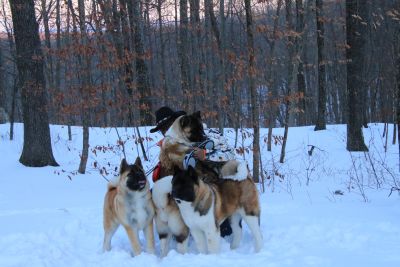
Ron Durant of Apexx Akitas training young American Akitas in socialization exercise

Ron Durant with young Apexx Akitas adults during structured socialization training in Sussex County, New Jersey.

Training an American Akita is not the same as training a Labrador, a German Shepherd, or any other breed that measures success by how quickly it obeys a command. The Akita thinks independently. It evaluates whether your request is reasonable, whether you have earned the right to make it, and whether following through benefits the relationship. That is not stubbornness. That is the breed working exactly as it was designed.

Successful Akita training is built on respect, consistency, and early socialization. Not force. Not repetition for the sake of repetition. Not dominance theory. I have bred, raised, shown, and placed American Akitas for over 20 years at Apexx Akitas, and every dog I have produced, from Grand Champion Asa to Champion Torro to Champion Bengal, was trained using the same core principles I am sharing in this post.

Why American Akitas Are Different to Train
And Why That Is Actually a Good Thing

Most popular training advice online is written for breeds that were developed to work in direct partnership with a handler. Retrievers fetch on command. Herding dogs follow directional cues at distance. These breeds were selectively bred over centuries to look at a human and ask, "What do you need me to do next?"

The American Akita was bred to do the opposite. This is a breed that was developed to make decisions on its own, to assess threats independently, and to act without waiting for instructions. That history does not disappear because a dog lives in a house instead of guarding an estate. It is built into the breed at a genetic level.

What this means for training is straightforward. An Akita does not repeat a behavior because you asked it 40 times. It repeats a behavior because it understands the behavior and respects the person asking. If your training method depends on repetition alone, you will fail with this breed. If your training method depends on building a genuine relationship where the dog understands that following your lead is in its best interest, you will succeed.

I have watched people bring home an Akita puppy and try to train it like their previous Golden Retriever. Within two weeks they are frustrated. Within two months they are calling the breeder asking what is wrong with the dog. Nothing is wrong with the dog. The approach is wrong.

American Akitas are not hard to train. They are hard to train incorrectly. The breed responds to earned respect, not repeated commands.

Once you understand that distinction, training an Akita becomes one of the most rewarding experiences you can have with a dog. The bond you build with an Akita that respects you is deeper and more reliable than the eager-to-please compliance you get from breeds that will follow anyone holding a treat.

When to Start Training an American Akita Puppy
Earlier Than You Think

Training starts the day your puppy comes home. Not next week. Not when the puppy is older. Not after it finishes its vaccination series. The day it walks through your door.

At Apexx Akitas, our training process begins well before placement. By the time a puppy leaves us at 8 to 10 weeks old, it has already been handled daily, introduced to household sounds, exposed to different surfaces and textures, and started on basic boundaries. That foundation gives our families a head start that most other breeders do not provide.

The critical socialization window for any dog falls between 8 and 16 weeks of age. For an American Akita, this window determines the adult dog's temperament more than any other single factor. What a puppy experiences during these weeks, the people it meets, the environments it encounters, the sounds and situations it learns to navigate calmly, shapes the dog it becomes for the next 10 to 13 years.

Waiting until a puppy is 4 or 5 months old to begin training is not being patient. It is wasting the most important developmental period the dog will ever have.

Ron Durant explains why early exercise structure matters for American Akita puppies.

Here is what your first two weeks should look like. Days 1 through 3, let the puppy adjust to your home. Keep things calm. Establish where it sleeps, where it eats, and where it goes outside. Days 4 through 7, begin introducing the puppy to different rooms, surfaces, and sounds at a pace the puppy is comfortable with. Do not flood it. Let it explore. Days 8 through 14, start short training sessions. Two minutes. Three minutes. Name recognition, sitting for food, following you from room to room. These are not formal obedience drills. They are the foundation of every behavior you will build for the rest of the dog's life.

The Foundation: Socialization Is Not Optional
For This Breed, It Is Everything

I cannot say this clearly enough. A well-socialized American Akita is stable, confident, and predictable. An unsocialized Akita is reactive, fearful, and dangerous. Socialization is not a suggestion for this breed. It is a requirement.

The American Akita is naturally reserved with strangers. That is part of the breed's character and it is one of the qualities that makes the breed exceptional. But there is a critical difference between a dog that is calmly reserved and a dog that is anxious, reactive, or aggressive toward anything unfamiliar. The difference is socialization.

Apexx Akitas puppies experiencing controlled socialization with new people. This is one of the most important exercises in early development.

Socialization does not mean taking your puppy to a crowded pet store and letting strangers grab it. That is flooding, and it produces the opposite result of what you want. Real socialization is controlled, positive exposure to new people, new places, new sounds, and new experiences at a pace the puppy can handle without becoming overwhelmed.

At Apexx Akitas, every puppy is exposed to the following before placement: men and women of different ages, children who have been taught to interact with dogs correctly, household appliances and sounds, different floor surfaces including tile, grass, gravel, and concrete, car rides, and gentle handling by multiple people. None of this is random. All of it is intentional and supervised.

After placement, your job is to continue that work. Between 8 and 16 weeks, your puppy should meet at least two to three new people every week in calm, controlled settings. It should experience at least one new environment per week. Every experience should end on a positive note. If the puppy becomes stressed, you have pushed too far. Back up, let it recover, and try again more gradually.

This investment pays dividends for the entire life of the dog. I have placed over 150 American Akitas across the country. The families who follow this protocol produce stable, confident adults. The ones who skip it are the ones who contact me later with behavioral concerns. Every time. Without exception.

For more on what happens when socialization is neglected and how it connects to the breed's reputation, read my post on Are Akitas Aggressive?

Training Methods That Actually Work With Akitas
And the One Approach That Will Ruin Everything

The most effective training approach for an American Akita is positive reinforcement paired with firm, consistent boundaries. Akitas respect handlers who are fair. They shut down under handlers who are forceful.

Let me explain what that looks like in practice.

Positive reinforcement means the dog receives something it values, a treat, calm praise, a moment of play, immediately after performing the desired behavior. The timing matters. You have about one second to mark the behavior before the dog moves on mentally. This is why many trainers use a marker word or a clicker. The marker bridges the gap between the behavior and the reward.

Firm, consistent boundaries means the rules do not change based on your mood, the day of the week, or who is handling the dog. If the dog is not allowed on the couch, it is never allowed on the couch. If the dog is expected to sit before meals, it sits before every meal. Akitas are incredibly perceptive. They notice inconsistency immediately and they will test every gap you leave open.

Resource guarding prevention starts at 8 weeks. Here we teach an Apexx Akitas puppy to accept hands near his food bowl calmly and without stress.

Keep training sessions short. Ten to fifteen minutes maximum. Akitas are intelligent dogs that get bored with repetition quickly. Five focused minutes with a clear outcome are worth more than thirty minutes of drilling the same command until the dog checks out. End every session on a success, even if it means going back to something simple the dog already knows.

Now, the approach that will ruin everything. Dominance-based training. Alpha rolls. Leash popping. Shock collars. Physical corrections designed to intimidate the dog into compliance. These methods may produce short-term results with some breeds. With an Akita, they produce a dog that does not trust you. An Akita that does not trust its handler is either shut down and withdrawn or reactive and unpredictable. Neither outcome is acceptable.

I have taken calls from owners who went to a trainer that used prong collars and physical corrections on their Akita. In every case, the dog's behavior got worse, not better. The relationship between handler and dog was damaged. In several cases, it took months of patient, trust-based work to rebuild what a few weeks of harsh training destroyed.

This breed has a long memory. Earn its trust and you have a partner for life. Break that trust and you may never fully get it back.

Common Training Mistakes Akita Owners Make
And How to Avoid Every One of Them

After 20 years of breeding and placing American Akitas, I hear the same training problems repeated by new owners across the country. Almost every issue traces back to one of these mistakes.

1. Treating the Akita like a retriever or herding breed

If you expect your Akita to respond with the same eager, immediate compliance as a Golden Retriever, you will interpret normal Akita behavior as defiance. It is not defiance. It is a different breed with a different temperament. Adjust your expectations to match the dog you actually own.

2. Repeating commands instead of following through

Saying "sit" five times teaches the dog that the first four do not count. Give the command once. If the dog does not respond, guide it into position calmly. Then reward. The dog learns that the command means something the first time, every time.

3. Inconsistency between family members

One person allows the dog on the bed while another pushes it off. One person enforces the sit before meals while another just sets the bowl down. The dog does not understand conflicting rules. It understands whoever is least consistent and defaults to doing whatever it wants. Every person in the household must enforce the same rules the same way.

4. Skipping leash training in the first month

A 10-pound Akita puppy that pulls on a leash is manageable. A 100-pound adult that pulls on a leash is a safety hazard. Leash manners must start the week the puppy comes home. Not when it gets bigger. Not when it gets stronger. Now.

5. Allowing resource guarding to develop unchecked

Akitas can be possessive of food, toys, and space. This is a natural breed tendency, not a personality flaw. But it must be addressed early through desensitization, not ignored because the puppy is small and the behavior seems harmless. A resource guarding puppy becomes a resource guarding adult, and an adult Akita guarding a food bowl is a serious problem.

6. Waiting too long to address behavioral issues

Hoping a behavior will go away on its own is not a training plan. If your Akita is showing signs of reactivity, fear, or aggression at any age, address it immediately. The longer a behavior is practiced, the more ingrained it becomes. Early intervention is always easier and more effective than trying to undo months or years of reinforced behavior.

Leash Training and Recall
The Non-Negotiables for a 100-Pound Dog

Leash manners are not a luxury with this breed. They are a safety requirement. An adult American Akita that has not been taught to walk calmly on a leash is a liability to itself, to its owner, and to every person and dog it encounters in public.

Start leash work at 8 weeks. The first sessions are not about walking in a straight line. They are about getting the puppy comfortable wearing a collar and dragging a lightweight leash in a safe, enclosed area. Let the puppy figure out the sensation without pressure. Once it is comfortable, begin short walks inside the house or in your yard. Reward the puppy for staying near you. Redirect it gently when it pulls. Keep sessions to five minutes.

Young American Akita puppy learning leash manners at Apexx Akitas

Leash training begins at 8 weeks. A puppy that learns to walk calmly beside you at this age carries that behavior into adulthood.

By 12 to 16 weeks, the puppy should be walking on a loose leash in low-distraction environments. By 6 months, it should be able to maintain a loose leash in moderate distraction. By one year, leash manners should be reliable in most public settings.

Equipment matters. I recommend a flat buckle collar or a front-clip harness for Akita puppies. No prong collars. No choke chains. No retractable leashes. Retractable leashes teach the dog that pulling creates more freedom, which is the exact opposite of what you want. Use a standard 6-foot leash and keep it there.

Now, recall. I am going to be honest about this because too many trainers and breeders are not. Most American Akitas should not be trusted off-leash in unfenced areas. This is not a training failure. It is a breed reality. The Akita's independent nature means that even a well-trained dog may decide, in a moment of high stimulation, that the squirrel across the street is more important than your recall command.

Can you build a reliable recall in controlled environments? Yes, absolutely. Practice in your yard, in your house, in enclosed training spaces. Use high-value rewards. Make coming to you the best thing that happens to the dog all day. But understand that off-leash reliability in open, uncontrolled environments is a goal very few Akitas will achieve consistently, and the consequences of being wrong are too serious to gamble on.

A fenced yard is not optional for this breed. A reliable leash is not optional. Anyone who tells you otherwise has not spent enough time with American Akitas.

Training an Akita to Be Safe Around Other Dogs
What You Need to Know Before You Need to Know It

The American Akita is a dog-selective breed. This does not mean every Akita is dog aggressive. It means the breed has a natural tendency toward selectivity about which dogs it tolerates, and that tendency must be managed through training, socialization, and honest awareness of your individual dog's limits.

Champion Torro mentoring a young American Akita puppy at Apexx Akitas, structured multi-dog socialization

Champion Torro with a young puppy. Structured multi-dog interaction supervised by experienced adults is how Akitas learn appropriate behavior with other dogs.

Same-sex aggression is a real and well-documented trait in the breed. Two intact males or two intact females housed together carry significant risk, regardless of how well they are trained. This is not a training problem that can be trained away. It is a breed characteristic that must be managed through responsible ownership decisions, including which dogs you bring into your household and how living arrangements are structured.

Opposite-sex pairings raised together from puppyhood often coexist peacefully. Adult introductions to existing dogs require careful, supervised management over weeks or months, not a single meeting in the backyard.

Dog parks are not appropriate for most American Akitas. I tell every family I place a puppy with the same thing. Dog parks are uncontrolled environments with unpredictable dogs and inattentive owners. An Akita that has been rushed, mounted, or challenged by a rude off-leash dog will respond. The Akita will be blamed. The Akita will be labeled aggressive. And none of it needed to happen.

Structured socialization with known, stable dogs in controlled settings is the correct approach. Puppy classes with a trainer who understands large, independent breeds. Planned playdates with dogs whose temperament you trust. Parallel walks where the dogs are near each other but not forced to interact. These build the social skills your Akita actually needs without the risks of unmanaged free-for-all environments.

For more on this topic, including the breed's history with dog selectivity and what it means for family life, read American Akita Temperament: What to Expect.

When to Hire a Professional Trainer
And How to Find One Who Understands This Breed

I recommend every Akita owner invest in at least one professional evaluation between 4 and 6 months of age, regardless of how well training is going at home. A qualified trainer sees things you will miss. They can identify developing issues before they become serious problems, and they can confirm that what you are doing is working.

Beyond that baseline evaluation, seek professional help immediately if you see any of the following: escalating resource guarding that does not respond to your desensitization work, reactivity toward people or dogs that is increasing rather than improving, fear-based behaviors that interfere with daily life, or any situation where you feel physically unable to control the dog safely.

Finding the right trainer matters more than finding any trainer. The wrong trainer can do real damage to an Akita. Here is what to look for. Experience with large, independent breeds. Not just experience with dogs in general. A trainer who has worked primarily with Golden Retrievers and Poodles may not understand why your Akita does not respond to the same methods. Ask specifically about their experience with Akitas, Mastiffs, Rottweilers, or other breeds with similar temperaments.

Positive reinforcement methodology is non-negotiable. Walk away from any trainer who reaches for a prong collar, a shock collar, or any tool designed to cause pain or discomfort as a first response. Walk away from any trainer who talks about being the "alpha" or "showing the dog who is boss." Those methods fail with this breed and they damage the trust you need.

Ask for references. Speak to other clients. Watch a session before committing. A good trainer will welcome that level of scrutiny. A bad one will not.

What a Well-Trained American Akita Looks Like
The Payoff for Doing the Work

I want to end with this, because it matters. Everything in this post requires real work. Real time. Real consistency. Real patience. And the result is one of the finest companion dogs you will ever share your life with.

Grand Champion Asa with handler Esther, the result of proper American Akita training and socialization from Apexx Akitas

Grand Champion Asa with handler Esther. This is what proper breeding, training, and socialization produce. Calm, confident, and completely reliable.

A well-trained American Akita is calm in public. It walks on a loose leash beside its handler without pulling, lunging, or reacting to distractions. It acknowledges strangers without aggression or anxiety. It settles quietly in the house, not because it has been exhausted into compliance, but because it understands the routine and trusts the structure of its environment.

A well-trained Akita is reliable. You know what the dog will do in any given situation because you have prepared it for that situation through months of consistent training and socialization. There are no surprises. There is no guessing. The dog is predictable because you made it predictable through the work you put in.

I have placed Akitas with single professionals in apartments, with families with children, and with retired couples in rural properties. The families who follow the guidance in this post, who put in the work during the first year, who treat training as a non-negotiable part of Akita ownership, send me photos and updates of dogs that are a credit to the breed. Dogs that walk through hardware stores without incident. Dogs that greet visitors at the front door without a single raised hackle. Dogs that sleep at the foot of their owner's bed after a calm, structured day.

That is the Akita I breed for. That is the Akita you can raise if you are willing to do what this breed requires.

For more on whether the American Akita is the right fit for your family, read Are Akitas Excellent Family Dogs?

Looking for a Well-Bred American Akita?

At Apexx Akitas, every puppy comes from OFA health-tested, champion-bloodline parents and is raised with the early socialization foundation described in this post. We have placed over 150 American Akitas with families across the country since 2003.

VIEW AVAILABLE PUPPIES
Ron Durant

Founder and head breeder, Apexx Akitas. AKC-registered American Akita breeding program since 2003. Sussex County, New Jersey. 150+ placements nationwide. All breeding dogs OFA health-tested through hips, elbows, thyroid, eyes, and cardiac evaluations by Dr. Jonathan King, VMD, at Steinbach Veterinary Hospital.

Posted on Leave a comment

First 30 Days with an American Akita Puppy: The Complete Owner’s Guide

Ownership Guide  ·  Apexx Akitas

First 30 Days with an American Akita Puppy: The Complete Owner’s Guide

Everything you need to know for your puppy’s first month home. Feeding, crating, sleep, leash introduction, socialization, grooming, and first vet visit, all from 20-plus years of breeding and placing champion American Akitas.

Ron Durant Founder, Apexx Akitas Sussex County, New Jersey April 2026
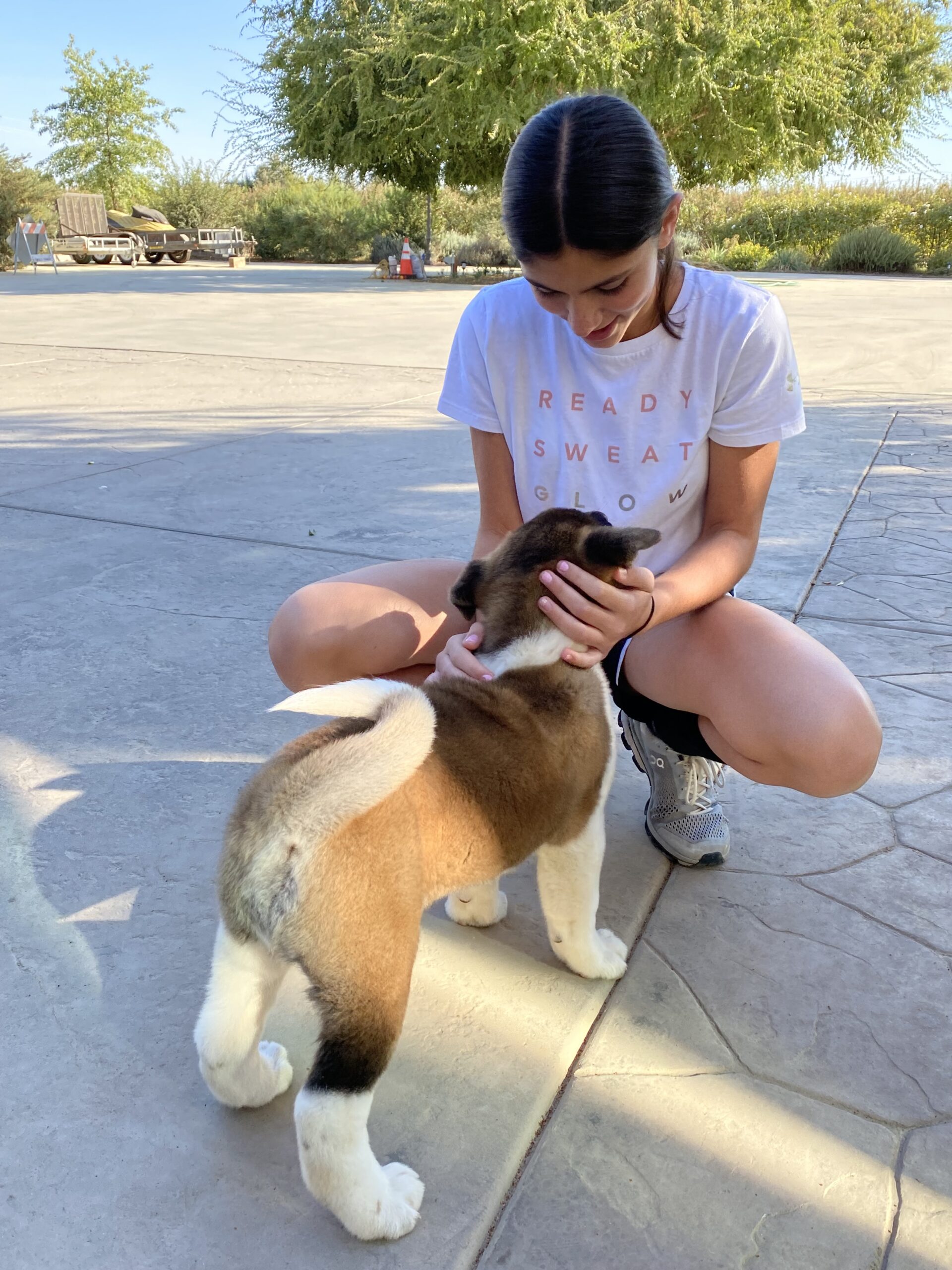
American Akita puppy from Apexx Akitas meeting its new owner for the first time demonstrating calm confident temperament
Apexx Akitas puppy meeting its new owner · Sussex County, NJ
30
Days Covered
in This Guide
11
Topics
Covered
8
Weeks Old
at Placement
20+
Years Breeding
American Akitas

The first 30 days with your American Akita puppy are the most important of the next 12 years. The habits, routines, boundaries, and trust you establish in this window shape everything that follows. Getting this period right does not require perfection. It requires consistency, patience, and a clear understanding of what your puppy needs at each stage.

This guide covers everything you will encounter in your puppy’s first month home, organized by topic so you can find exactly what you need when you need it. Before your puppy arrives, read it from start to finish. After arrival, use it as a reference. If you are still deciding whether the American Akita is right for you, start with our guide Is an American Akita Right for You? All our guides are available on the American Akita Resources page.

Every Apexx Akitas puppy arrives with a foundation already in place. Early Neurological Stimulation, deliberate handling, sound exposure, and leash introduction all begin here before your puppy comes home. Your job in the first 30 days is to build on that foundation consistently. Learn more about our early development program.

Before the Puppy Arrives: What to Prepare

The most common mistake new owners make is not preparing before pickup day. Walking into the first week without the right setup in place makes everything harder for both you and your puppy. Here is everything to have ready before your Apexx Akitas puppy comes home.

Essential supplies checklist

  • Crate , Heavy duty wire or plastic crate. For a full budget breakdown see How Much Does an Akita Puppy Cost? For an adult male American Akita you need a 48-inch crate minimum. Buy the adult size now and use a divider to make it smaller for the puppy. This saves money and avoids transitioning to a new crate mid-training.
  • Food and water bowls , Stainless steel, heavy enough not to tip. Elevated feeders are not recommended for large breeds due to bloat risk.
  • Puppy food , Ask your breeder what food the puppy has been eating. Our OFA Health Testing Guide explains the full health foundation behind every Apexx Akitas puppy. Continue the same food for at least the first two weeks to avoid digestive upset during the transition period.
  • Leash and collar , A flat buckle collar sized for a puppy and a 6-foot leash. No retractable leashes for training.
  • ID tag , On the collar before pickup day with your phone number.
  • Baby gate , To limit the puppy to specific areas of the home during the first weeks.
  • Enzymatic cleaner , For accidents. Regular cleaners do not fully eliminate the scent markers that encourage repeat accidents in the same spot.
  • Chew toys , Durable rubber toys such as Kongs, bully sticks, and rope toys. Avoid anything that can be torn into small pieces and swallowed.
  • Puppy pads , Optional but useful for the first nights if the puppy cannot hold through the night.

Prepare the home environment

Decide before pickup day which areas of the home the puppy will have access to and which areas are off limits. Establish this boundary and stick to it from day one. Changing the rules mid-training creates confusion. Puppies learn faster when boundaries are clear and consistent from the start.

Identify where the crate will live permanently. The crate should be in a quiet area but not isolated. Many owners place it in the bedroom for the first weeks so the puppy can hear and smell the family at night, which reduces separation anxiety significantly.


The First 24 Hours: Arrival and Settling In

The first 24 hours set the emotional tone for the weeks ahead. Your puppy has just left its mother, littermates, and the only environment it has ever known. Everything is new. Your role in this window is to be calm, predictable, and present without overwhelming the puppy with excitement, new people, or new experiences.

The pickup moment

Keep the energy calm at pickup. Excited, loud energy from humans transfers directly to the puppy and makes the transition harder. Speak quietly, move calmly, and give the puppy time to approach you on its own terms rather than reaching for it immediately. The image at the top of this guide shows exactly the right energy at a first meeting: calm, low, and patient.

The car ride home

Have a second person in the car to hold the puppy on the way home, or bring a crate with familiar bedding. Do not let the puppy roam loose in the vehicle. Motion sickness is common in young puppies. Bring a towel and enzymatic cleaner just in case.

Arriving home

Take the puppy directly to its designated toilet area before going inside. Stay there until the puppy eliminates, then praise calmly. This establishes the toilet area from the very first moment. Then bring the puppy inside and let it explore the accessible areas of the home at its own pace without forcing interaction.

First night

The first night is often the hardest. Your puppy will likely cry. This is normal and not an indication that something is wrong. Do not take the puppy into your bed in response to crying. This establishes a pattern that is very difficult to undo. Instead, place the crate near your bed so the puppy can hear and smell you. A warm water bottle wrapped in a blanket and a piece of clothing with your scent in the crate both help significantly.

Resist the urge to invite family and friends over in the first 48 hours. Give the puppy time to bond with its immediate household first. New people, new dogs, and high excitement in the first days create stress that works against the settling-in process.

Feeding: Schedule, Amounts, and Nutrition

Continue the breeder’s food

For the first two weeks feed exactly what your breeder was feeding, in the same amounts, at the same times. A puppy experiencing a transition in environment, social group, and routine does not also need a food transition. Digestive upset during the first weeks is stressful for both the puppy and the owner and is largely avoidable.

If you want to transition to a different food, begin the transition after the puppy has settled, using a gradual 7 to 10 day changeover mixing the new food in increasing proportions with the old.

Feeding schedule

At 8 weeks, American Akita puppies should eat three times per day at consistent times. A sample schedule:

  • Morning , 7:00 AM
  • Midday , 12:00 PM
  • Evening , 5:00 PM

Consistent feeding times make housetraining significantly easier because elimination follows eating on a predictable schedule. At around 12 weeks you can transition to two meals per day. At 6 months two meals per day is sufficient for most American Akita puppies.

How much to feed

Follow the guidelines on your specific food packaging as a starting point, adjusted for your puppy’s actual body condition. You should be able to feel the puppy’s ribs easily without pressing hard but not see them. If ribs are clearly visible, increase the portion. If you cannot feel them at all, reduce it. Your veterinarian will assess body condition at the first visit and can provide specific guidance.

Water

Fresh water should be available at all times except in the hour before crating for the night, when limiting water access reduces overnight accidents. Never restrict water during the day.

What not to feed

No table scraps, no bones except raw meaty bones specifically appropriate for puppies, no grapes, raisins, onions, garlic, chocolate, xylitol, or macadamia nuts. These are toxic to dogs. Establish from day one that the puppy does not receive food from the table or from human plates.


Crate Training: The Foundation of a Settled Dog

Crate training is one of the most valuable things you can do for your American Akita in the first 30 days. A dog that is comfortable in its crate has a safe, calm space it can retreat to for rest, has boundaries that prevent destructive behavior when unsupervised, and travels safely. Crate training is not punishment. It is structure, and structure is what American Akitas thrive on.

Introducing the crate

Place the crate in the designated area with the door open. Put comfortable bedding and a chew toy inside. Let the puppy explore it on its own without forcing entry. Feed meals inside the crate with the door open initially, then closed briefly, then for longer periods as the puppy becomes comfortable. Build duration gradually over days, not hours.

Crate schedule for the first weeks

  • A puppy can hold its bladder approximately one hour per month of age plus one. At 8 weeks that means roughly two to three hours maximum during the day.
  • At night most 8-week puppies need one overnight outing between midnight and 4 AM in the first weeks.
  • Set an alarm rather than waiting for crying, which conditions the puppy to cry to be let out.
  • By 12 to 16 weeks most American Akita puppies can sleep through the night in the crate.

What to do when the puppy cries in the crate

Wait for a pause in the crying before opening the crate. Even a 10-second pause is enough. Opening the crate in response to active crying teaches the puppy that crying is the exit mechanism. This is one of the most common mistakes owners make and one of the most consequential for long-term crate comfort.


Housetraining: Consistency Creates Success

American Akita puppies are generally clean dogs that do not want to soil their living areas. This breed characteristic works in your favor for housetraining but it does not replace the need for a consistent schedule and immediate reinforcement.

The housetraining schedule

Take the puppy to its designated toilet area:

  • Immediately after waking from any sleep including naps
  • Within 10 minutes of every meal
  • After any play session
  • Every two hours during the day in the first weeks
  • Last thing before crating for the night
  • First thing upon waking in the morning

Reinforcement

When the puppy eliminates in the correct spot, praise immediately and calmly. The reinforcement must happen within seconds of elimination to be associated with the correct behavior. Delayed praise is not effective. Do not wait until the puppy returns inside to praise.

Accidents

Accidents are information, not failures. They mean the schedule is not tight enough or the puppy was given more freedom than it was ready for. Clean thoroughly with enzymatic cleaner, tighten the schedule, and supervise more closely. Never scold a puppy for an accident that you did not witness in real time. The association cannot be made after the fact and punishment after the fact creates confusion and anxiety.


Leash Introduction: Starting Right from Day One

The American Akita will eventually weigh 100 to 130 pounds. A dog that pulls on the leash at that size is not manageable regardless of the owner’s strength. Leash manners established in puppyhood make adult ownership dramatically easier and safer. Leash introduction begins here at Apexx Akitas before the puppy comes home.

Watch how our puppies are introduced to the leash in this real footage from Apexx Akitas:

American Akita puppy leash introduction · Apexx Akitas, Sussex County NJ

How to introduce the leash at home

Start with the collar only for the first day or two so the puppy gets used to wearing it. Then attach the leash and simply let the puppy drag it around under supervision for short periods. This removes the strangeness of the leash before you add the pressure of being guided by it.

When you first pick up the leash end, follow the puppy rather than restraining it. Let the puppy lead for short sessions while you walk alongside it. Gradually begin introducing gentle direction by calling the puppy toward you and rewarding movement in your direction. Keep early sessions under five minutes. Puppy attention spans are short and ending on a positive note is more valuable than extended sessions that end in frustration.

What to avoid

  • Never drag or jerk a puppy on the leash. This creates leash aversion that is difficult to overcome.
  • Avoid retractable leashes during the training period. They teach the puppy that pulling extends freedom, which is the opposite of what you want.
  • Do not attempt formal heel training in the first 30 days. Focus only on leash comfort and loose-leash walking in familiar areas.

Socialization: The Critical Window You Cannot Get Back

The socialization window for dogs closes at approximately 14 to 16 weeks of age. What your puppy is exposed to during this period shapes its responses to those experiences for life. An American Akita that is not deliberately socialized during this window will be harder to manage around strangers, new environments, and novel situations as an adult.

This does not mean exposing the puppy to everything at once. It means deliberate, positive, controlled exposure to the people, sounds, surfaces, and situations it will encounter throughout its life.

What to socialize to in the first 30 days

  • People: Men, women, children of different ages, people wearing hats or uniforms, people using walking aids. Aim for the puppy meeting multiple new people per week in calm, positive contexts. For the specific protocol on introducing your puppy to your child, read Are American Akitas Good With Children? which covers the first meeting in detail.
  • Sounds: Traffic, construction, appliances, thunderstorms (recordings if not naturally occurring), children playing, doorbells.
  • Surfaces: Grass, concrete, gravel, tile, wood floors, metal grating, carpet.
  • Environments: Different rooms of your home, the car, quiet outdoor areas, parking lots, pet-friendly stores.
  • Handling: Ears, paws, mouth, tail, body examination. This prepares the puppy for veterinary handling and grooming throughout its life.

Important socialization cautions

Until your puppy is fully vaccinated, avoid areas with high dog traffic such as dog parks, pet store floors, and areas where unknown dogs defecate. Puppy classes held indoors on cleaned surfaces with vaccinated puppies are generally considered acceptable by veterinarians during this period. Ask your vet specifically about their recommendations given your local disease prevalence.

Socialization is not about exposure volume. It is about positive association. A puppy that has one frightening experience with a loud noise and no recovery opportunity is worse off than a puppy with no exposure at all. Every socialization experience should end positively. For more on the temperament you are shaping see our guide on Are Akitas Aggressive?

First Veterinary Visit: What to Bring and What to Expect

Schedule your first veterinary appointment within 48 to 72 hours of bringing your puppy home. This serves as a health baseline, catches any issues that may not have been apparent at placement, and begins the veterinary relationship that will span the puppy’s entire life.

What to bring

  • All health documentation provided by your breeder including vaccination records, deworming records, and any health certificates
  • A fresh stool sample in a sealed container for parasite screening
  • A list of questions you have prepared in advance
  • The food you are currently feeding so the vet can review the ingredient list and nutritional profile

What the vet will assess

A standard puppy wellness exam covers weight and body condition, heart and lung sounds, eye and ear examination, dental development, joint palpation, skin and coat condition, and umbilical area. The vet will review the vaccination schedule and recommend the next steps based on what your breeder has already administered.

Choosing the right veterinarian

For an American Akita, look for a veterinarian with large breed experience who is familiar with the health concerns specific to the breed. Mention at your first visit that the breed is predisposed to hip dysplasia, autoimmune thyroiditis, and VKH syndrome so these conditions are on the vet’s radar. A vet who is not familiar with Akita-specific health concerns may miss early indicators. Use the same verification approach from our 15 Questions guide to evaluate your veterinarian. See our complete American Akita Health Problems guide and Health Testing Standards for the full list of conditions to discuss with your vet.


Grooming Basics: Starting the Right Habits from Day One

The American Akita has a thick double coat that requires regular maintenance throughout its life. The habits you establish in the first 30 days determine how cooperative your dog will be for grooming at 100-plus pounds. A dog that is comfortable with brushing, bathing, blow drying, ear cleaning, and nail trimming as a puppy is a pleasure to groom as an adult. A dog that has never been handled for grooming is a significant challenge.

Watch how our puppies are introduced to blow drying at Apexx Akitas:

American Akita puppy introduced to blow drying · Apexx Akitas, Sussex County NJ

Brushing

Begin brushing from the first week home. Use a soft slicker brush initially and work up to a pin brush and undercoat rake as the puppy grows. Keep early sessions short, two to three minutes maximum, always ending before the puppy becomes resistant. The goal in the first month is cooperation and positive association, not thorough coat maintenance.

Bathing

American Akita puppies do not need frequent bathing. Once every four to six weeks is sufficient unless the puppy gets into something requiring immediate cleaning. Use a gentle puppy shampoo and rinse thoroughly. The double coat holds shampoo deeply and incomplete rinsing causes skin irritation.

Blow drying

The American Akita coat holds water and a puppy that is not blow dried after bathing will remain damp for hours, which creates skin issues and significant discomfort in cooler weather. Introduce the blow dryer early at a low heat setting and low speed, treating the experience as a socialization opportunity. Our puppies are introduced to this process here before placement as you can see in the video above.

Nails

Touch and handle the puppy’s paws daily from day one. When the puppy is comfortable with paw handling begin introducing the nail clippers by touching them to the paw without clipping. Trim one nail at a time initially using sharp stainless steel clippers. Avoid the quick, the pink vein visible in light-colored nails. If you are uncomfortable with nail trimming your veterinarian or a professional groomer can demonstrate the technique at the first visit.

Do not shave the coat

The American Akita double coat regulates temperature in both heat and cold. Shaving damages the coat permanently and disrupts the dog’s natural temperature regulation. The coat should never be shaved regardless of season or temperature.


Training Foundations: What to Start and What to Wait On

The first 30 days is not the time for advanced obedience. It is the time to establish the relationship, the routine, and a small number of foundational behaviors that create a framework for everything that follows. Keep training sessions short (three to five minutes), positive, and consistent.

What to start in the first 30 days

  • Name recognition , Say the puppy’s name once in a happy tone and reward any movement toward you. Never use the name to call the puppy for something unpleasant or in a corrective tone.
  • Sit , The first formal behavior to teach. Lure with a treat held above the nose, reward the moment the hindquarters touch the floor. Ten repetitions per session maximum.
  • Come , Practice recall multiple times daily in low-distraction environments. Call once in a happy tone, reward generously when the puppy arrives. Never call the puppy for anything it dislikes in the first weeks.
  • Leave it , Begin introducing this with low-value items. This is one of the most important safety behaviors for a large breed dog.
  • Crate entry on cue , Teach a cue word for crate entry paired with a treat tossed inside. This makes crating a positive choice rather than a physical process.

What to wait on

  • Formal heel work , wait until 12 to 16 weeks when focus and duration improve
  • Down stay , requires more impulse control than most 8-week puppies have
  • Off leash work in open areas , wait until solid recall is established in fenced environments
  • Dog-to-dog interactions outside the household , proceed carefully and only with known, vaccinated, temperamentally stable dogs

Working with a professional trainer

A professional trainer with working breed experience is a worthwhile investment for any American Akita owner, especially in the first year. The time to engage a trainer is before problems develop, not after. Look for a trainer experienced specifically with dominant or independent breeds who uses positive reinforcement combined with clear structure. See our guide on how to find a reputable American Akita breeder for the same due diligence framework applied to trainers. Ask your breeder for recommendations. At Apexx Akitas we maintain relationships with trainers we trust and can point placed families in the right direction. Read what our placed families say about their experience and ongoing support.


Weeks 2 Through 4: What to Expect as the Puppy Settles

The first week is almost always the hardest. By the end of week two most American Akita puppies have established basic routines and are sleeping through the night or close to it. Here is a realistic picture of what weeks two through four typically look like.

Week 2
Settling in. The puppy begins to understand the household routine. Housetraining accidents decrease as the schedule becomes predictable. Sleep improves. The puppy begins showing its personality more clearly. Energy levels increase as confidence grows.
Week 3
Testing begins. This is when many puppies begin testing boundaries for the first time. This is normal developmental behavior. Respond to testing with calm, consistent redirection rather than frustration. The puppy is learning how the household works. Your responses now teach it the rules.
Week 4
Establishing rhythm. By the end of week four most puppies have a reliable daily rhythm, are largely housetrained with occasional accidents, are comfortable in the crate, and are showing clear attachment to their household. Basic training responses are beginning to solidify. This is the foundation everything builds from.
The first 30 days will not be perfect. There will be accidents, sleepless moments, and sessions that do not go as planned. That is normal. What matters is the overall trajectory. If your puppy is gradually becoming more settled, more responsive, and more connected to you each week, you are doing it right.

Frequently Asked Questions: First 30 Days with an American Akita

When can I take my American Akita puppy outside for walks?

Short, controlled outings on clean surfaces in low-risk areas can begin immediately. Avoid dog parks, pet store floors, and high-traffic areas until your puppy is fully vaccinated at approximately 16 weeks. Leash introduction in your yard or driveway can and should begin in the first week home.

How long should I leave my American Akita puppy alone?

At 8 weeks, no more than two to three hours at a time during the day. The puppy cannot hold its bladder longer than this and extended isolation creates anxiety and destructive behavior. If your work schedule requires longer absences, arrange for a midday dog walker or puppy check-in from the first week.

My American Akita puppy is biting everything. Is this normal?

Yes. Puppies explore the world with their mouths and bite inhibition is a learned behavior. Redirect biting onto appropriate chew toys immediately and consistently. Yelp and withdraw attention when biting is too hard. Never use your hands as play toys. Bite inhibition typically improves significantly between 12 and 16 weeks as the puppy matures.

When should I start obedience training my American Akita puppy?

Start basic training from the day the puppy comes home. Name recognition, sit, come, and crate entry can all begin at 8 weeks in short three to five minute sessions. Formal obedience classes can begin as soon as the puppy is vaccinated enough to attend safely, typically around 10 to 12 weeks for puppy-specific classes held in controlled environments.

How much sleep does an American Akita puppy need?

Young puppies sleep 16 to 18 hours per day. This is normal and essential for healthy development. Do not interpret sleeping as lethargy or illness. Allow the puppy to sleep when it needs to rather than stimulating it constantly. Overtired puppies become manic and difficult to manage, much like overtired toddlers.

Should I be concerned if my puppy is not eating well in the first few days?

Mild appetite reduction in the first 24 to 48 hours is common due to stress and transition. If the puppy is not eating at all after 48 hours, contact your veterinarian. Continue the exact food and schedule from your breeder and avoid adding extras or changing foods during the transition period.

Apply Today

Ready for an Apexx Akitas Puppy?

Every Apexx Akitas puppy arrives with a foundation already in place. Full OFA health testing, Early Neurological Stimulation, leash introduction, and lifetime breeder support included with every placement.

Apply for a Puppy