American Akita Shedding: What 20 Years of Living With This Breed Has Taught Me About Coat Care
If you are researching the American Akita as a family dog, one of the first practical questions you should ask is about the coat. How much do they shed? How often do you need to brush them? What is "blow coat" and how bad is it really? Will my house be covered in fur all year long?
I have been breeding American Akitas in Sussex County, New Jersey for over twenty years, and I live with these dogs daily. I am going to give you the honest answer about shedding, because most articles online either underplay it to sell puppies or overhype it to scare people away. The truth is in the middle, and once you understand how this coat works, it is completely manageable.
Yes, American Akitas shed. Daily, year round, with two heavier shedding periods per year called "blow coat." But with the right brush, a consistent ten-minute routine, and an honest understanding of what to expect, this coat is one of the easier double coats to manage. The breed is not the cleanup nightmare some articles claim.
Let me walk you through exactly what to expect, how to manage it, and what twenty years of daily experience has taught me about keeping an Akita coat clean, healthy, and looking the way it should.
Understanding the American Akita Double Coat
To manage shedding, you have to understand what you are managing. The American Akita has a double coat. That means two distinct layers of hair doing two different jobs.
The outer coat is straight, slightly coarse, and stands off the body. It is the layer you see when you look at the dog. Its job is weather protection. Rain rolls off, snow does not penetrate, and dirt brushes out easily because the texture repels rather than absorbs.
The undercoat is short, dense, and soft. It looks like cotton or wool when you part the outer coat with your fingers. Its job is insulation. In winter it traps body heat. In summer it actually does the opposite job and insulates the dog against external heat. This is why you should never shave an Akita. You destroy the temperature regulation system the coat is designed to provide.
The shedding you see day to day is primarily the undercoat releasing in small amounts. The major shedding events twice a year are when the undercoat releases all at once. This is what coat blow means.
Daily Shedding: What to Expect Most of the Year
For approximately ten months of the year, an American Akita sheds at a rate that is consistent and predictable. You will find fur on your floors, on furniture if the dog has access, and on your clothes if you pet them frequently.
The amount is moderate compared to breeds like the Siberian Husky or the German Shepherd. It is more than a Labrador. About the same as a Golden Retriever in terms of volume, but the texture and color of Akita fur makes it more visible on dark surfaces.
What controls daily shedding levels:
- Brushing frequency. A dog brushed two to three times a week sheds noticeably less around the house than a dog brushed once a week. The fur comes out either way. The question is whether it comes out into your brush or onto your floor.
- Diet quality. A high-quality diet with adequate fatty acids supports coat health and reduces excessive shedding. Cheap kibble correlates with dry coat and more shedding.
- Bathing schedule. Too-frequent bathing strips natural oils and causes the coat to shed more. Once every six to eight weeks is the sweet spot for most Apexx Akitas.
- Stress and health. Stressed or unhealthy dogs shed more. A calm, stable dog in a calm home sheds at the breed's baseline rate.
The honest answer is that you will own a vacuum and you will use it more than friends with short-coated breeds. That is the trade. In exchange, you get one of the most beautiful and weather-resistant coats in the dog world on a breed that needs almost no professional grooming.
The Two Blow Coat Periods: What Really Happens Twice a Year
This is the part most articles get wrong. Blow coat is not gradual. It is a defined event that happens roughly twice a year, lasts two to three weeks each time, and produces an astonishing amount of fur in a short window.
In Sussex County where my dogs live, the spring blow coat typically happens in March through April as the dog prepares for warmer weather. The fall blow coat happens in September through October as the dog gets ready to grow in the heavier winter undercoat. Your timing may vary slightly depending on your climate and your dog's individual cycle, but the pattern is reliable.
During blow coat, the undercoat releases in clumps. You can run your fingers through the coat and pull out handfuls of soft, cotton-like fur. The dog often looks slightly disheveled during this period as the old undercoat works its way out and the new one grows in.
What blow coat looks like in practice:
- Volume. A single brushing session during peak blow coat can fill a gallon-sized bag. I am not exaggerating. Expect to see this.
- Duration. Two to three weeks of heavy shedding per blow coat period. Sometimes a few days shorter, sometimes a few days longer.
- Daily brushing required. The two to three times per week routine is not enough during blow coat. Daily brushing for fifteen to twenty minutes is the right approach until the heavy shedding subsides.
- The dog feels different. Once the undercoat is fully released, the coat sits differently against the body and the dog often acts more comfortable, especially in warmer spring temperatures.
A few things to know if you are a first-time Akita owner approaching your first blow coat. It looks worse than it is. The dog is not sick. The amount of fur coming out is normal. You are not doing anything wrong. Just brush every day, get through the two to three weeks, and the coat returns to its baseline.
Starting Young: Why Puppies Need to Learn Grooming Early
The dog who tolerates a full grooming session as an adult is the dog who learned to tolerate it as a puppy. This is one of the most important parts of the first weeks home that new owners underestimate.
At eight weeks old, the puppy has almost nothing to actually groom. The coat is still soft puppy fluff that does not require real maintenance. But the eight-week-old puppy still needs to be introduced to the experience of being handled, brushed, blow dried, and standing still for it. The grooming you do at this age is not really about the coat. It is about building tolerance and trust for a routine the dog will go through hundreds of times over its life.
An eight week old Apexx Akita puppy standing hesitantly through his first blow drying session. This is the work that pays off for the rest of the dog's life. The puppy learns now that grooming is calm and normal, so the adult does not fight it.
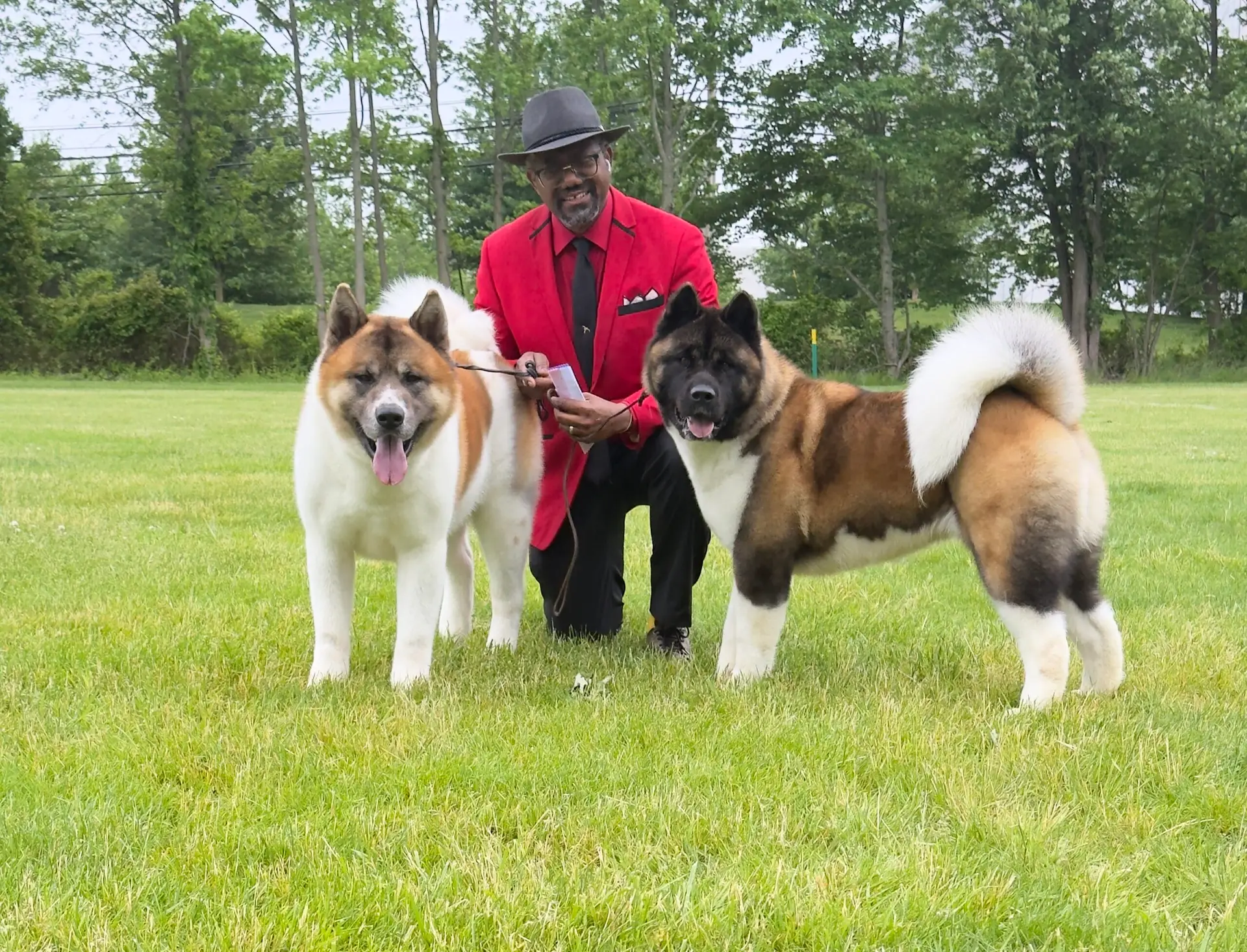
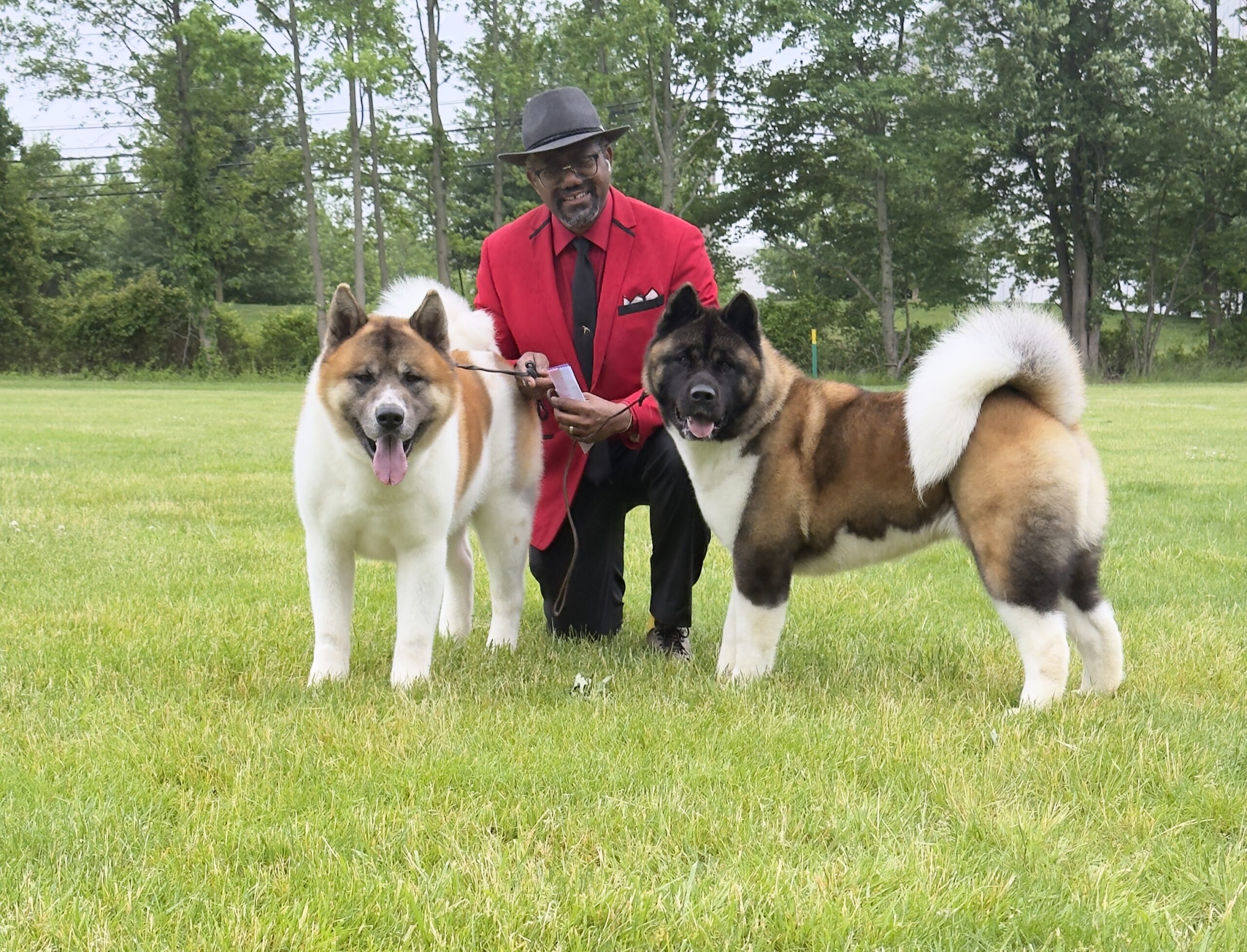
If you want a dog who stands calmly through grooming sessions like Toro and Astra do, start the work at eight weeks. Short sessions, lots of praise, no pressure. The puppy does not need to be perfect. The puppy just needs to learn that being handled, brushed, and dried is part of normal life.
The Tools That Actually Work
I have tried most of the tools sold for double-coated breeds over twenty years. Some are excellent. Some are gimmicks. Here is what I actually use and recommend.
- Undercoat rake. This is the single most important tool for the breed. The teeth are spaced and shaped to pull the loose undercoat out without damaging the outer coat. Use this for the bulk of daily and blow-coat brushing.
- Slicker brush. For finishing work and for removing the last layer of loose hair from the outer coat. Use this after the rake.
- Pin brush. For daily light maintenance brushing on weeks when the coat is not heavily shedding. Gentler than the slicker, good for keeping the coat lying naturally.
- Metal comb. For checking finished work. Run the comb through the coat after brushing and any tangles or missed undercoat will catch on the teeth.
What I do not recommend:
- Furminator and similar de-shedding tools. They cut the outer coat in addition to removing undercoat. Over time this damages the outer coat's protective function and changes the coat's texture. Avoid.
- Razor combs and stripping tools. Same problem. They alter the coat structure rather than just removing what is naturally releasing.
- Professional shaving. Never shave an Akita unless medically required. The coat does not always grow back correctly and you destroy the dog's temperature regulation.
A good undercoat rake costs around twenty dollars and lasts years. That is the entire core tool investment for managing an Akita coat. The grooming budget for this breed is genuinely small compared to breeds that need professional cuts every six to eight weeks.
A Real Pre-Show Grooming Session: Toro and Astra in Freehold
If you want to see what a complete grooming session actually looks like on an adult American Akita, here is footage of Toro and Astra being groomed before a show in Freehold, New Jersey. This is the same routine I use at home, just with the polish of pre-show preparation added.
Toro and Astra being groomed and deshedded before a show in Freehold, NJ. Notice how calm both dogs are throughout the process. This is the payoff for the work we did when they were puppies.
Watch the body language of both dogs in that video. Neither one is fighting the process. Both are standing calmly through brushing, blow drying, and handling. That tolerance was built when they were eight-week-old puppies going through their first blow drying sessions. The same routine, just on bigger dogs.
The Brushing Routine That Actually Works
Here is the routine I follow with my own dogs and recommend to every Apexx Akita family. It takes ten minutes a session, two to three times a week during normal shedding periods, and daily during blow coat.
- Start at the head and work back. Brush the head, then the neck, then the shoulders, working in the direction the coat naturally lies. This gets the dog used to the session before you reach the more sensitive areas.
- Use the undercoat rake first. Pull the rake through the coat in the direction of hair growth. Apply moderate pressure. You will see undercoat come out immediately if there is any to remove.
- Pay attention to high-density areas. The neck, the rear pants, the tail, and the ruff around the shoulders hold the most undercoat. Spend extra time on these areas.
- Switch to the slicker brush. Once the rake stops pulling out significant amounts of undercoat, switch to the slicker to finish the outer coat and smooth everything down.
- Comb through to verify. Run the metal comb through the entire coat. If the comb glides through without catching, you are done. If it catches, return to the rake on those spots.
- Reward and release. End every session positively. A treat, some praise, and the dog learns to associate brushing with calm one-on-one time.
Ten minutes. That is the entire commitment outside of blow coat. The dogs I have raised with this routine from puppyhood actually enjoy brushing sessions because they associate them with attention and calm time with their person.
Bathing: Less Is More With This Breed
The American Akita is one of the cleanest dog breeds you will ever own. The outer coat naturally repels dirt and moisture. A healthy Akita rarely develops the "dog smell" that many breeds produce. They are almost cat-like in their cleanliness.
This means bathing is needed far less often than people assume. Over-bathing actually causes problems. It strips natural oils, dries out the skin, and triggers more shedding rather than less.
My recommendations for bathing:
- Frequency. Every six to eight weeks under normal conditions. Sooner only if the dog gets into something genuinely dirty.
- Shampoo. A high-quality dog shampoo formulated for double coats. Avoid harsh detergents and human products. Oatmeal-based shampoos work well for routine baths.
- Pre-brush. Always brush thoroughly before bathing. Wet undercoat that has not been brushed out turns into a tangled mess.
- Dry completely. The undercoat traps moisture. A dog that is not dried thoroughly can develop hot spots underneath the coat. Towel dry, then air dry or use a low heat dryer until the undercoat feels dry to the touch.
If you brush regularly and only bathe when needed, you can own an Akita for a decade with minimal grooming costs and a coat that always looks the way it should.
What Affects Coat Quality Most
The visible quality of an Akita's coat reflects what is happening internally. A dull, brittle, or excessively shedding coat is almost always a sign of something else. The factors that matter most:
- Genetics. A well-bred Apexx Akita comes from generations selected for coat quality alongside temperament and health. The structural quality of the coat is bred in before you ever brush it.
- Diet. Adequate protein, omega-3 fatty acids, and overall nutrition show up directly in coat condition. A premium diet pays for itself in coat health.
- Health. Underlying health issues, parasites, thyroid problems, or allergies all show up first in the coat. A sudden change in coat quality is worth a vet visit. Read more about 7 Critical Health Problems in American Akitas for a deeper look at what to watch for.
- Bathing and grooming practices. As covered above, over-bathing and the wrong tools damage the coat over time.
- Hydration. Dogs that do not drink enough water have drier, duller coats. Make sure fresh water is always available.
If your Akita's coat suddenly changes character, becomes patchy, or sheds far more than the breed baseline, those are signals worth investigating. The coat is one of the body's early-warning systems for the dog's overall health.
The Honest Trade-Off of Owning a Double-Coated Breed
Let me give you the straight assessment. Owning an American Akita means:
- Fur on your floors most days of the year
- Two annual periods of heavier shedding that require daily attention for two to three weeks
- A vacuum that gets used more than your neighbor's with a Labrador
- Ten minutes of brushing two to three times a week
- Bathing once every six to eight weeks
- Approximately twenty dollars in tool investment
In exchange you get a dog that is naturally clean, almost odorless, weather-resistant in any climate, and beautifully coated for the entire decade or more of its life. The coat is also one of the breed's most striking features and a major part of why people fall in love with the American Akita in the first place.
If shedding is a deal-breaker for your household, this is not the breed for you. If it is something you can manage with ten minutes a few times a week, the coat becomes one of the easier aspects of owning an Akita rather than a burden.
The Bottom Line on American Akita Shedding
American Akitas shed daily and they blow coat twice a year. But with the right brush, a simple routine, and an honest understanding of what to expect, the coat is completely manageable. Most owners describe it as a small price for one of the most beautiful and functional coats in the dog world.
What you should not do is over-bathe, shave, or use damaging tools. What you should do is brush regularly, feed well, monitor health, and prepare for blow coat twice a year with daily brushing during those periods.
That is the honest answer twenty years of living with this breed has taught me. Manage the coat correctly and it will be a source of pride rather than a frustration for the entire life of your dog.
For more practical guidance on living with an American Akita, read First 30 Days With Your American Akita Puppy and Are Akitas Good Family Dogs? next.
When you are ready to talk seriously about a puppy from a breeder who selects for coat quality alongside temperament and health, our Available Dogs page is the place to start.