Posted on — Leave a comment

OFA Health Testing for American Akitas: What Every Buyer Must Know

OFA Health Testing for American Akitas: What Every Buyer Must Know

Health Testing Guide · Apexx Akitas

OFA Health Testing for American Akitas: What Every Buyer Must Know

A complete guide to what OFA clearances mean, how to read the ratings, how to verify results yourself, and what to ask any breeder before committing.
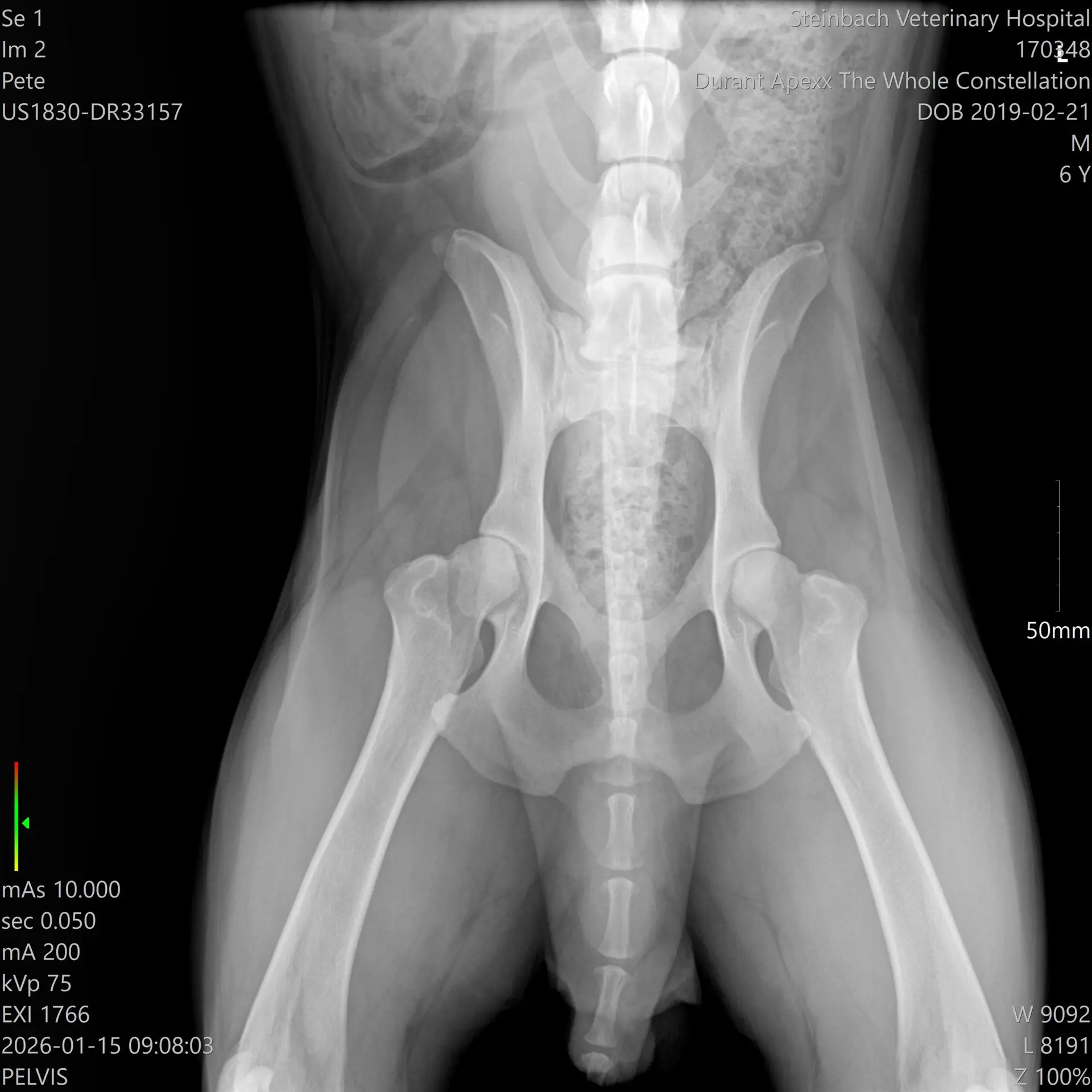
OFA hip radiograph of Durant Apexx The Whole Constellation, American Akita breeding dog at Apexx Akitas, showing structurally sound hip joints evaluated January 2026

OFA hip radiograph: Durant Apexx The Whole Constellation (“Ash”), male, DOB 2019-02-21. Evaluated January 15, 2026 at Steinbach Veterinary Hospital. This is what verified OFA documentation looks like.

If you are researching American Akita breeders, you have almost certainly seen the phrase “OFA health tested” in a breeder’s marketing. But what does it actually mean? How do you verify it? And what should you do if a breeder cannot or will not show you the documentation?

This guide answers every one of those questions in plain language. After more than 20 years breeding American Akitas, completing OFA clearances on every breeding dog in my program, and watching the long-term health outcomes of over 150 placed dogs, I can tell you that OFA testing is not a formality. It is the single most reliable predictor of whether your future Akita will live a long, comfortable, mobile life.

Read this before you talk to any breeder.


What Is OFA and Why Does It Matter for American Akitas

The Orthopedic Foundation for Animals (OFA) is a nonprofit organization founded in 1966 with a specific mission: to reduce the prevalence of inherited disease in companion animals through research, education, and open health databases. Their registry is the gold standard for canine health evaluation in the United States.

For American Akitas specifically, OFA testing matters more than it does for many other breeds. American Akitas are a large, heavy-boned working breed that grows rapidly and carries significant weight on their joints throughout their lives. According to OFA data, nearly one in four Akitas evaluated for hip dysplasia show evidence of the condition. That is a 24-plus percent rate in a breed where hip replacement surgery runs between $5,000 and $7,000 per hip. Elbow dysplasia affects roughly 15 percent of evaluated dogs. Autoimmune thyroid disease is common. Inherited eye conditions occur with enough frequency that annual ophthalmology screening is considered essential by responsible breeders.

None of these conditions are visible to the naked eye in a healthy-looking puppy. A dog can look and move perfectly normally at 8 weeks old and develop debilitating hip dysplasia by age two. The only way to know whether a puppy’s parents carry these risks is through documented, third-party health evaluations completed before those breeding dogs are ever paired.

A vet check is not the same as OFA clearance. A vet can confirm a dog appears healthy today. OFA clearances evaluate genetic structural soundness and inherited disease risk across generations.

The Five Core OFA Tests for American Akita Breeders

Responsible American Akita breeding programs complete the following evaluations before pairing any two dogs. Each test addresses a specific inherited vulnerability in the breed.

1. Hip Dysplasia Evaluation (OFA or PennHIP)

Hip dysplasia is the most prevalent and costly inherited condition in American Akitas. The hip joint is a ball-and-socket joint, and dysplasia occurs when the ball does not fit correctly into the socket, causing abnormal wear, progressive arthritis, pain, and reduced mobility over time.

The x-ray at the top of this page is Ash’s actual OFA hip radiograph taken January 15, 2026. The clear, well-seated ball-and-socket joint visible on both sides is what a structurally sound Akita hip looks like. This is the standard every Apexx Akitas breeding dog is evaluated against.

OFA hip evaluations work as follows. Radiographs are taken by the dog’s veterinarian and submitted to OFA, where three independently selected radiologists evaluate them. The dog must be at least 24 months old for a permanent certification.

OFA Hip Rating What It Means Breeding Suitability
ExcellentTight joint conformation, no evidence of dysplasiaIdeal. Actively sought in responsible programs.
GoodSlightly less than perfect but within normal rangeAcceptable for breeding when paired thoughtfully.
FairMinor irregularities, borderline normal rangeAcceptable only if paired with Excellent or Good.
BorderlineCannot classify as normal or dysplasticRetest at a later date recommended.
Mild DysplasiaEvidence of disease present but not severeShould not be bred.
Moderate DysplasiaSignificant evidence of diseaseShould not be bred.
Severe DysplasiaExtensive joint abnormalityShould not be bred.

Important: Preliminary hip evaluations taken before 24 months do not count as OFA clearances and are not assigned a number. Always verify the dog has a permanent OFA number, meaning the dog was at least 24 months old at evaluation.

PennHIP is an alternative hip evaluation method developed at the University of Pennsylvania. It measures hip laxity and can be performed as early as 16 weeks. PennHIP results are expressed as a Distraction Index score compared against the breed median.
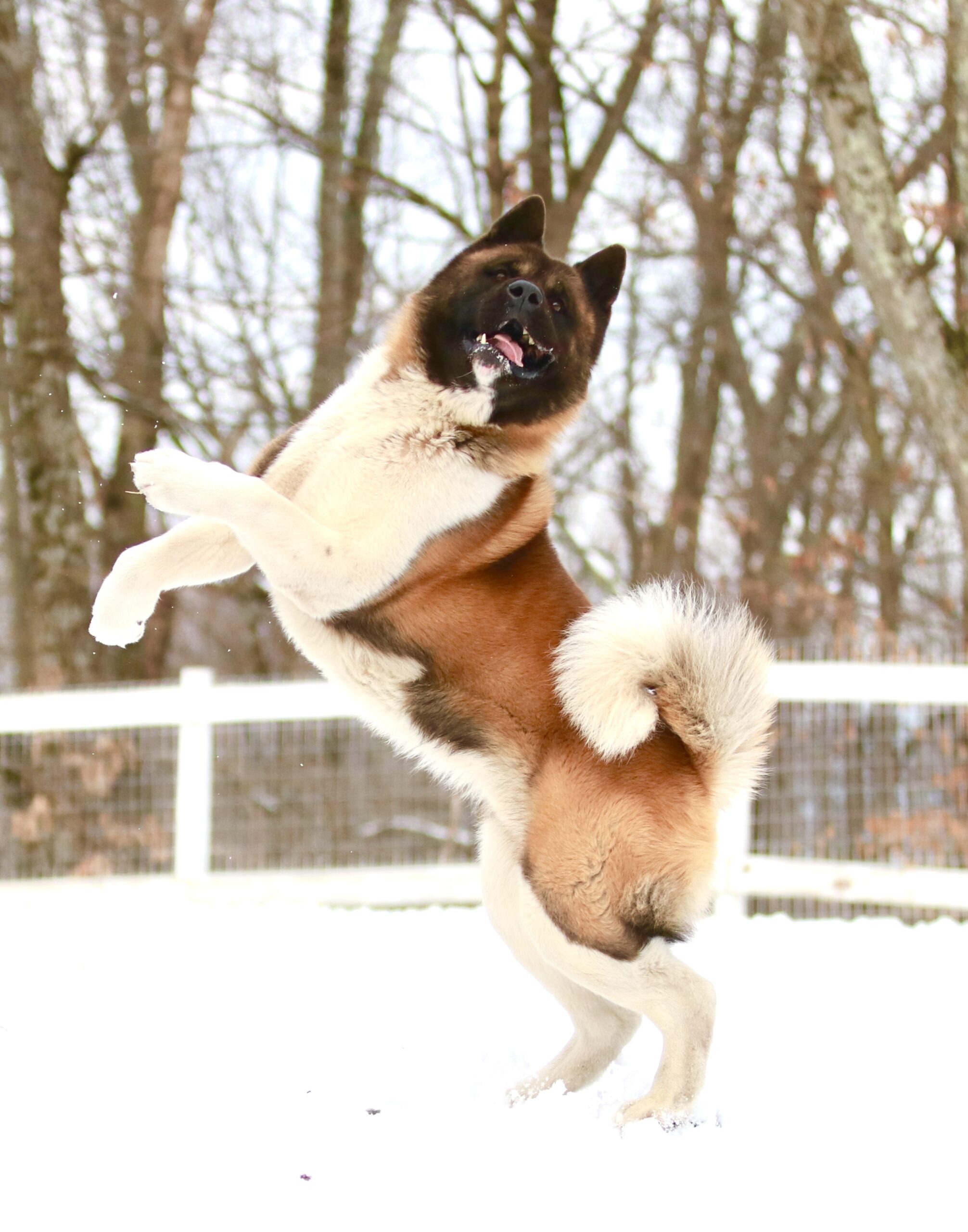
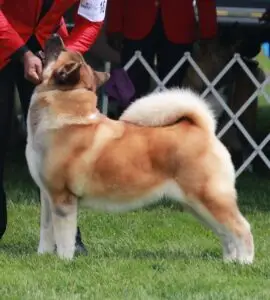
Durant Apexx The Whole Constellation, OFA-evaluated American Akita breeding dog at Apexx Akitas, demonstrating correct structure and athletic movement in snow

Ash at Apexx Akitas. The same dog whose OFA hip radiograph appears above. Correct structure produces correct movement.

2. Elbow Dysplasia Evaluation

Elbow dysplasia covers several inherited conditions affecting the elbow joint. In Akitas, elbow dysplasia is the most common cause of front limb lameness and affects approximately 15 percent of evaluated dogs.

OFA Elbow Rating What It Means
Normal (Grade 0)No evidence of elbow dysplasia. Required for responsible breeding.
Grade IMinimal bone change. Dog should not be bred.
Grade IIModerate bone change or defined bone defect. Dog should not be bred.
Grade IIIWell-developed bone change. Dog should not be bred.

Because hip and elbow radiographs are almost always taken at the same veterinary appointment, both results should carry the same test date. If a breeder shows you hip results but cannot explain why elbow results are absent from the same date, ask directly.

3. Thyroid Panel (Autoimmune Thyroiditis)

Autoimmune thyroiditis is one of the most common inherited conditions in American Akitas. The disease causes the immune system to attack the thyroid gland, leading to progressive destruction of thyroid tissue and eventually hypothyroidism. It tends to appear between 2 and 5 years of age, long after most puppies have been placed.

OFA thyroid testing evaluates T3, T4, Free T4, and thyroglobulin antibody (TgAA). Positive TgAA results indicate active autoimmune disease. Dogs with positive TgAA should not be bred.

A dog can have normal T3 and T4 values while still being TgAA positive, meaning the autoimmune disease is active but has not yet destroyed enough thyroid tissue to affect hormone levels. This is why a full thyroid panel, not just a routine hormone check, is required.

Thyroid evaluations are time-sensitive. OFA recommends annual testing for breeding dogs. A thyroid clearance from three years ago is not current documentation.

4. CAER Eye Examination (Companion Animal Eye Registry)

OFA’s Companion Animal Eye Registry (CAER) replaced the older CERF certification system. Eye examinations are performed by board-certified veterinary ophthalmologists and screen for inherited eye diseases including progressive retinal atrophy, juvenile cataracts, iris coloboma, and other heritable conditions.

CAER certifications are valid for 12 months only. Responsible breeders obtain annual eye clearances for all active breeding dogs. A certification from two years ago is not current eye clearance.

5. Cardiac Evaluation

Cardiac evaluations screen breeding dogs for inherited heart conditions. There are two levels of OFA cardiac evaluation:

  • Basic cardiac exam: Performed by a general practitioner or specialist through auscultation. Available from 12 months of age.
  • Advanced cardiac exam: Performed by a board-certified veterinary cardiologist using echocardiography. Preferred in serious breeding programs.

The OFA cardiac number suffix tells you who performed the exam. P indicates a general practitioner, S indicates a specialist, and C indicates a board-certified cardiologist.

How to Read an OFA Number

Every dog that receives a normal OFA evaluation is assigned a registration number. Learning to read these numbers protects you from misrepresentation.

Example OFA number:  AKIT-1234G24F-VPI
Segment What It Means
AKITBreed abbreviation. AKIT = Akita.
1234Sequential number. The 1,234th Akita to receive this rating.
GHip rating. E = Excellent, G = Good, F = Fair.
24Age in months when tested. 24 means 2 years old, the minimum for permanent certification.
FSex. M = Male, F = Female.
VPIPermanent identification verified. The dog has a microchip or tattoo confirmed by the examining vet.

The age segment is the most important number to check. If you see a 16 or 18 in that position on a hip clearance, the dog was not yet two years old when evaluated. That is a preliminary result, not a certification.

How to Verify OFA Results Yourself on ofa.org

This is the most important skill in this entire guide. You do not have to take a breeder’s word for their health clearances. Every normal OFA result is posted to a public database at ofa.org, and you can search it in under two minutes.

  1. Go to ofa.org and click Search in the top navigation.
  2. Enter the dog’s registered name or AKC registration number. Get this from the breeder before you search.
  3. Review the results. You will see all evaluations on file for that dog including the test type, date, rating, and OFA number.
  4. Check the dates. Thyroid and eye clearances expire. Confirm they are current for the breeding you are considering.
  5. Verify both parents. Not just one. Responsible breeders test every breeding dog on both sides of every pairing.
If a breeder’s dogs do not appear in the OFA database, there are only two explanations: the testing has not been done, or the results were abnormal. OFA policy requires all normal results from dogs 24 months and older to be posted publicly. There are no exceptions.

What to Ask a Breeder About Their OFA Clearances

Once you understand OFA testing, asking the right questions becomes straightforward.

Can you give me the OFA registration numbers for both parents so I can verify them on ofa.org?

A transparent breeder will hand you these numbers without hesitation. Any reluctance or redirection is a red flag.

How old were the parents when their hips and elbows were evaluated?

The answer should be 24 months or older for a permanent certification. Earlier evaluations are preliminary results only.

When was the thyroid panel last run?

Thyroid clearances should be current, meaning within the past 12 months for actively breeding dogs.

When was the most recent CAER eye examination for each parent?

Eye certifications are valid for 12 months. Responsible breeders complete them annually for every dog they breed.

Who performed the cardiac evaluation, and can I see the OFA documentation?

Ideally a board-certified cardiologist. The documentation should include the OFA number.

Do you track health outcomes in your placed dogs long-term?

Breeders who follow up with families and track real-world health outcomes know things that no database captures.

Red Flags That Should End the Conversation

“My vet checked them and they are healthy.”

A routine veterinary examination is not OFA testing. This response means the testing has not been done.

“We have done preliminary testing.”

Preliminaries are not certifications. Ask for the permanent OFA numbers. If they do not exist, the dogs do not have clearances.

“DNA testing covers everything.”

DNA panels test for specific gene variants but cannot evaluate hip structure, elbow development, thyroid function, cardiac anatomy, or eye health. Neither replaces the other.

“I can tell by looking at them that they are healthy.”

No one can see hip dysplasia, autoimmune thyroid disease, or inherited eye conditions in a dog that has not yet developed symptoms.

“My bloodlines are naturally healthy.”

Champion bloodlines can and do produce heritable conditions. Bloodline reputation is not documentation. OFA numbers are documentation.

Inability or unwillingness to provide OFA numbers for verification.

If a breeder claims to health test but cannot provide registration numbers you can verify on ofa.org, the testing either has not been done or produced abnormal results.

How Apexx Akitas Approaches OFA Testing

At Apexx Akitas, every breeding dog in our program has completed OFA hip and elbow evaluations, thyroid panels, CAER eye examinations, and cardiac evaluation before being considered for any breeding. This is not a minimum standard for us. It is a floor we have maintained without exception for over 20 years.

We verify OFA clearances on both sides of every pairing and we do not breed dogs whose results fall outside acceptable ranges, regardless of other qualities they may possess. A structurally impressive dog with Fair hips does not improve the breed.

This level of testing is also one of the biggest reasons a responsibly bred Akita is priced the way it is. If you want to understand the full picture, here is what a health-tested American Akita actually costs and why.

We also maintain long-term contact with our placed families and track health outcomes across our dogs’ lifetimes. If you are considering a puppy from Apexx Akitas, every parent’s OFA registration numbers are available for your verification. We expect you to check.

Summary: OFA Testing Checklist for American Akita Buyers

Test Minimum Acceptable Verify at ofa.org
Hip evaluation (OFA or PennHIP)Fair or better. Dog 24 months or older.✓ Yes
Elbow evaluationNormal (Grade 0)✓ Yes
Thyroid panel (with TgAA)Normal. Within past 12 months.✓ Yes
CAER eye examinationNormal. Within past 12 months.✓ Yes
Cardiac evaluationNormal. Cardiologist preferred.✓ Yes

If any of these evaluations are missing, outdated, or cannot be verified on ofa.org, you are not looking at a fully health-tested litter. That gap in testing is a financial and emotional risk that follows you for the full lifetime of the dog.

The Bottom Line

OFA health testing is not complicated once you understand what each evaluation covers, what the ratings mean, and how to verify them. The breeders who resist explaining their testing in detail are the ones you should walk away from. The breeders who hand you OFA numbers, encourage you to verify them, and can walk you through every evaluation are the ones worth your trust.

The American Akita is a magnificent, powerful, deeply loyal breed. When bred responsibly, they can be extraordinary lifelong companions. When bred carelessly, the health consequences fall entirely on the families who love them.

Know what you are buying. Verify what you are told. And choose a breeder who expects you to do both.
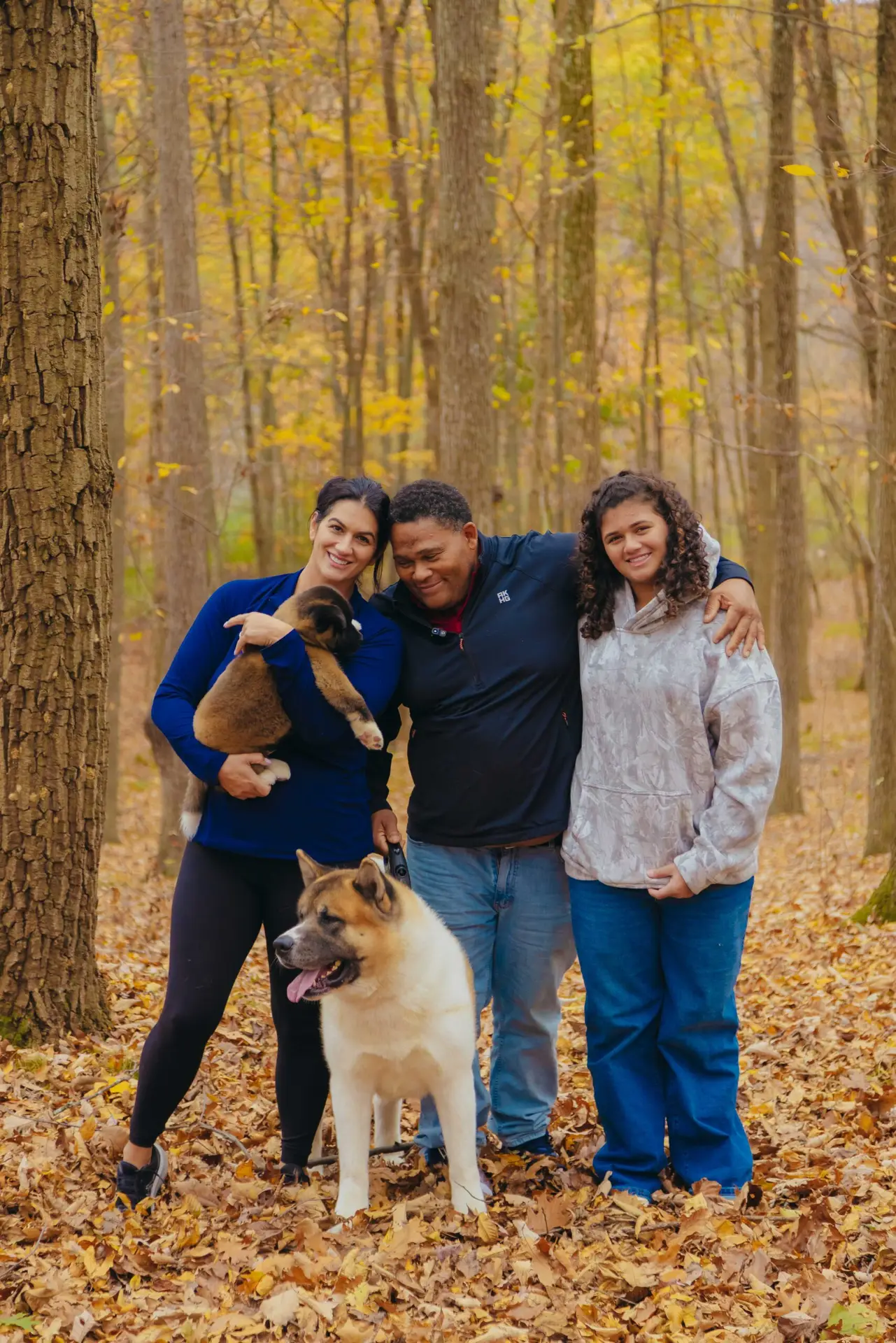

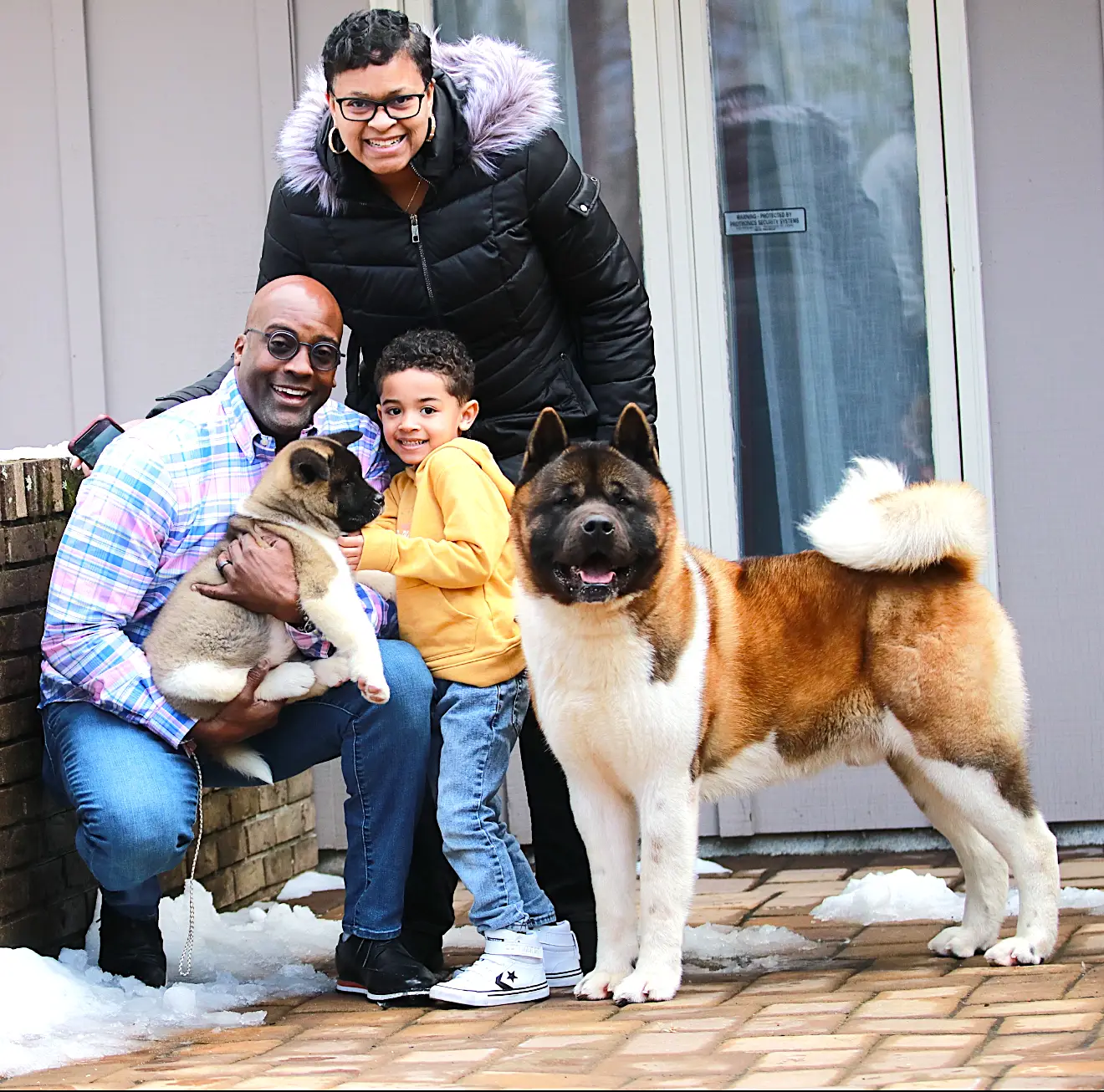
American Akita placed by Apexx Akitas with happy family, parents OFA health tested for hips, elbows, thyroid, eyes and cardiac

An Apexx Akitas family. Behind this moment: OFA-cleared hips, elbows, thyroid, eyes, and cardiac on both parents. Health testing is what makes moments like this possible for a lifetime.

Frequently Asked Questions: OFA Health Testing for American Akitas

What OFA tests should an American Akita breeder have?

A responsible American Akita breeder should have OFA clearances for hips, elbows, thyroid including TgAA, CAER eye examination, and cardiac evaluation on every breeding dog before any pairing.

How do I verify OFA health results for an Akita breeder?

Go to ofa.org, click Search, and enter the dog’s registered name or AKC registration number. All normal OFA results from dogs 24 months and older are posted publicly. If results do not appear, they either do not exist or were abnormal.

What is a passing OFA hip score for an American Akita?

OFA hip ratings of Excellent, Good, or Fair are considered passing and acceptable for breeding. The dog must also be at least 24 months old for a permanent certification. Borderline, Mild, Moderate, and Severe Dysplasia ratings are not acceptable for breeding.

How often should Akita breeders test for thyroid disease?

OFA recommends annual thyroid testing for breeding dogs. A thyroid clearance older than 12 months is not current documentation. The panel must include thyroglobulin antibody testing, not just T3 and T4 values.

What does an OFA number mean on an Akita health certificate?

An OFA number like AKIT-1234G24F-VPI breaks down as: AKIT is the breed abbreviation, 1234 is the sequential number, G is the hip rating (E for Excellent, G for Good, F for Fair), 24 is the age in months when tested, F is the sex, and VPI confirms permanent identification was verified.

Ready to meet an OFA-tested litter?

Every Apexx Akitas breeding dog carries full verifiable health clearances. Apply today and we will walk you through every number.

Apply for a Puppy
Posted on — Leave a comment

American Akita vs Japanese Akita (Akita Inu): Key Differences Every Buyer Must Understand

American Akita vs Japanese Akita: Key Differences Every Buyer Must Understand

The Short Answer The American Akita is larger and heavier boned with a broad, bear-like head and is accepted in all colors including pinto and black mask. The Japanese Akita (Akita Inu) is smaller and more refined, with a fox-like face and is limited to a few solid colors with no black mask.

Both descend from the same Japanese roots but diverged into two distinct breeds. Beyond size, coloring, and head type, the two differ in temperament nuance, coat, and breed standard. Choosing between them comes down to what you want in build, appearance, and ownership experience. Here is the full breakdown from a breeder who works with the American Akita specifically.

If you have been researching Akitas, you have likely encountered a confusing reality: there is not just one Akita breed, there are two distinct types with different origins, standards, appearances, and temperaments. Understanding the difference between the American Akita and the Japanese Akita (Akita Inu) is not just an academic exercise. It is actually the single most important piece of knowledge you can have before committing to one of the most powerful, loyal, and demanding breeds in the world.

I am Ron Durant, founder of Apexx Akitas, and I have spent over two decades studying, breeding, showing, and placing American Akitas across the United States. In that time, I have spoken with hundreds of families who were confused about which Akita they were getting and worse, families who purchased one type expecting the other. This guide covers everything: history, appearance, temperament, health, registry standards, and how to decide which type is right for your family.

Two Breeds. One Name. Completely Different Dogs.

American Akita pinto coloring black mask bear-like head Apexx Akitas
American Akita

Bear-like head. Pinto coloring. Black mask. 100 to 130+ lbs

Japanese Akita Inu red fawn urajiro fox-like head show dog
Japanese Akita Inu

Fox-like head. Red fawn with urajiro. 75 to 85 lbs. No pinto

Two Breeds, One Name

AKC: Registers both as "Akita"
FCI: Two completely separate breeds
Japan: Only Akita Inu recognized
Size gap: Up to 50 lbs difference
Pinto: American only
Black mask: American only

In the United States, the American Kennel Club (AKC) has long recognized a single breed called "Akita" technically encompassing both types, though the two have diverged dramatically over 80 years.

In FCI countries (most of Europe, Asia, and South America) they are registered, shown, and judged as two completely separate breeds.

In Japan, only the Japanese Akita Inu is recognized. The American type is not accepted by Japanese registries and would not be considered an Akita by Japanese standards at all.

A dog that wins Best in Show at Westminster under AKC rules could be disqualified from competition entirely under FCI or Japanese standards. That is how different these two dogs have become.

The History: How One Breed Became Two

The Japanese Akita Inu: A National Treasure

The Akita Inu is one of Japan's oldest and most revered breeds. Originating in the mountainous Akita prefecture of northern Japan, these dogs were bred for centuries as hunting dogs capable of tracking and holding large game including Japanese black bears, boar, and deer. They were also prized as status symbols by Japanese nobility and samurai.

In 1931, the Japanese government declared the Akita Inu a Tennen Kinenbutsu, a National Natural Monument. The story of Hachiko, the Akita who waited at Shibuya Station for his deceased owner every day for nearly ten years, cemented the breed's legendary status in Japanese culture.

American Akita champion bloodlines from Apexx Akitas breeder New Jersey

The American Akita descended from Japanese hunting dogs, refined over decades by dedicated breeders in the United States.

The American Akita: A Post-War Divergence

American soldiers stationed in Japan after World War II were captivated by the Akita. Many arranged to bring dogs back to the United States beginning in the mid-1940s. As more Akitas arrived in America, breeders began crossing them with other large breeds including Mastiffs, Saint Bernards, and German Shepherds to create a larger, heavier, more powerful dog.

By the time the AKC formally recognized the Akita in 1972, the American type had already diverged significantly. Japanese breeders, horrified by what they saw as corruption of their national treasure, pushed back. Japanese registries refused to recognize the American type. The FCI eventually formalized the split, and by the 1990s the two types were effectively separate breeds sharing a common ancestor but little else in appearance or standard.

Side-by-Side Comparison
Characteristic American Akita Japanese Akita (Akita Inu)
Size (Males)100 to 130+ lbs, 26 to 28 inches75 to 85 lbs, 25 to 27.5 inches
Size (Females)70 to 100 lbs, 24 to 26 inches55 to 65 lbs, 23 to 25 inches
BuildHeavy, bear-like, substantial boneLighter, more elegant, athletic
Head TypeBroad, massive, bear-likeNarrower, fox-like, more refined
Accepted ColorsAll colors, patterns, markingsRed fawn, sesame, brindle, white only
Pinto Allowed?YesNo, disqualifying fault
Black Mask?AcceptableNot acceptable (serious fault)
Urajiro Required?Not requiredRequired on non-white dogs
Coat TextureDense double coat, plushDense double coat, slightly harsher
AKC RecognitionYes ("Akita")Under "Akita" in US
FCI RecognitionYes (as "Akita")Yes (as "Akita Inu"), separate breed
Japanese RegistryNot recognizedRecognized by Akiho
TemperamentSlightly more adaptable with familiesMore primitive, more independent
Availability in USWidely available from reputable breedersLess common, fewer dedicated breeders
Typical Price Range$2,500 to $5,000+, see our puppy cost guide$3,000 to $6,000+
Physical Differences
American Akita: Bear-Like Power
American Akita showing bear-like head broad skull pinto coloring black mask

Broad, massive skull. Deep stop. Blunt muzzle. Pinto coloring with black mask accepted. 100 to 130+ lbs

Japanese Akita Inu: Fox-Like Elegance
Japanese Akita Inu showing fox-like head red fawn urajiro lighter build

Refined fox-like head. Triangular eyes. Red fawn with urajiro. No pinto, no black mask. 75 to 85 lbs

The American Akita: Bear-Like Power

The American Akita is built for presence and power. When you look at one head-on, you see a broad, massive skull wide between the ears with a deep stop, a blunt muzzle, and a commanding expression. The overall impression is bear-like. This is not an accident; American breeders specifically cultivated this type.

The body matches the head: deeply chested, heavily boned, powerful through the neck and shoulders. An adult male in prime condition is genuinely imposing, often over 120 pounds of dense muscle. Color variety is broad: rich reds, brindles, silvers, blacks, whites, and the striking pinto pattern, a white base with patches of color. Black masks are accepted and common.

Pinto American Akita showing accepted color patterns Apexx Akitas breeder

The pinto pattern, a white base with patches of color, is exclusive to the American Akita. It is a disqualifying fault under Japanese and FCI standards.

The Japanese Akita Inu: Fox-Like Elegance

The Japanese Akita Inu reads differently immediately. The head is more refined and narrower with a longer, more fox-like muzzle, smaller triangular eyes, and a more alert expression. The body is athletic and proportional, lighter-boned but still powerful. A male typically weighs 75 to 85 pounds, noticeably lighter than his American counterpart.

Color options are strictly controlled: only red fawn, sesame, brindle, and white. On all non-white dogs, urajiro, the pale cream to white coloring on the muzzle, cheeks, neck, chest, and underside, is required. There are no pinto Akita Inus. A black mask is a serious fault that would disqualify from competition.

American Akita correct structure and conformation Apexx Akitas New Jersey

An American Akita from Apexx Akitas demonstrating correct structure: broad skull, deep chest, and heavy bone that defines the American type.

Temperament

Both types share the foundational Akita temperament traits: loyalty, independence, intelligence, dignity, and a natural guardian instinct. For a deeper look at how these traits translate to everyday family life, read our full guide on whether Akitas are good family dogs.

American Akita Temperament

The American Akita has been bred in the United States for generations with family life in mind. At Apexx Akitas, this has been our core breeding philosophy for over 20 years. Well-bred American Akitas tend to be:

  • Calm and composed indoors, rarely destructive when properly exercised
  • Deeply loyal to their immediate family, forming powerful bonds
  • Naturally watchful, exceptional home guardians without being reactive
  • Discerning with strangers, not aggressive by default, but not immediately friendly
  • Independent thinkers who respect confident, consistent leadership
Well-bred American Akita with family showing stable calm temperament Apexx Akitas

A well-bred, properly socialized American Akita from Apexx Akitas: calm, confident, and deeply loyal to its family.

Japanese Akita Inu Temperament

The Japanese Akita Inu retains more of what breeders describe as the "primitive" character of the original breed, reflecting the Japanese preservation philosophy, which prioritizes maintaining the ancient type. Japanese Akita Inus tend to be more independent, more sensitive to their environment, and more emotionally private than the American type.

One of the most common misconceptions about Akitas in both types is that they are inherently aggressive. This is not accurate for well-bred dogs from ethical programs. For a full breakdown, read our dedicated post on whether Akitas are aggressive. Temperament is largely determined before a puppy is ever born, which is why choosing a reputable breeder is the single most important decision you will make.

Health Considerations

Both types share the genetic predispositions common to large, heavily-boned breeds. For a complete breakdown of every major condition, read our dedicated guide to American Akita health problems.

Champion American Akita from Apexx Akitas showing correct breed structure

Health testing and temperament selection are non-negotiable at Apexx Akitas.

Both types are susceptible to hip dysplasia (OFA data shows approximately 24.8% of American Akitas dysplastic), elbow dysplasia (approximately 15.3% failing evaluation), autoimmune disorders including VKH Syndrome and hypothyroidism, and bloat (GDV).

The American type's greater size amplifies orthopedic risk. A 130-pound dog places greater mechanical demand on joints than a 75-pound one. This is an argument for rigorous health testing and breeding standards, not against the American type. At Apexx Akitas, every breeding dog carries full OFA certifications, annual CERF eye examinations, complete thyroid panels, and cardiac evaluation.

Registry and Show Standards

In the United States (AKC): The AKC now distinguishes between the two types for competition purposes, with both judged according to their specific standards. The American type dominates AKC shows due to the larger breeding population.

In FCI Countries: The FCI recognizes "Akita" (American type, Group 5) and "Akita Inu" (Japanese type, Group 5) as completely separate breeds with separate classes and judging. A pinto American Akita entered in the Akita Inu class would be disqualified immediately.

In Japan: Only the Japanese Akita Inu is recognized, registered through the Akiho. The American type has no standing in Japanese competition.

Which Type Is Right for You?

Choose an American Akita If...

  • You want maximum physical presence and bear-like power
  • You want wide color variety including pinto and black mask
  • You want a dog bred for American family life
  • You want easier access to quality breeders in the US
  • You plan to show under AKC in the United States

Choose a Japanese Akita Inu If...

  • You are drawn to the primitive, ancient Japanese type
  • You want a slightly smaller but equally powerful dog
  • You plan to show under FCI standards internationally
  • You are a dedicated enthusiast of Japanese breed preservation
  • You prefer the fox-like refined head and strict color standard

Neither type is right for every family. Both require confident ownership, early socialization, strong leadership, and appropriate exercise. The breeder relationship matters enormously with this breed. Learn what separates ethical programs from the rest in our guide on what makes a reputable Akita breeder. And if you are evaluating the buying process, read our guide on how to find a healthy, well-bred Akita puppy.

Buying an American Akita
Ron Durant Apexx Akitas American Akita breeder Sussex New Jersey

Ron Durant, Founder of Apexx Akitas, Sussex County, New Jersey. 20+ years breeding champion American Akitas with full OFA health certifications.

A reputable American Akita breeder will provide verifiable OFA hip and elbow certifications for both parents, perform annual CERF eye examinations, test for thyroid and cardiac health, maintain multi-generational health records, offer a lifetime return-to-breeder policy, and interview prospective families rigorously.

Walk away from any breeder who cannot provide OFA certification numbers, always has puppies available, breeds multiple different breeds, or becomes defensive when asked about health testing. At Apexx Akitas, we have maintained an 80%+ follow-up contact rate with puppy families, tracking health outcomes through senior years. Every breeding decision is informed by real long-term data.

Frequently Asked Questions

Are American Akitas and Japanese Akitas the same breed?

No. Though they share common ancestry, in FCI countries they are recognized as two completely separate breeds with different standards, different judging, and different names: Akita and Akita Inu. In the US, the AKC now distinguishes between both types for competition purposes.

Which type is larger?

The American Akita is significantly larger. Adult males typically weigh 100 to 130+ pounds. Japanese Akita Inu males average 75 to 85 pounds, meaningfully lighter and more lightly built.

Which has the better temperament for families?

Both can make excellent family companions with proper breeding and socialization. The American Akita, bred in the US with family life as a primary goal for generations, tends to be slightly more adaptable to American household environments. Quality of breeding matters far more than type. See our full guide on Akitas as family dogs.

Are pinto Akitas American or Japanese?

Exclusively American. The pinto pattern, a white base with patches of color, is a disqualifying fault under FCI and Akiho standards. No Japanese Akita Inu may be pinto.

What is urajiro?

Urajiro is the pale cream to white coloring required on Japanese Akita Inus of non-white colors on the muzzle, cheeks, jaw, neck, chest, body, and tail underside. It is required under Akiho and FCI standards. American Akitas have no such requirement.

How much does an American Akita cost vs a Japanese Akita?

Both types from reputable health-tested programs typically range from $3,500 to $5,000+ for American Akitas and $3,000 to $6,000+ for Japanese Akita Inus. Read our full Akita puppy cost guide for a complete breakdown.

Do American Akita health problems differ from Japanese Akita Inus?

Both types share the same core genetic predispositions: hip dysplasia, elbow dysplasia, autoimmune disorders, and bloat. The American type's greater size amplifies orthopedic risk. Read our complete guide to American Akita health problems.

Ready to Learn More About the American Akita?

Explore our available puppies, review our health testing standards, or apply to start the conversation. Every Apexx Akitas family begins with education first.

Posted on — Leave a comment

Are Akitas Good Family Dogs? What 20 Years of Family Placements Has Taught Me

Well-bred American Akita with family showing stable calm temperament Apexx Akitas

Are Akitas Good Family Dogs? What 20 Years of Family Placements Has Taught Me

Yes, well-bred American Akitas are excellent family dogs. They are calm indoors, deeply bonded to their immediate family, gentle with children they grow up with, capable of coexisting with other pets when matched and introduced correctly, and remarkably respectful with elderly or fragile family members. However, "family dog" for an Akita means something specific: it is a discerning guardian breed that treats its own family with unshakeable loyalty and is naturally reserved with strangers. Success depends on the breeder behind the dog, the household the dog lives in, and how introductions to existing pets are handled. This is the honest answer from a breeder who has placed American Akitas with families for over twenty years.

Calm and confident American Akita from Apexx Akitas in a family setting
An Apexx Akita in a family setting, displaying the calm temperament that has defined our breeding program for over twenty years.

I have been placing American Akitas with families in Sussex County, New Jersey and across the country for over twenty years. In that time I have answered this exact question hundreds of times. Are Akitas good family dogs? Will this breed work in my home? Can my kids, my other dog, my elderly parent all live with one of these dogs?

I am going to give you the honest answer, and then I am going to walk you through what the answer actually depends on. Because the truth is more useful than the headline.

Yes. A well-bred American Akita from a serious breeding program is one of the best family dogs you will ever own. But "family dog" means more than just good with kids. It means fit for your specific household, your other pets, your routine, and your lifestyle. The right Apexx Akita does all of that. The wrong dog from the wrong breeder does none of it.

If you are specifically researching how this breed does with children, I have a dedicated answer for that question in Are American Akitas Good With Children? A Breeder's Honest Answer. This post is the broader picture. Family fit is not just about the kids. It is about everyone and everything in your home.

What "Family Fit" Actually Means for This Breed

Most articles online treat "family dog" as a binary trait. The dog is either good with families or it is not. That framing is too simple for a breed like the American Akita.

A well-bred American Akita is a discerning, deeply bonded guardian dog. The dog you bring home will treat your immediate family as the most important beings in its world. Your spouse, your kids, your elderly parents who live with you, the dog that already lives in your house, the cat that has been there since before the puppy arrived. All of them are inside the circle the dog will protect and love.

What that means practically is that the question is not really "is this breed good with families." The question is "will the dog I bring home recognize my specific family as its family." And the answer to that question depends on three things: the genetics behind the dog, the early socialization in the breeder's home, and the introductions you handle in the first few weeks.

This is why the breeder you choose matters more than almost anything else. A poorly bred Akita can struggle to bond, struggle to recognize its people, and struggle to coexist with the other animals in your home. A properly bred Apexx Akita arrives wired for stable, deep family bonding from day one.

Akitas With Children

The short answer is yes, well-bred American Akitas are excellent with the children in their family. They are watchful, tolerant, and remarkably gentle with the kids they live with. In twenty years of placements, the bond between an Apexx Akita and the kids it grows up with has been one of the most consistent and reliable patterns I have seen.

This question deserves more space than I can give it in one section of a broader post, so I covered it in full elsewhere. Read Are American Akitas Good With Children? for the complete answer, including how to handle the first introduction between your puppy and your child, and the rules every child in the house needs to learn.

Akitas With Other Dogs and Pets

This is where I want to spend real time, because this is the question most breeders avoid being honest about. Akitas with other dogs is the area where breed-specific traits show up most clearly, and prospective owners deserve a clear-eyed answer instead of marketing copy.

Here is the honest version. American Akitas can absolutely live successfully with other dogs. I have placed Apexx puppies into homes with golden retrievers, with German shepherds, with smaller breeds, and with other Akitas. Those placements have worked beautifully when three conditions were met.

  • The other dog already in the home has a stable, non-reactive temperament. A dog that picks fights or escalates tension will be a poor match for any Akita.
  • The two dogs are opposite sex when possible. American Akitas, like several other primitive guardian breeds, can show same-sex selectivity. Two intact males in one household, or two females, is a more challenging dynamic than male and female. Not impossible, but harder.
  • The introduction is handled correctly. Neutral territory first, slow exposure, no forced face-to-face confrontations, supervised interactions in the first weeks.

For cats and small pets, the conversation is about prey drive. The breed was developed in part as a hunting dog, and that drive does not entirely disappear just because the dog is in a family setting. The key is early exposure. An Apexx Akita raised from eight weeks alongside a cat will almost always treat that cat as part of the family for life. An adult Akita meeting an unfamiliar cat in a new context is a different conversation, and one that requires honesty about the individual dog.

When you talk to me about a puppy, I will ask about every other animal in your home. Not to filter you out, but to find the right match. Some pairings in my litters are better suited to multi-dog households than others. That selection happens at the breeder level, not at the new-owner level.

An Apexx Akita relaxed and bonded with its family in a household setting
An Apexx Akita in its family environment. This is what twenty years of breeding for stable, family-suitable temperament produces.

Multi-Generational and Multi-Adult Households

One of the most overlooked questions in breed research is how the dog handles a household with multiple adults, kids, and sometimes elderly parents or grandparents all sharing the same space. American Akitas thrive in these settings, but the dynamic deserves explanation.

An Apexx Akita will treat the whole family unit as its pack. It will not "choose" one adult to the exclusion of others, the way some single-owner breeds tend to. What it will do is recognize the calm, consistent leader in the home and look to that person for direction first. In households with multiple adults, the dog usually settles on whichever person is most reliable about feeding, walking, and setting boundaries. That is the dog's reference point. But the affection and loyalty are spread across the whole family.

For elderly family members living with the family, this breed is one of the most respectful and gentle large dogs you will find. They sense fragility. I have placed dogs into multi-generational homes where the elderly parent was the dog's quiet companion all day while the working adults were at the office, and those pairings have been some of the most touching relationships I have witnessed across two decades.

What you need from the household side is consistency. If multiple adults are giving the dog different rules, different signals, and different expectations, even a well-bred Akita will struggle. The dog is not the problem in that situation. The household is. A unified approach to training, boundaries, and routine produces a dog that fits seamlessly into a busy multi-adult home.

Real Apexx Akitas in Family Contexts

I want to give you specific examples rather than generic claims, because over the years I have taken many of our dogs into public settings, family events, and busy environments. This is what those experiences have actually looked like.

Toro has come with me into busy public spaces and educational events for children. Strangers approach him expecting tension and find him calm. Kids walk up to him and he stands quietly while they pet him. He has spent his life around our family and other animals and treats everyone in his orbit the same way. With dignity and patience.

Arctic is the embodiment of the watchful family guardian. In her home, she has lived alongside children growing up, other dogs, and the normal chaos of family life, and her response to all of it has been steady presence. She is the dog who notices everything and reacts to almost nothing.

Tice and Bengal have both demonstrated the breed's natural ease with children of different ages, in public and at home. People are repeatedly surprised by their calm in busy environments, especially given the size and presence of the dogs.

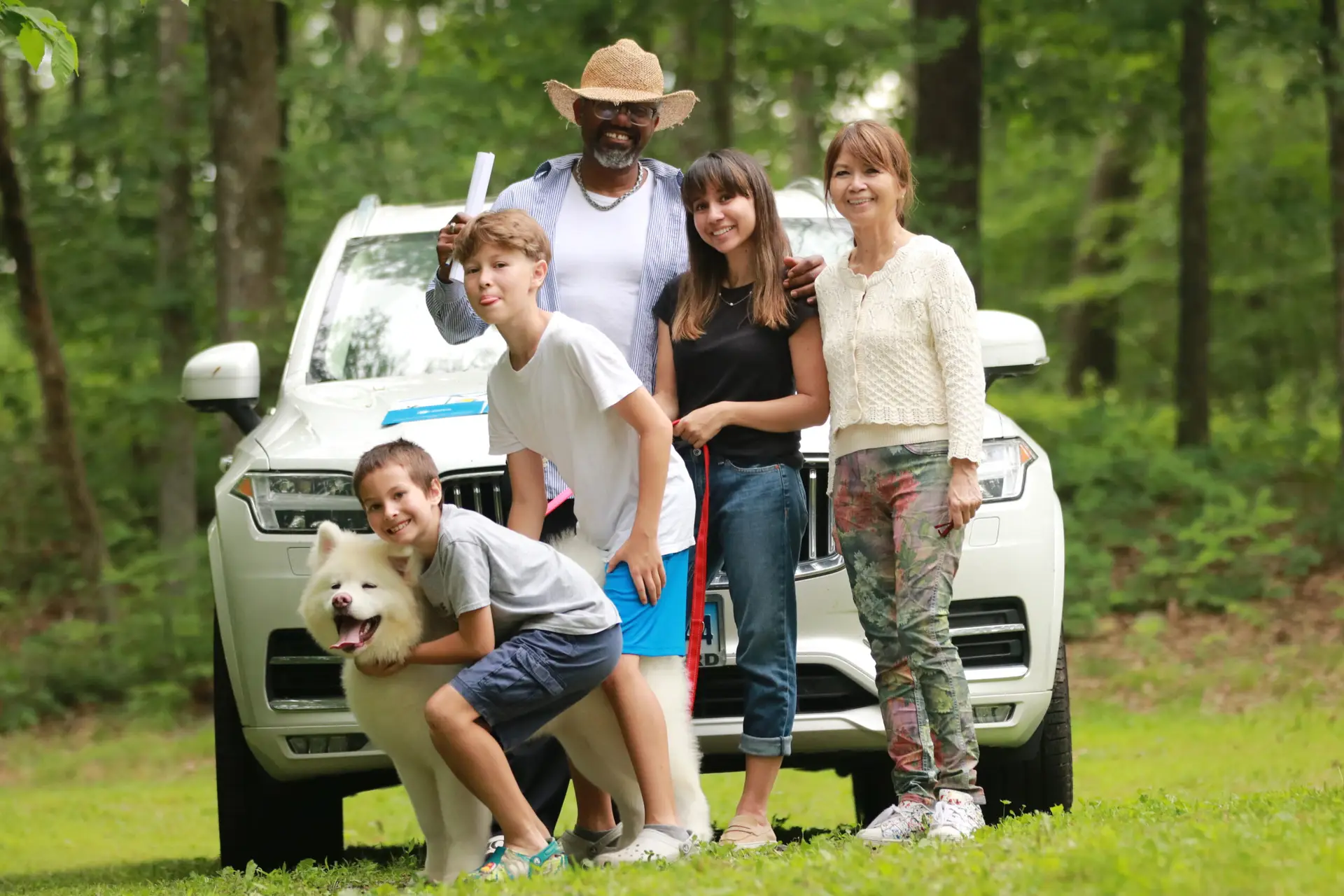
A beautiful family with their new white American Akita from Apexx Akitas champion bloodlines, with children showing the deep affection and bond a well-bred Akita inspires in its family
A new Apexx Akitas family with their white American Akita. The bond is unmistakable, and it starts on day one when the dog comes from champion bloodlines bred for temperament.

Domino, Astra, and Swatt have all shown the same pattern in different family placements. Deep bonding with their immediate family, tolerance with other animals introduced correctly, and the kind of stable nervous system that lets them function in the real world without the anxiety or reactivity people expect from large guardian breeds.

None of this is accidental. These dogs come from generations of selective breeding for exactly the temperament they display. The breeding decisions I make are designed to produce dogs that look like Toro, Arctic, Tice, Bengal, Domino, Astra, and Swatt. The fact that we see this pattern reliably across our placements is the proof that the breeding program is doing what it is supposed to do.

Who Should Not Get an American Akita

I am going to be direct here, because helping you decide against the breed is just as valuable as helping you decide for it. American Akitas are not the right family dog for every household. Specifically:

  • Households without time for training and structure. This breed needs consistent leadership in the first year. If your schedule does not allow daily attention and a clear routine, choose a different breed.
  • Families wanting a social butterfly. If you want a dog who runs up to every stranger at the park wagging its tail, an Akita is not it. They are reserved with strangers by design.
  • Owners who want an off-leash dog around unknown people and animals. This breed has guardian instincts and prey drive. Off-leash work happens in controlled environments only.
  • Chaotic households without clear boundaries. Akitas thrive in calm, structured homes. A constantly chaotic environment will produce a stressed, reactive dog regardless of how well it was bred.
  • First-time large breed owners without willingness to learn. First time is fine. Unwilling to learn is not.

If any of these describe your situation honestly, please look at a different breed. Both you and the dog will be better off, and I would rather you walk away than buy a puppy from me you cannot live with for the next twelve years.

The Bottom Line on American Akitas as Family Dogs

Are American Akitas good family dogs? Yes, when the dog comes from a serious breeding program and the family is genuinely prepared for the breed. They are calm indoors, deeply bonded to the family unit, tolerant of children they grow up with, capable of coexisting with other pets when matched and introduced correctly, and remarkably respectful with elderly or fragile family members.

What separates an excellent family Akita from a difficult one is almost always the breeder behind the dog and the household the dog lives in. Get both of those right, and you will have a family member who will be the calm, loyal, watchful presence at the center of your home for the next decade or more.

That is the answer twenty years of family placements has taught me. And it is the answer every Apexx Akita is bred and raised to fulfill.

Frequently Asked Questions About Akitas as Family Dogs

Are American Akitas good family dogs?

Yes. Well-bred American Akitas are excellent family dogs. They are calm indoors, deeply bonded to their immediate family, gentle with children they grow up with, capable of coexisting with other pets when matched and introduced correctly, and remarkably respectful with elderly household members. The breed is naturally reserved with strangers, which is a guardian trait, not aggression. Success depends on the breeder behind the dog, the household the dog lives in, and how introductions are handled.

Is an American Akita a good house dog?

Yes. American Akitas are one of the calmest large breeds inside the home. They are dignified rather than exuberant, watchful rather than reactive, and generally quiet indoors. A well-bred American Akita in a family home spends most of the day relaxed and observant, activating only when there is a genuine reason to. This indoor calm is a hallmark of the breed and one of the reasons families with children specifically often find the Akita fits their household better than more excitable large breeds.

Are American Akitas good with young children and toddlers?

Well-bred American Akitas are typically gentle and tolerant with the children in their own family, including young children they grow up alongside. However, all interactions between toddlers and any large breed dog should be supervised. American Akitas from a serious breeding program are selected for stable temperament, and the bond between an Apexx Akita and the kids in its home is one of the most consistent patterns we have seen across two decades of placements. Teaching children to interact with the dog respectfully is essential, as with any large breed.

Will an American Akita turn on its owner?

A well-bred American Akita from a serious breeding program with full health clearances and stable temperament will not turn on its owner. The breed is characterized by deep, unshakeable loyalty to its family. Cases where any breed shows aggression toward its owner are almost always the result of poor breeding, lack of socialization, medical issues, or resource guarding that was never properly addressed. Choosing a breeder who tests for temperament stability across multiple generations, provides full OFA health clearances, and offers lifetime breeder support is the single most important step a buyer can take to prevent this concern.

Is the American Akita considered an aggressive dog?

No, a well-bred American Akita is not aggressive. The breed is a discerning guardian, meaning it is naturally reserved with strangers and deeply loyal to family, but reservation is not aggression. Same-sex selectivity toward other dogs is a known breed trait that responsible breeders manage through selective placement. Reactive or aggressive Akitas typically come from breeders who did not test for temperament stability, did not perform health clearances, or did not socialize puppies during the critical development window. Genetics and early development determine adult temperament far more than any training program.

Are American Akitas good with kids?

Yes. Well-bred American Akitas are excellent with the children in their own family. They are watchful, tolerant, and remarkably gentle with kids they live with and grow up around. The key factors are early socialization, sound temperament from health-tested parents, and teaching children how to interact with the dog respectfully. As with any large breed, interactions between young children and any dog should always be supervised.

Do American Akitas get along with other dogs?

American Akitas can live successfully with other dogs when three conditions are met: the other dog has a stable non-reactive temperament, the two dogs are opposite sex when possible (Akitas can show same-sex selectivity), and introductions are handled correctly on neutral territory with slow exposure. The right breeder will help match puppies to multi-dog households based on individual temperament, not just breed generalizations.

Are Akitas good with cats?

American Akitas can live peacefully with cats when raised alongside them from puppyhood. The breed retains prey drive from its hunting history, so early exposure starting at eight weeks is essential. An Apexx Akita raised with a resident cat will almost always treat that cat as family for life. An adult Akita meeting an unfamiliar cat is a different situation that requires honest evaluation of the individual dog.

Are American Akitas good for first-time dog owners?

American Akitas can work for first-time large breed owners who are genuinely committed to learning the breed, providing consistent training, and setting clear boundaries from day one. What matters is not previous dog experience but willingness to learn and follow through. First-time owners who want a social butterfly, an off-leash dog around strangers, or a low-maintenance breed should choose differently. Ongoing breeder support during the first year is essential for a successful first-time placement.

How much space does an American Akita need?

American Akitas do best with access to a securely fenced yard and a home with enough space for a large, dignified breed to move comfortably. However, indoor calm is a hallmark of the breed. Well-bred Akitas are surprisingly settled inside the house. What matters more than square footage is daily physical exercise, mental engagement, and structured time with the family. Apartment living is not ideal for the breed but is possible with committed exercise routines and consistent enrichment.

Are American Akitas protective of their family?

Yes. The American Akita is a natural guardian breed with deep loyalty to its family. They are watchful, discerning, and naturally reserved with strangers, which makes them one of the most reliable family protection dogs when properly bred and socialized. This protective instinct is instinctive rather than trained, but it must be channeled through consistent socialization and clear leadership to produce a stable adult dog. A well-bred Akita distinguishes between a genuine threat and a normal visitor without needing to be taught the difference.

What is the temperament of a well-bred American Akita in a family home?

A well-bred American Akita in a family home is calm indoors, deeply affectionate with immediate family, gentle with children and elderly household members, tolerant of other pets when introduced correctly, and reserved with strangers. They are dignified rather than exuberant, watchful rather than reactive, and loyal without being clingy. Temperament comes from generations of selective breeding, structured early development, and consistent leadership in the new home.

If you are still researching the breed for your family, read Are American Akitas Good With Children?, Are Akitas Aggressive?, and Is an American Akita Right for You? next.

When you are ready to talk seriously about a puppy from a breeder who selects for temperament first, our Available Dogs page is the place to start.