Posted on Leave a comment

Why Temperament Starts Before the Puppy

Why Temperament Starts Before the Puppy — Apexx Akitas

Apexx Akitas  ·  Breeding Philosophy

Why Temperament Starts
Before the Puppy

Ron Durant  ·  Apexx Akitas  ·  Sussex County, New Jersey

Most people looking for an American Akita puppy start in the wrong place. They look at the puppy. They should be looking at what came before it.

I have been breeding American Akitas for over twenty years. The single question I hear most often from families is some version of: how do I know the puppy will have a good temperament? It is the right question. But the answer almost nobody gives them is the honest one — by the time you are looking at a puppy, the most important decisions have already been made. Or they have not been made at all.

This post is about what those decisions are, why they matter more than any training program, and how to tell whether the breeder you are considering actually made them.


The Breeding Decision Is the Temperament Decision

The American Akita is a dominant, powerful, and deeply loyal dog. Those qualities, when they come together correctly, produce the companion this breed is known for — calm, confident, bonded to its family, and stable under pressure. When they do not come together correctly, you get a dog that is difficult to live with and potentially dangerous.

What determines which outcome you get? The pairing. Every temperament trait this breed carries — drive, threshold, reactivity, confidence, social tolerance — has a genetic component. You cannot breed two high-strung, reactive dogs and train the puppies into stability. The ceiling is set before conception.
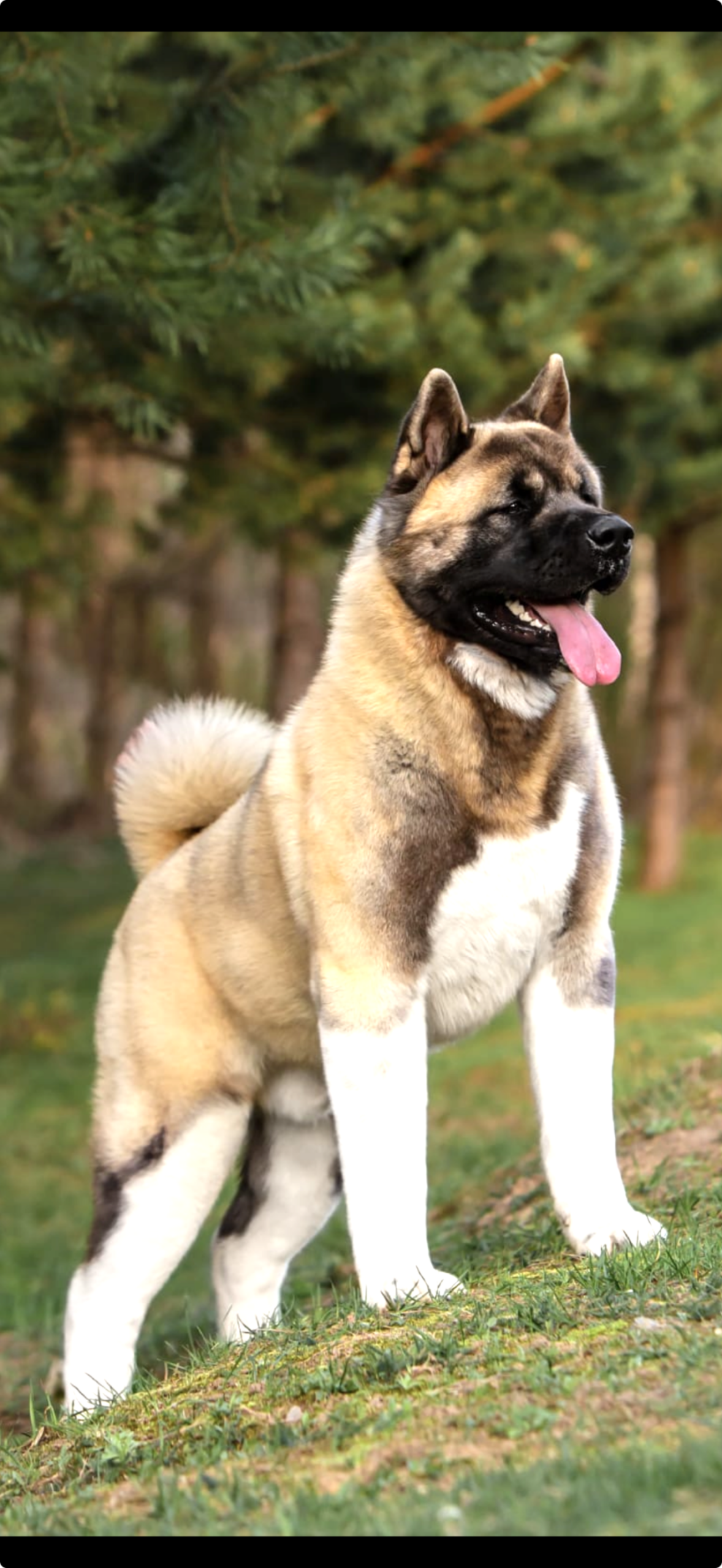
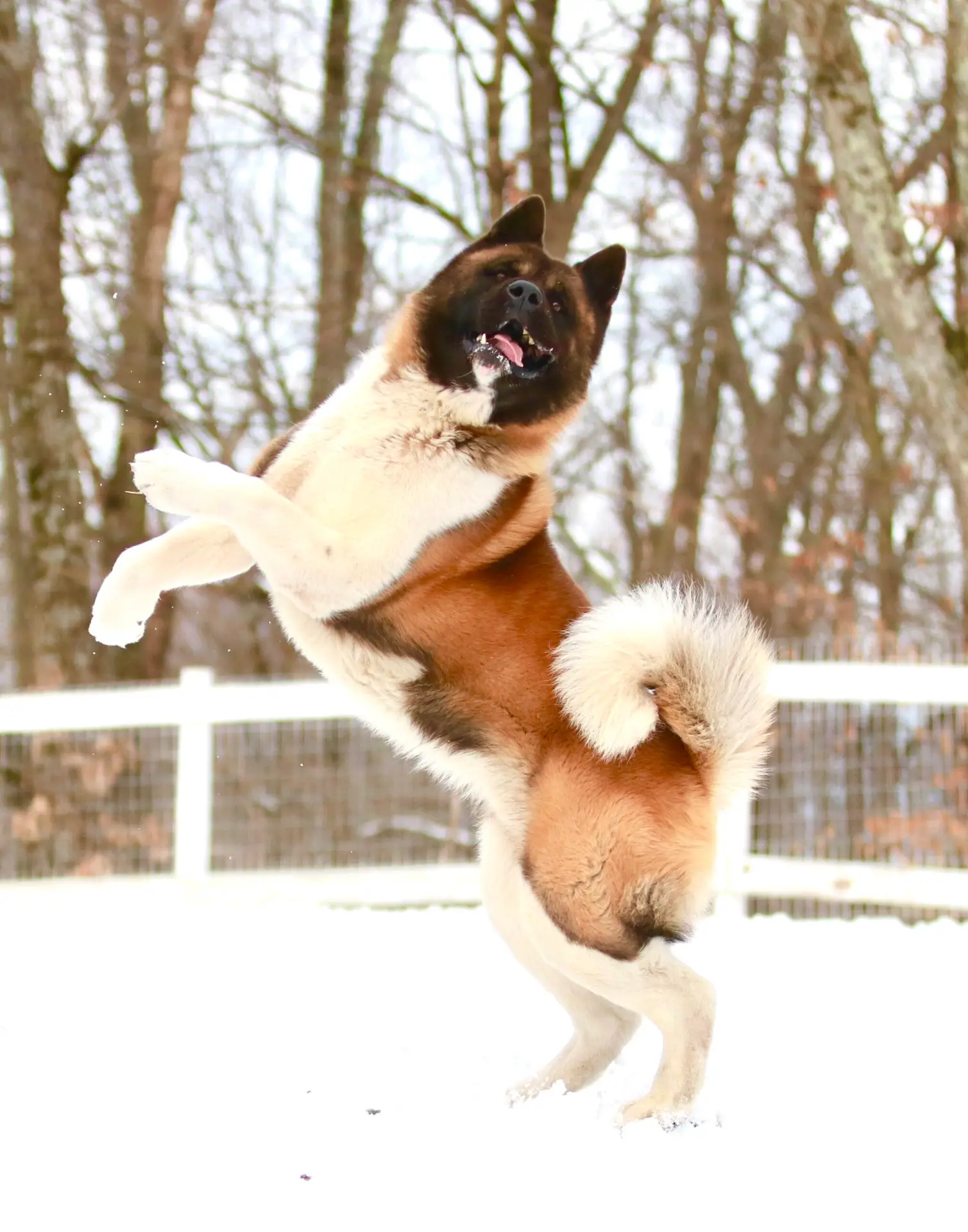
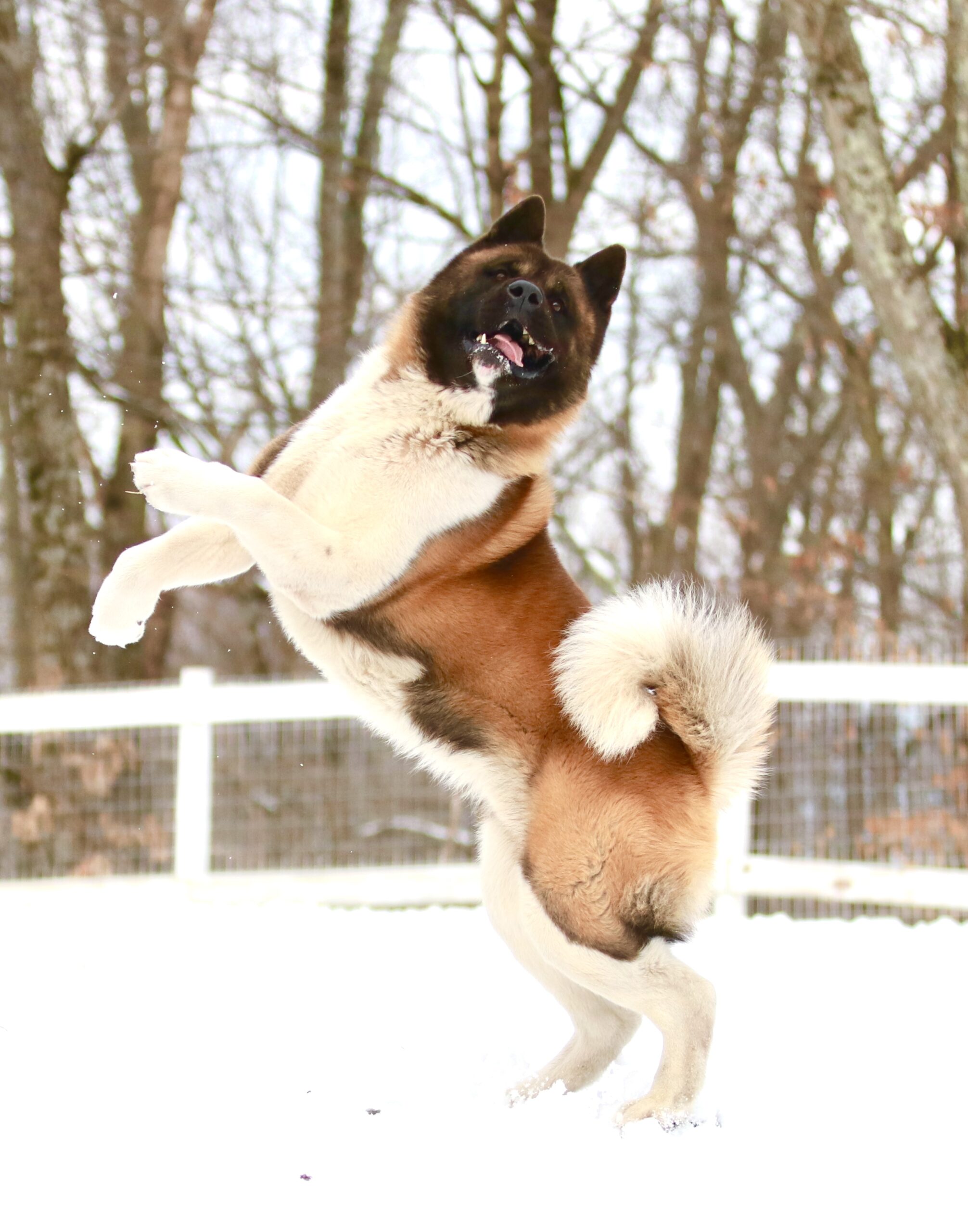
Powerful well-structured American Akita male — the result of intentional, health-tested breeding at Apexx Akitas
This is what correct breeding decisions look like in the flesh. Structure, presence, and stability do not happen by accident.

This is why I evaluate every potential breeding against three questions before anything else. Does each parent demonstrate the stable, self-assured temperament the breed standard describes? Have both parents been health-tested to confirm they are not carrying structural problems that will cause chronic pain — and therefore behavioral instability — in their offspring? And does the combination of their lines suggest a predictable, desirable outcome, or is it a gamble?

If the answer to any of those questions is uncertain, the breeding does not happen. That is not a marketing statement. It is the actual standard this program operates by, and it is why we produce limited litters instead of consistent availability.

By the time you are looking at a puppy, the most important decisions have already been made — or they have not been made at all.

Why Health Testing and Temperament Are the Same Conversation

Most buyers understand that OFA certification matters for physical health. Fewer understand why it matters for temperament. The connection is direct.

A dog with undiagnosed hip dysplasia lives in pain. A dog in chronic pain is not a stable dog. It may be reactive. It may guard resources or spaces it would not otherwise guard. It may be unpredictable in situations that would not concern a healthy animal. You cannot train around structural pain. You can only manage it, and management is not the same as a sound temperament.

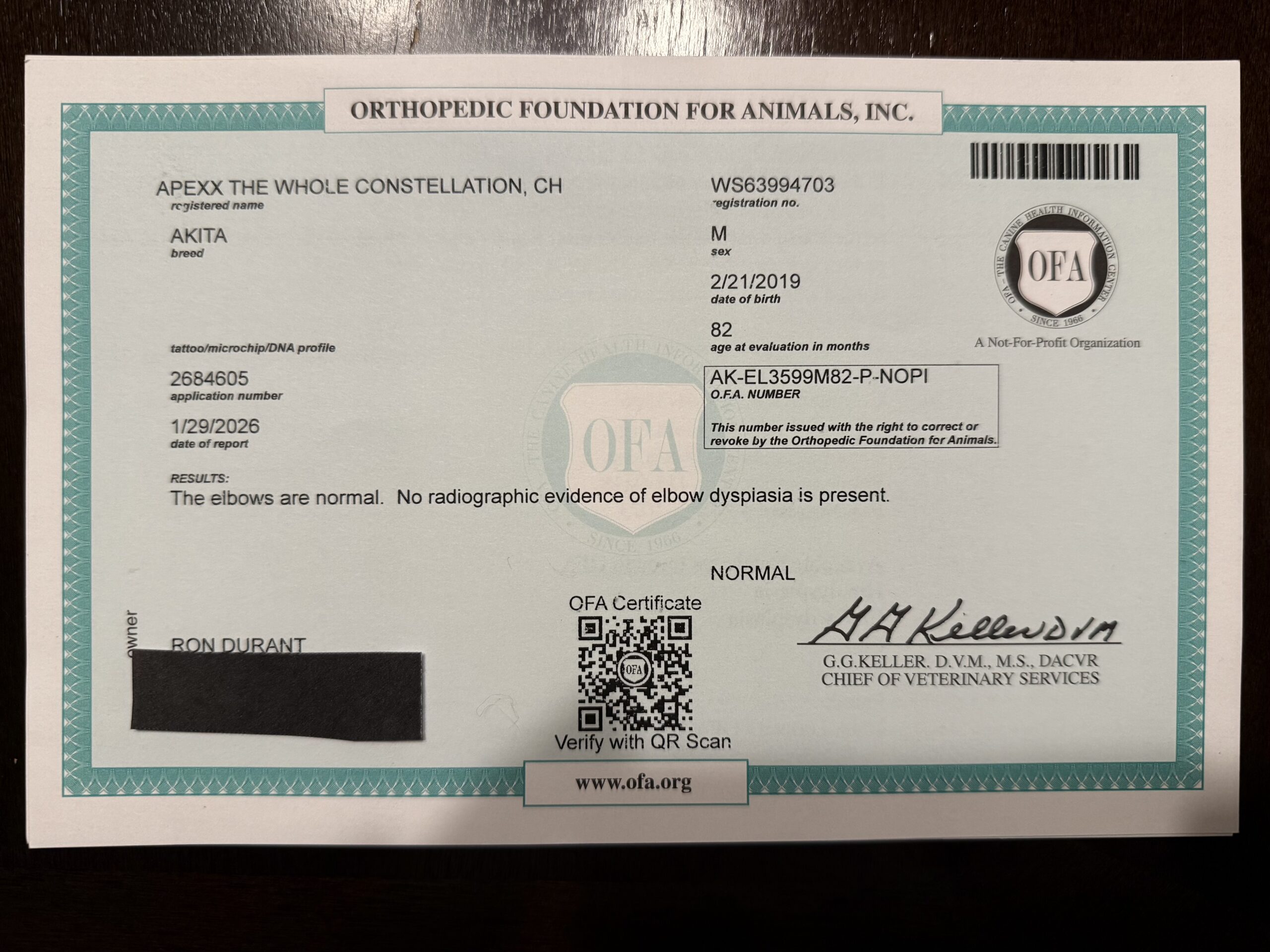
Every dog in our breeding program carries verifiable OFA certification — hips, elbows, thyroid, eyes, and cardiac. Not claimed. Verifiable. The certificate numbers are public record on the OFA database, and I encourage every prospective buyer to look them up before they ever contact me.
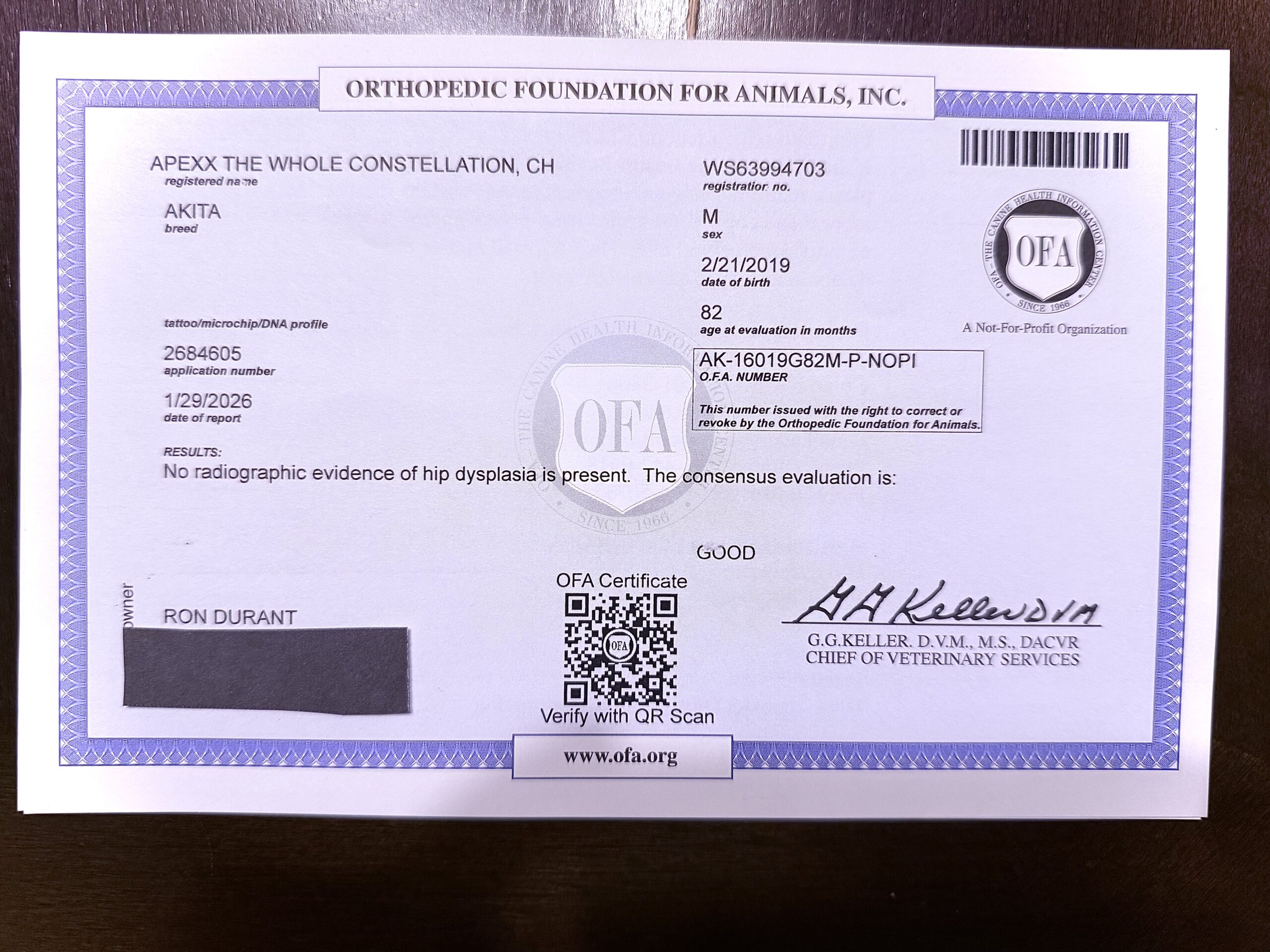
OFA hip and health report for Champion Ash — Apexx Akitas breeding stock
Champion Ash — OFA Health Report. Verifiable on the OFA public database.
OFA elbow certificate for Champion Ash — Apexx Akitas
Champion Ash — OFA Elbow Certificate. Both parents certified before any breeding decision is made.

These are not documents we produce on request. They exist before any puppy does. That is the standard. Anything less is a breeder asking you to trust their word instead of the record.


What Happens in the First Weeks That Most Breeders Miss

Genetics set the foundation. But what happens in the first twelve weeks of a puppy's life either builds on that foundation or wastes it.

The neurological system of a newborn puppy is still forming. Research into early canine development — specifically the work on neurological stimulation protocols — has shown clearly that gentle, structured handling in the first weeks of life produces measurable differences in how a dog responds to stress for the rest of its life. Dogs that received consistent early handling show stronger cardiovascular performance, greater tolerance for novel situations, and more stable responses under pressure.

This is not complicated work. It does not require equipment or facilities. It requires showing up every day, handling each puppy individually, introducing controlled novelty as the puppy is ready for it, and understanding what you are actually doing and why. Most breeders do not do it because it takes time and it does not show up in photos.

Watch — Early Socialization at Apexx Akitas

Daily handling from the first days of life. This is what early development actually looks like.

What you are watching in that video is not a special event. It is Tuesday. It is what every litter we produce receives from the day they arrive. By the time our puppies go to their families, they have been handled hundreds of times, exposed to a variety of sounds and surfaces and people, and have already begun learning that the world is not a threatening place. That foundation cannot be purchased at week eight from a breeder who did not build it.
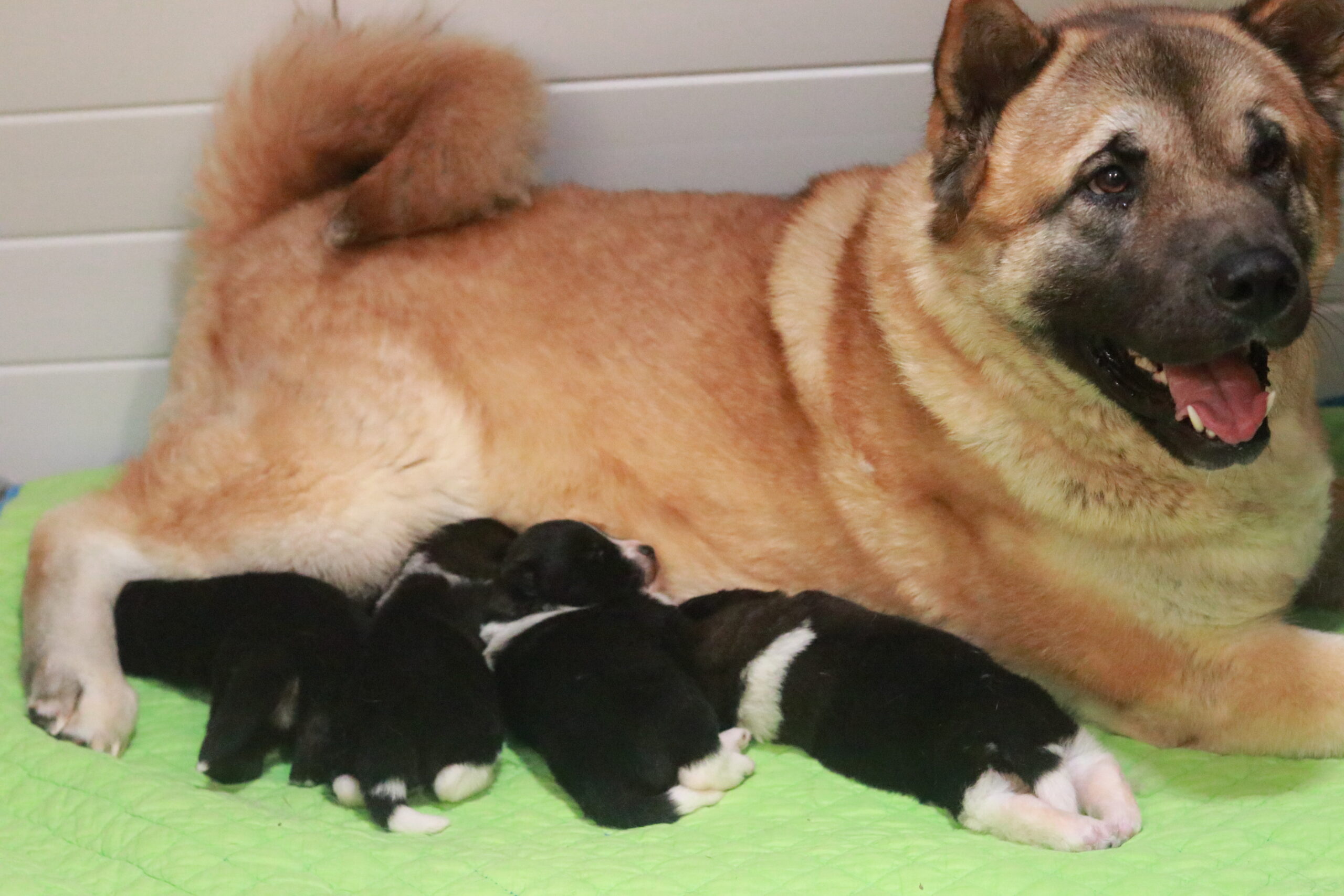
Apexx Akitas dam with her litter — champion bloodline American Akita puppies, New Jersey
The dam with her litter. The mother's temperament, her comfort in the whelping environment, and her relationship with us all shape how her puppies experience their first weeks.

What a Well-Bred Akita Actually Looks Like in a Home

The American Akita is not a dog for everyone. That is not a disclaimer — it is a fact about the breed that ethical breeders say plainly and puppy brokers never do. This dog is dominant, independent, and deeply bonded to its people. It requires confident ownership, consistent leadership, and an owner who has done their research.

But when those conditions exist — and when the breeding behind the dog was done correctly — what you get is remarkable. Calm in the home. Alert and capable outside it. Loyal without being needy. Stable around children it was raised with. Not looking for a fight, but not backing down from one either. That is the American Akita at its best, and it is entirely achievable with the right dog from the right program.
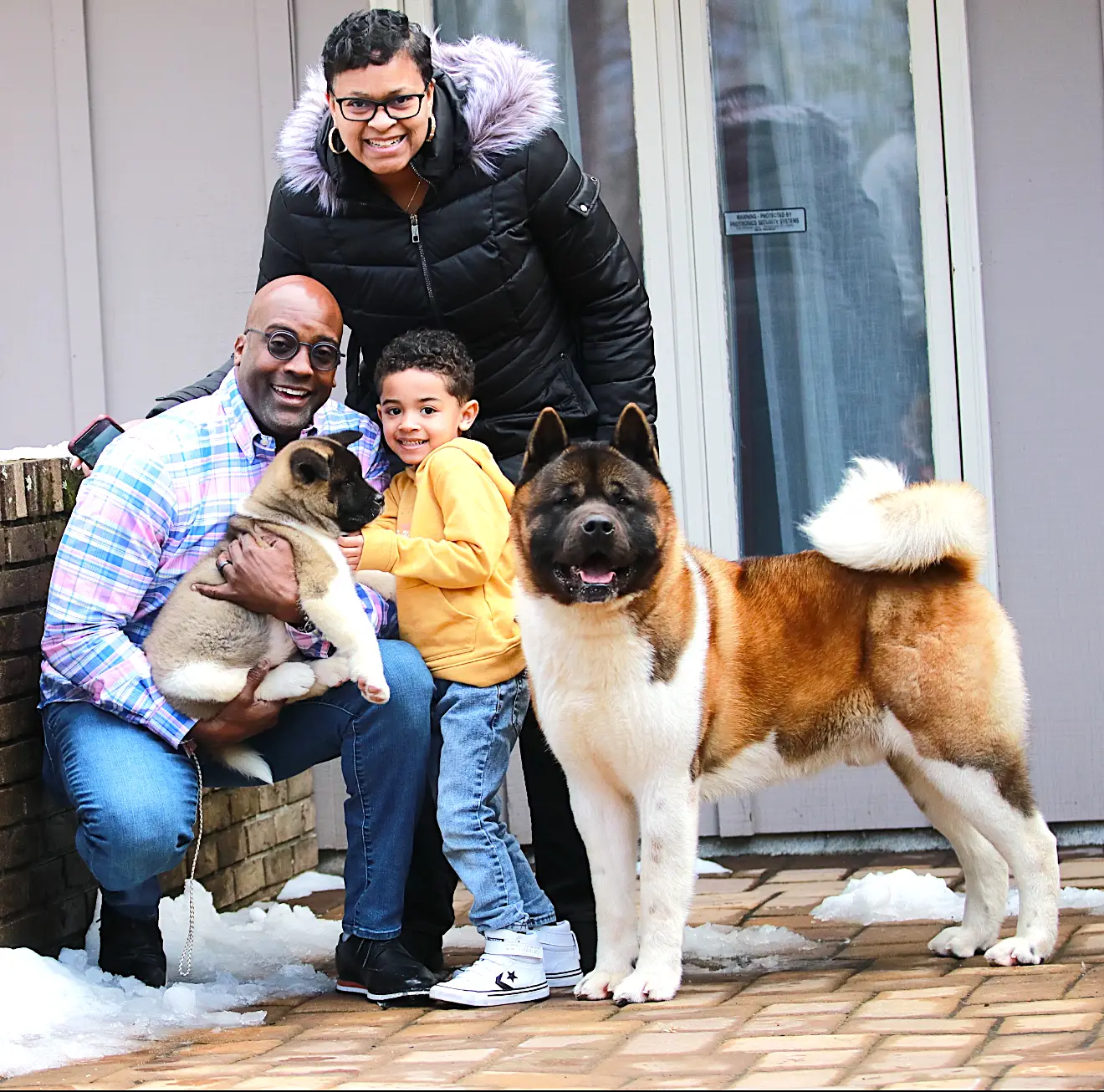
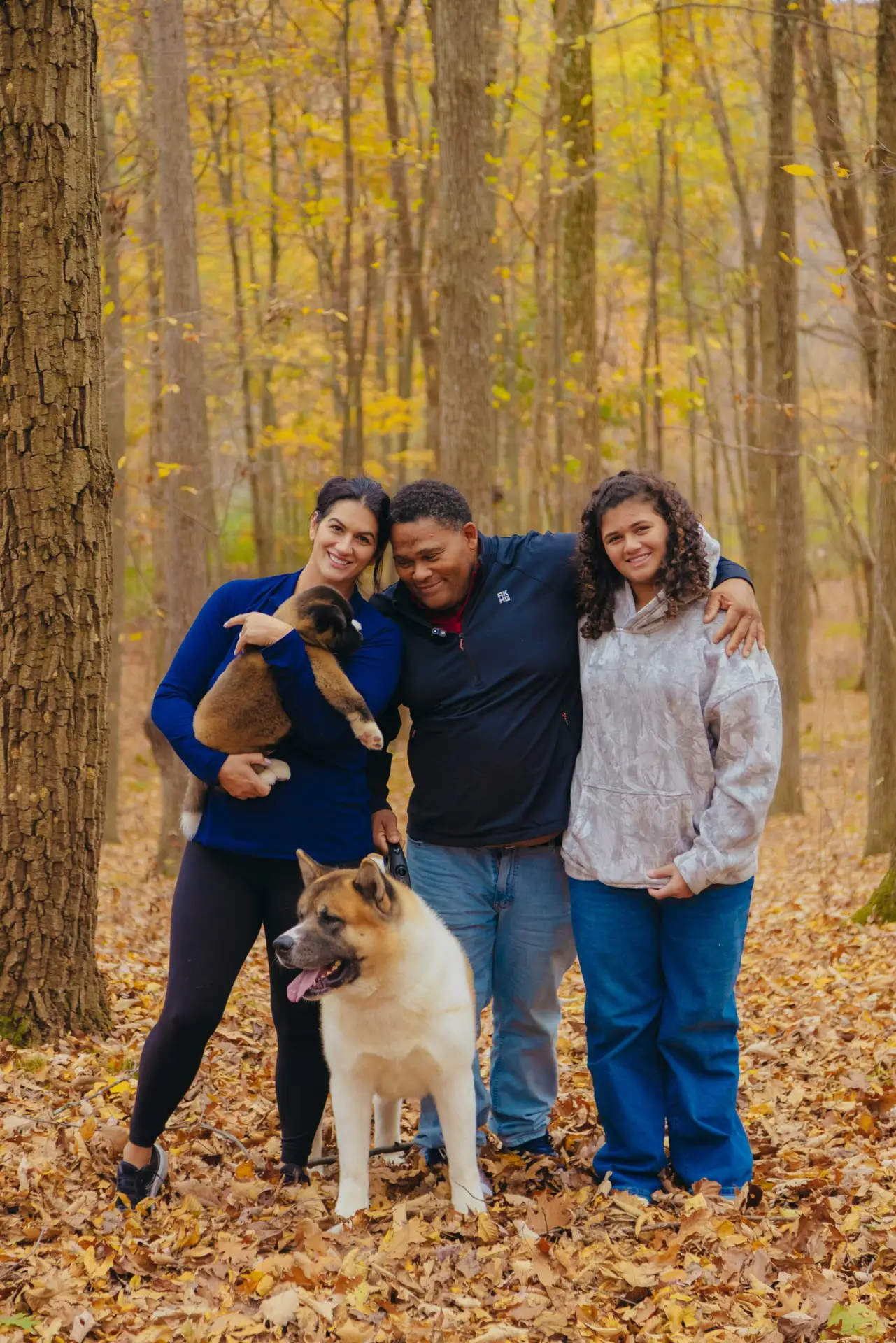
American Akita with family — calm stable temperament, Apexx Akitas puppy in home environment
A well-bred Akita in a family environment. Calm, present, stable. This is what the breed looks like when the breeding decisions were right.

What it is not is a guarantee you can purchase from a breeder who did not do the work. There is no training program that fixes the wrong pairing. There is no socialization protocol that compensates for a dam in chronic pain, or a sire with an unstable threshold, or a litter raised in a barn with no human contact. By the time you are looking at that puppy, the ceiling has already been set — and set low.

There is no training program that fixes the wrong pairing. The ceiling is set before the puppy is born.

The Questions Every Akita Buyer Should Ask

Before you commit to any breeder — including us — ask these questions and expect specific answers.

Can you provide the OFA certification numbers for both parents? Not a certificate image. The actual numbers, so you can verify them yourself at ofa.org. A reputable breeder hands these over without hesitation.

How many litters do you produce per year, and are puppies always available? Limited, intentional litters are a feature, not a flaw. A breeder with constant availability is a breeder making different decisions than we are.

What is your early development protocol? What specifically happens with the puppies between birth and eight weeks? If the answer is vague, it means the answer is nothing.

What do you look for in a home, and what would disqualify a buyer? A breeder who approves every applicant is not evaluating applicants. We turn people away. That is part of the job.

What happens if the placement does not work? Every dog we produce has a home with us for life if the placement fails. That commitment is in writing.

Ron Durant — founder of Apexx Akitas, American Akita breeder Sussex County New Jersey

Ron Durant

Founder, Apexx Akitas  ·  Sussex County, New Jersey
Twenty-plus years breeding champion American Akitas with full OFA health certification. Every litter is planned. Every placement is evaluated. Every dog produced here has a home with us for life.

Common Questions

Is Akita temperament genetic or shaped by training?

Both matter, but genetics set the ceiling. A puppy from parents with unstable temperament cannot be trained into the calm, confident dog the American Akita is meant to be. Training refines what breeding built — it cannot replace it.

What is OFA certification and why does it matter for temperament?

OFA certification verifies that a dog's hips, elbows, thyroid, and other health markers meet the breed standard. Chronic pain from untested structural problems directly affects temperament — a dog in discomfort is a dog that cannot be stable. Health and temperament are inseparable in this breed.

What should I look for in a reputable American Akita breeder?

Verifiable OFA certification numbers for both parents, a clear temperament evaluation process, limited and intentional litters, and a breeder who interviews you as thoroughly as you interview them. Walk away from anyone who always has puppies available or becomes defensive when asked about health records.

At what age does Akita temperament development begin?

Neurological development begins within the first days of life. The critical socialization window opens around three weeks and closes around twelve to fourteen weeks. What happens — or does not happen — in that window has a permanent effect on how the dog processes the world for the rest of its life.

If You Are Serious About an American Akita

We produce limited litters from health-tested, champion-bloodline parents. Every placement goes through an evaluation process because every dog we produce matters to us long after it leaves. If that is what you are looking for, start here.

View Available Puppies
Posted on Leave a comment

How to Buy an American Akita Online Safely

Dr. Zev with his male American Akita from Apexx Akitas showing confident calm temperament, Sussex County New Jersey

How to Buy an American Akita Online Safely: Scams, Fake Reviews, and the Red Flags Every Buyer Needs to Know

Dr. Zev with his champion bloodline male American Akita from Apexx Akitas, Sussex County New Jersey

Dr. Zev with his male American Akita from Apexx Akitas. This is what a confident, well-bred dog looks like with his person.

There has never been more information available about American Akitas than there is today. There has also never been more noise, more misinformation, and more deliberate manipulation designed to confuse buyers and steer them away from reputable breeders.

I have been breeding American Akitas for over 20 years. In that time I have placed more than 150 dogs into families across the country. I have also watched the online landscape for this breed become increasingly polluted. Puppy mills dressed up as legitimate operations. Scam websites built to steal deposits. Competitors who use anonymous online forums to systematically damage the reputations of breeders they see as threats.

This post is about all of it. How to identify a genuine breeder when you are searching online. How to recognize when reviews have been manipulated. How to verify every claim a breeder makes before a single dollar changes hands. And how to protect yourself from the scams that have already cost other Akita buyers thousands of dollars and months of heartbreak.

If you are serious about bringing an American Akita into your home, read this first.

The Online Akita Market Is Not What It Appears to Be

Most people begin their search for an American Akita the same way they begin everything else: with a Google search. What they find looks reassuring. Websites with professional photography, glowing testimonials, OFA certificates displayed prominently, contact pages with phone numbers and addresses. The problem is that many of these signals are easy to fake.

The Better Business Bureau has documented this specifically in the dog breeding space. Scam breeders build convincing websites using stolen photos, fabricated health certificates, and invented testimonials. Buyers pay deposits, sometimes thousands of dollars, for puppies that do not exist. When they try to follow up, the website disappears.

American Akitas are a specific target for these operations because they are a relatively uncommon breed. Families searching for American Akita puppies for sale often encounter this manipulation before they ever make contact with a real breeder. They may not have a local reference point, and they are often willing to work with someone at a distance. Scammers know this and exploit it.

Real case on record: A Texas buyer paid nearly $700 for an Akita from a fraudulent website, drove hours to pick up the dog, and arrived to find no breeder and no puppy at the address provided. The website, the photos, and the so-called breeder were entirely fabricated. Cases like this have been reported to the BBB, news outlets, and consumer protection agencies across the country.

This is the most extreme version of online fraud. But there are subtler forms of manipulation that are just as damaging and far more common.

The Problem With Online Reviews of Akita Breeders

Before I explain how to evaluate a breeder, you need to understand something important about online reviews in the dog breeding world: they are not a reliable measure of a breeder's quality. In many cases, they are the opposite.

Reddit, Facebook groups, and online forums give the impression of organic community feedback. In reality, many of these spaces are controlled or heavily influenced by people with a financial interest in who appears trustworthy and who does not. In the American Akita community specifically, it is not uncommon for breeders to use anonymous accounts to post negative reviews of competitors, control which comments survive in certain threads, and coordinate efforts to suppress positive feedback from satisfied buyers.

I know this firsthand. Customers of mine have attempted to post their positive experiences in threads discussing my kennel, only to have those comments deleted repeatedly by whoever controls the thread. The negative content remains. The positive content disappears. The result is a manufactured impression that has nothing to do with the actual experience of actual families who bought dogs from me.

This is not rare. It is a tactic, and it is used specifically because it works. Buyers trust peer reviews. They trust the apparent consensus of strangers on the internet. They do not know the consensus is being engineered.

What this means for you: Do not make a final decision about an American Akita breeder based on forum posts or Reddit threads. These can be and often are manipulated. The only reviews worth trusting are verifiable: direct contact with named, placed families, cross-referenced with documented health results you can check yourself.

Watch: Temperament Reinforcement at Apexx Akitas

Ron Durant working with four American Akitas at the Apexx Akitas facility. This is what deliberate temperament reinforcement looks like in practice, and exactly what you should be asking to see from any breeder you are seriously considering.

How to Verify a Breeder's Claims

Everything a reputable breeder claims about their program is verifiable. That is not a coincidence. It is the point. Here is the complete framework I recommend to every buyer, whether they are considering Apexx Akitas or any other program.

Start with OFA

Go to ofa.org and search the registered names of both parents. A breeder should give you these names without hesitation. OFA results are public record. If you find the dogs in the database and the results match what the breeder told you, that is a green flag. If the dogs are not there, or if the breeder is reluctant to provide names, stop the conversation.

A complete OFA health panel for American Akitas includes hip and elbow evaluations, thyroid testing, annual CERF eye exams, and cardiac evaluation. If a breeder mentions only hips, or hips and elbows, they are not performing complete health testing regardless of what their website says.

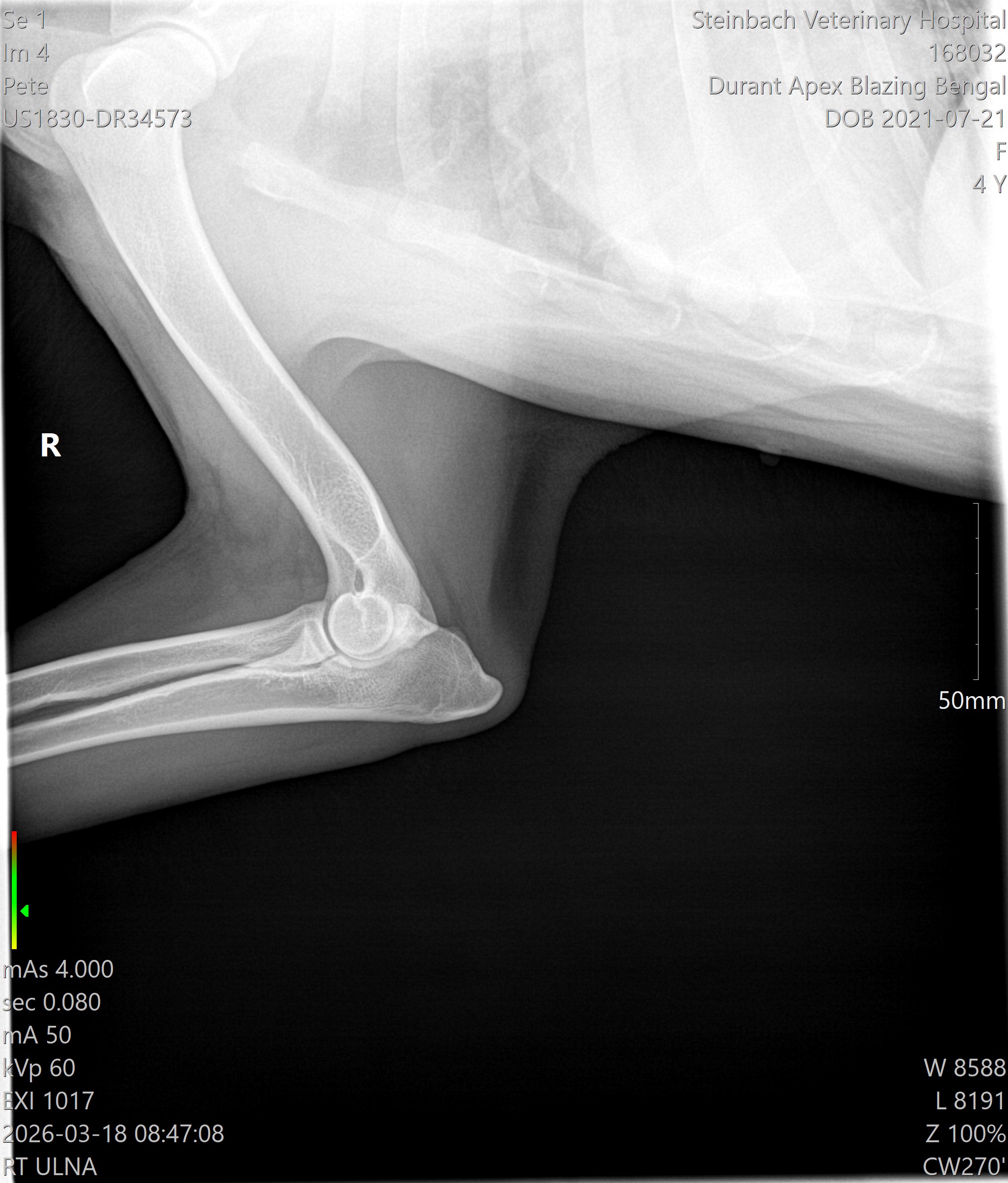
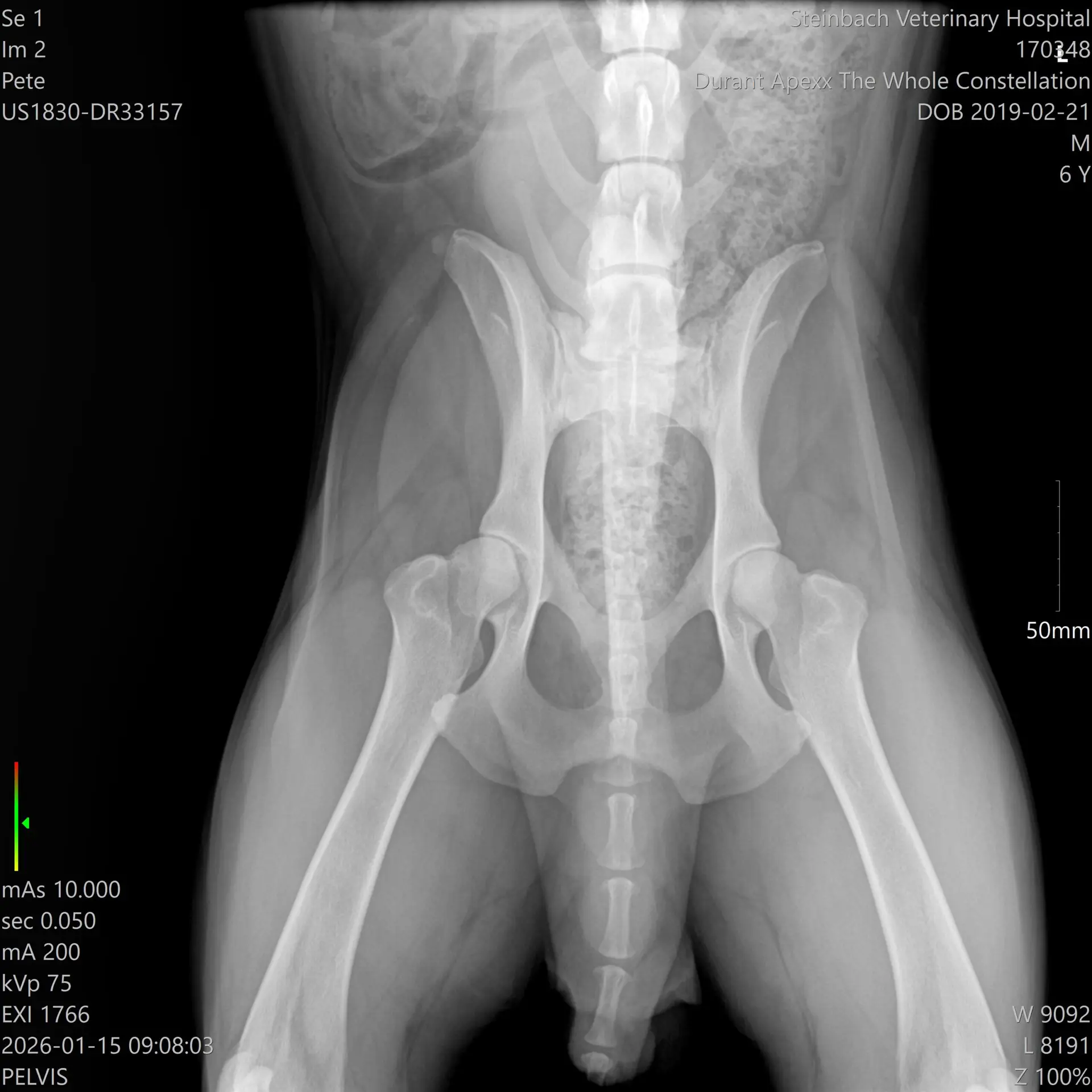
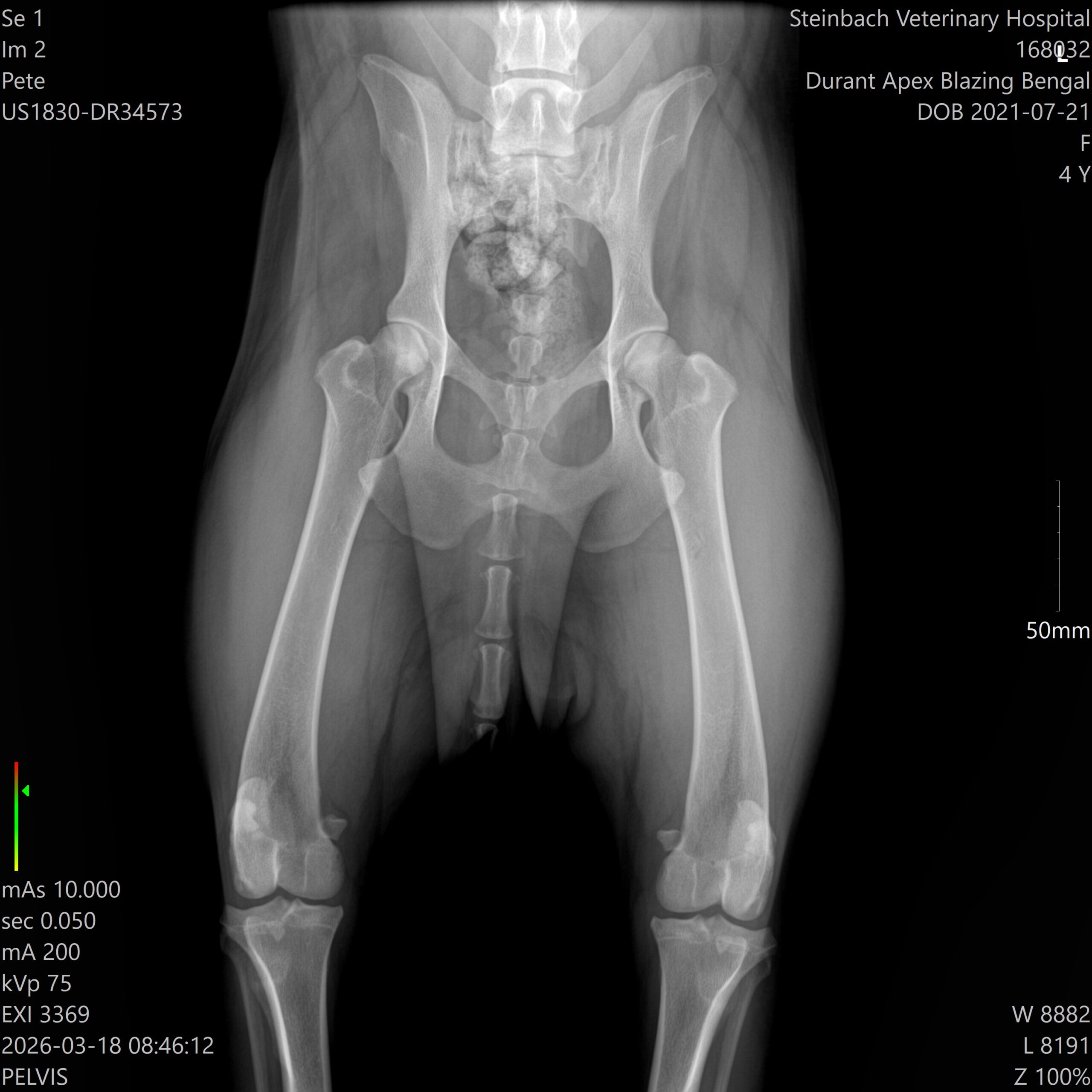
OFA hip X-ray of Apexx Blazing Bengal showing excellent hip clearance, Steinbach Veterinary Hospital 2026

OFA hip X-ray, Apexx Blazing Bengal. Steinbach Veterinary Hospital, March 2026. Results publicly verifiable at ofa.org.

OFA elbow X-ray of Apexx Blazing Bengal showing excellent elbow clearance, Steinbach Veterinary Hospital 2026

OFA elbow X-ray, Apexx Blazing Bengal. Same evaluation date. Both results on file and verifiable.

Those are actual OFA radiographs from one of my breeding dogs, taken at Steinbach Veterinary Hospital in March 2026. Every breeder you speak to should be able to show you documentation at this level, and you should be able to verify it yourself at ofa.org using the dog's registered name. If they cannot produce this, move on.

Verify AKC Registration

Ask for the AKC registration numbers for the sire and dam and verify them at the AKC registration lookup. Legitimate breeders register their dogs. If registration paperwork is described as "pending" or "coming soon" after a litter is born, that is a red flag.

Request References and Actually Contact Them

Any legitimate breeder with five or more years of experience should be able to give you direct contact information for multiple placed families. Not just names. Not just emails. Phone numbers for people willing to speak with you. If a breeder cannot or will not provide this, ask yourself why.

When you contact references, ask specific questions: How long have you had the dog? Have there been any health issues? Did the breeder follow up after placement? Would you use this breeder again? The answers to those questions will tell you more than any forum thread ever could.

Insist on a Video Call Before Any Payment

Scam operations cannot survive a video call. A legitimate breeder will always be willing to show you their facility, introduce you to their dogs, and have a real conversation with you on camera before any money changes hands. If a breeder avoids video calls, makes excuses, or tells you they prefer to communicate only by text or email, walk away.

Read the Contract Before You Sign Anything

A reputable breeder's contract protects both parties. It will specify health guarantee terms, what happens if a hereditary condition is diagnosed, and a lifetime return-to-breeder clause. That last point matters more than most buyers realize. Responsible breeders accept their dogs back at any point in the dog's life rather than allow them to end up in rescue or rehoming. If a breeder's contract does not include a return clause, they are not fully committed to the dogs they produce.

Red Flags That Should End the Conversation

Any one of these should give you serious pause. Multiple together should end the inquiry completely.

  • Puppies always available with no waitlist and no screening process
  • OFA results mentioned but not verifiable at ofa.org
  • Pressure to pay a deposit quickly before the puppy is gone
  • Shipping only with no option to visit and no video call offered
  • Price significantly below market rate for health-tested dogs
  • Vague or dismissive answers to health testing questions
  • No written contract or a contract with no health guarantee
  • No references from placed families or references who do not respond
  • Website with no physical address or a phone number that goes unanswered
  • Communication only through a contact form or a single email address

What a Legitimate American Akita Breeder Looks Like

In contrast to the red flags above, here is what you should expect from a reputable program.

  • Full OFA clearances on all breeding dogs, verifiable at ofa.org
  • An application process that takes your lifestyle and experience seriously
  • A waitlist, because responsible breeders do not produce litters on demand
  • Willingness to video call and welcome a visit
  • References from placed families willing to speak openly
  • A detailed written contract with a health guarantee and lifetime return clause
  • Ongoing contact and support after placement
  • Transparent answers to every question you ask
  • No pressure of any kind
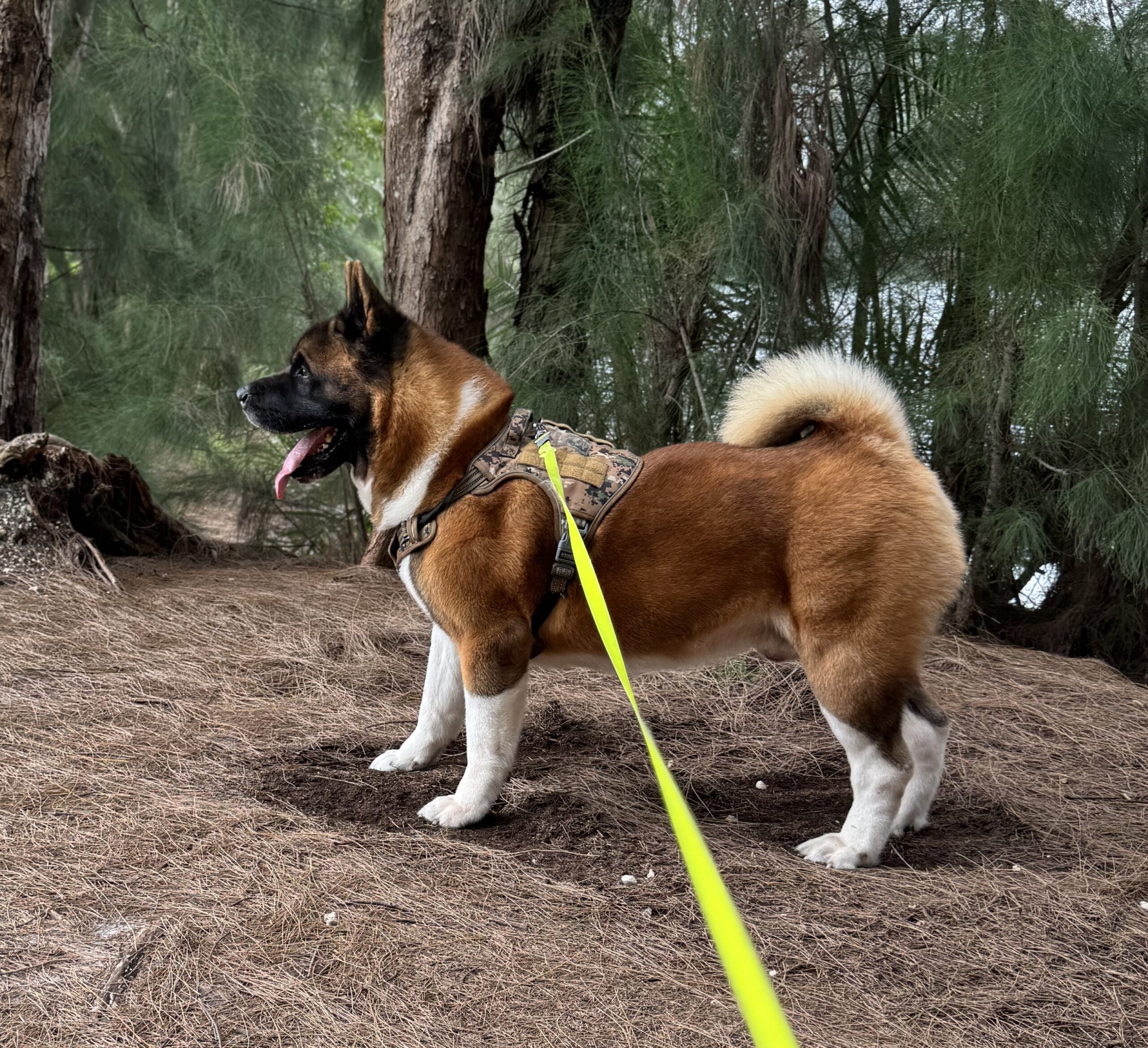
Orange Red male American Akita from Apexx Akitas showing excellent natural structure, Dr Zev's dog

Dr. Zev's orange red male from Apexx Akitas, shown here standing naturally in the field. Correct structure is not staged for a photo. It is bred in.

On Protecting Yourself From Review Manipulation

Given what I described earlier about review manipulation, here is a practical approach to evaluating online feedback about any breeder.

Discount anonymous sources heavily. Forum posts, Reddit comments, and Facebook group threads from accounts with no history or no verifiable identity are not reliable data points. They cost nothing to create and nothing to coordinate.

Look for patterns. If a thread shows consistent positive comments being removed while negative ones remain, that is a sign of active management, not organic community feedback.

Go directly to Google Business reviews, which are harder to manipulate because they require a real Google account. They are not perfect, but they carry more weight than anonymous forum posts.

Most importantly, prioritize direct contact over everything. One phone call with a placed family who gives you their name, tells you about their dog, and answers your questions honestly is worth more than a hundred anonymous posts on either side.

Why This Matters More With Akitas Than Most Breeds

The American Akita is a serious dog. Large, powerful, deeply loyal, and genuinely difficult in the wrong hands or from the wrong gene pool. A poorly bred Akita with an unstable temperament is not a minor inconvenience. It is a 100-pound responsibility that will be with your family for the next 10 to 13 years.

The stakes of choosing the wrong breeder are higher with this breed than with almost any other. An Akita from a breeder who skips health testing, overlooks temperament, and sells to anyone who pays is a genuine problem. For the dog, for the buyer, and for the breed.

This is why I have written this guide, and why I put the same information in front of every family that applies to Apexx Akitas regardless of whether they eventually buy from me. Informed buyers make better decisions. Better decisions produce better outcomes for the dogs.


Watch: A Family Meets Their Apexx Akitas Puppy

A family meeting their Apexx Akitas puppy for the first time. The temperament you see here is the result of deliberate breeding decisions, not luck.

Ready to Start the Right Way?

Every Apexx Akitas puppy comes from fully OFA-cleared parents. Every family goes through a personal review by Ron Durant. Every dog we place carries lifetime support.

Apply for a Puppy

Frequently Asked Questions

How do I know if an American Akita breeder is legitimate?

A legitimate American Akita breeder will have verifiable OFA health clearances for both parents covering hips, elbows, thyroid, eyes, and cardiac. Verify at ofa.org using the dog's registered name. They will use a real application process, provide a written contract, offer a lifetime return policy, and encourage you to video call or visit before any money changes hands.

Are online reviews of American Akita breeders reliable?

Not always. Reviews on Reddit, Facebook groups, and breeder forums can be manipulated. Competing breeders have been documented controlling threads and deleting positive customer comments while leaving negative ones visible. Always verify by contacting placed families directly and cross-referencing with OFA records and AKC registration.

What are the biggest red flags when buying an American Akita puppy online?

Major red flags include: no verifiable OFA health testing, puppies always available with no waitlist, pressure to pay quickly, refusal to video call or allow a visit, unusually low prices, shipping-only arrangements, and breeders who cannot provide references from past buyers.

How can I verify that an American Akita breeder's health claims are true?

Go to ofa.org and search the registered name of both the sire and dam. A legitimate breeder will give you these names upfront. OFA results are public record. If a breeder's dogs are not in the database, or the results do not match what they told you, that is a disqualifying red flag.

Is it safe to buy an American Akita from a breeder in another state?

Yes, if you do your due diligence. Most responsible Akita buyers work with breeders at a distance because there are so few ethical programs nationally. Verify OFA records, confirm AKC registration, speak directly with placed families, and complete a video call before paying anything. Distance is not a barrier to verification. It is only an excuse to skip it.

Ron Durant, Founder, Apexx Akitas

Over 20 years breeding champion American Akitas in Sussex County, New Jersey. Every breeding dog carries full OFA clearances. Every puppy is placed through a personal application review. Every family receives lifetime support. apexxakitas.com   732-850-5435

Posted on Leave a comment

The Truth About American Akita Temperament — What the Internet Gets Wrong

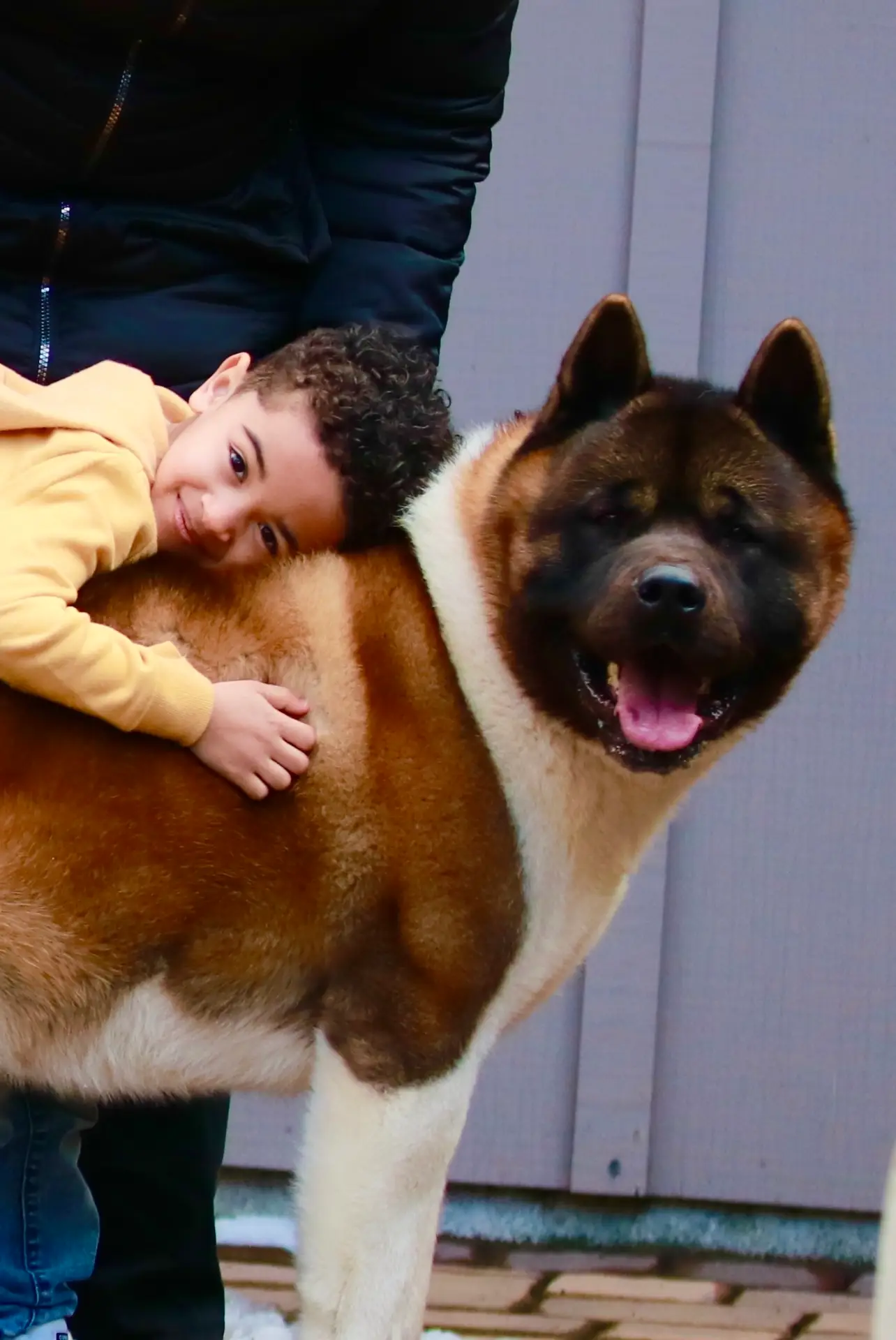
Young child hugging an Apexx Akitas American Akita — gentle and calm with children from champion bloodlines
American Akita Resources — Apexx Akitas

The Truth About American Akita Temperament — What the Internet Gets Wrong

By Ron Durant  •  Apexx Akitas  •  20+ Years Experience  •  Sussex, New Jersey

I have lived with, trained, shown, and placed American Akitas for over two decades. In that time I have heard every myth, read every forum thread, and watched families walk away from the breed because of things they read online that simply were not true. This article is for serious families who want the real picture. The truth about what this breed actually is, what it is not, and why the dog the internet loves to fear is one of the most extraordinary animals a family can share their life with.

Arctic — an Apexx Akitas American Akita from puppy to full-grown adult. Watch the confidence, structure, and stable temperament that champion bloodlines and responsible breeding produce.

Are American Akitas Aggressive?

This is the question I get more than any other. The honest answer is no — but it requires context.

The American Akita is a guardian breed. It was developed in Japan and refined in America to be powerful, alert, and deeply loyal to its family. Those traits, in the wrong hands or from an irresponsible breeding program, can manifest as aggression. In the right home, with a well-bred dog from health-tested, temperament-evaluated parents, those same traits produce a dog that is calm, confident, and profoundly devoted.

The internet conflates two very different things. A poorly bred, undersocialized Akita with unstable nerves is not the same animal as a well-bred Akita from a responsible program. The difference is enormous and it starts long before the puppy is born.

At Apexx Akitas every breeding decision is made with temperament as a primary criterion. We do not breed reactive dogs. We do not breed nervous dogs. The Akitas we produce are stable, confident, and controllable because their parents were — and because we have been selecting for those traits for over twenty years.

Learn more: Our Breeding Program  •  Health Testing Standards

Champion bloodline American Akita brindle pinto from Apexx Akitas showing correct structure and confident stance
A champion bloodline Apexx Akitas brindle pinto — correct structure, confident expression, and the stable presence that responsible breeding produces over twenty years of selection.

See It for Yourself — Temperament Stability in a Real Environment

Words are easy. This video is not staged. No training session, no controlled environment. Two American Akitas from our program walking through a crowded mall, completely calm and composed around strangers, children, and noise. That is not luck. That is genetics, early development, and twenty years of selecting the right dogs to breed.

Two Apexx Akitas in a busy shopping mall — calm, composed, and completely stable around crowds, strangers, and noise. This is what genuine American Akita temperament looks like.

This is the American Akita that Apexx Akitas produces. Not the dog the internet describes. The dog you just watched.

What the Internet Gets Wrong About Akitas and Children

You will read online that Akitas are not good with children. This is one of the most damaging myths about the breed and it is simply not accurate for well-bred dogs raised correctly.

I have placed Akitas with families who have toddlers, school-age children, and teenagers. When the dog comes from sound genetics, is raised with proper socialization from birth, and goes to a family that understands the breed, the Akita becomes one of the most devoted guardians a child can have.

Young child hugging an Apexx Akitas American Akita — gentle and calm with children
This is worth more than any explanation I can offer. A young child draped across an Apexx Akitas dog — completely at ease, completely safe. This is what a well-bred Akita actually looks like around children.

"Rush has truly been the best dog — he has an amazing temperament, is incredibly gentle and wonderful with our sons, and has been an absolute joy to have as part of our family."

Chris Skretkowicz — Owner of Rush, Apexx Akitas family since 2021

The breeder you choose determines the dog you get. This cannot be overstated.

Read what our families say: Family Reviews

What the Internet Gets Wrong About Akitas and Other Dogs

Same-sex dog aggression is a real trait in the American Akita. I will not pretend otherwise. The breed has a history as a fighting dog in Japan and some of that instinct remains, particularly between two dogs of the same sex.

But here is what the internet leaves out. A well-bred Akita raised correctly can absolutely coexist with other dogs. The key is early socialization, confident ownership, and proper introductions. Many of our families have multi-dog households and manage them beautifully.

Same-sex aggression is a management consideration, not a disqualifying flaw. Millions of households manage it every day.

Two Apexx Akitas American Akitas coexisting calmly at a dog show — proof of balanced temperament
Two Apexx Akitas at a dog show — calm, composed, and completely comfortable in each other's space. This is what early socialization and responsible breeding looks like in practice.
Torro and Arctic — two male Apexx Akitas together. The internet says two male Akitas cannot coexist. Watch this and decide for yourself.

What the Internet Gets Wrong About Akita Training

The narrative that Akitas are untrainable or too stubborn to work with frustrates me deeply because it is so far from the truth.

Akitas are highly intelligent. They learn quickly. What they do not do is respond to repetitive, low-value training or heavy-handed correction. They are thinking dogs that require a handler who is calm, consistent, and worthy of their respect.

When you earn an Akita's respect the dog is responsive, cooperative, and genuinely eager to work with you. When you try to dominate or force an Akita the relationship breaks down. This is not stubbornness. This is intelligence.

The families who thrive with Akitas understand that the relationship comes first. Training flows naturally from a foundation of mutual trust and clear, consistent leadership.

Three male Apexx Akitas walking together — calm, controlled, and completely manageable. If Akitas were untrainable, this would not be possible. The handler is relaxed. The dogs are relaxed. That is the result of the right foundation.

The Real Reason Akita Temperament Varies So Much

Here is the truth that the internet never tells you. The reason you see such wildly different accounts of Akita temperament online is not because the breed is unpredictable. It is because the quality of breeding varies enormously.

An Akita from a responsible breeder who health tests both parents, evaluates temperament carefully, limits litter frequency, and provides early development for every puppy is a fundamentally different animal from an Akita produced by someone who breeds for profit without regard for genetics, health, or temperament.

Both dogs are called American Akitas. Only one of them represents what the breed is actually capable of.

When you read a horror story about an Akita online, ask yourself where that dog came from. Was it health tested? Were the parents temperament evaluated? Did the breeder limit litters and invest in early development? In the vast majority of cases the answer is no.

Review our standards: OFA Health Testing & Breeding Standards

How to Evaluate an Akita Breeder Before You Commit

Before you purchase an American Akita puppy from any breeder, ask these questions and pay close attention to the answers.

  • Ask whether both parents have full OFA health clearances covering hips, elbows, thyroid, and cardiac. A responsible breeder will not hesitate and will show you the documentation.
  • Ask about the temperament evaluation process. How do they assess the parents before breeding? How do they assess the puppies before placement?
  • Ask how many litters they produce per year. A breeder serious about quality limits their litters. Volume and quality do not coexist in responsible breeding.
  • Ask whether they provide lifetime support and whether they require the dog to be returned to them if you can no longer keep it. A breeder who stands behind their dogs will always say yes to both.
  • Ask to see references from families who purchased two, three, and five years ago. Long-term families tell you everything about what a breeder's dogs actually become.

If a breeder cannot answer these questions clearly and confidently, walk away.

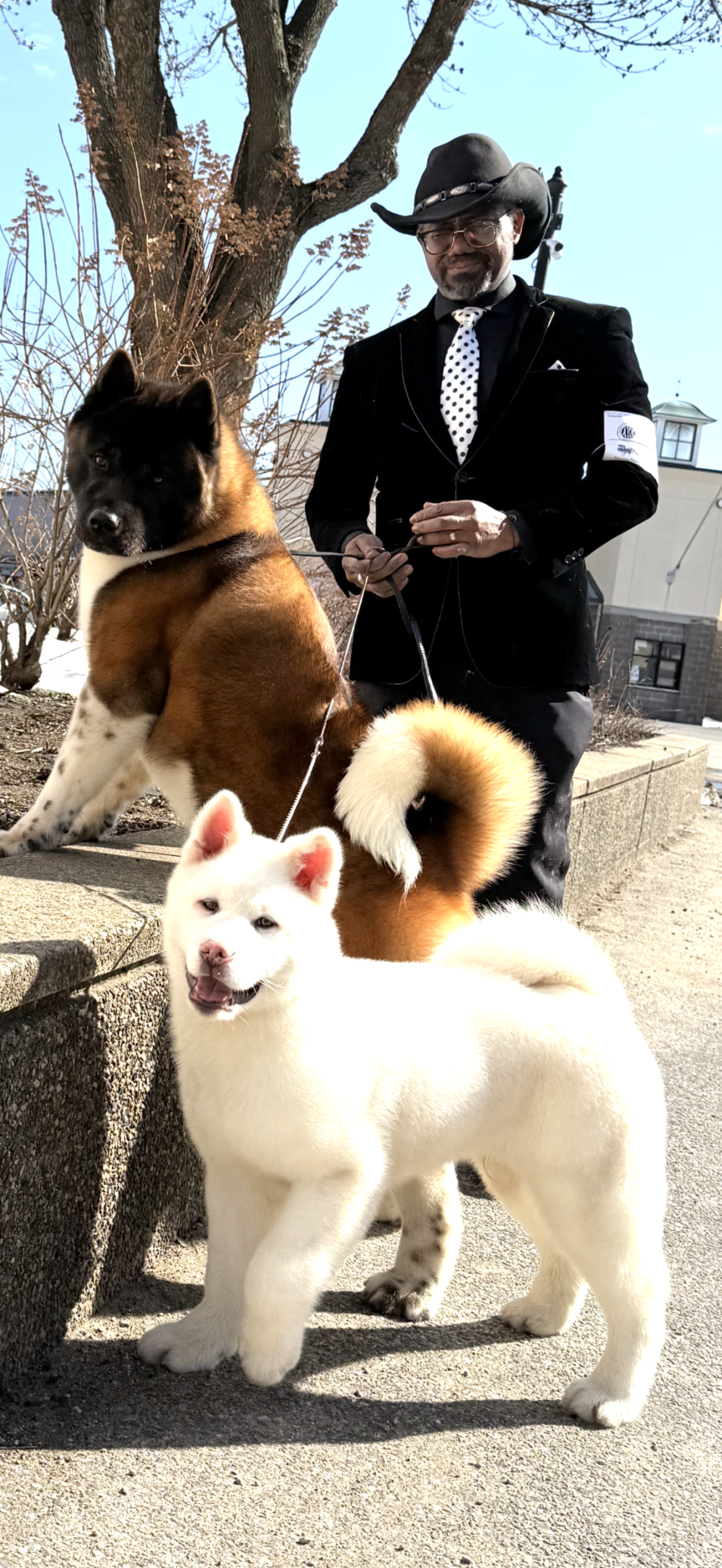
Ron Durant founder of Apexx Akitas with two American Akitas at a dog show — one 3 months old and one 1.5 years old

Ron Durant — Founder, Apexx Akitas

Ron with two of his dogs at a show — the white puppy is 3 months old, the older Akita is 1.5 years. Twenty-six years of breeding decisions made with purpose. Every dog that leaves Apexx Akitas is the result of standards that never get compromised. Ron reviews every puppy application personally.

What a Well-Bred American Akita Actually Looks Like

A well-bred American Akita from a responsible program is calm in the home and alert outside of it. It is affectionate and devoted with its family and reserved but not fearful with strangers. It is confident enough to assess a situation without reacting to everything it sees.

It is the dog that follows you from room to room not out of anxiety but out of loyalty. It is the dog that positions itself between you and an unfamiliar situation without being told to. It is the dog that children in the family climb on, sleep next to, and grow up alongside in complete safety.

"I've had 7 Akitas over my lifetime, and Apexx Akitas gave me my 8th — he is absolutely incredible. Hands down the most superior animal I've ever had."

DrZevTV — 8th Akita, Apexx Akitas family for 6 years

That dog exists. It is real. And it starts with the breeder.

Browse our dogs: Our Males  •  Our Females  •  Available Puppies
RD
Ron Durant
Founder of Apexx Akitas. Breeder, handler, and lifelong student of the American Akita since 1998. Based in Sussex, New Jersey. Placing champion bloodline, OFA health tested Akitas with approved families across the United States and Canada.

Ready to Apply?

If you are serious about adding an American Akita to your family I invite you to apply. I review every application personally. I will tell you honestly whether an Akita is the right fit for your home, and if it is I will match you with a dog that will exceed every expectation you have. We place puppies with approved families across the United States and Canada.

Apply for a Puppy
Posted on Leave a comment

Is an American Akita Right for You?

Ownership Guide  ·  Apexx Akitas

Is an American Akita Right for You?

An honest, experience-based guide to whether the American Akita fits your household, lifestyle, and experience level. Written by someone who has placed over 150 of these dogs with families across the country and followed up on nearly all of them.

Ron Durant Founder, Apexx Akitas Sussex County, New Jersey March 2026
American Akita with family from Apexx Akitas demonstrating loyal calm temperament in a home environment
150+
Akitas Placed
Nationwide
20+
Years Breeding
American Akitas
100
to 130 lbs
Adult Male Weight
10
to 13 Years
Average Lifespan

The American Akita is one of the most impressive dogs you will ever encounter. It is also one of the most demanding. These two facts are not unrelated. The same qualities that make this breed extraordinary, the loyalty, the confidence, the physical presence, are the same qualities that make it genuinely wrong for many households.

This guide is not a sales pitch. It is an honest assessment of what life with an American Akita actually looks like, written after 20-plus years of breeding, placing, and following up on these dogs with real families across the United States. Some of what follows will confirm that this is the right breed for you. Some of it may give you pause. Both outcomes are the point.

Read this entire guide before speaking to a single breeder. Find all our guides in one place on the American Akita Resources page. It will make every conversation you have more productive and every decision you make more grounded. You may also want to read our companion guides on Are Akitas Aggressive? and Are Akitas Good Family Dogs? for additional depth on temperament.

I decline placements when the fit is not right. That policy has prevented heartbreak for families and dogs alike. The questions in this guide are the same ones I ask every prospective family before we discuss anything else.

What the American Akita Actually Is

Before you can answer whether this breed is right for you, you need an accurate picture of what you are evaluating. The American Akita is frequently misunderstood by people who have only seen photos or read surface-level breed descriptions. The AKC breed standard provides the official framework for structure and type.

Physical reality

Adult males weigh 100 to 130 pounds and stand 26 to 28 inches at the withers. Females run 70 to 100 pounds at 24 to 26 inches. This is not a large dog in the way a Labrador Retriever is large. This is a powerful, heavily-boned, working-breed dog with substantial physical presence. A healthy adult male American Akita can knock over an adult human without trying. This is not a manageable inconvenience. It is a physical reality that shapes every aspect of ownership from leash handling to veterinary visits to home logistics.

Temperament reality

The American Akita is deeply loyal to its family, reserved with strangers, and naturally dominant. It is not aggressive by nature, but it is not submissive, and it will not pretend to be. It thinks independently, makes its own assessments of situations and people, and acts on those assessments. This is a dog that respects quiet confidence and views uncertainty as an invitation to take charge. Responsible breeding produces stable, predictable temperament but it does not produce a dog that is easy in the way a Golden Retriever is easy.

The dog-to-dog reality

American Akitas are typically not dog-friendly. Same-sex aggression is a common and serious issue in the breed. Many Akitas will live peacefully with a dog of the opposite sex they were raised with from puppyhood, but adult introductions to unfamiliar dogs, particularly of the same sex, carry real risk. This is not a training failure. It is a breed characteristic that has been consistent for generations. Any honest assessment of this breed must address it directly. For more on temperament see our guide on Are Akitas Aggressive?

The commitment reality

The American Akita lives 10 to 13 years. It requires daily exercise, consistent leadership, ongoing socialization, and significant financial investment in health care, food, and maintenance. It is not a dog you can neglect for weeks and return to unchanged. It is not a dog that tolerates chaos, inconsistency, or passive ownership. It is a dog that rewards serious, engaged owners with a depth of loyalty and connection that is genuinely unlike any other breed experience.


Who the American Akita Is Right For

Strong Fit

  • Experienced dog owners who understand working breeds
  • Adults or families with older children (10 and above)
  • People who want a deeply loyal one-family dog
  • Owners who are calm, consistent, and confident leaders
  • Single-dog or carefully managed multi-dog households
  • People with a securely fenced yard
  • Owners who have time for daily exercise and engagement
  • People prepared for a 10 to 13 year commitment
  • Households where someone is home regularly
  • People who want a dog with genuine protective instinct

Poor Fit

  • First-time dog owners without mentorship or support
  • Families with very young children (under 5 years old)
  • Multi-dog households with same-sex dogs
  • Households with cats or small animals
  • People who want a socially outgoing, friendly-with-everyone dog
  • Renters without confirmed pet policies
  • People with limited time for exercise and training
  • Owners who want a low-maintenance or passive companion
  • People who travel frequently without dog care arrangements
  • Anyone looking for an off-leash hiking companion in open areas

Owner Profiles: Is This You?

These profiles are drawn from real placement conversations over 20-plus years. Every profile represents a pattern I have seen repeatedly. Find the one that most closely matches your situation and read it honestly.

🏠

The Experienced Single Owner or Couple

Strong Fit

You have owned dogs before, possibly large breeds. You understand that training is ongoing, not a six-week course. You have a stable home environment, a securely fenced yard, and consistent daily routines. You work but are not absent for 10 or more hours a day without arrangement. You want a dog that is deeply bonded to you specifically rather than friendly with everyone.

This is the profile where American Akitas thrive most consistently. The breed’s loyalty is extraordinary in this context. These placements produce the long-term relationships that make breeding this dog worthwhile.

👨‍👩‍👧‍👦

The Family with Children

Depends on Age and Experience

The American Akita can be an excellent family dog under specific conditions. Children should be 7 years old or older and must be taught to interact with the dog respectfully. The dog must be raised with the children from puppyhood with proper socialization and consistent boundaries. Supervision between young children and any large dog is non-negotiable regardless of breed.

Toddlers and very young children present a more challenging dynamic. Not because the dog is dangerous by nature, but because toddlers are unpredictable, loud, and often make movements that a dominant breed reads differently than an adult would. The risk is not zero and responsible ownership acknowledges that. Families with children under 5 should have a serious conversation with their breeder before proceeding. For a full assessment see Are Akitas Good Family Dogs?

🐕

The Multi-Dog Household

Proceed with Caution

An American Akita raised from puppyhood with a dog of the opposite sex will often coexist peacefully. Two Akitas of the same sex in the same household is a high-risk combination that I advise against unless the owner has significant breed experience and a clear management plan.

Introducing an adult Akita to an existing dog regardless of sex requires careful, supervised introduction and a realistic assessment of both dogs’ temperaments. This is not impossible, but it should never be approached casually. If you have existing dogs, be fully transparent with your breeder about their age, sex, and temperament before any placement discussion begins.

🌟

The First-Time Dog Owner

Not Recommended Without Support

Every experienced Akita person I know, including myself, strongly advises against the American Akita as a first dog for someone with no prior experience. This is not gatekeeping. It is an honest assessment of what can go wrong when someone without a reference point encounters a dog that pushes back, tests boundaries, and does not respond to passive or inconsistent handling.

If your heart is set on this breed as a first dog, the path forward requires exceptional commitment: work with a responsible breeder who will provide ongoing support, engage a professional trainer with working breed experience before the puppy comes home, and be honest with yourself about the learning curve ahead. There are people who have made this work as a first dog. They succeeded because they treated it as a serious undertaking requiring real preparation, not because it was easy.

🏙️

The Apartment or Urban Dweller

Workable with Planning

The American Akita is not a breed that requires a sprawling rural property. What it requires is an owner committed to meeting its exercise needs regardless of living situation, and urban owners who approach that commitment seriously can absolutely make this work. Some of our most engaged, successful placements have been with city-based families who treated daily exercise as non-negotiable and built routines around it.

The practical considerations are real but manageable. Verify your building’s pet policy before committing to a puppy. Identify nearby parks, trails, or open spaces where your dog can move freely on a long lead. Plan for the reality that elevator rides and shared hallways require a calm, well-managed dog, which comes from consistent training from day one. Urban life with an Akita is absolutely achievable. It simply requires more intentional planning than suburban or rural ownership, and owners who go in with that understanding tend to do very well.

💼

The Busy Professional

Depends on Arrangements

Working full-time does not disqualify you from American Akita ownership, but it requires honest planning. Akitas left alone for very long periods consistently become destructive and anxious. A reliable dog walker, doggy daycare arrangement (note that many Akitas do not do well in group play environments), or a partner who is home part of the day makes a significant difference.

The bigger issue is time for training, socialization, and exercise. Consistent training in the first year especially requires more than weekend effort. If your honest assessment is that you have two hours per week to devote to your dog, this breed will not reach its potential in your household. If you can commit meaningfully, professional support and good planning can make it work.


The Honest Challenges Every Prospective Owner Must Understand

Exercise requirements

Adult American Akitas need meaningful daily exercise, not a quick walk around the block. 30 to 60 minutes of purposeful activity per day is a minimum for a healthy adult dog. Without adequate exercise the breed’s energy redirects into destructive behavior, stubbornness, and anxiety. A securely fenced yard supplements but does not replace structured exercise. Akitas do not self-exercise reliably and will not run laps around the yard on their own initiative.

Training and socialization

Early and consistent socialization is non-negotiable. An American Akita that is not deliberately exposed to people, environments, sounds, and controlled situations during the critical developmental window will be harder to manage as an adult. Socialization is not a one-time event. It is an ongoing practice throughout the first two years of life at minimum.

Training must be consistent, calm, and clear. Harsh or punitive methods backfire badly with this breed. So does inconsistency. An Akita that receives different responses to the same behavior from different family members will decide its own rules. That is not a personality flaw. It is a consequence of unclear leadership.

Health costs

The American Akita is predisposed to hip dysplasia, elbow dysplasia, autoimmune disorders, and thyroid disease. Even from a responsibly bred litter with fully health-tested parents, the lifetime cost of veterinary care for a large breed dog is significant. Budget realistically for annual wellness exams, unexpected illness, and the possibility of orthopedic issues. Pet insurance is worth evaluating seriously before the puppy comes home. You can research breed-specific health statistics directly at ofa.org. For a complete breakdown of health risks see our American Akita Health Problems guide and our OFA Health Testing Guide.

Grooming

The American Akita has a thick double coat that sheds year-round with two heavy blowout seasons in spring and fall. During blowout season the volume of shedding is substantial. Regular brushing, at minimum two to three times per week and daily during shedding seasons, is required. Professional grooming every 6 to 8 weeks helps manage coat health and reduces household shedding. Do not shave the coat. The double coat regulates temperature in both heat and cold and shaving damages it permanently.

Boarding and travel

Many boarding facilities will not accept American Akitas due to their size, breed-specific policies, and potential dog-to-dog temperament challenges. If you travel regularly, you need a plan for your dog that does not rely on standard boarding. A trusted dog sitter who comes to your home, a neighbor or family member with experience, or a breed-specific trainer who boards are all better options than a standard kennel environment for most Akitas.


What Makes the American Akita Worth Every Bit of It

Everything written above is true. So is this: people who have owned American Akitas rarely choose another breed for the rest of their lives.

The loyalty of a well-bred, well-raised American Akita is not the enthusiastic, indiscriminate affection of breeds that love everyone equally. It is something quieter and more profound. An Akita chooses you specifically. It tracks your movements, reads your moods, and positions itself consistently between you and anything it perceives as a threat. Not because it was trained to, but because it decided to. That quality is difficult to describe to someone who has not experienced it.

The presence of an American Akita in a home is significant in the best sense of the word. They are not background dogs. They are participants in family life who bring a dignity, composure, and depth of character to every interaction. The owners who succeed with this breed describe it as the most meaningful dog relationship of their lives.

The American Akita asks more of you than most breeds. In exchange, it gives you more than most breeds are capable of giving. That is the honest equation. Whether it balances in your favor depends entirely on what you bring to it.

If You Decide the Answer Is Yes: The Breeder Is Everything

Assuming you have read this guide honestly and concluded that the American Akita is right for your situation, your next decision is the most important one you will make about this dog. The breeder you choose determines the temperament, health, and trainability of the dog you bring home.

A responsibly bred American Akita from health-tested parents with proper early development is a fundamentally different animal from one produced carelessly. The former gives you the best possible starting point for a successful long-term relationship. The latter gives you an uphill battle from day one. See our complete guide on how to find a reputable American Akita breeder and browse AKC-registered breeders at AKC Marketplace and our 15 questions to ask before you commit.

At Apexx Akitas, every placement begins with an honest conversation about your household, your experience, your lifestyle, and your long-term plans. We decline placements when the fit is not right. That is not a judgment. It is accountability to the dogs we produce and the families we serve. If you apply and we have concerns we will tell you directly. That conversation is a service, not a rejection.

Review our breeding program and our health testing standards to understand what responsible American Akita breeding looks like in practice. Read testimonials from placed families to hear from people who asked these same questions and found their answer.


Frequently Asked Questions: Is an American Akita Right for Me?

Is the American Akita a good family dog?

Yes, under the right conditions. The American Akita is deeply loyal to its family and can be an excellent companion for families with older children, consistent routines, and an owner who understands the breed. It is not recommended for families with very young children without careful management, or for households that want a universally friendly, low-maintenance dog. See our full guide on Are Akitas Good Family Dogs?

Is the American Akita good for first-time dog owners?

Not recommended without significant support and preparation. The American Akita’s independent nature, physical strength, and dominant temperament require an owner who understands how to provide consistent, calm leadership. First-time owners who approach this breed with serious preparation, professional training support, and an honest assessment of the learning curve ahead can succeed, but it is not an easy starting point.

Can American Akitas live with other dogs?

Sometimes, with careful management. Akitas raised from puppyhood with a dog of the opposite sex often coexist peacefully. Same-sex dog combinations carry significant risk and are generally not recommended. Adult Akita introductions to existing dogs require careful, supervised management. Be fully transparent with your breeder about your existing pets before any placement discussion.

How much exercise does an American Akita need?

A minimum of 30 to 60 minutes of purposeful daily exercise for a healthy adult. This means structured walks or activity, not just access to a yard. Without adequate exercise the breed’s energy redirects into destructive behavior. Exercise requirements are lower for puppies under 18 months due to developing joints and higher for high-drive adult dogs.

Are American Akitas aggressive?

Not by nature, but they are dominant, protective, and reserved with strangers. A well-bred, well-socialized American Akita is stable and predictable. Aggression issues in the breed almost always trace back to poor breeding decisions, lack of socialization, or ownership that was not equipped for the breed’s needs. See our full guide on Are Akitas Aggressive?

How much does it cost to own an American Akita?

A responsibly bred puppy from a health-tested program costs $3,500 to $5,000 at purchase. Annual ownership costs including food, veterinary care, grooming, and supplies run $2,000 to $4,000 for a healthy dog. Unexpected health costs, particularly orthopedic issues if they arise, can be significantly higher. See our full breakdown in How Much Does an Akita Puppy Cost?

Apply Today

Ready for an Apexx Akitas Puppy?

Every breeding dog carries full verifiable OFA clearances. Every placement starts with an honest conversation. Applications are reviewed personally by Ron Durant.

Apply for a Puppy
Posted on Leave a comment

15 Questions to Ask an American Akita Breeder Before You Buy

Buyer’s Guide  ·  Apexx Akitas

15 Questions to Ask an American Akita Breeder Before You Buy

The exact questions every serious buyer should ask, what good answers sound like, which responses should end the conversation, and how to verify every claim a breeder makes.

Ron Durant Founder, Apexx Akitas Sussex County, New Jersey March 2026
American Akita from Apexx Akitas champion bloodlines demonstrating correct breed structure and type
15
Questions to
Ask Every Breeder
20+
Years Breeding
American Akitas
10
Red Flag
Responses Listed
5
OFA Health
Clearance Types

Most buyers go into breeder conversations without knowing what to ask. They look at puppies, hear the word “healthy,” and make a decision that shapes the next 12 years of their life. This guide changes that.

These 15 questions are designed to do two things. First, they extract the information you actually need to evaluate a breeding program. Second, they reveal a breeder’s character. Responsible breeders answer these questions with enthusiasm. Careless ones get defensive, deflect, or disappear.

For each question you will find why it matters, what a good answer sounds like, and what responses should end the conversation. Use this list on every breeder you contact before committing to anything. You can also find all our buyer guides in one place on the American Akita Resources page.

These questions are not meant to be confrontational. They are meant to be thorough. A breeder who bristles at being asked to verify their health testing documentation is telling you something important about how they operate.

Health Testing Questions: The Non-Negotiables

These five questions must be answered with verifiable documentation. Not verbal assurances. Not vet certificates. Actual OFA registration numbers you can look up yourself at ofa.org. For a full explanation of what each test covers see our OFA Health Testing Guide.

01

Can you give me the OFA hip certification numbers for both parents so I can verify them myself?

Why it matters

Hip dysplasia affects nearly 1 in 4 American Akitas according to OFA data. It is the most expensive inherited condition in the breed, with bilateral hip replacement costing $10,000 to $14,000. OFA results are publicly posted at ofa.org and verifiable by anyone. A breeder who cannot hand you the registration number either has not tested or has results they do not want you to see.

Good Answer

Immediately provides OFA numbers like AKIT-1234G24F-VPI. Encourages you to verify at ofa.org. Can explain what the rating means.

Red Flag

“The vet said their hips are fine” or “We do our own x-rays” or “I can send you a certificate” without an OFA number.

02

What are the OFA elbow certification numbers for both parents?

Why it matters

Elbow dysplasia affects 15.3 percent of American Akitas and typically manifests between 4 and 12 months of age. Hip and elbow x-rays are almost always taken the same day, so both results should share a test date. A breeder who has hip results but no elbow results on the same date is testing selectively and cutting corners. See our health problems guide for what this condition costs to treat.

Good Answer

Provides elbow OFA numbers with the same test date as the hip results. Both parents, Normal rating on both elbows.

Red Flag

Has hip results but no elbow results. Or provides elbow results with a different test date. Or says elbows “look fine” without OFA certification.

03

When was the last thyroid panel run on each parent and does it include TgAA testing?

Why it matters

Autoimmune thyroiditis is inherited and affects an estimated 7 to 10 percent of American Akitas. A standard thyroid panel measuring T3 and T4 alone is not sufficient. The thyroglobulin antibody (TgAA) test is required to identify dogs that are positive for autoimmune thyroiditis. A dog can have normal hormone levels while being TgAA positive, meaning it will pass standard thyroid screening but still pass the condition to offspring. Thyroid panels must be current within 12 months.

Good Answer

Panel completed within the last 12 months. Includes TgAA antibody testing. Can provide documentation. Both parents tested, both negative.

Red Flag

“They have great energy so thyroid is fine” or a panel older than 12 months or a panel that does not include TgAA.

04

When was the last CAER eye examination on each parent, and who performed it?

Why it matters

American Akitas are predisposed to Progressive Retinal Atrophy, entropion, and uveitis as a component of VKH syndrome. CAER certifications expire annually. The examination must be performed by a board-certified veterinary ophthalmologist, not a general practice veterinarian. A certificate from a regular vet exam is not CAER certification.

Good Answer

Current CAER exam within the last 12 months. Performed by a board-certified veterinary ophthalmologist. Can provide documentation with the examiner’s credentials.

Red Flag

“Our vet checked their eyes” or a certificate older than 12 months or an exam not performed by a boarded ophthalmologist.

05

Has cardiac evaluation been performed on both parents and by whom?

Why it matters

Cardiac evaluation screens for congenital heart conditions that affect longevity and quality of life. The OFA number suffix tells you the level of examiner: C for cardiologist, S for specialist, P for general practitioner. A board-certified cardiologist provides the strongest evaluation. This is often the most overlooked health test in American Akita breeding programs.

Good Answer

Cardiac evaluation completed on both parents. Can provide OFA certification number. Ideally performed by a board-certified cardiologist.

Red Flag

No cardiac evaluation performed. Or “the vet listened to their heart.” Or cardiac performed but no OFA submission.


Accountability Questions: What Happens After the Sale

Health testing tells you what a breeder does before breeding. These questions tell you what they do after. The answers reveal whether this is a transaction or a lifetime relationship.

06

Will you take the dog back at any point in its life if I cannot keep it?

Why it matters

A lifetime return policy is the single strongest signal that a breeder views their dogs as a permanent responsibility. It means they are invested in the outcome of every placement. It also means they track where their dogs go and what happens to them, which is essential for any serious health and temperament tracking program. If a breeder does not want their dogs back, they do not care what happens to them.

Good Answer

Absolutely, unconditionally, for the lifetime of the dog. No questions about the reason. Policy is written into the contract.

Red Flag

“We can help you rehome it” or “That has never happened” or a return policy limited to the first year only.

07

How do you track the long-term health of dogs from your breeding program?

Why it matters

Breeding decisions can only be truly evaluated by their long-term outcomes. A breeder who does not maintain contact with placed families cannot know whether their program is producing healthy dogs over a 10 to 13 year lifespan. This question separates breeders who are genuinely invested in their program from those who are finished at the point of sale. Read reviews from Apexx Akitas placed families to see what long-term relationships look like in practice.

Good Answer

Describes a specific tracking system. Maintains contact with a high percentage of placed families. Uses health outcome data to inform future breeding decisions.

Red Flag

“Families let us know if there are problems” or no structured follow-up process at all.

08

Can I read the full puppy contract before placing a deposit?

Why it matters

A puppy contract defines the entire relationship. It should specify the health guarantee terms including which conditions are covered and for how long, the return to breeder policy, spay or neuter requirements for pet placements, and how disputes are resolved. A legitimate breeder provides this without hesitation. Breeders who will not share the contract before a deposit are hiding terms you would not agree to if you saw them first.

Good Answer

Provides the full contract immediately and encourages you to review it carefully. Answers any questions about specific terms.

Red Flag

Delays providing the contract until after a deposit. Or provides a vague one-page document with no specific health guarantee terms.

09

Can I speak with three or more families who purchased dogs from you in the last three to five years?

Why it matters

Website testimonials are not references. You need to speak with real people who will tell you honestly about their experience including health outcomes, temperament, and whether the breeder remained accessible after placement. Ask specifically about dogs that are now 3 years old or older so you can ask about late-onset health conditions like autoimmune disorders and thyroid disease.

Good Answer

Provides contact information for multiple families and encourages you to ask them anything. References include families with adult dogs at least 3 years old.

Red Flag

“All our families are private” or provides only written testimonials rather than real contacts you can call.

10

Have any health conditions appeared in dogs from your breeding program and what did you do about it?

Why it matters

The correct answer to this question is never “no.” No breeder who has been producing dogs for more than a few years has had zero health issues appear in any placed dog. A breeder who claims a perfect record is either not tracking outcomes or not being honest. Transparency about health issues is a sign of accountability, not a weakness. What matters is what they did when problems appeared. Did they remove affected dogs from the breeding program? Did they notify other families from the same lines?

Good Answer

Shares a specific example of a health issue that appeared, explains how they responded, and what changes they made to the breeding program as a result.

Red Flag

“We have never had a single problem” or becomes defensive when asked. Either answer means they are not tracking or not telling the truth.


Breeding Program Questions: Standards and Experience

These questions reveal the depth and seriousness of the breeding program. Experience, show involvement, and deliberate selection criteria separate preservation breeders from people producing puppies for the market. For more context on what a serious program looks like see the Apexx Akitas breeding program.

11

Are you involved in AKC conformation or performance events and do your dogs hold titles?

Why it matters

Breeders who participate in AKC conformation have their dogs evaluated publicly by qualified judges against the breed standard. This is external accountability that hobby breeders with no show involvement simply do not have. It does not mean show breeders are perfect, but it does mean they subject their dogs to independent evaluation. Titles earned by parents and dogs in the pedigree indicate a commitment to breed standard beyond personal opinion.

Good Answer

Active in AKC conformation. Can name specific titles held by breeding dogs. Involved in the breed community beyond just producing litters.

Red Flag

No show involvement. No titles. No external evaluation of their dogs by anyone outside their own operation.

12

How many litters do you produce per year and how many dogs are in your breeding program?

Why it matters

Volume and quality are incompatible. A breeder producing six or more litters per year across multiple females cannot provide the individual attention, early development, and placement screening that responsible breeding requires. The number of breeding dogs also matters. A program with 10 or more breeding females is a production operation regardless of what the breeder calls it. Understanding why responsible breeding costs more helps put litter volume in financial context.

Good Answer

Limited litters per year. Small number of carefully selected breeding dogs. Often has a waitlist rather than always having puppies available.

Red Flag

Multiple litters at once or at any time. Always has puppies available immediately. Large number of breeding females. Cannot remember exact litter count.

13

What early development protocol do you use with your puppies before placement?

Why it matters

Temperament in an American Akita is partly inherited and partly shaped in the first eight weeks of life. Responsible breeders implement structured early development protocols including Early Neurological Stimulation, deliberate handling, exposure to sounds and surfaces, and controlled socialization. A puppy that leaves at eight weeks without this foundation is starting behind before you ever bring it home. Ask specifically about ENS and what the puppy has been exposed to.

Good Answer

Describes specific protocols by name such as ENS or Puppy Culture. Can explain what each phase involves and what the puppies have been exposed to before placement.

Red Flag

“We let the mother raise them” or no structured handling or socialization program of any kind.

14

Why did you pair these two specific dogs for this litter?

Why it matters

This question reveals the depth of breeding decision-making. A responsible breeder can articulate the specific reasons for every pairing in terms of health results, structural complementarity, temperament, pedigree, and contribution to the breed. A careless breeder pairs dogs based on availability, proximity, or because both are registered. Understanding the differences in American Akita breed type helps you evaluate whether a breeder understands what they are producing. The answer to this question separates intentional stewardship from casual production.

Good Answer

Can explain specific structural, health, temperament, and pedigree reasoning for the pairing. Has a clear vision for what the litter is meant to achieve.

Red Flag

“They are both great dogs” or “the timing worked out” or any answer that does not address health results and structural goals.

15

Is the American Akita the right breed for my situation and would you tell me honestly if it is not?

Why it matters

This is the most revealing question on the list. A responsible breeder will give you an honest, sometimes uncomfortable answer about whether the American Akita is the right fit for your household, experience level, lifestyle, and long-term plans. They will ask you hard questions about your dog experience, living situation, children, and other pets. A breeder who tells every prospective buyer that yes, an Akita is perfect for them is interested in making a sale, not a responsible placement. For an honest assessment of whether this breed is right for you see Are Akitas Good Family Dogs? and Are Akitas Aggressive?

Good Answer

Asks detailed questions about your situation before answering. Shares honest concerns about breed challenges. Has declined placements when the fit was not right.

Red Flag

Immediately says yes without knowing anything about your situation. Does not ask any questions about your household, experience, or lifestyle.


Quick Reference: All 15 Questions and What to Listen For

# Question Category Instant Red Flag
01OFA hip certification numbers for both parentsHealthCannot provide OFA numbers
02OFA elbow certification numbers for both parentsHealthHas hips but no elbows
03Thyroid panel with TgAA within 12 monthsHealthNo TgAA or outdated panel
04CAER eye exam within 12 months by specialistHealthRegular vet eye check only
05Cardiac evaluation on both parentsHealthNo cardiac evaluation
06Lifetime return to breeder policyAccountabilityLimited window or no policy
07Long-term health tracking systemAccountabilityNo structured follow-up
08Full contract before depositAccountabilityContract delayed until after deposit
09Three or more references with adult dogsAccountabilityWritten testimonials only
10Health issues in the program and responseAccountabilityClaims zero problems ever
11AKC conformation involvement and titlesProgramNo show involvement at all
12Litters per year and number of breeding dogsProgramAlways has puppies available
13Early development protocol usedProgramNo structured ENS or socialization
14Specific reason for this pairingProgramVague or convenience-based answer
15Honest breed fit assessment for your situationProgramImmediate yes without questions

How Apexx Akitas Answers Every One of These Questions

Every question on this list has a clear answer at Apexx Akitas because every standard it represents is already part of how the program operates.

OFA hip and elbow certification numbers for every breeding dog are available for verification at ofa.org. Thyroid panels including TgAA are run annually. CAER eye examinations are completed yearly by board-certified veterinary ophthalmologists. Cardiac evaluation is performed on every breeding dog before any pairing is considered.

The lifetime return policy is written into every contract without exception. We maintain contact with approximately 80 percent of placed families and track health outcomes throughout each dog’s life. References from families with adult dogs are available immediately. The full puppy contract is provided before any deposit is requested.

Every pairing is intentional and documented. We can explain the structural, health, temperament, and pedigree reasoning for every breeding decision we have made. And we ask every prospective family hard questions about their situation before discussing placement, because a good match matters more than a completed sale.

View our complete health testing and breeding standards or read the full guide to finding a reputable American Akita breeder for the complete framework behind these questions.


Frequently Asked Questions: Buying an American Akita Puppy

How do I verify an American Akita breeder’s OFA health results?

Go to ofa.org, click Search, and enter the registered name or AKC number of the sire or dam. All normal OFA results from dogs 24 months or older are posted publicly. Check the test date, the rating, and the age of the dog at evaluation. Both parents, every test type. If results do not appear the dog has either not been tested or the results were abnormal.

What is the difference between a vet check and OFA certification?

A veterinary wellness exam confirms that a dog appears healthy at that moment. It evaluates nothing about inherited structural or genetic conditions. OFA certification requires specific radiographic evaluation by a veterinary radiologist or specialist and involves submission to the OFA for independent review and public posting. These are completely different things and no responsible breeder conflates them.

How many litters should a reputable American Akita breeder produce per year?

There is no fixed number but the principle is deliberate limitation. A breeder who consistently has puppies available immediately regardless of when you inquire is producing volume rather than quality. Waitlists, planned litters with specific pairings, and limited annual production are all signs of a serious program. Volume and responsible breeding are incompatible.

Should I buy an American Akita puppy from out of state?

Yes, if the breeder meets every standard on this list. The American Akita is an uncommon breed and limiting your search geographically significantly increases the probability of compromising on standards. Responsible breeders place puppies nationwide and can coordinate safe transport. The quality of the breeding program follows your dog for its entire life. Choose the best breeder and solve the logistics second. See our full discussion in the reputable breeder guide.

What should an American Akita puppy contract include?

A legitimate puppy contract should specify the health guarantee terms including which genetic conditions are covered and for how long, a lifetime return to breeder clause, spay or neuter requirements for pet placements, AKC registration terms, and a clear dispute resolution process. Any contract that does not address health guarantees with specific terms or omits a return policy is not protecting you adequately.

Apply Today

Ready for an Apexx Akitas Puppy?

Every breeding dog carries full verifiable OFA clearances. Every placement is backed by a lifetime return policy and ongoing support. Applications are reviewed personally by Ron Durant.

Apply for a Puppy
Posted on Leave a comment

How to Find a Reputable American Akita Breeder

Buyer’s Guide  ·  Apexx Akitas

How to Find a Reputable American Akita Breeder

A complete framework for evaluating any American Akita breeder from first contact through final decision. Every point drawn from 20-plus years of hands-on experience.

Ron Durant Founder, Apexx Akitas Sussex County, New Jersey March 2026
American Akita from Apexx Akitas champion bloodlines demonstrating correct breed structure and type
20+
Years Breeding
American Akitas
150+
Nationwide
Placements
10
Checklist Items
to Verify
9
Red Flags
to Avoid

Why Finding the Right Breeder Is the Most Important Decision You Will Make

Every major outcome for your American Akita was determined before you ever met the puppy. It was determined by the breeder’s decisions about which dogs to pair, which tests to run, and which standards to hold.

Whether the dog develops hip dysplasia, whether the temperament is stable, whether it lives 10 years or 13, whether it integrates into your family or becomes a liability. All of it traces back to the breeding program. A responsible program and a careless one produce fundamentally different dogs even when both describe themselves the same way online.

The good news is that responsible breeders are not hard to identify once you know what to look for. They are distinguished not just by what they do, but by how transparently and consistently they can document it.

Brindle American Akita puppy from Apexx Akitas champion bloodlines showing correct structure and breed type
American Akita puppy · Apexx Akitas
The American Akita is a large, powerful, potentially dominant breed with a lifespan of 10 to 13 years. The breeder you choose shapes every one of those years. There is no decision you will make about this dog that matters more.

What a Reputable American Akita Breeder Actually Does

Before you evaluate anyone else, you need a clear picture of what responsible American Akita breeding looks like in practice. These are not aspirational standards. They are observable, verifiable practices that any legitimate breeder should be able to document without hesitation. See our own Health Testing and Breeding Standards as an example of what full transparency looks like.

Comprehensive OFA health testing on every breeding dog

This is the single most important marker of a responsible program. Every dog used for breeding should have completed and verifiable OFA clearances for hips, elbows, thyroid, eyes, and cardiac function before being paired. Not some dogs. Every dog. Not preliminary results. Final certifications at 24 months or older.

You can verify any breeder’s OFA results yourself at ofa.org by searching the dog’s registered name. If the results are not in the public database, they either do not exist or were abnormal. For a complete explanation of what each OFA test covers, see our OFA Health Testing Guide.

Intentional, limited litters

Responsible breeders produce a small number of litters each year. They plan each pairing carefully based on health results, structural compatibility, temperament, and pedigree. Volume and quality are incompatible in serious breeding programs. For a full breakdown of what responsible breeding costs and why it affects price, see How Much Does an Akita Puppy Cost? If a breeder consistently has puppies available immediately whenever you call, that is a production signal, not a quality one.

Temperament selection and early development

Temperament in an American Akita is partly inherited and partly shaped in the first eight weeks of life. Responsible breeders select breeding stock for nerve strength and environmental confidence. For more on how breeding decisions shape temperament, see Are Akitas Good Family Dogs?, and they implement structured early development protocols including Early Neurological Stimulation and deliberate handling.

Transparency and verifiable documentation

Reputable breeders share documentation freely and encourage you to verify it. They provide AKC registration numbers, OFA certification numbers, pedigrees going back multiple generations, and health guarantee terms in writing. If a breeder hesitates to share any of these, that hesitation is information.

Lifetime accountability

The relationship with a responsible breeder does not end at placement. They require you to return the dog to them if you can no longer keep it at any point in the dog’s life. They maintain contact with placed families. They track health outcomes. They are invested in what happens to every dog they produce.

Honest breed assessment

A reputable breeder will tell you directly if the American Akita is not the right breed for your situation. They will ask you hard questions about your experience, your household, and your long-term plans. They are not trying to sell you a puppy. They are trying to make a placement that works for the next decade.


The Reputable Breeder Checklist: What to Verify Before Committing

Use this checklist on every breeder you evaluate. Every item should produce a confirmed yes with supporting documentation.

01
OFA hip clearance on both sire and dam

Rating of Fair or better. Dog 24 months or older at time of evaluation. Verify the OFA number yourself at ofa.org. Do not accept “vet checked” as a substitute.

02
OFA elbow clearance on both sire and dam

Normal rating required. Hip and elbow x-rays are taken the same day, so both results should share a test date. A missing elbow result when hips are present is a significant red flag.

03
Current thyroid panel with TgAA on both parents

Completed within the past 12 months. Must include thyroglobulin antibody testing. Learn more in our OFA Health Testing Guide.

04
Current CAER eye examination on both parents

Completed within the past 12 months by a board-certified veterinary ophthalmologist. Eye certifications expire annually. A two-year-old certificate is not current clearance.

05
Cardiac evaluation on both parents

Performed by a qualified veterinarian. A board-certified cardiologist is the higher standard.

06
AKC registration papers for both parents

Verifiable with the AKC using the registration number. Legitimate breeders register all breeding stock and all litters. Unregistered parents are an immediate disqualifier.

07
Written health guarantee with specific terms

Specific conditions covered, duration, and defined remedies. Vague guarantees that promise “healthy puppies” with no defined conditions or obligations are not meaningful protection.

08
Return to breeder policy at any age

Every responsible breeder accepts returns unconditionally for the lifetime of the dog. This is the single strongest signal that a breeder views their dogs as lifetime responsibilities rather than transactions.

09
References from placed families you can actually contact

Not testimonials on a website. Real families you can call or message. You can read verified reviews from our own placed families on our Testimonials page.

10
A real puppy application or screening process

Responsible breeders screen buyers. See our own Puppy Application as an example of a genuine screening process.


Red Flags That Should End the Conversation

The following are not minor concerns. Each one is a reason to stop and move on.

Always has puppies available

Responsible breeders plan limited litters. If a breeder consistently has puppies ready immediately regardless of when you inquire, they are producing volume rather than quality.

Cannot or will not provide OFA registration numbers

Every normal OFA result is posted publicly. A breeder who claims to health test but cannot hand you registration numbers to verify is either not testing or not sharing results they do not want you to see.

Uses “vet checked” as a substitute for OFA testing

A veterinary wellness exam confirms a dog appears healthy at that moment. It evaluates nothing about inherited structural or genetic conditions.

Breeds primarily for rare or unusual colors

Breeders who market puppies around rare colors are selecting for appearance over health and structure. Color-focused breeding almost always involves cutting corners elsewhere.

Sells puppies before eight weeks of age

Eight weeks is the developmental minimum for healthy placement. Breeders who place earlier are prioritizing turnover over puppy welfare.

No contract or a vague one-line guarantee

A legitimate breeder uses a detailed written contract specifying health guarantee terms, return policy, spay or neuter requirements, and both parties’ obligations.

Pressure to decide quickly or lose the puppy

Responsible breeders want you to make the right decision. Artificial urgency is a sales tactic.

Unwilling to let you meet the parents or see the facility

You should be able to see the dam and understand the environment your puppy was raised in. Breeders who deflect these requests have something to hide.

No show involvement or community accountability

Read Are Akitas Aggressive? for an honest temperament assessment. Breeders with no show involvement have no external accountability and no external standard to meet.


Responsible Breeder vs Backyard Breeder: Side by Side

What to Look For Responsible Breeder Backyard Breeder
OFA health testingFull clearances, verifiable at ofa.org“Vet checked” or no testing at all
Puppy availabilityWaitlist, limited litters per yearAlways has puppies available
AKC registrationAll breeding stock and litters registeredOften unregistered or incomplete papers
Health guaranteeDetailed written contract with specific termsVague verbal promise or no guarantee
Return policyAccepts returns at any age, lifetimeNo return policy or limited window only
Buyer screeningApplication required, meaningful questions askedAnyone with the purchase price gets a puppy
Placement ageEight weeks minimum, often laterSometimes as early as five or six weeks
Breed knowledgeDeep expertise, honest about challengesMinimal knowledge, sells the breed without caveats
Post-placement supportOngoing, lifetime relationshipEnds at sale
Show or performance involvementActive in breed communityNone or minimal

Where to Search for a Reputable Breeder

GoodDog.com

GoodDog screens breeders for health testing compliance before listing them. One of the more reliable online starting points because of that vetting layer. Still verify everything independently since a listing is a signal, not a guarantee.

AKC Marketplace

The AKC Marketplace lists breeders of AKC-registered dogs. AKC registration is a baseline requirement, not a quality endorsement. Use it as a starting point, then apply the full checklist from this guide to evaluate each breeder.

Better Breeder Directory

The Better Breeder Institute maintains a directory of breeders committed to a code of ethics emphasizing health testing, breeding to the standard, and ethical placement. A useful secondary resource.

Dog show results and AKC records

Breeders active in AKC conformation produce dogs evaluated publicly against the breed standard. Searching AKC records for American Akita show results identifies breeders whose dogs have been assessed by qualified judges.

Veterinarian and trainer referrals

The most reliable referral source is a veterinarian or professional trainer who has worked with multiple Akitas over time. They see the real long-term outcomes of breeding decisions and their recommendations carry significant weight.

What to avoid

Craigslist, Facebook Marketplace, and generic puppy listing sites that accept payment without vetting breeders are not reliable sources.


How to Verify Any Breeder’s Claims in Five Steps

  1. Verify OFA results at ofa.org. Ask for the registered names or AKC numbers of both parents. Search at ofa.org and review all evaluations on file. Check test dates, ratings, and age at evaluation. Both parents, every test type.
  2. Verify AKC registration. Ask for the AKC registration numbers for sire and dam and confirm they are actively registered at akc.org. Litters should also be properly recorded.
  3. Call the references. Get contact information for three or more placed families and actually call them. Ask specifically about long-term health outcomes and whether the breeder has remained accessible.
  4. Search the breeder’s name online. Look for reviews, community forum mentions, and any history of disputes. Dog breeding communities are small and word travels.
  5. Read the full contract before paying anything. Ask for the puppy contract before placing a deposit. A legitimate breeder provides this without hesitation.

Does Location Matter? The Truth About Buying Out of State

Location should not be a primary factor in choosing an American Akita breeder. The American Akita is a relatively uncommon breed. If you are still deciding between the American and Japanese type, read our American Akita vs Japanese Akita comparison before continuing your breeder search. There are not enough responsible breeders in every region for buyers to find a top-quality program within driving distance.

Responsible breeders place puppies across the country routinely. Safe, well-managed transport options including in-cabin flight nanny services and coordinated ground transport make long-distance placement straightforward when done correctly.

Choose the best breeder, then solve the logistics. Never choose a nearby breeder over a better distant one because travel seems inconvenient. The quality of the breeding program follows your dog for its entire life. The inconvenience of transport lasts one day.

How Apexx Akitas Meets These Standards

At Apexx Akitas, every standard in this guide is a description of how our program already operates.

Every breeding dog in our program has completed OFA hip and elbow evaluations, thyroid panels including TgAA, CAER eye examinations, and cardiac evaluation before being considered for any pairing. We verify clearances on both sides of every breeding decision and do not breed dogs whose results fall outside acceptable ranges regardless of other qualities they may possess.

We limit our litters deliberately. Every pairing is planned based on health, structure, temperament, and pedigree compatibility. We implement Early Neurological Stimulation and structured early development with every litter. We maintain contact with our placed families, track health outcomes across our dogs’ lifetimes, and have accepted returns at every age without exception.

Our puppy contract is detailed and specific. Our application process is real. We place puppies across the United States and coordinate every transport personally to ensure puppy welfare comes first.

Every OFA registration number for our breeding dogs is available for your verification. We expect buyers to check.

The Bottom Line

A reputable American Akita breeder is not hard to find once you know what to look for. What makes the search difficult is that the language of responsible breeding has been adopted widely by people who do not practice it. Every breeder claims to health test. Every breeder claims to produce stable temperaments.

The difference is in the documentation. Responsible breeders can prove every claim they make. They hand you OFA numbers, encourage you to verify, give you references who will actually talk to you, and put everything in writing. The ones who cannot or will not do those things are telling you something important.

Take the time to verify. Apply this checklist to every breeder you consider. The American Akita is a decade-long commitment. The time you spend verifying a breeder’s credentials is the most valuable investment you will make in that relationship.

Frequently Asked Questions: Finding a Reputable American Akita Breeder

How do I find a reputable American Akita breeder?

A reputable American Akita breeder will have full OFA health clearances on both parents including hips, elbows, thyroid, eyes, and cardiac evaluation. They use a puppy application process, provide a written health guarantee, accept lifetime returns, and encourage you to verify all health results at ofa.org.

What questions should I ask an American Akita breeder?

Ask for OFA registration numbers for both parents so you can verify them at ofa.org. Ask how old the parents were when tested, when the thyroid panel was last run, when the most recent eye exam was completed, who performed the cardiac evaluation, and whether they track long-term health outcomes in placed dogs.

What are red flags when buying an American Akita puppy?

Red flags include a breeder who always has puppies available, cannot provide OFA registration numbers, uses vet checks instead of OFA testing, breeds for rare colors, sells puppies before eight weeks, has no written contract, pressures you to decide quickly, or is unwilling to let you meet the parents.

Does location matter when choosing an American Akita breeder?

No. Location should not be a primary factor. The American Akita is a relatively uncommon breed and there are not enough responsible breeders in every region. Choose the best breeder based on health testing, standards, and accountability, then arrange transport. Responsible breeders place puppies nationwide safely.

What is the difference between a responsible breeder and a backyard breeder?

A responsible breeder completes full OFA health testing on all breeding dogs, produces limited intentional litters, has a real screening process for buyers, provides a detailed written contract, accepts lifetime returns, and maintains contact with placed families. A backyard breeder typically lacks health testing documentation, always has puppies available, and ends their involvement at the point of sale.

Apply Today

Ready for an Apexx Akitas Puppy?

Every breeding dog carries full verifiable OFA clearances. Every placement is backed by a lifetime return policy and ongoing support. Applications are reviewed personally by Ron Durant.

American Akita puppies from Apexx Akitas champion bloodlines available for placement
Apply for a Puppy
Posted on Leave a comment

OFA Health Testing for American Akitas: What Every Buyer Must Know

OFA Health Testing for American Akitas: What Every Buyer Must Know

Health Testing Guide · Apexx Akitas

OFA Health Testing for American Akitas: What Every Buyer Must Know

A complete guide to what OFA clearances mean, how to read the ratings, how to verify results yourself, and what to ask any breeder before committing.

OFA hip radiograph of Durant Apexx The Whole Constellation, American Akita breeding dog at Apexx Akitas, showing structurally sound hip joints evaluated January 2026

OFA hip radiograph: Durant Apexx The Whole Constellation (“Ash”), male, DOB 2019-02-21. Evaluated January 15, 2026 at Steinbach Veterinary Hospital. This is what verified OFA documentation looks like.

If you are researching American Akita breeders, you have almost certainly seen the phrase “OFA health tested” in a breeder’s marketing. But what does it actually mean? How do you verify it? And what should you do if a breeder cannot or will not show you the documentation?

This guide answers every one of those questions in plain language. After more than 20 years breeding American Akitas, completing OFA clearances on every breeding dog in my program, and watching the long-term health outcomes of over 150 placed dogs, I can tell you that OFA testing is not a formality. It is the single most reliable predictor of whether your future Akita will live a long, comfortable, mobile life.

Read this before you talk to any breeder.


What Is OFA and Why Does It Matter for American Akitas

The Orthopedic Foundation for Animals (OFA) is a nonprofit organization founded in 1966 with a specific mission: to reduce the prevalence of inherited disease in companion animals through research, education, and open health databases. Their registry is the gold standard for canine health evaluation in the United States.

For American Akitas specifically, OFA testing matters more than it does for many other breeds. American Akitas are a large, heavy-boned working breed that grows rapidly and carries significant weight on their joints throughout their lives. According to OFA data, nearly one in four Akitas evaluated for hip dysplasia show evidence of the condition. That is a 24-plus percent rate in a breed where hip replacement surgery runs between $5,000 and $7,000 per hip. Elbow dysplasia affects roughly 15 percent of evaluated dogs. Autoimmune thyroid disease is common. Inherited eye conditions occur with enough frequency that annual ophthalmology screening is considered essential by responsible breeders.

None of these conditions are visible to the naked eye in a healthy-looking puppy. A dog can look and move perfectly normally at 8 weeks old and develop debilitating hip dysplasia by age two. The only way to know whether a puppy’s parents carry these risks is through documented, third-party health evaluations completed before those breeding dogs are ever paired.

A vet check is not the same as OFA clearance. A vet can confirm a dog appears healthy today. OFA clearances evaluate genetic structural soundness and inherited disease risk across generations.

The Five Core OFA Tests for American Akita Breeders

Responsible American Akita breeding programs complete the following evaluations before pairing any two dogs. Each test addresses a specific inherited vulnerability in the breed.

1. Hip Dysplasia Evaluation (OFA or PennHIP)

Hip dysplasia is the most prevalent and costly inherited condition in American Akitas. The hip joint is a ball-and-socket joint, and dysplasia occurs when the ball does not fit correctly into the socket, causing abnormal wear, progressive arthritis, pain, and reduced mobility over time.

The x-ray at the top of this page is Ash’s actual OFA hip radiograph taken January 15, 2026. The clear, well-seated ball-and-socket joint visible on both sides is what a structurally sound Akita hip looks like. This is the standard every Apexx Akitas breeding dog is evaluated against.

OFA hip evaluations work as follows. Radiographs are taken by the dog’s veterinarian and submitted to OFA, where three independently selected radiologists evaluate them. The dog must be at least 24 months old for a permanent certification.

OFA Hip Rating What It Means Breeding Suitability
ExcellentTight joint conformation, no evidence of dysplasiaIdeal. Actively sought in responsible programs.
GoodSlightly less than perfect but within normal rangeAcceptable for breeding when paired thoughtfully.
FairMinor irregularities, borderline normal rangeAcceptable only if paired with Excellent or Good.
BorderlineCannot classify as normal or dysplasticRetest at a later date recommended.
Mild DysplasiaEvidence of disease present but not severeShould not be bred.
Moderate DysplasiaSignificant evidence of diseaseShould not be bred.
Severe DysplasiaExtensive joint abnormalityShould not be bred.

Important: Preliminary hip evaluations taken before 24 months do not count as OFA clearances and are not assigned a number. Always verify the dog has a permanent OFA number, meaning the dog was at least 24 months old at evaluation.

PennHIP is an alternative hip evaluation method developed at the University of Pennsylvania. It measures hip laxity and can be performed as early as 16 weeks. PennHIP results are expressed as a Distraction Index score compared against the breed median.

Durant Apexx The Whole Constellation, OFA-evaluated American Akita breeding dog at Apexx Akitas, demonstrating correct structure and athletic movement in snow

Ash at Apexx Akitas. The same dog whose OFA hip radiograph appears above. Correct structure produces correct movement.

2. Elbow Dysplasia Evaluation

Elbow dysplasia covers several inherited conditions affecting the elbow joint. In Akitas, elbow dysplasia is the most common cause of front limb lameness and affects approximately 15 percent of evaluated dogs.

OFA Elbow Rating What It Means
Normal (Grade 0)No evidence of elbow dysplasia. Required for responsible breeding.
Grade IMinimal bone change. Dog should not be bred.
Grade IIModerate bone change or defined bone defect. Dog should not be bred.
Grade IIIWell-developed bone change. Dog should not be bred.

Because hip and elbow radiographs are almost always taken at the same veterinary appointment, both results should carry the same test date. If a breeder shows you hip results but cannot explain why elbow results are absent from the same date, ask directly.

3. Thyroid Panel (Autoimmune Thyroiditis)

Autoimmune thyroiditis is one of the most common inherited conditions in American Akitas. The disease causes the immune system to attack the thyroid gland, leading to progressive destruction of thyroid tissue and eventually hypothyroidism. It tends to appear between 2 and 5 years of age, long after most puppies have been placed.

OFA thyroid testing evaluates T3, T4, Free T4, and thyroglobulin antibody (TgAA). Positive TgAA results indicate active autoimmune disease. Dogs with positive TgAA should not be bred.

A dog can have normal T3 and T4 values while still being TgAA positive, meaning the autoimmune disease is active but has not yet destroyed enough thyroid tissue to affect hormone levels. This is why a full thyroid panel, not just a routine hormone check, is required.

Thyroid evaluations are time-sensitive. OFA recommends annual testing for breeding dogs. A thyroid clearance from three years ago is not current documentation.

4. CAER Eye Examination (Companion Animal Eye Registry)

OFA’s Companion Animal Eye Registry (CAER) replaced the older CERF certification system. Eye examinations are performed by board-certified veterinary ophthalmologists and screen for inherited eye diseases including progressive retinal atrophy, juvenile cataracts, iris coloboma, and other heritable conditions.

CAER certifications are valid for 12 months only. Responsible breeders obtain annual eye clearances for all active breeding dogs. A certification from two years ago is not current eye clearance.

5. Cardiac Evaluation

Cardiac evaluations screen breeding dogs for inherited heart conditions. There are two levels of OFA cardiac evaluation:

  • Basic cardiac exam: Performed by a general practitioner or specialist through auscultation. Available from 12 months of age.
  • Advanced cardiac exam: Performed by a board-certified veterinary cardiologist using echocardiography. Preferred in serious breeding programs.

The OFA cardiac number suffix tells you who performed the exam. P indicates a general practitioner, S indicates a specialist, and C indicates a board-certified cardiologist.

How to Read an OFA Number

Every dog that receives a normal OFA evaluation is assigned a registration number. Learning to read these numbers protects you from misrepresentation.

Example OFA number:  AKIT-1234G24F-VPI
Segment What It Means
AKITBreed abbreviation. AKIT = Akita.
1234Sequential number. The 1,234th Akita to receive this rating.
GHip rating. E = Excellent, G = Good, F = Fair.
24Age in months when tested. 24 means 2 years old, the minimum for permanent certification.
FSex. M = Male, F = Female.
VPIPermanent identification verified. The dog has a microchip or tattoo confirmed by the examining vet.

The age segment is the most important number to check. If you see a 16 or 18 in that position on a hip clearance, the dog was not yet two years old when evaluated. That is a preliminary result, not a certification.

How to Verify OFA Results Yourself on ofa.org

This is the most important skill in this entire guide. You do not have to take a breeder’s word for their health clearances. Every normal OFA result is posted to a public database at ofa.org, and you can search it in under two minutes.

  1. Go to ofa.org and click Search in the top navigation.
  2. Enter the dog’s registered name or AKC registration number. Get this from the breeder before you search.
  3. Review the results. You will see all evaluations on file for that dog including the test type, date, rating, and OFA number.
  4. Check the dates. Thyroid and eye clearances expire. Confirm they are current for the breeding you are considering.
  5. Verify both parents. Not just one. Responsible breeders test every breeding dog on both sides of every pairing.
If a breeder’s dogs do not appear in the OFA database, there are only two explanations: the testing has not been done, or the results were abnormal. OFA policy requires all normal results from dogs 24 months and older to be posted publicly. There are no exceptions.

What to Ask a Breeder About Their OFA Clearances

Once you understand OFA testing, asking the right questions becomes straightforward.

Can you give me the OFA registration numbers for both parents so I can verify them on ofa.org?

A transparent breeder will hand you these numbers without hesitation. Any reluctance or redirection is a red flag.

How old were the parents when their hips and elbows were evaluated?

The answer should be 24 months or older for a permanent certification. Earlier evaluations are preliminary results only.

When was the thyroid panel last run?

Thyroid clearances should be current, meaning within the past 12 months for actively breeding dogs.

When was the most recent CAER eye examination for each parent?

Eye certifications are valid for 12 months. Responsible breeders complete them annually for every dog they breed.

Who performed the cardiac evaluation, and can I see the OFA documentation?

Ideally a board-certified cardiologist. The documentation should include the OFA number.

Do you track health outcomes in your placed dogs long-term?

Breeders who follow up with families and track real-world health outcomes know things that no database captures.

Red Flags That Should End the Conversation

“My vet checked them and they are healthy.”

A routine veterinary examination is not OFA testing. This response means the testing has not been done.

“We have done preliminary testing.”

Preliminaries are not certifications. Ask for the permanent OFA numbers. If they do not exist, the dogs do not have clearances.

“DNA testing covers everything.”

DNA panels test for specific gene variants but cannot evaluate hip structure, elbow development, thyroid function, cardiac anatomy, or eye health. Neither replaces the other.

“I can tell by looking at them that they are healthy.”

No one can see hip dysplasia, autoimmune thyroid disease, or inherited eye conditions in a dog that has not yet developed symptoms.

“My bloodlines are naturally healthy.”

Champion bloodlines can and do produce heritable conditions. Bloodline reputation is not documentation. OFA numbers are documentation.

Inability or unwillingness to provide OFA numbers for verification.

If a breeder claims to health test but cannot provide registration numbers you can verify on ofa.org, the testing either has not been done or produced abnormal results.

How Apexx Akitas Approaches OFA Testing

At Apexx Akitas, every breeding dog in our program has completed OFA hip and elbow evaluations, thyroid panels, CAER eye examinations, and cardiac evaluation before being considered for any breeding. This is not a minimum standard for us. It is a floor we have maintained without exception for over 20 years.

We verify OFA clearances on both sides of every pairing and we do not breed dogs whose results fall outside acceptable ranges, regardless of other qualities they may possess. A structurally impressive dog with Fair hips does not improve the breed.

We also maintain long-term contact with our placed families and track health outcomes across our dogs’ lifetimes. If you are considering a puppy from Apexx Akitas, every parent’s OFA registration numbers are available for your verification. We expect you to check.

Summary: OFA Testing Checklist for American Akita Buyers

Test Minimum Acceptable Verify at ofa.org
Hip evaluation (OFA or PennHIP)Fair or better. Dog 24 months or older.✓ Yes
Elbow evaluationNormal (Grade 0)✓ Yes
Thyroid panel (with TgAA)Normal. Within past 12 months.✓ Yes
CAER eye examinationNormal. Within past 12 months.✓ Yes
Cardiac evaluationNormal. Cardiologist preferred.✓ Yes

If any of these evaluations are missing, outdated, or cannot be verified on ofa.org, you are not looking at a fully health-tested litter. That gap in testing is a financial and emotional risk that follows you for the full lifetime of the dog.

The Bottom Line

OFA health testing is not complicated once you understand what each evaluation covers, what the ratings mean, and how to verify them. The breeders who resist explaining their testing in detail are the ones you should walk away from. The breeders who hand you OFA numbers, encourage you to verify them, and can walk you through every evaluation are the ones worth your trust.

The American Akita is a magnificent, powerful, deeply loyal breed. When bred responsibly, they can be extraordinary lifelong companions. When bred carelessly, the health consequences fall entirely on the families who love them.

Know what you are buying. Verify what you are told. And choose a breeder who expects you to do both.


American Akita placed by Apexx Akitas with happy family, parents OFA health tested for hips, elbows, thyroid, eyes and cardiac

An Apexx Akitas family. Behind this moment: OFA-cleared hips, elbows, thyroid, eyes, and cardiac on both parents. Health testing is what makes moments like this possible for a lifetime.

Frequently Asked Questions: OFA Health Testing for American Akitas

What OFA tests should an American Akita breeder have?

A responsible American Akita breeder should have OFA clearances for hips, elbows, thyroid including TgAA, CAER eye examination, and cardiac evaluation on every breeding dog before any pairing.

How do I verify OFA health results for an Akita breeder?

Go to ofa.org, click Search, and enter the dog’s registered name or AKC registration number. All normal OFA results from dogs 24 months and older are posted publicly. If results do not appear, they either do not exist or were abnormal.

What is a passing OFA hip score for an American Akita?

OFA hip ratings of Excellent, Good, or Fair are considered passing and acceptable for breeding. The dog must also be at least 24 months old for a permanent certification. Borderline, Mild, Moderate, and Severe Dysplasia ratings are not acceptable for breeding.

How often should Akita breeders test for thyroid disease?

OFA recommends annual thyroid testing for breeding dogs. A thyroid clearance older than 12 months is not current documentation. The panel must include thyroglobulin antibody testing, not just T3 and T4 values.

What does an OFA number mean on an Akita health certificate?

An OFA number like AKIT-1234G24F-VPI breaks down as: AKIT is the breed abbreviation, 1234 is the sequential number, G is the hip rating (E for Excellent, G for Good, F for Fair), 24 is the age in months when tested, F is the sex, and VPI confirms permanent identification was verified.

Ready to meet an OFA-tested litter?

Every Apexx Akitas breeding dog carries full verifiable health clearances. Apply today and we will walk you through every number.

Apply for a Puppy
Posted on Leave a comment

American Akita vs Japanese Akita (Akita Inu): Key Differences Every Buyer Must Understand

If you've been researching Akitas, you've likely encountered a confusing reality: there isn't just one Akita breed there are two distinct types with different origins, standards, appearances, and temperaments. Understanding the difference between the American Akita and the Japanese Akita (Akita Inu) is not just an academic exercise. It's actually the single most important piece of knowledge you can have before committing to one of the most powerful, loyal, and demanding breeds in the world.

I'm Ron Durant, founder of Apexx Akitas, and I've spent over two decades studying, breeding, showing, and placing American Akitas across the United States. In that time, I've spoken with hundreds of families who were confused about which Akita they were getting and worse, families who purchased one type expecting the other. This guide covers everything: history, appearance, temperament, health, registry standards, and how to decide which type is right for your family.

Two Breeds. One Name. Completely Different Dogs.

American Akita pinto coloring black mask bear-like head Apexx Akitas
American Akita

Bear-like head • Pinto coloring • Black mask • 100 to 130+ lbs

Japanese Akita Inu red fawn urajiro fox-like head show dog
Japanese Akita Inu

Fox-like head • Red fawn with urajiro • 75 to 85 lbs • No pinto

The Short Answer: Two Breeds, One Name

AKC: Registers both as "Akita"
FCI: Two completely separate breeds
Japan: Only Akita Inu recognized
Size gap: Up to 50 lbs difference
Pinto: American only
Black mask: American only

In the United States, the American Kennel Club (AKC) has long recognized a single breed called "Akita" technically encompassing both types, though the two have diverged dramatically over 80 years.

In FCI countries most of Europe, Asia, and South America they are registered, shown, and judged as two completely separate breeds.

In Japan, only the Japanese Akita Inu is recognized. The American type is not accepted by Japanese registries and would not be considered an Akita by Japanese standards at all.

A dog that wins Best in Show at Westminster under AKC rules could be disqualified from competition entirely under FCI or Japanese standards. That's how different these two dogs have become.

The History: How One Breed Became Two

The Japanese Akita Inu: A National Treasure

The Akita Inu is one of Japan's oldest and most revered breeds. Originating in the mountainous Akita prefecture of northern Japan, these dogs were bred for centuries as hunting dogs capable of tracking and holding large game including Japanese black bears, boar, and deer. They were also prized as status symbols by Japanese nobility and samurai.

In 1931, the Japanese government declared the Akita Inu a Tennen Kinenbutsu a National Natural Monument. The story of Hachiko, the Akita who waited at Shibuya Station for his deceased owner every day for nearly ten years, cemented the breed's legendary status in Japanese culture.

American Akita champion bloodlines from Apexx Akitas breeder New Jersey

The American Akita descended from Japanese hunting dogs, refined over decades by dedicated breeders in the United States.

The American Akita: A Post-War Divergence

American soldiers stationed in Japan after World War II were captivated by the Akita. Many arranged to bring dogs back to the United States beginning in the mid-1940s. As more Akitas arrived in America, breeders began crossing them with other large breeds including Mastiffs, Saint Bernards, and German Shepherds to create a larger, heavier, more powerful dog.

By the time the AKC formally recognized the Akita in 1972, the American type had already diverged significantly. Japanese breeders, horrified by what they saw as corruption of their national treasure, pushed back. Japanese registries refused to recognize the American type. The FCI eventually formalized the split, and by the 1990s the two types were effectively separate breeds sharing a common ancestor but little else in appearance or standard.

Side-by-Side Comparison
Characteristic American Akita Japanese Akita (Akita Inu)
Size (Males)100 to 130+ lbs, 26 to 28 inches75 to 85 lbs, 25 to 27.5 inches
Size (Females)70 to 100 lbs, 24 to 26 inches55 to 65 lbs, 23 to 25 inches
BuildHeavy, bear-like, substantial boneLighter, more elegant, athletic
Head TypeBroad, massive, bear-likeNarrower, fox-like, more refined
Accepted ColorsAll colors, patterns, markingsRed fawn, sesame, brindle, white only
Pinto Allowed?YesNo disqualifying fault
Black Mask?AcceptableNot acceptable (serious fault)
Urajiro Required?Not requiredRequired on non-white dogs
Coat TextureDense double coat, plushDense double coat, slightly harsher
AKC RecognitionYes ("Akita")Under "Akita" in US
FCI RecognitionYes (as "Akita")Yes (as "Akita Inu") separate breed
Japanese RegistryNot recognizedRecognized by Akiho
Temperament TendencySlightly more adaptable with familiesMore primitive, more independent
Availability in USWidely available from reputable breedersLess common; fewer dedicated breeders
Typical Price Range$2,500 to $5,000+ see our puppy cost guide$3,000 to $6,000+
Physical Differences
🇺🇸 American Akita Bear-Like Power
American Akita showing bear-like head broad skull pinto coloring black mask

Broad, massive skull • Deep stop • Blunt muzzle • Pinto coloring with black mask accepted • 100 to 130+ lbs

🇯🇵 Japanese Akita Inu Fox-Like Elegance
Japanese Akita Inu showing fox-like head red fawn urajiro lighter build

Refined fox-like head • Triangular eyes • Red fawn with urajiro • No pinto, no black mask • 75 to 85 lbs

The American Akita: Bear-Like Power

The American Akita is built for presence and power. When you look at one head-on, you see a broad, massive skull wide between the ears with a deep stop, a blunt muzzle, and a commanding expression. The overall impression is bear-like. This is not an accident; American breeders specifically cultivated this type.

The body matches the head: deeply chested, heavily boned, powerful through the neck and shoulders. An adult male in prime condition is genuinely imposing often over 120 pounds of dense muscle. Color variety is broad: rich reds, brindles, silvers, blacks, whites, and the striking pinto pattern a white base with patches of color. Black masks are accepted and common.

Pinto American Akita showing accepted color patterns Apexx Akitas breeder

The pinto pattern white base with patches of color is exclusive to the American Akita. It is a disqualifying fault under Japanese and FCI standards.

The Japanese Akita Inu: Fox-Like Elegance

The Japanese Akita Inu reads differently immediately. The head is more refined and narrower with a longer, more fox-like muzzle, smaller triangular eyes, and a more alert expression. The body is athletic and proportional lighter-boned but still powerful. A male typically weighs 75 to 85 pounds, noticeably lighter than his American counterpart.

Color options are strictly controlled: only red fawn, sesame, brindle, and white. On all non-white dogs, urajiro pale cream to white coloring on the muzzle, cheeks, neck, chest, and underside is required. There are no pinto Akita Inus. A black mask is a serious fault that would disqualify from competition.

American Akita correct structure and conformation Apexx Akitas New Jersey

An American Akita from Apexx Akitas demonstrating correct structure broad skull, deep chest, and heavy bone that defines the American type.

Temperament

Both types share the foundational Akita temperament traits: loyalty, independence, intelligence, dignity, and a natural guardian instinct. For a deeper look at how these traits translate to everyday family life, read our full guide on whether Akitas are good family dogs.

American Akita Temperament

The American Akita has been bred in the United States for generations with family life in mind. At Apexx Akitas, this has been our core breeding philosophy for over 20 years. Well-bred American Akitas tend to be:

  • Calm and composed indoors rarely destructive when properly exercised
  • Deeply loyal to their immediate family, forming powerful bonds
  • Naturally watchful exceptional home guardians without being reactive
  • Discerning with strangers not aggressive by default, but not immediately friendly
  • Independent thinkers who respect confident, consistent leadership
Well-bred American Akita with family showing stable calm temperament Apexx Akitas

A well-bred, properly socialized American Akita from Apexx Akitas calm, confident, and deeply loyal to its family.

Japanese Akita Inu Temperament

The Japanese Akita Inu retains more of what breeders describe as the "primitive" character of the original breed reflecting the Japanese preservation philosophy, which prioritizes maintaining the ancient type. Japanese Akita Inus tend to be more independent, more sensitive to their environment, and more emotionally private than the American type.

One of the most common misconceptions about Akitas in both types is that they are inherently aggressive. This is not accurate for well-bred dogs from ethical programs. For a full breakdown, read our dedicated post on whether Akitas are aggressive. Temperament is largely determined before a puppy is ever born which is why choosing a reputable breeder is the single most important decision you'll make.

Health Considerations

Both types share the genetic predispositions common to large, heavily-boned breeds. For a complete breakdown of every major condition, read our dedicated guide to American Akita health problems.

Champion American Akita from Apexx Akitas showing correct breed structure

Health testing and temperament selection are non-negotiable at Apexx Akitas.

Both types are susceptible to hip dysplasia (OFA data shows ~24.8% of American Akitas dysplastic), elbow dysplasia (~15.3% failing evaluation), autoimmune disorders including VKH Syndrome and hypothyroidism, and bloat (GDV).

The American type's greater size amplifies orthopedic risk a 130-pound dog places greater mechanical demand on joints than a 75-pound one. This is an argument for rigorous health testing and breeding standards, not against the American type. At Apexx Akitas, every breeding dog carries full OFA certifications, annual CERF eye examinations, complete thyroid panels, and cardiac evaluation.

Registry & Show Standards

In the United States (AKC): The AKC now distinguishes between the two types for competition purposes, with both judged according to their specific standards. The American type dominates AKC shows due to the larger breeding population.

In FCI Countries: The FCI recognizes "Akita" (American type, Group 5) and "Akita Inu" (Japanese type, Group 5) as completely separate breeds with separate classes and judging. A pinto American Akita entered in the Akita Inu class would be disqualified immediately.

In Japan: Only the Japanese Akita Inu is recognized, registered through the Akiho. The American type has no standing in Japanese competition.

Which Type Is Right for You?

🇺🇸 Choose an American Akita If…

  • You want maximum physical presence and bear-like power
  • You want wide color variety including pinto and black mask
  • You want a dog bred for American family life
  • You want easier access to quality breeders in the US
  • You plan to show under AKC in the United States

🇯🇵 Choose a Japanese Akita Inu If…

  • You're drawn to the primitive, ancient Japanese type
  • You want a slightly smaller but equally powerful dog
  • You plan to show under FCI standards internationally
  • You're a dedicated enthusiast of Japanese breed preservation
  • You prefer the fox-like refined head and strict color standard

Neither type is right for every family. Both require confident ownership, early socialization, strong leadership, and appropriate exercise. The breeder relationship matters enormously with this breed. Learn what separates ethical programs from the rest in our guide on what makes a reputable Akita breeder. And if you're evaluating the buying process, read our guide on how to find a healthy, well-bred Akita puppy.

Buying an American Akita
Ron Durant Apexx Akitas American Akita breeder Sussex New Jersey

Ron Durant Founder of Apexx Akitas, Sussex County, New Jersey. 20+ years breeding champion American Akitas with full OFA health certifications.

A reputable American Akita breeder will provide verifiable OFA hip and elbow certifications for both parents, perform annual CERF eye examinations, test for thyroid and cardiac health, maintain multi-generational health records, offer a lifetime return-to-breeder policy, and interview prospective families rigorously.

Walk away from any breeder who cannot provide OFA certification numbers, always has puppies available, breeds multiple different breeds, or becomes defensive when asked about health testing. At Apexx Akitas, we have maintained an 80%+ follow-up contact rate with puppy families, tracking health outcomes through senior years. Every breeding decision is informed by real long-term data.

Frequently Asked Questions

Are American Akitas and Japanese Akitas the same breed?

No. Though they share common ancestry, in FCI countries they are recognized as two completely separate breeds with different standards, different judging, and different names Akita and Akita Inu. In the US, the AKC now distinguishes between both types for competition purposes.

Which type is larger?

The American Akita is significantly larger. Adult males typically weigh 100 to 130+ pounds. Japanese Akita Inu males average 75 to 85 pounds meaningfully lighter and more lightly built.

Which has the better temperament for families?

Both can make excellent family companions with proper breeding and socialization. The American Akita, bred in the US with family life as a primary goal for generations, tends to be slightly more adaptable to American household environments. Quality of breeding matters far more than type. See our full guide on Akitas as family dogs.

Are pinto Akitas American or Japanese?

Exclusively American. The pinto pattern a white base with patches of color is a disqualifying fault under FCI and Akiho standards. No Japanese Akita Inu may be pinto.

What is urajiro?

Urajiro is the pale cream to white coloring required on Japanese Akita Inus of non-white colors on the muzzle, cheeks, jaw, neck, chest, body, and tail underside. It is required under Akiho and FCI standards. American Akitas have no such requirement.

How much does an American Akita cost vs a Japanese Akita?

Both types from reputable health-tested programs typically range from $3,500 to $5,000+ for American Akitas and $3,000 to $6,000+ for Japanese Akita Inus. Read our full Akita puppy cost guide for a complete breakdown.

Do American Akita health problems differ from Japanese Akita Inus?

Both types share the same core genetic predispositions hip dysplasia, elbow dysplasia, autoimmune disorders, and bloat. The American type's greater size amplifies orthopedic risk. Read our complete guide to American Akita health problems.

Ready to Learn More About the American Akita?

Explore our available puppies, review our health testing standards, or apply to start the conversation. Every Apexx Akitas family begins with education first.

Posted on Leave a comment

7 Critical Health Problems in American Akitas: What Every Buyer Must Know Before Choosing a Puppy

Health Guide  ·  Apexx Akitas

7 Critical Health Problems in American Akitas: What Every Buyer Must Know

At 8 weeks, every puppy looks healthy. The difference lies in what happened before you ever met them: OFA testing, health tracking, and breeder transparency.

Ron Durant Founder, Apexx Akitas Sussex County, New Jersey February 2026
Healthy American Akita puppy from Apexx Akitas with parents tested for common American Akita health problems including hip dysplasia
24.8%
Akitas with
Hip Dysplasia (OFA)
15.3%
Akitas with
Elbow Dysplasia
7
Critical Health
Conditions Covered
$14K+
Avg Cost of
Untreated Hip Dysplasia

If you are researching American Akita health problems, you have likely read that they are “generally healthy” or heard breeders claim their puppies are “100% healthy.”

Here is what those statements do not tell you: American Akitas are predisposed to several serious genetic health conditions that can cost tens of thousands of dollars and cause immeasurable heartbreak when breeding decisions are made carelessly.

I am Ron Durant from Apexx Akitas, and over 20 years of breeding champion American Akitas with full OFA health testing, I have learned this critical truth: The health of your future Akita was determined long before you ever met the puppy. Our OFA Health Testing Guide explains exactly what each clearance means and how to verify them yourself. It was determined by the breeder’s commitment to genetic testing, structural evaluation, and multi-generational health tracking.

American Akitas are extraordinary dogs. When bred responsibly, they are stable, loyal, and physically impressive companions. But when bred carelessly, they become medical nightmares that break families financially and emotionally. The difference lies entirely in the breeder. See our complete guide on how to find a reputable American Akita breeder, and our 15 Questions to Ask an American Akita Breeder.

Quick Reference: American Akita Health Problems at a Glance

Health Condition Prevalence Age of Onset Testing Available Preventability
Hip Dysplasia24.8% (OFA data)6 to 18 monthsOFA radiographsHigh (with testing)
Elbow Dysplasia15.3% (OFA data)4 to 12 monthsOFA radiographsHigh (with testing)
Autoimmune Disorders8 to 12% estimated1 to 7 yearsTracking programsModerate (with pedigree analysis)
Eye ConditionsVariableVariesAnnual CAER examsModerate to High
Hypothyroidism7 to 10% estimated2 to 6 yearsThyroid panelModerate (with testing)
Skin and Coat IssuesCommonVariesNone (symptom-based)Low to Moderate
VKH SyndromeRare but serious1 to 4 yearsClinical diagnosisLow (genetic tracking)

01

Hip Dysplasia: The Most Common and Costly American Akita Health Problem

Hip dysplasia is the single most devastating condition in American Akitas, affecting nearly 1 in 4 dogs according to OFA data.

What It Is

Hip dysplasia is a structural malformation where the femoral head (ball) does not fit properly into the acetabulum (socket). This creates abnormal joint wear, progressive arthritis, chronic pain, reduced mobility, and diminished quality of life.

The financial reality: Hip replacement surgery costs $5,000 to $7,000 per hip. Conservative management costs $1,200 to $2,400 annually for life.

Why American Akitas Are Particularly Susceptible

  • Rapid growth rate: American Akitas grow quickly, putting stress on developing joints during the critical 4 to 12 month period
  • Large frame: Adult males typically weigh 100 to 140-plus pounds, placing significant load on hip joints
  • Genetic predisposition: Hip dysplasia is highly heritable with a heritability estimate of approximately 60 percent
  • Poor breeding selections: Many breeders prioritize head size and coat color over joint health

What Responsible Breeders Do

  • OFA radiographs at 24 months minimum
  • Breed only dogs with Fair, Good, or Excellent ratings
  • Review pedigree hip data across 3 to 5 generations
  • Avoid pairing dogs with borderline results even if they technically pass
Critical buyer question: “Can you provide me with the OFA hip certification numbers for both parents so I can verify them on the OFA website?” If the breeder says the dog “has good hips” but cannot provide OFA numbers, walk away.

Real-World Impact

Families I have spoken with who purchased Akitas from untested breeders have faced: a 14-month-old requiring bilateral hip surgery, $18,000 in surgeries and rehabilitation before age 3, dogs too painful to walk by age 5, and euthanasia decisions at 6 to 7 years old due to unmanageable pain. Every single case traced back to breeders who did not OFA test.

02

Elbow Dysplasia: The Earlier-Onset Joint Disorder

Elbow dysplasia often manifests between 4 and 12 months of age, making it particularly devastating for families bonding with their young Akita.

Warning Signs in Young American Akitas

  • Limping or favoring a front leg, especially after rest
  • Stiffness when getting up
  • Reluctance to exercise or play
  • Rotating the affected leg outward while walking
  • Swelling around the elbow joint

The Genetic Component

Elbow dysplasia is highly heritable and manifests as several related conditions: ununited anconeal process (UAP), fragmented medial coronoid process (FCP), and osteochondritis dissecans (OCD). Unlike hip dysplasia, elbow problems cannot be effectively managed with exercise restriction alone. Surgery is often the only option, and outcomes are less predictable.

OFA data shows only 84.7 percent of American Akitas submitted for elbow evaluation receive passing grades. This means 15.3 percent fail. Breeders who test hips but not elbows are taking shortcuts. Joint health is not optional in large breeds.
03

Autoimmune Disorders: The Silent Threat in American Akitas

American Akitas have a genetic predisposition to autoimmune diseases that often do not appear until well after puppyhood.

Vogt-Koyanagi-Harada (VKH) Syndrome

Also called uveodermatologic syndrome. Affects eyes and skin pigmentation. Can cause blindness if untreated. Requires lifelong medication. Often appears between 1 and 4 years old.

Hypothyroidism

Thyroid gland dysfunction causing weight gain, lethargy, behavioral changes, and coat deterioration. Requires daily medication for life and may affect temperament and trainability.

Immune-Mediated Skin Disorders

Including sebaceous adenitis, pemphigus foliaceus, and chronic inflammation and infection.

The Late-Onset Challenge

Your dog may be completely healthy at 8 weeks and at 1 year, then show first symptoms at 2, 3, or 4 years old. This is why health testing the parents is not enough. Responsible breeders must track multi-generational health outcomes, maintain contact with puppy families, and remove dogs from breeding programs when patterns emerge.

Ask your breeder: “Have any autoimmune conditions appeared in dogs from your breeding program? If so, which ones, and what did you do in response?” A response of “Never had any problems” means the breeder is either not tracking outcomes or not being honest. Both are unacceptable.
04

Eye Conditions: What You Cannot See at 8 Weeks

Common Eye Issues in the Breed

  • Progressive Retinal Atrophy (PRA): Gradual degeneration of the retina leading to blindness. No cure. Genetic testing available for some forms.
  • Entropion: Eyelids roll inward, lashes irritate the cornea. Causes pain, tearing, and potential scarring. Requires surgical correction.
  • Uveitis: Inflammation of the eye’s middle layer, can be a component of VKH syndrome, and may lead to glaucoma and blindness.

Why Annual Eye Exams Matter

Some conditions develop with age. Early detection prevents progression. Breeding dogs should be examined regularly, not just once. CAER certifications are valid for 12 months only.

Ask your breeder: “When was the last CAER eye exam performed on each parent, and can I see the results?” A routine vet check is not the same as an examination by a board-certified veterinary ophthalmologist.
05

Skin and Coat Problems: Usually Genetic, Not Environmental

When an American Akita has chronic skin issues, owners often blame food allergies, environmental allergies, or grooming products. While these factors can contribute, most persistent skin problems in American Akitas have genetic or autoimmune origins.

Common Skin Issues in the Breed

  • Sebaceous adenitis: Destruction of sebaceous glands leading to dry, scaly skin and hair loss. Genetic condition.
  • Persistent hot spots: Recurring moist dermatitis often linked to immune system function with frequent secondary infections.
  • Zinc-responsive dermatosis: Particularly in heavily marked or dilute-colored Akitas. Requires lifelong zinc supplementation.
  • Coat quality degradation: Brittle, thin coat often linked to thyroid or immune issues.

Dogs with chronic skin conditions should never be bred, even if they are visually impressive. Yet many breeders overlook skin issues to preserve certain head types, colors, or body structures. At Apexx Akitas, we maintain contact with families specifically to track these issues. Find all our health and buyer guides on the American Akita Resources page. and adjust breeding decisions accordingly.

06

Thyroid Disorders: The Hidden Impact on Temperament and Health

Hypothyroidism affects an estimated 7 to 10 percent of American Akitas and often goes undiagnosed for years.

How Hypothyroidism Affects American Akitas

  • Physical symptoms: Unexplained weight gain, lethargy, coat deterioration, skin problems, cold intolerance
  • Behavioral symptoms: Increased reactivity or aggression, anxiety or fearfulness, cognitive changes, reduced trainability

The behavioral component is particularly significant in American Akitas, a breed that requires stable temperament and clear thinking. Many owners attribute symptoms to the dog getting older or being less active, while the dog is actually suffering from a treatable medical condition.

A dog can be visually stunning, move beautifully, and have perfect structure but if thyroid levels are off, breeding that dog passes on metabolic dysfunction and potential temperament instability.
07

Why “Healthy American Akita Puppies” Is a Meaningless Marketing Phrase

Every breeder claims their puppies are healthy. Every single one. That statement alone means absolutely nothing.

An 8-week-old puppy can look perfectly healthy while carrying hip dysplasia genes, elbow abnormalities that will not manifest for months, predisposition to autoimmune disease, eye conditions that develop later, and thyroid dysfunction that appears at 2 to 3 years old.

What Actually Matters

  • OFA hip and elbow certification numbers verifiable at ofa.org
  • Current CAER eye exam results within the past 12 months
  • Thyroid panel including TgAA antibody testing
  • Cardiac evaluation
  • Long-term outcome tracking across placed dogs
  • Written health guarantee with specific terms
  • Lifetime return-to-breeder policy

How Reputable American Akita Breeders Actually Reduce Health Risks

The difference between a responsible American Akita breeding program and a negligent one comes down to systems, transparency, and accountability.

  1. Test before breeding, not after problems appear. Every breeding dog at Apexx Akitas undergoes OFA hip and elbow radiographs, annual CAER eye examinations, complete thyroid panels, and cardiac evaluation. These are ongoing evaluations throughout a dog’s breeding career, not done once and forgotten.
  2. Breed selectively, not frequently. Responsible breeders do not breed every heat cycle, do not breed dogs just because they have champion titles, wait until dogs are fully mature at 2-plus years, and limit the number of litters per dog. Volume breeding and quality breeding are mutually exclusive.
  3. Track puppies for life. The only way to truly evaluate breeding decisions is to see long-term outcomes. At Apexx Akitas, we maintain contact with approximately 80 percent of placed families, tracking health outcomes through senior years. This data informs every breeding decision.
  4. Require return-to-breeder contracts. Every Apexx Akitas puppy contract includes a lifetime return policy. If a family cannot keep their dog at any point, for any reason, the dog comes back to us. If a breeder does not want their dogs back, they do not care about the dogs.
  5. Invest in continuous education. The world of canine genetics and health screening is constantly evolving. Responsible breeders stay current with research, attend seminars, and collaborate with veterinary specialists. See our complete health testing and breeding standards.

The Cost Comparison: Responsible Breeding vs Health Problems

Breeder Investment in Health Testing

  • OFA hip radiographs: $200 to $400
  • OFA elbow radiographs: $200 to $400
  • Annual CAER eye exam: $50 to $150
  • Complete thyroid panel: $150 to $250
  • Cardiac evaluation: $100 to $300

Total per dog: $700 to $1,500 annually

Owner Cost When Testing Is Skipped

  • Hip replacement (bilateral): $10,000 to $14,000
  • Elbow surgery per elbow: $3,000 to $5,000
  • Autoimmune disease (lifetime): $2,000 to $5,000 per year
  • Eye surgery (severe): $3,000 to $5,000 per eye
  • Conservative hip management: $1,200 to $2,400 per year

Potential total: $20,000 to $50,000-plus

A puppy from a health-tested, responsibly bred American Akita has a higher initial cost but dramatically lower lifetime health costs. The cheapest puppy is often the most expensive dog. See How Much Does an Akita Puppy Cost? for a full breakdown.

The Questions You Must Ask Before Choosing an American Akita Puppy

Health Testing Questions

Good answer to “Can I verify the OFA hip and elbow certification numbers for both parents?”

Provides OFA numbers immediately without hesitation.

Red flag response

“The vet said their hips are good” or “We’re getting that done soon” or “We do our own X-rays.”

Good answer to “When was the last CAER eye exam performed on each parent?”

Within the past 12 months, provides documentation.

Red flag response

“The vet checked their eyes” or “Never had any problems.”

Good answer to “Have you run complete thyroid panels on the parents?”

Yes, provides results including TgAA antibody values.

Red flag response

“They have lots of energy, so thyroid must be fine.”


Red Flags and Green Flags: How to Read Any Breeder

Red Flags That Signal an Irresponsible Breeder

Cannot provide OFA certification numbers

Every normal OFA result is publicly verifiable at ofa.org. No numbers means no clearances.

Claims “the vet checked them”

A wellness exam is not OFA testing. These are completely different things.

Tests hips but not elbows, or only one parent

Incomplete testing is not responsible testing.

Always has puppies available

Volume production and quality breeding are incompatible.

Claims “never had a single health problem”

Either not tracking outcomes or not telling the truth.

Focuses on rare colors or markings

Color-focused breeding almost always involves compromises elsewhere.

Green Flags That Signal a Responsible Breeder

Readily provides OFA certification numbers and encourages verification

Transparent breeders have nothing to hide.

Discusses past health issues honestly

Transparency about health issues is a sign of responsibility, not a weakness.

Provides references from families with adult dogs

Long-term relationships indicate a breeder who tracks outcomes.

Has a lifetime return-to-breeder policy

The strongest possible signal of genuine accountability.

Requires application and interviews prospective buyers

Responsible breeders interview you as carefully as you interview them.


Frequently Asked Questions About American Akita Health

Are American Akitas generally healthy dogs?

When bred responsibly with proper health testing, American Akitas can be healthy, long-lived companions. However, the breed is predisposed to several significant genetic health conditions. The health of your American Akita is primarily determined by your breeder’s testing protocols and breeding decisions.

Is it worth paying more for a puppy from health-tested parents?

Absolutely. The price difference between an irresponsibly bred and responsibly bred American Akita is minimal compared to potential health costs. More importantly, health testing dramatically increases your chances of enjoying 10 to 13 years with a stable, sound companion.

Can good nutrition and exercise prevent genetic health problems?

No. While proper nutrition and exercise support overall health, they cannot prevent genetic conditions like hip dysplasia, elbow dysplasia, or autoimmune disease. These conditions are inherited and determined at conception. Prevention requires responsible breeding selection.

At what age do most health problems appear in American Akitas?

Joint problems typically manifest between 6 and 18 months. Autoimmune conditions often appear between 1 and 7 years. Thyroid disorders commonly develop between 2 and 6 years. This is why long-term health tracking by breeders is essential.

How can I verify that a breeder’s health testing claims are legitimate?

Visit ofa.org and search for the dog’s registered name or registration number. You will see all submitted health clearances with dates. If a breeder claims testing but results are not publicly available, they are either not testing or have poor results they are hiding.

Can a puppy from champion parents still have health problems?

Absolutely. Championships are awarded for conformation, not health. A dog can have a gorgeous head, perfect proportions, and beautiful movement while carrying genes for hip dysplasia, autoimmune disease, or other conditions. Health testing is separate from and more important than titles.


The Apexx Akitas Health Commitment

At Apexx Akitas, we do not view health testing as a checklist to complete. We view it as the foundation of every breeding decision.

Before a dog enters our breeding program, every dog undergoes OFA hip evaluation (minimum Good rating), OFA elbow evaluation (Normal rating), annual CAER eye examinations, complete thyroid panel including Free T4, Total T4, T3, and thyroid antibodies, and cardiac evaluation.

Throughout the breeding career, we conduct annual eye exams, periodic thyroid monitoring, physical evaluations before each breeding, and track offspring health outcomes. After breeding, we maintain lifetime tracking of offspring health, provide immediate notification to families if patterns emerge, and remove dogs from the breeding program if concerns develop.

Every puppy from Apexx Akitas comes with a hips and elbows health guarantee, lifetime return-to-breeder policy, and direct access to health records. Learn more about life with an American Akita as a family dog. View our complete health testing protocols.

Read verified reviews from placed families on our Apexx Akitas testimonials page to see long-term health and temperament outcomes.

Apply Today

Ready for an Apexx Akitas Puppy?

Every breeding dog carries full verifiable OFA clearances. Every puppy is placed with lifetime support. Applications are reviewed personally by Ron Durant.

Apply for a Puppy
Posted on Leave a comment

How to Find a Healthy, Well-Bred Akita Puppy in the United States

American Akita puppy from a health-tested breeding program showing correct structure and coat
A well-bred American Akita puppy raised with early socialization and responsible breeding standards.

Akita Puppies for Sale: How to Find a Healthy, Well-Bred Akita Puppy in the United States

Searching for Akita puppies for sale can feel overwhelming. A single Google search returns hundreds of listings, directories, and breeder ads, many of which look legitimate at first glance. Unfortunately, not all Akita puppies are bred with health, temperament, or long-term responsibility in mind.

This guide is written from the perspective of an experienced American Akita breeder, with one goal: to help you understand how to identify a well-bred Akita puppy, avoid costly mistakes, and confidently choose a breeder who stands behind their dogs for life. Whether you are looking for a family companion, a future show prospect, or a loyal guardian, understanding what separates ethical breeders from mass listings is critical.

Are “Akita Puppies for Sale Near Me” Always the Best Choice?

Many buyers start with “Akita puppies for sale near me,” assuming proximity equals quality. While local breeders can be excellent, distance alone tells you nothing about breeding standards.

A reputable Akita breeder prioritizes:

    • Proven health testing
    • Stable, predictable temperament
    • Structured early development
    • Proper placement not impulse sales

Well-bred Akita puppies are often worth traveling for or safely transporting. Ethical breeders place puppies nationwide and focus on the right home, not the fastest sale.

How Much Do Akita Puppies Cost?

One of the most common questions buyers ask is price and it’s also where misinformation spreads fastest.

Typical price range for responsibly bred Akitas:

This pricing reflects real investments, including:

    • Orthopedic and genetic health testing
    • Carefully selected breeding pairs
    • Veterinary prenatal care
    • Early neurological stimulation
    • Quality nutrition and socialization
    • Lifetime breeder support

Listings offering Akita puppies far below this range often cut corners leading to higher long-term costs in veterinary bills, behavioral issues, or heartbreak.

What Makes a Reputable Akita Breeder?

A truly reputable breeder does not rely on vague claims or flashy listings. They document their program clearly and transparently.

Key markers include:

 Health Testing

Responsible breeders test breeding dogs for conditions common in Akitas, such as hip and elbow dysplasia, thyroid issues, and hereditary disorders.

 Temperament Selection

Akitas should be confident, stable, and discerning, not fearful or unstable. Temperament is shaped by both genetics and early handling.

 Early Development & Socialization

Structured exposure during the first eight weeks dramatically influences adult behavior.

 Accountability After Sale

Ethical breeders provide guidance for the life of the dog and remain a resource and not just a seller.

This is why families looking for Akita puppies for sale from health-tested parents consistently choose established breeders over anonymous listings.

Why Large Puppy Listing Websites Can Be Risky

Mass marketplaces and directory sites may look authoritative, but they often operate as advertising platforms and not quality control systems.

Common issues with large listing sites:

    • Minimal breeder verification
    • No enforcement of health testing standards
    • Limited accountability after placement
    • Puppies treated as inventory rather than lives.

Available Akita Puppies at Apexx Akitas

Apexx Akitas is a dedicated American Akita breeding program based in the United States, focused on producing dogs with sound structure, stable temperament, and long-term health.

Our program emphasizes:

    • Purpose-bred pairings
    • Health-tested parents
    • Early neurological development
    • Careful family placement
    • Ongoing breeder support

If you are researching Akita puppies for sale and want transparency, education, and accountability not just a listing you can view available Akita puppies for sale directly through our program.

Choosing the Right Akita Puppy for Your Lifestyle

Akitas are not a “one-size-fits-all” breed. A responsible breeder helps match puppies to homes based on:

    • Household structure
    • Experience level
    • Activity expectations
    • Long-term goals

A good breeder may decline a placement if the match isn’t right. This is a sign of integrity and not inconvenience.

Frequently Asked Questions About Akita Puppies for Sale

Are Akitas good family dogs?

Yes when bred and raised correctly. Well-bred Akitas with stable temperaments often thrive in structured family environments with clear leadership.

Are Akita puppies aggressive?

Aggression is not a breed trait. Poor breeding, lack of socialization, and irresponsible ownership are the real risk factors.

Do Akitas require experienced owners?

Akitas do best with confident, consistent leadership. First-time owners can succeed when supported by a responsible breeder.

What health testing should an Akita breeder perform?

At minimum, hips, elbows, and thyroid should be evaluated, along with breed-relevant genetic screening.