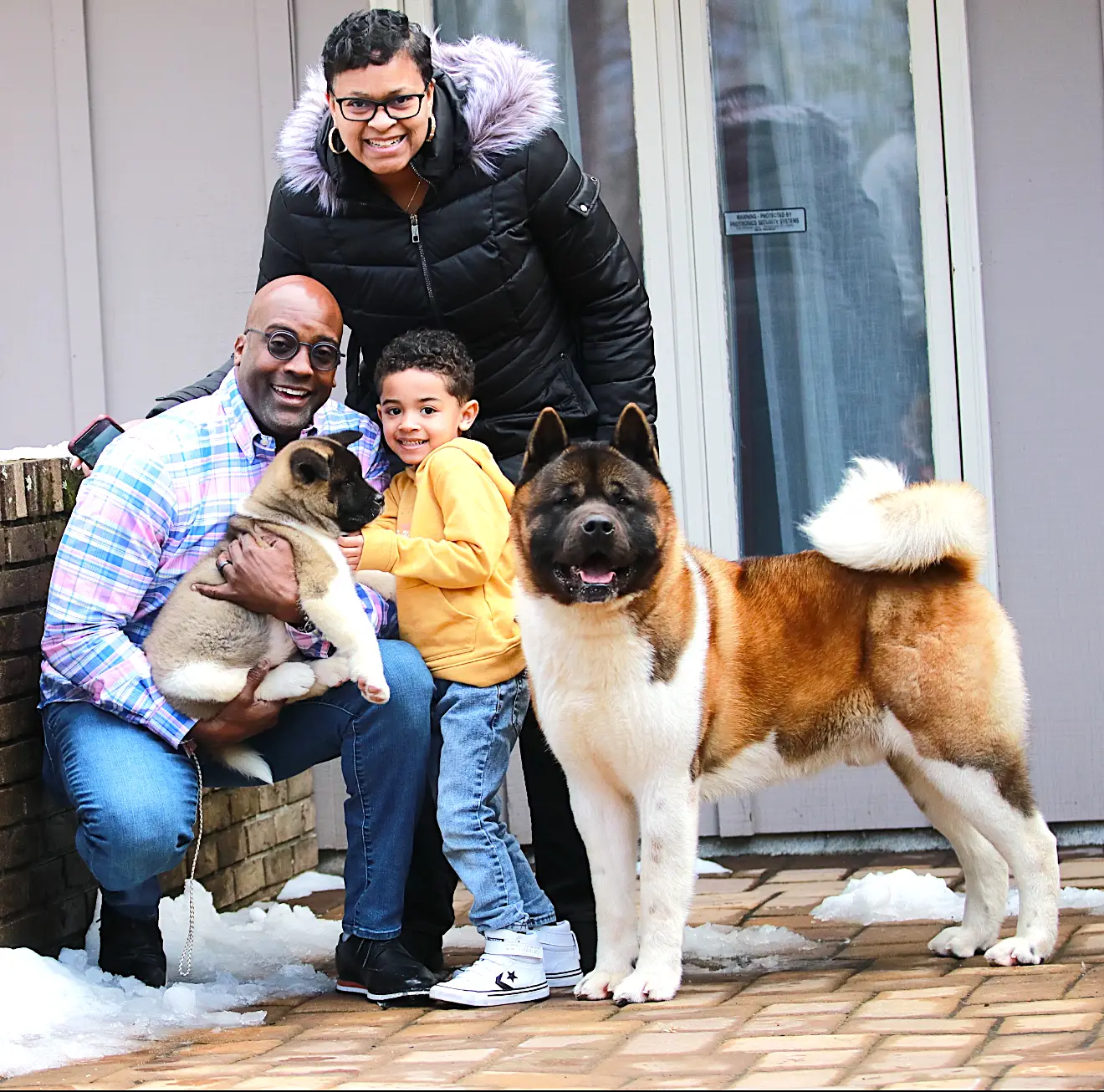
I have been placing American Akitas with families in Sussex County, New Jersey and across the country for over twenty years. In that time I have answered this exact question hundreds of times. Are Akitas good family dogs? Will this breed work in my home? Can my kids, my other dog, my elderly parent all live with one of these dogs?
I am going to give you the honest answer, and then I am going to walk you through what the answer actually depends on. Because the truth is more useful than the headline.
Yes. A well-bred American Akita from a serious breeding program is one of the best family dogs you will ever own. But "family dog" means more than just good with kids. It means fit for your specific household, your other pets, your routine, and your lifestyle. The right Apexx Akita does all of that. The wrong dog from the wrong breeder does none of it.
If you are specifically researching how this breed does with children, I have a dedicated answer for that question in Are American Akitas Good With Children? A Breeder's Honest Answer. This post is the broader picture. Family fit is not just about the kids. It is about everyone and everything in your home.
What "Family Fit" Actually Means for This Breed
Most articles online treat "family dog" as a binary trait. The dog is either good with families or it is not. That framing is too simple for a breed like the American Akita.
A well-bred American Akita is a discerning, deeply bonded guardian dog. The dog you bring home will treat your immediate family as the most important beings in its world. Your spouse, your kids, your elderly parents who live with you, the dog that already lives in your house, the cat that has been there since before the puppy arrived. All of them are inside the circle the dog will protect and love.
What that means practically is that the question is not really "is this breed good with families." The question is "will the dog I bring home recognize my specific family as its family." And the answer to that question depends on three things: the genetics behind the dog, the early socialization in the breeder's home, and the introductions you handle in the first few weeks.
This is why the breeder you choose matters more than almost anything else. A poorly bred Akita can struggle to bond, struggle to recognize its people, and struggle to coexist with the other animals in your home. A properly bred Apexx Akita arrives wired for stable, deep family bonding from day one.
Akitas With Children
The short answer is yes, well-bred American Akitas are excellent with the children in their family. They are watchful, tolerant, and remarkably gentle with the kids they live with. In twenty years of placements, the bond between an Apexx Akita and the kids it grows up with has been one of the most consistent and reliable patterns I have seen.
This question deserves more space than I can give it in one section of a broader post, so I covered it in full elsewhere. Read Are American Akitas Good With Children? for the complete answer, including how to handle the first introduction between your puppy and your child, and the rules every child in the house needs to learn.
Akitas With Other Dogs and Pets
This is where I want to spend real time, because this is the question most breeders avoid being honest about. Akitas with other dogs is the area where breed-specific traits show up most clearly, and prospective owners deserve a clear-eyed answer instead of marketing copy.
Here is the honest version. American Akitas can absolutely live successfully with other dogs. I have placed Apexx puppies into homes with golden retrievers, with German shepherds, with smaller breeds, and with other Akitas. Those placements have worked beautifully when three conditions were met.
- The other dog already in the home has a stable, non-reactive temperament. A dog that picks fights or escalates tension will be a poor match for any Akita.
- The two dogs are opposite sex when possible. American Akitas, like several other primitive guardian breeds, can show same-sex selectivity. Two intact males in one household, or two females, is a more challenging dynamic than male and female. Not impossible, but harder.
- The introduction is handled correctly. Neutral territory first, slow exposure, no forced face-to-face confrontations, supervised interactions in the first weeks.
For cats and small pets, the conversation is about prey drive. The breed was developed in part as a hunting dog, and that drive does not entirely disappear just because the dog is in a family setting. The key is early exposure. An Apexx Akita raised from eight weeks alongside a cat will almost always treat that cat as part of the family for life. An adult Akita meeting an unfamiliar cat in a new context is a different conversation, and one that requires honesty about the individual dog.
When you talk to me about a puppy, I will ask about every other animal in your home. Not to filter you out, but to find the right match. Some pairings in my litters are better suited to multi-dog households than others. That selection happens at the breeder level, not at the new-owner level.

Multi-Generational and Multi-Adult Households
One of the most overlooked questions in breed research is how the dog handles a household with multiple adults, kids, and sometimes elderly parents or grandparents all sharing the same space. American Akitas thrive in these settings, but the dynamic deserves explanation.
An Apexx Akita will treat the whole family unit as its pack. It will not "choose" one adult to the exclusion of others, the way some single-owner breeds tend to. What it will do is recognize the calm, consistent leader in the home and look to that person for direction first. In households with multiple adults, the dog usually settles on whichever person is most reliable about feeding, walking, and setting boundaries. That is the dog's reference point. But the affection and loyalty are spread across the whole family.
For elderly family members living with the family, this breed is one of the most respectful and gentle large dogs you will find. They sense fragility. I have placed dogs into multi-generational homes where the elderly parent was the dog's quiet companion all day while the working adults were at the office, and those pairings have been some of the most touching relationships I have witnessed across two decades.
What you need from the household side is consistency. If multiple adults are giving the dog different rules, different signals, and different expectations, even a well-bred Akita will struggle. The dog is not the problem in that situation. The household is. A unified approach to training, boundaries, and routine produces a dog that fits seamlessly into a busy multi-adult home.
Real Apexx Akitas in Family Contexts
I want to give you specific examples rather than generic claims, because over the years I have taken many of our dogs into public settings, family events, and busy environments. This is what those experiences have actually looked like.
Toro has come with me into busy public spaces and educational events for children. Strangers approach him expecting tension and find him calm. Kids walk up to him and he stands quietly while they pet him. He has spent his life around our family and other animals and treats everyone in his orbit the same way. With dignity and patience.
Arctic is the embodiment of the watchful family guardian. In her home, she has lived alongside children growing up, other dogs, and the normal chaos of family life, and her response to all of it has been steady presence. She is the dog who notices everything and reacts to almost nothing.
Tice and Bengal have both demonstrated the breed's natural ease with children of different ages, in public and at home. People are repeatedly surprised by their calm in busy environments, especially given the size and presence of the dogs.
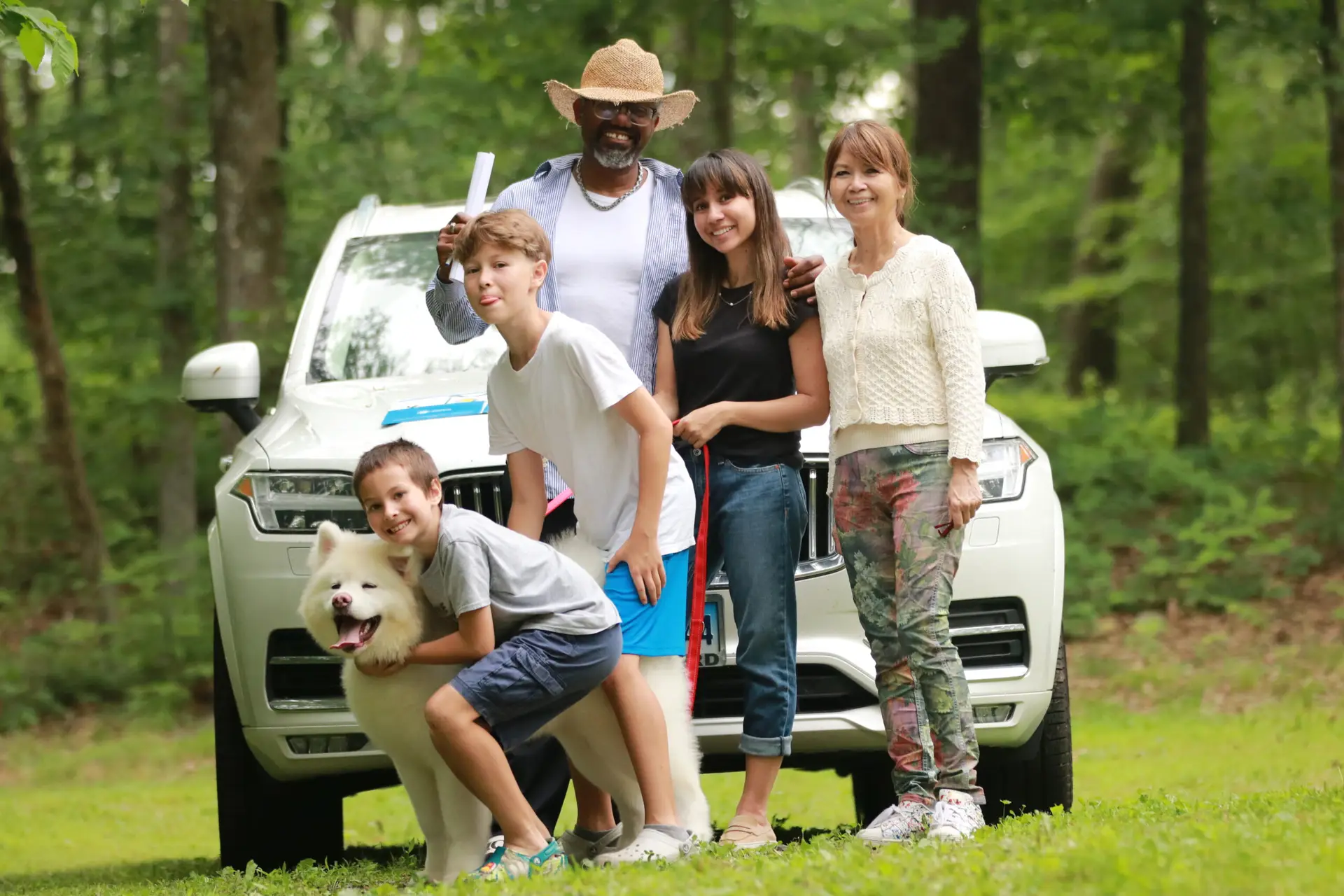
Domino, Astra, and Swatt have all shown the same pattern in different family placements. Deep bonding with their immediate family, tolerance with other animals introduced correctly, and the kind of stable nervous system that lets them function in the real world without the anxiety or reactivity people expect from large guardian breeds.
None of this is accidental. These dogs come from generations of selective breeding for exactly the temperament they display. The breeding decisions I make are designed to produce dogs that look like Toro, Arctic, Tice, Bengal, Domino, Astra, and Swatt. The fact that we see this pattern reliably across our placements is the proof that the breeding program is doing what it is supposed to do.
Who Should Not Get an American Akita
I am going to be direct here, because helping you decide against the breed is just as valuable as helping you decide for it. American Akitas are not the right family dog for every household. Specifically:
- Households without time for training and structure. This breed needs consistent leadership in the first year. If your schedule does not allow daily attention and a clear routine, choose a different breed.
- Families wanting a social butterfly. If you want a dog who runs up to every stranger at the park wagging its tail, an Akita is not it. They are reserved with strangers by design.
- Owners who want an off-leash dog around unknown people and animals. This breed has guardian instincts and prey drive. Off-leash work happens in controlled environments only.
- Chaotic households without clear boundaries. Akitas thrive in calm, structured homes. A constantly chaotic environment will produce a stressed, reactive dog regardless of how well it was bred.
- First-time large breed owners without willingness to learn. First time is fine. Unwilling to learn is not.
If any of these describe your situation honestly, please look at a different breed. Both you and the dog will be better off, and I would rather you walk away than buy a puppy from me you cannot live with for the next twelve years.
The Bottom Line on American Akitas as Family Dogs
Are American Akitas good family dogs? Yes, when the dog comes from a serious breeding program and the family is genuinely prepared for the breed. They are calm indoors, deeply bonded to the family unit, tolerant of children they grow up with, capable of coexisting with other pets when matched and introduced correctly, and remarkably respectful with elderly or fragile family members.
What separates an excellent family Akita from a difficult one is almost always the breeder behind the dog and the household the dog lives in. Get both of those right, and you will have a family member who will be the calm, loyal, watchful presence at the center of your home for the next decade or more.
That is the answer twenty years of family placements has taught me. And it is the answer every Apexx Akita is bred and raised to fulfill.