

What is Early Neurological Stimulation?
Early Neurological Stimulation is a short daily routine of gentle, mild stressors applied to very young puppies. The method traces back to the United States military's "Bio Sensor" program, which studied how early stimulation affected the development of working dogs, and it was brought to dog breeders largely through the writing of Dr. Carmen Battaglia.
The routine is built around a specific window. Between day 3 and day 16, a puppy's eyes and ears are still closed and its nervous system is developing rapidly. ENS introduces small, controlled sensations during that period, each lasting only seconds, so the puppy experiences a mild stress and recovers from it.
How we do ENS at Apexx Akitas
My daughter Sarah-Cassidy and I do the exercises together every evening at 7:30. Every puppy in the litter goes through the full routine, one puppy at a time, once a day from day 3 through day 16. One of us handles the puppy while the other keeps the routine moving, so no puppy is away from its mother and littermates for more than a minute or two.
| Exercise | What it involves | Time |
|---|---|---|
| Tactile stimulation | Gently tickling between the toes of one paw with a cotton swab. | 3 to 5 seconds |
| Head held up | Holding the puppy securely with both hands, upright, with its head directly above its tail. | 3 to 5 seconds |
| Head held down | Holding the puppy securely with both hands, head pointed toward the ground. | 3 to 5 seconds |
| On its back | Cradling the puppy on its back in both palms, muzzle facing up. | 3 to 5 seconds |
| Thermal stimulation | Setting the puppy feet down on a cool, damp towel, without restraining it. | 3 to 5 seconds |
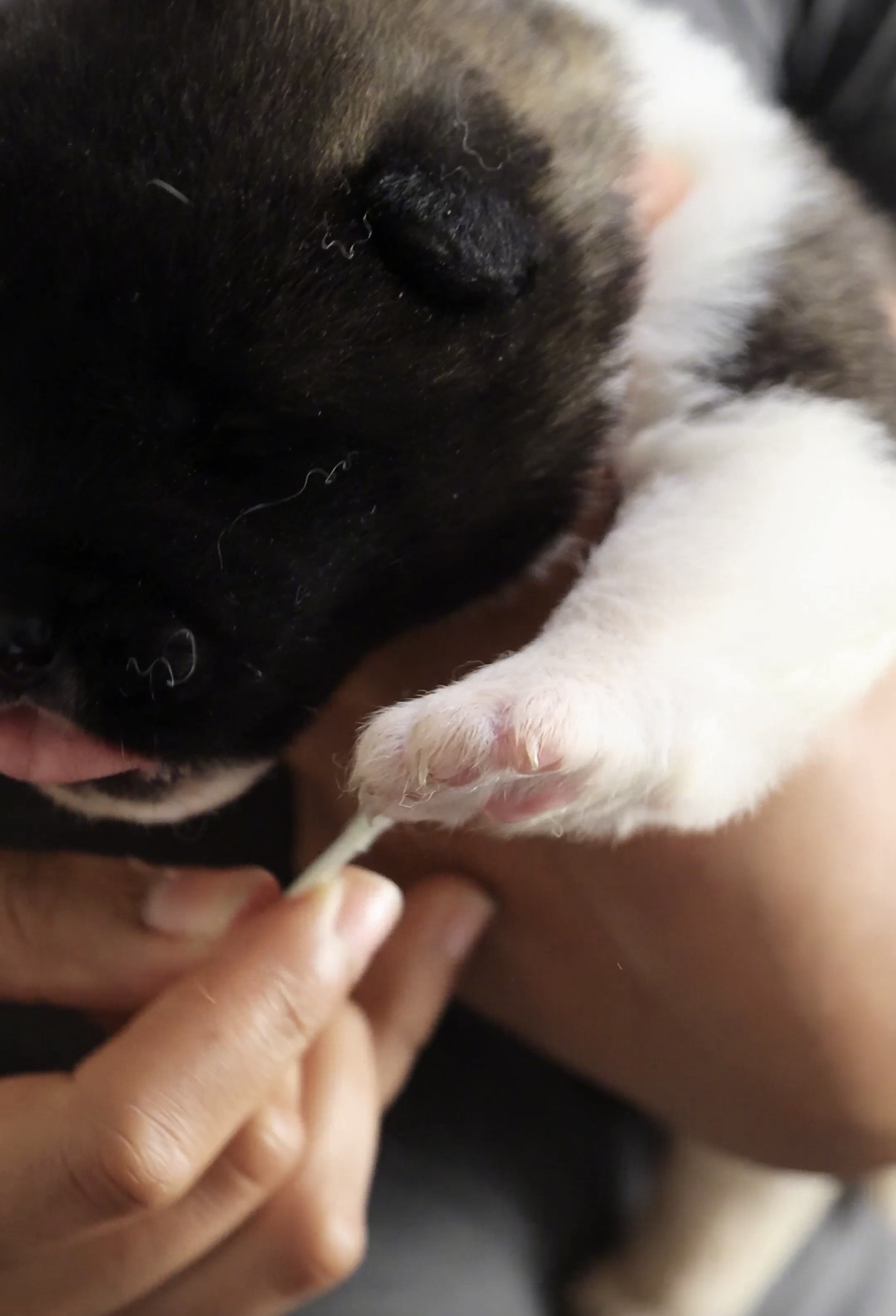
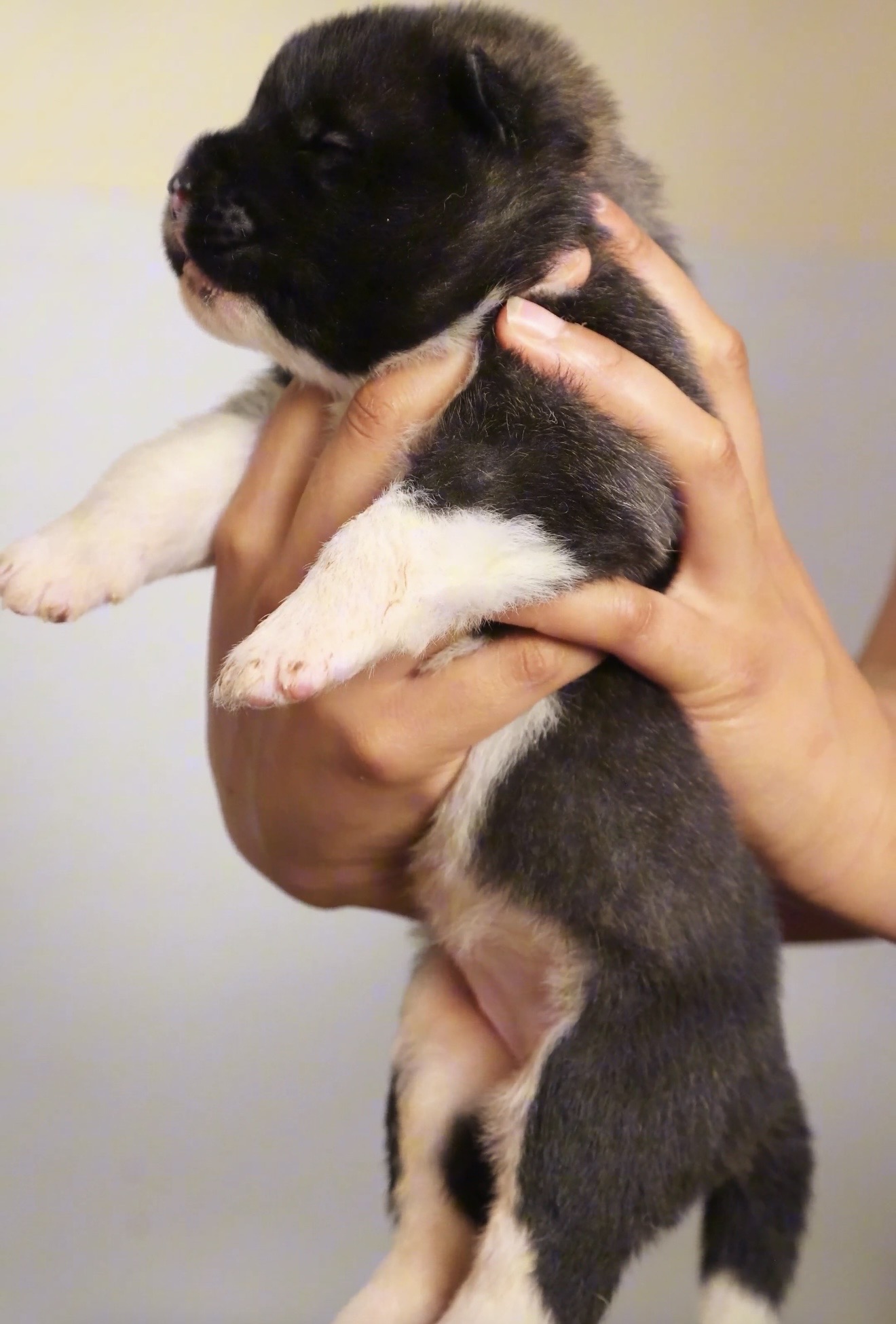
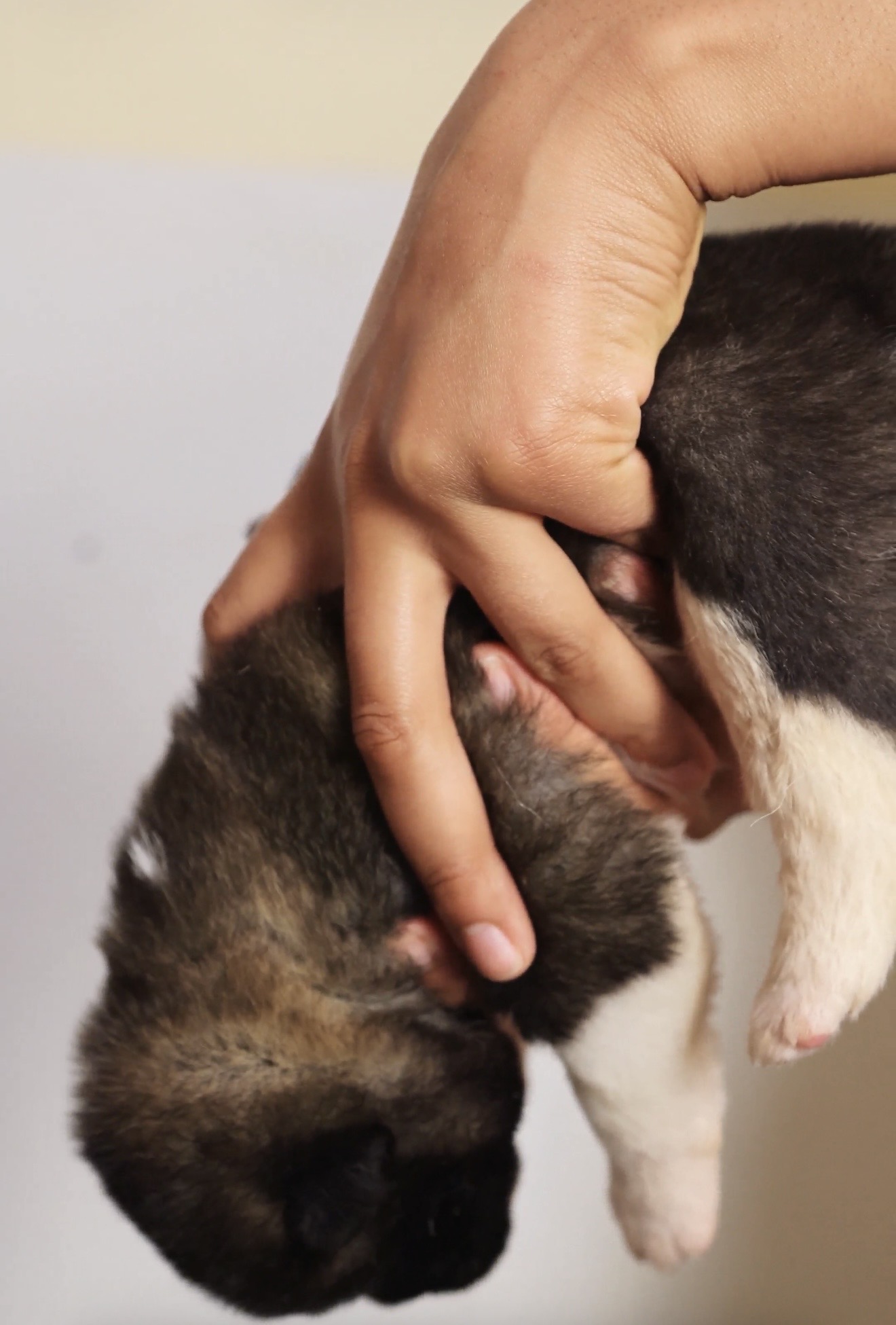
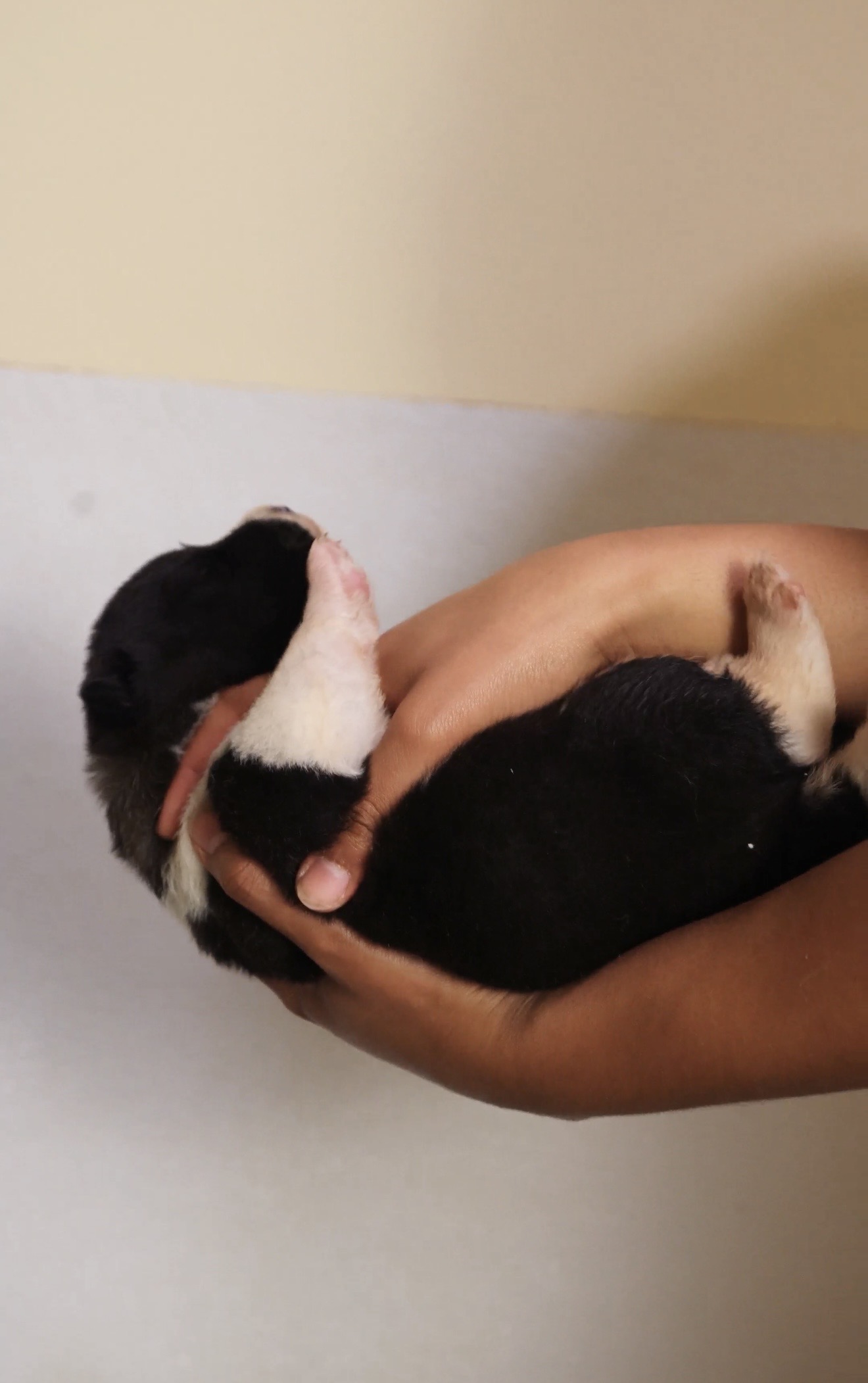
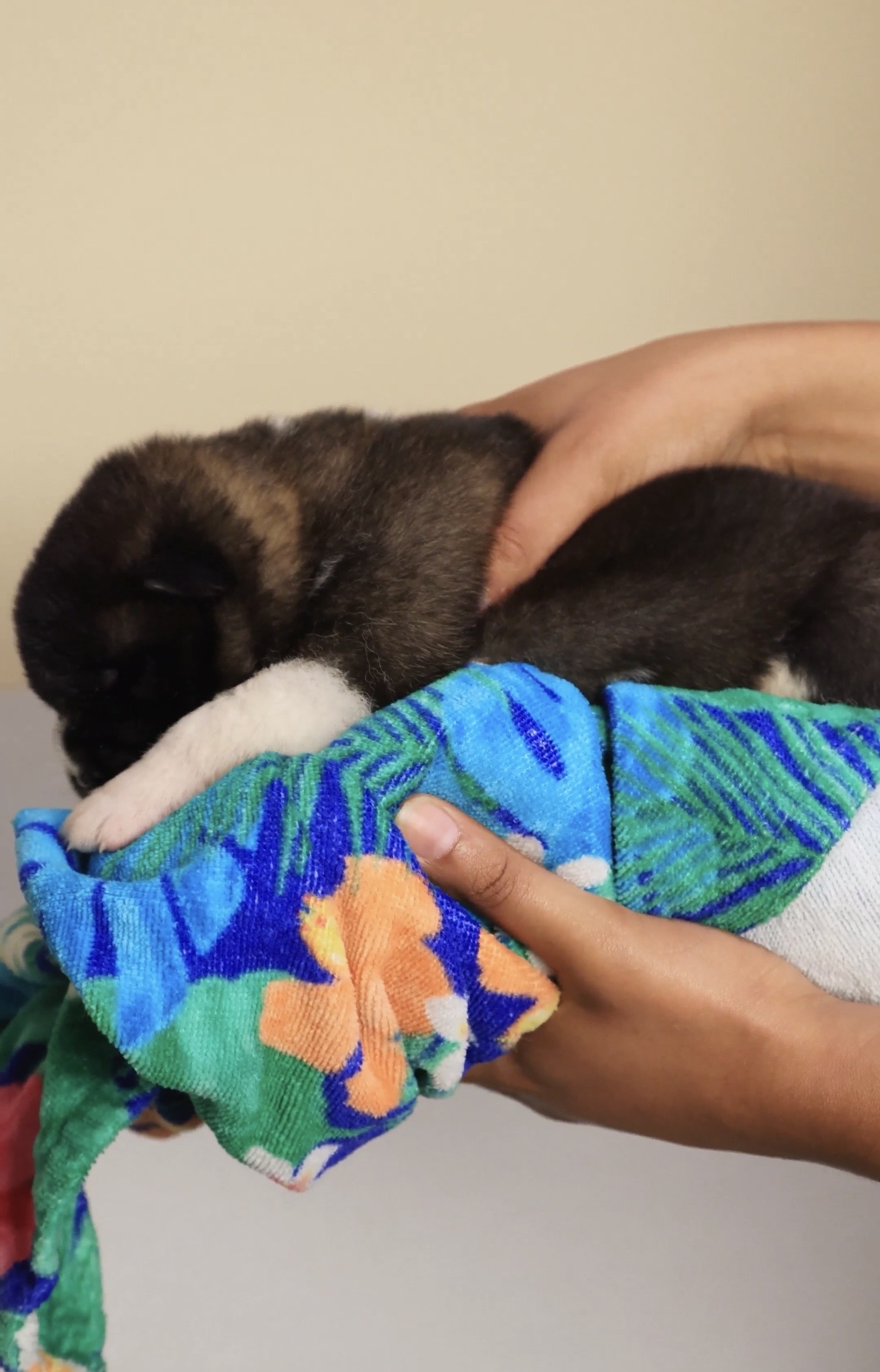
More is not better. ENS is meant to be brief. Each exercise lasts a few seconds, the routine happens once a day, and it stops at day 16. Longer or more frequent stimulation can overwhelm a newborn puppy, which is why the protocol is so specific. Every puppy is handled with both hands, close to the body, and returned to its mother right after.
What is Early Scent Introduction?
Early Scent Introduction (ESI) is a companion exercise done during the same window. A puppy is offered a single scent held near its nose, and we simply observe the response. At Apexx, we rotate scents such as pine, leather, herbs, and deer.
Puppies respond in different ways. One may move toward the scent, another may pull away, and another may barely react. There is no right or wrong response. ESI gives each puppy a new kind of sensory experience at an age when its sense of smell is already working, and it gives us one more look at each puppy as an individual.

What we have seen since 2007
I want to be straightforward here. ENS is one part of a larger program, and I can't separate its effect from everything else we do, from genetics and health testing to the socialization that follows. What I can tell you is what we have seen across our litters since we made ENS part of every puppy's routine.
We have seen a marked difference. Puppies that are confident and train smoothly, easy vet visits and examinations, puppies that cooperate when their nails are ground, and dogs that seem to have a stronger bond with their families and a real sense of awareness.
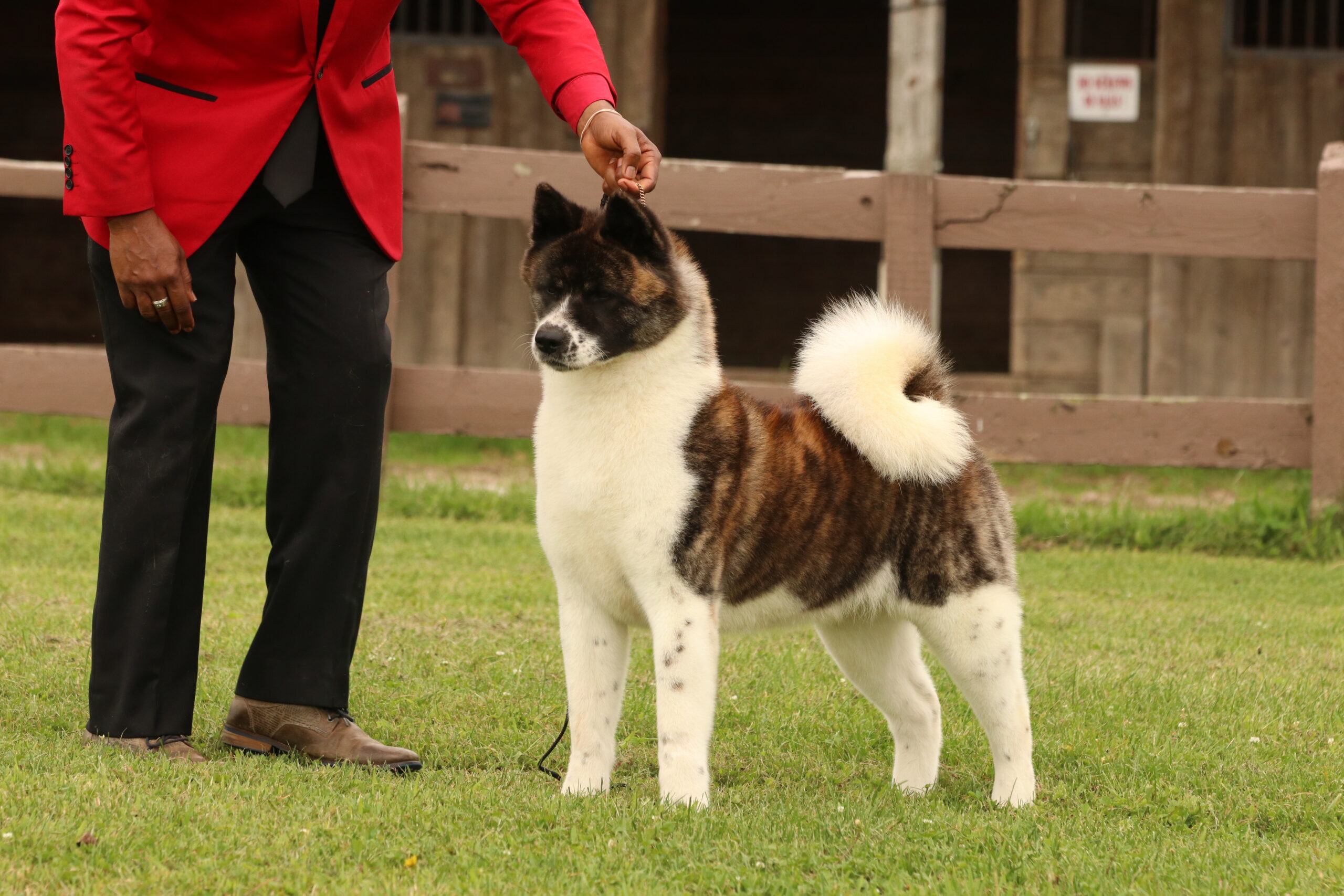
For an American Akita, that matters. This is a large, powerful guardian breed. A dog that accepts handling calmly, from a vet exam to a nail grind, is a safer and easier dog to live with for its whole life. If you want to understand what an Akita's temperament is really like, read The Truth About American Akita Temperament.
What the research shows
ENS is widely recommended in the breeding world, and some of what is said about it online goes further than the evidence. Here is an honest summary.
Dr. Battaglia's writing describes the Bio Sensor program's view that there are specific periods early in life when stimulation has its greatest effect, and that early stimulation can have positive results but must be used with caution.
A 2008 study by Gazzano and colleagues compared handled and unhandled puppies raised in family homes and in a breeding kennel. At 8 weeks, the handled puppies were calmer in both environments, and the authors concluded that deliberate gentle handling in early puppyhood benefits emotional development and welfare.
A 2022 study from Purdue University's Croney Research Group followed 76 small breed puppies in a commercial kennel. Puppies that received ENS did not respond to stress tests differently from puppies that were simply held for the same 30 seconds a day. The researchers' practical takeaway was that daily gentle early handling is beneficial and recommended, whether or not a specific protocol is used.
Our reading of the research: gentle, consistent, early human handling clearly matters. Whether the specific ENS exercises add something beyond that is still being studied. That is why we do both. Every puppy gets ENS and ESI, and every puppy also gets a great deal of calm, daily handling from the people raising it.
What comes after day 16
ENS ends at day 16, but development does not. Once the window closes, our puppies move into a broader socialization program: household sounds, different surfaces underfoot, regular handling of paws, ears, and mouths, car rides, and visitors coming into the home. By the time an Apexx puppy goes home at around 8 weeks, it has already met a wide range of people, places, and experiences.
That foundation is also why we put so much weight on what happens before a puppy is born. Every breeding dog in our program is fully OFA health tested, and every pairing is chosen for structure and temperament.

Frequently asked questions
What is Early Neurological Stimulation for puppies?
Early Neurological Stimulation (ENS) is a set of five brief handling exercises done once a day on puppies from day 3 to day 16 of life: tactile stimulation between the toes, head held up, head held down, lying on its back, and thermal stimulation on a cool, damp towel. Each exercise lasts 3 to 5 seconds.
At what age is ENS done?
ENS is done between day 3 and day 16 of a puppy's life. This early window is when the protocol is designed to have its effect, so it is performed by the breeder before puppies are old enough to go home.
Is ENS safe for puppies?
When done correctly, ENS is gentle and very brief: a few seconds per exercise, once a day, with the puppy held securely in both hands. Doing more is not better. Longer or more frequent stimulation can overwhelm a newborn puppy, so the protocol should be followed exactly.
Does ENS make puppies smarter or healthier?
Some claims about ENS go beyond the evidence. Research supports the value of gentle early handling for puppies' emotional development, but a 2022 Purdue University study found ENS puppies responded to stress no differently than puppies that were simply held each day. At Apexx Akitas, we present ENS as one part of our early development program, not a guarantee of specific outcomes.
What is Early Scent Introduction?
Early Scent Introduction (ESI) is a companion exercise done during the same day 3 to day 16 window. A puppy is offered one scent near its nose, such as pine, leather, herbs, or deer, and the breeder observes its response. There is no right or wrong reaction.
Do all Apexx Akitas puppies receive ENS and ESI?
Yes. Every puppy in every Apexx Akitas litter goes through ENS and ESI each evening from day 3 to day 16. Ron Durant has included ENS in the program since 2007.
Should I do ENS with my puppy after I bring it home?
No. The ENS window closes at day 16, weeks before a puppy is ready to go home at around 8 weeks. Once your puppy is home, focus on calm daily handling, positive socialization, and early training.
What happens after day 16?
After day 16, Apexx Akitas puppies move into a broader socialization program that includes household sounds, different surfaces, regular handling of paws, ears, and mouths, car rides, and visitors, continuing until they go home at around 8 weeks.
The Bottom Line
Early Neurological Stimulation is five brief exercises, a few seconds each, done once a day from day 3 to day 16. At Apexx Akitas, every puppy has received ENS since 2007, along with Early Scent Introduction, followed by a full socialization program until it goes home. The research clearly supports gentle early handling, and across our litters we have seen confident, trainable puppies that accept handling and bond strongly with their families. ENS is not a guarantee on its own. It is one part of a foundation built on genetics, health testing, and the work we put into every puppy from its first days.
Sources
- Battaglia, C. L. Early Neurological Stimulation. Society for Theriogenology.
- Gazzano, A., Mariti, C., Notari, L., Sighieri, C., and McBride, E. A. (2008). Effects of early gentling and early environment on emotional development of puppies. Applied Animal Behaviour Science.
- Boone, G., Romaniuk, A. C., Barnard, S., Shreyer, T., and Croney, C. (2022). The Effect of Early Neurological Stimulation on Puppy Welfare in Commercial Breeding Kennels. Animals, 13(1), 71.
- Croney Research Group, Purdue University. Research Summary: The Effect of Early Neurological Stimulation on Puppy Welfare.
More from Apexx Akitas: What to Feed an American Akita, American Akita Colors and Coat Patterns, and the full American Akita Resources library.