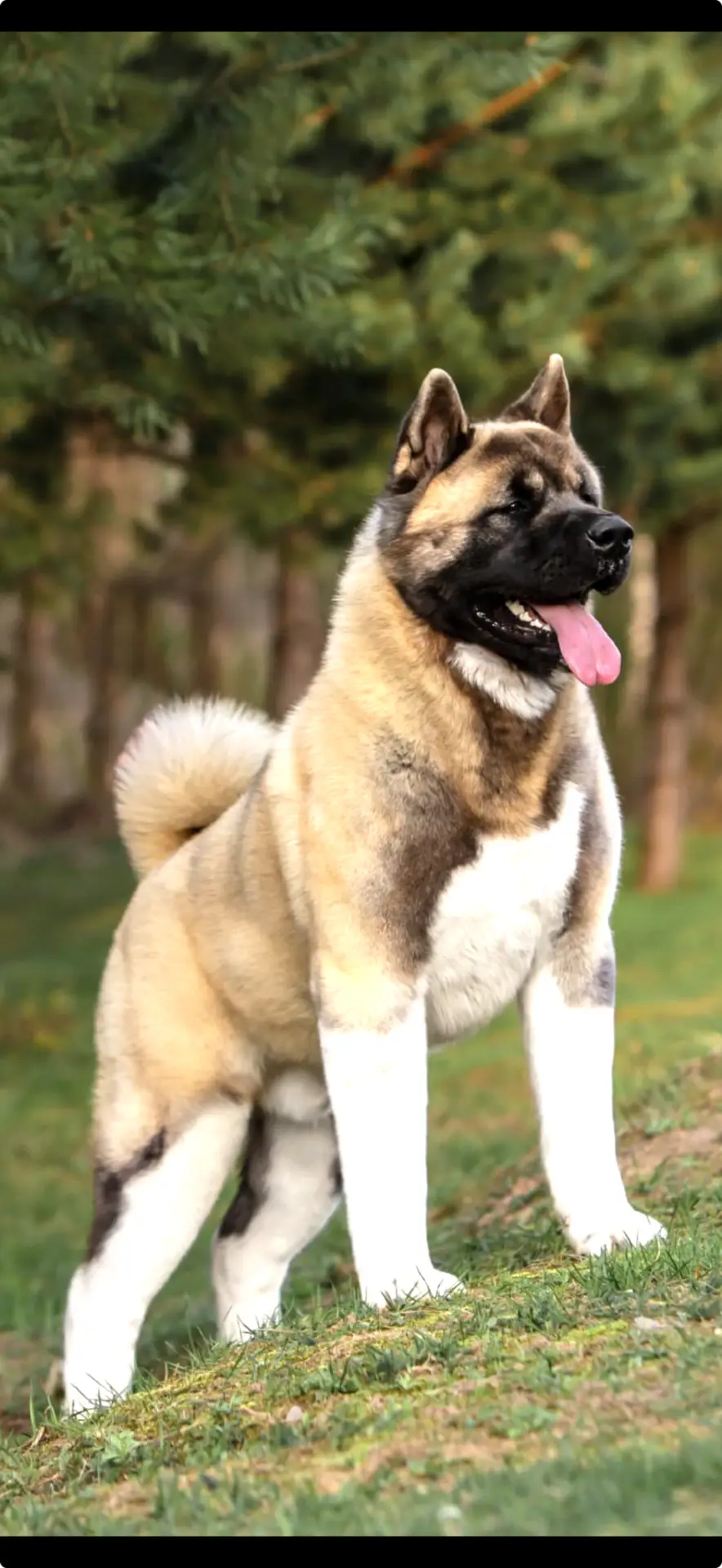
Why Akita Temperament Is Decided
Before the Puppy Is Born
The question I get from almost every serious family is some version of the same thing: how do I know the puppy will have a good temperament? It is the right question. The answer most breeders give is wrong.
They talk about training. They talk about socialization. They talk about how they raise their puppies. All of that matters , but none of it is where temperament starts. By the time you are looking at a puppy, the most important decisions have already been made. Either someone made them deliberately, or nobody made them at all.
I have been breeding American Akitas for over twenty years. This is what I have learned about where temperament actually comes from, and what it means for the family trying to find the right dog.
The Pairing Is the Temperament Decision
The American Akita is a dominant, powerful animal. That is not a warning , it is a description of what makes the breed extraordinary when the genetics are right. Calm, confident, bonded to its family, stable under pressure. That dog exists, and it is real, and it comes from specific decisions made before any puppy is born.
Drive, reactivity, threshold, social tolerance , these traits have a genetic component. You cannot breed two nervous, high-strung dogs and train the offspring into stability. The ceiling gets set at conception. A breeder who does not understand this is not managing temperament. They are gambling with it and asking you to pay for the result.
By the time you are looking at a puppy, the most important decisions have already been made , or they have not been made at all.
Before any pairing happens at Apexx Akitas, I am asking three things. Does each parent demonstrate the stable, self-assured temperament the breed standard describes? Are both parents fully health-tested , because structural pain and temperament instability are the same conversation, which I will get to in a moment. And does the combination of their lines suggest a predictable outcome, or is it a roll of the dice?
If any of those answers is uncertain, the breeding does not happen. That is why we produce limited litters. Quality and volume do not coexist in responsible breeding.
This is what correct breeding decisions look like. Structure, presence, and stability do not happen by accident.
Health Testing and Temperament
Are the Same Conversation
Most buyers understand that OFA certification matters for physical health. Fewer connect it to temperament. The connection is direct and it matters more than most people realize.
A dog with undiagnosed hip dysplasia lives in chronic pain. A dog in chronic pain cannot be stable. It may guard spaces it would not otherwise guard. It may be reactive in situations that would not concern a healthy animal. You cannot train around structural pain. You can only manage it , and management is not the same as a sound temperament.
Every dog in our breeding program carries verifiable OFA certification covering hips, elbows, thyroid, eyes, and cardiac. Not claimed. Verifiable. The certificate numbers are public record at ofa.org and I encourage every family to look them up before they ever contact me. Any breeder who cannot give you those numbers is asking you to trust their word instead of the record.
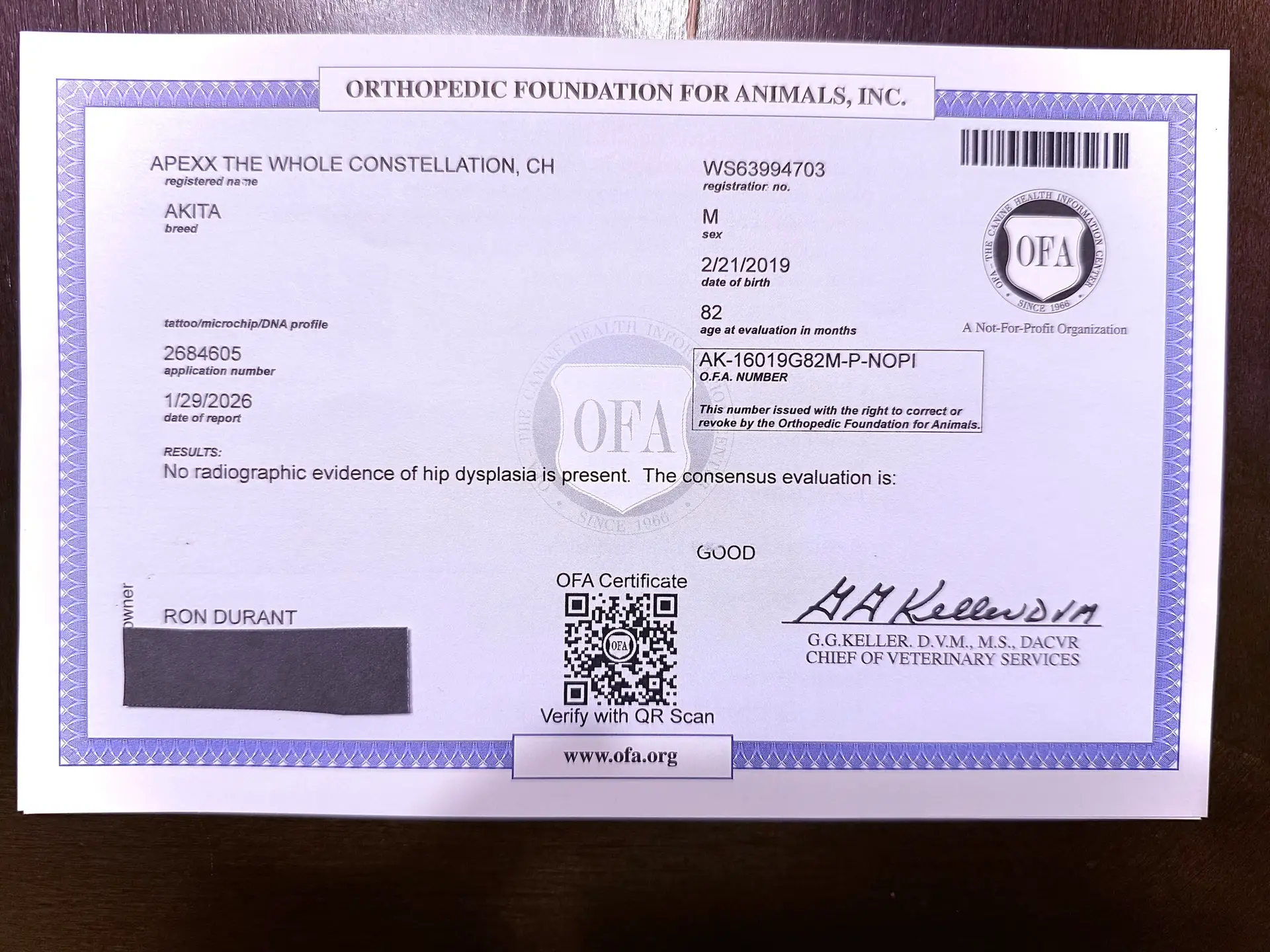
Champion Ash , OFA Hip Report. Publicly verifiable at ofa.org.
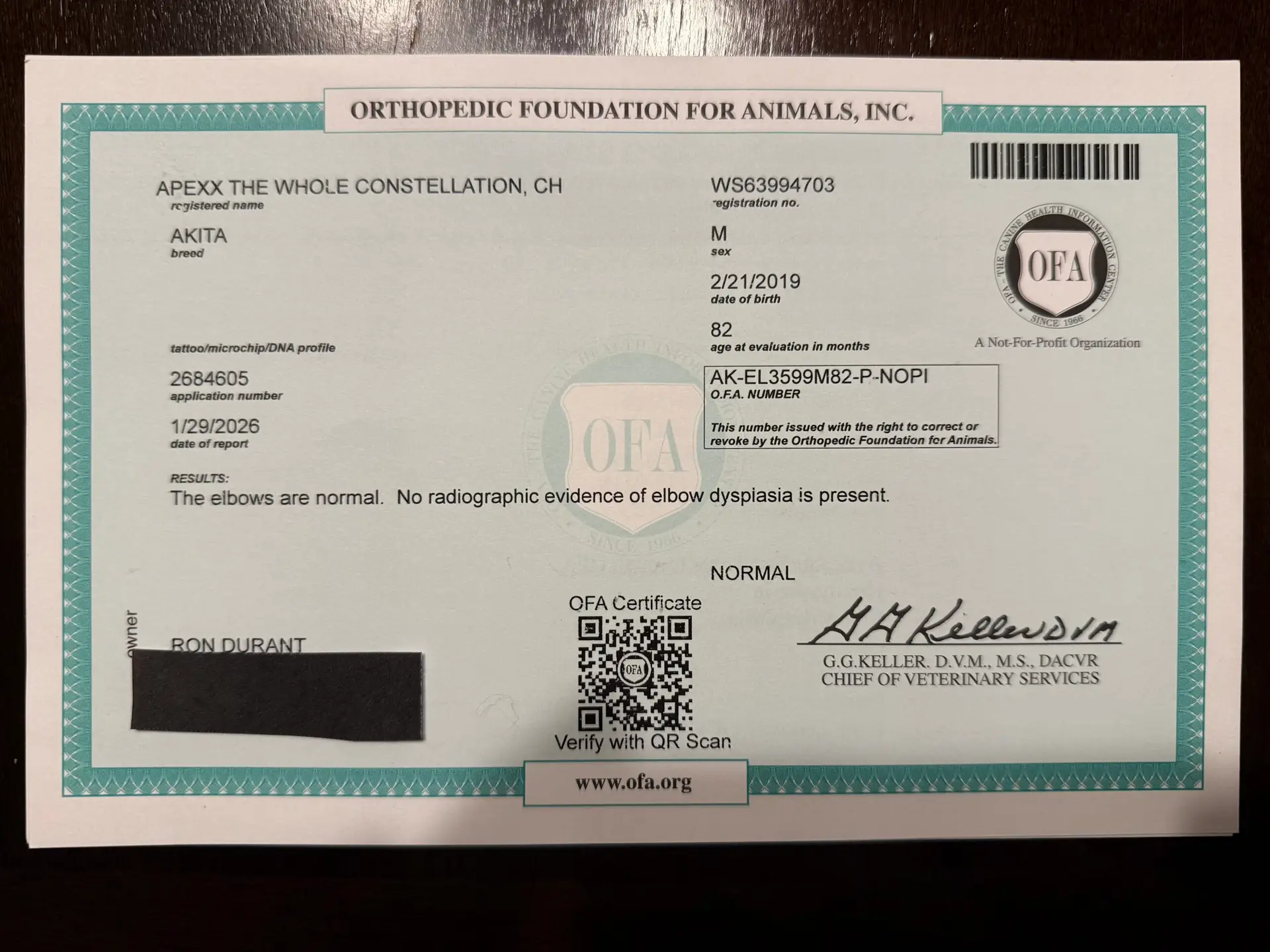
Champion Ash , OFA Elbow Certificate. Both parents certified before any breeding decision is made.
These documents exist before any puppy does. That is the standard. Anything less is a breeder asking you to trust claims made on a website.
What Happens in the
First Eight Weeks
Genetics set the foundation. What happens in the first weeks of a puppy's life either builds on that foundation or wastes it.
The neurological system of a newborn puppy is still forming. Research into early canine development has shown clearly that structured handling in the first weeks of life produces measurable differences in how a dog responds to stress for the rest of its life. Dogs that received consistent early handling show greater tolerance for novel situations and more stable responses under pressure. This is documented, not anecdotal.
It does not require equipment or special facilities. It requires showing up every day, handling each puppy individually, and understanding what you are doing and why. Most breeders do not do it because it takes time and it does not show up in photos.
Daily handling from the first days of life. This is not a special event. This is what every litter we produce receives.
By the time our puppies go home, they have been handled hundreds of times, exposed to varied sounds, surfaces, and people, and have already learned that the world is not a threatening place. That foundation cannot be purchased at week eight from a breeder who did not build it in weeks one through seven.
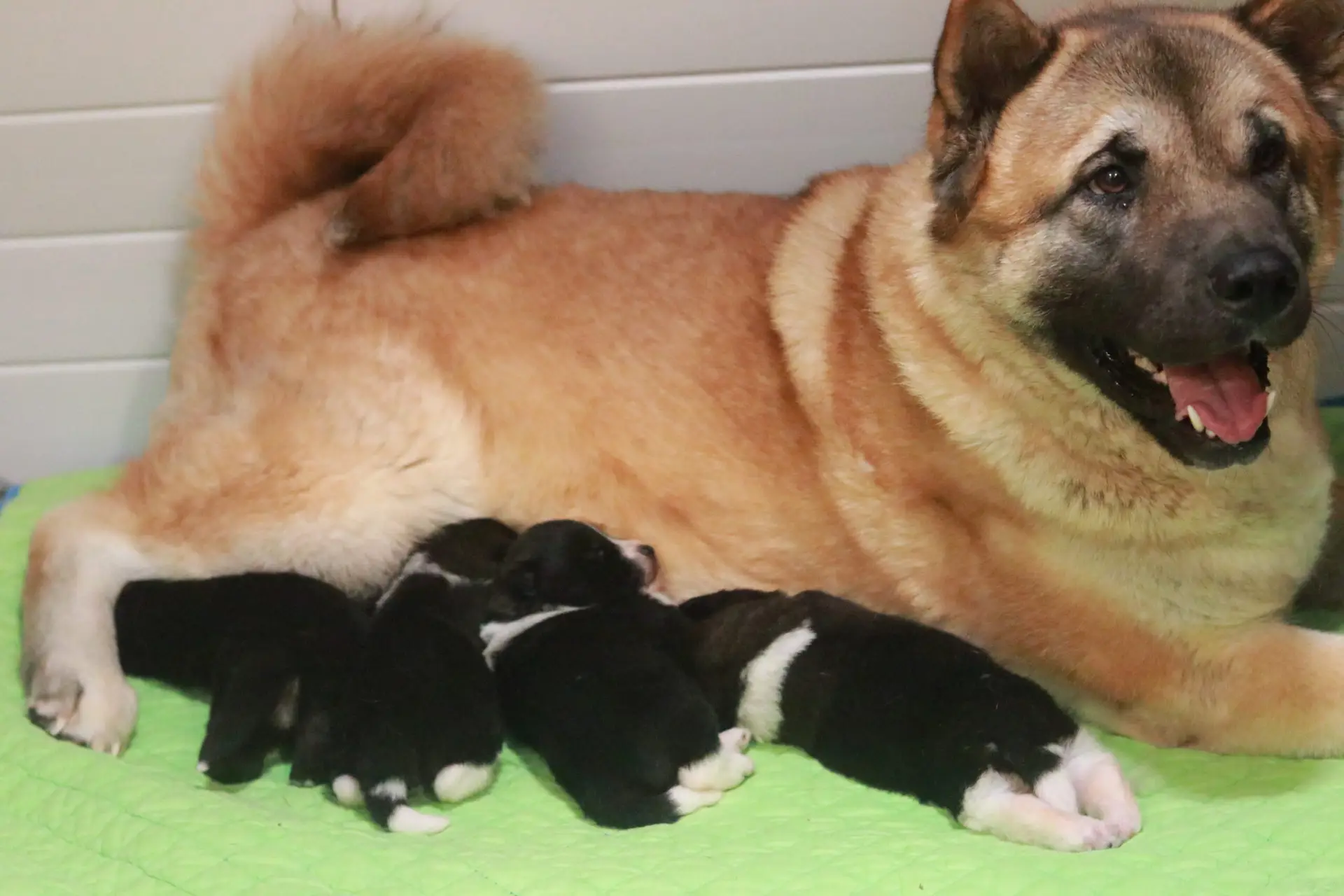
The dam with her litter. Her temperament, her comfort in the whelping environment, and her relationship with us all shape how her puppies experience their first weeks.
What a Well-Bred Akita
Actually Looks Like
The American Akita is not a dog for every household. I say that plainly because it is true and because families deserve to hear it before they commit, not after. This dog is dominant, independent, and deeply bonded to its people. It requires confident ownership and an owner who has done their research.
When those conditions exist , and when the breeding behind the dog was done correctly , what you get is something most breeds cannot match. Calm in the home. Alert outside it. Loyal without being anxious. Stable around children it was raised with. Not looking for a fight, but not backing down from one either.
That dog is entirely achievable with the right dog from the right program. What it is not is something you can purchase from a breeder who did not do the work. There is no training program that fixes the wrong pairing. There is no socialization protocol that compensates for a dam in pain or a sire with an unstable threshold. The ceiling was set before that puppy was born , and set low.
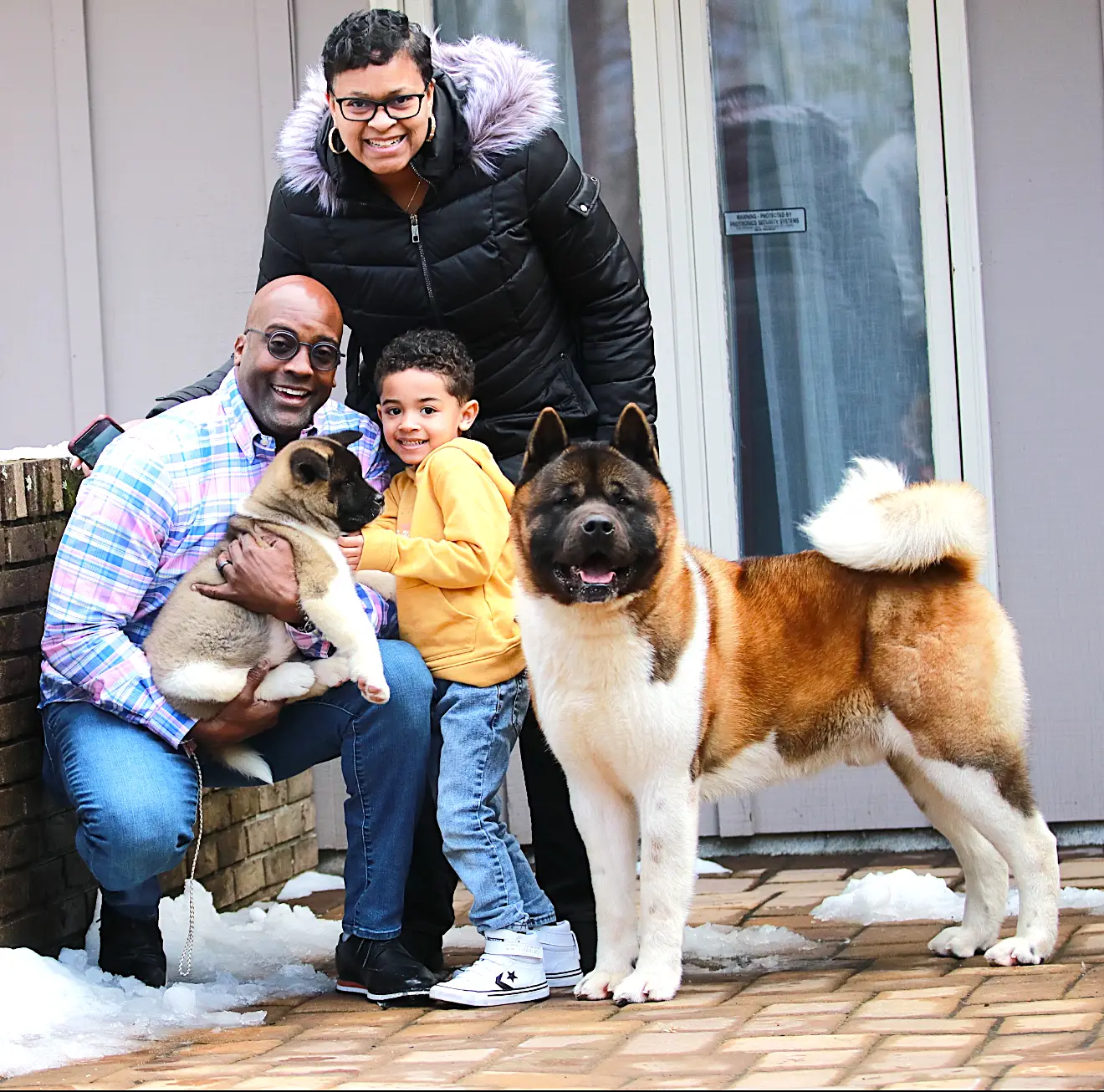
A well-bred Akita in a family environment. Calm, present, stable. This is what the breed looks like when the breeding decisions were right.
Questions to Ask
Every Breeder You Consider
Before you commit to any breeder , including us , ask these questions and pay attention to how they answer.
Can you provide the OFA certification numbers for both parents? Not a certificate image , the actual numbers, so you can look them up yourself at ofa.org. A breeder who hesitates here is telling you something important.
How many litters do you produce per year? Limited, intentional litters are a feature. A breeder with puppies always available is making different decisions than we are.
What specifically happens with the puppies between birth and eight weeks? If the answer is vague, the answer is nothing.
What would disqualify a buyer? A breeder who approves every applicant is not evaluating applicants. We turn people away. That is part of the job.
What happens if the placement does not work out? Every dog we produce has a home with us for life if it does. That commitment is in writing before any puppy leaves.
Both matter, but genetics set the ceiling. Training refines what breeding built , it cannot replace it. A puppy from parents with unstable temperament cannot be trained into the calm, confident dog the American Akita is meant to be.
A dog in chronic pain from undiagnosed structural problems cannot be stable. OFA certification confirms the breeding stock is structurally sound. Health and temperament are inseparable in this breed , you cannot evaluate one without the other.
Verifiable OFA certification numbers for both parents, a clear temperament evaluation process, limited and intentional litters, and a breeder who interviews you as thoroughly as you interview them. Walk away from anyone who always has puppies available or gets defensive when you ask about health records.
Neurological development begins within the first days of life. The critical socialization window opens around three weeks and closes around twelve to fourteen weeks. What happens , or does not happen , in that window has a permanent effect on how the dog processes the world for the rest of its life.
Start With the Application
We produce limited litters from health-tested, champion-bloodline parents. Every placement goes through an evaluation process because every dog we produce matters to us long after it leaves.
Apply for a Puppy