American Akita vs Japanese Akita: Key Differences Every Buyer Must Understand
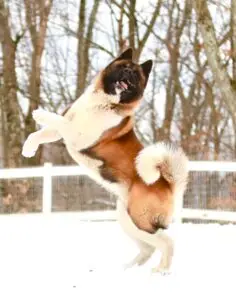
By Ron Durant — Apexx Akitas | 20+ Years Breeding Champion American Akitas | New Jersey
If you’ve been researching Akitas, you’ve likely encountered a confusing reality: there isn’t just one Akita breed, there are two distinct types with different origins, standards, appearances, and temperaments. Understanding the difference between the American Akita and the Japanese Akita (Akita Inu) is not just an academic exercise. It’s actually the single most important piece of knowledge you can have before committing to one of the most powerful, loyal, and demanding breeds in the world.
I’m Ron Durant, founder of Apexx Akitas, and I’ve spent over two decades studying, breeding, showing, and placing American Akitas across the United States. In that time, I’ve spoken with hundreds of families who were confused about which Akita they were getting and even worse, families who purchased one type expecting the other.
This guide covers everything: history, appearance, temperament, health, registry standards, and how to decide which type is right for your family. If you want to understand the Akita world at the level of a seasoned expert, read every word.
The Short Answer: Two Breeds, One Name
Here is the reality that surprises most buyers:
In the United States, the American Kennel Club (AKC) for decades has recognized a single breed called “Akita” which technically encompasses both types under one standard, though the two have diverged dramatically over the past 80 years.
In countries that follow the Fédération Cynologique Internationale (FCI) which includes most of Europe, Asia, and South America, the American Akita and the Japanese Akita Inu are registered, shown, and judged as two completely separate breeds.
In Japan, only the Japanese Akita Inu is recognized as an official breed. The American type is not accepted by Japanese registries and would not be considered an Akita by Japanese standards at all.
This means a dog that wins Best in Show at Westminster under AKC rules could be disqualified from competition entirely under FCI or Japanese standards. That’s how different these two dogs have become.
The History: How One Breed Became Two
To understand the American Akita vs Japanese Akita divide, you need to understand what happened during and after World War II.
The Japanese Akita Inu: A National Treasure
The Akita Inu is one of Japan’s oldest and most revered breeds. Originating in the mountainous Akita prefecture of northern Japan, these dogs were bred for centuries as hunting dogs capable of tracking and holding large game including Japanese black bears, boar, and deer. They were also prized as status symbols by Japanese nobility and samurai.
In 1931, the Japanese government declared the Akita Inu a Tennen Kinenbutsu, a National Natural Monument. The breed was so culturally significant that the government implemented strict preservation protocols, and the Akita Inu Hozonkai (Akiho), the primary Japanese preservation society, was established to protect the breed’s original characteristics.
The story of Hachiko, the Akita who waited at Shibuya Station for his deceased owner every day for nearly ten years cemented the breed’s legendary status in Japanese culture. A bronze statue of Hachiko still stands at Shibuya Station today, and his name is known by virtually every Japanese citizen.

The American Akita: A Post-War Divergence
Everything changed after World War II.
American soldiers stationed in Japan were captivated by the Akita. Many arranged to bring dogs back to the United States, beginning in the mid-1940s. Helen Keller is often credited as the first American to own an Akita, having received one as a gift during a visit to Japan in 1937.
As more Akitas arrived in America, breeders began crossing them with other large breeds including Mastiffs, Saint Bernards, and German Shepherds — to create a larger, heavier, more powerful dog. The American breeders were not focused on preserving the traditional Japanese type. They were focused on size, presence, and a more imposing physical structure.
The result was a dog that looked and behaved noticeably differently from the Japanese original. By the time the AKC formally recognized the Akita in 1972, the American type had already diverged significantly. Japanese breeders, horrified by what they saw as corruption of their national treasure, pushed back. Japanese registries refused to recognize the American type. The FCI eventually formalized the split.
By the 1990s, the two types were effectively separate breeds sharing a common ancestor but little else in appearance or standard.
Side-by-Side Comparison: American Akita vs Japanese Akita (Akita Inu)
Characteristic | American Akita | Japanese Akita (Akita Inu) |
Size (Males) | 100–130+ lbs, 26–28 inches | 75–85 lbs, 25–27.5 inches |
Size (Females) | 70–100 lbs, 24–26 inches | 55–65 lbs, 23–25 inches |
Build | Heavy, bear-like, substantial bone | Lighter, more elegant, athletic |
Head Type | Broad, massive, bear-like | Narrower, fox-like, more refined |
Accepted Colors | All colors, patterns, markings | Red fawn, sesame, brindle, white only |
Pinto Allowed? | Yes | No |
Black Mask? | Acceptable | Not acceptable (considered a fault) |
Urajiro Required? | Not required | Required on specific colors |
Coat | Dense double coat, plush texture | Dense double coat, slightly harsher |
Tail | Tightly curled over back | Tightly curled or sickle |
AKC Recognition | Yes (“Akita”) | Under “Akita” in US; “Akita Inu” in FCI countries |
FCI Recognition | Yes (as “Akita”) | Yes (as “Akita Inu”) — separate breed |
Japanese Registry | Not recognized | Recognized by Akiho |
Primary Purpose | Family companion, guardian | Preservation/show, family companion |
Temperament Tendency | Slightly more adaptable, often calmer with families | More primitive, more independent |
Availability in US | Widely available from reputable breeders | Less common; fewer dedicated breeders |
Typical Price Range | $2,500–$5,000+ | $3,000–$6,000+ |
Physical Differences: How to Tell Them Apart
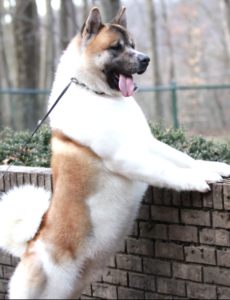
The most consistent way to distinguish an American Akita from a Japanese Akita Inu at a glance is the head and overall structure.
The American Akita: Bear-Like Power
The American Akita is built for presence and power. When you look at one head-on, you see a broad, massive skull, wide between the ears, with a deep stop (the angle where the forehead meets the muzzle), a blunt muzzle, and a commanding expression. The overall impression is bear-like. This is not an accident since American breeders specifically cultivated this type.
The body matches the head: deeply chested, heavily boned, powerful through the neck and shoulders. An adult male American Akita in prime condition is genuinely imposing, often over 120 pounds of dense muscle, moving with a deliberate, ground-covering stride.
Color variety in American Akitas is broad and beautiful. You’ll see rich reds, brindles, silvers, blacks, whites, and the striking pinto pattern, a white base with patches of color over the head, body, or both. Black masks are accepted and common. No specific ventral coloring is required by the AKC standard.
The Japanese Akita Inu: Fox-Like Elegance
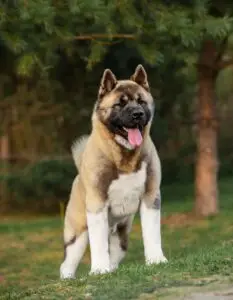
The Japanese Akita Inu reads differently immediately. The head is more refined and narrower, with a longer, more fox-like muzzle, smaller eyes (often triangular), and a more alert, refined expression. The stop is present but less dramatic than in the American type.
The body is athletic and proportional, lighter-boned than the American type but still powerful and substantial. A male Japanese Akita Inu typically weighs 75-85 pounds, noticeably lighter than his American counterpart.
Color options are strictly controlled. The Akiho and FCI standard allows only four colors: red fawn, sesame (red with black-tipped hairs), brindle, and white. On all non-white dogs, urajiro which is the pale cream to white coloring on the sides of the muzzle, cheeks, underside of the jaw, neck, chest, body, and underside of the tail is required. There are no pinto Akita Inus. A black mask on a Japanese Akita Inu is a serious fault that would disqualify from competition.
The Coat
Both types carry a dense double coat. A soft thick undercoat with a harsher outer coat that provides weather protection. The coats shed significantly, particularly during semi-annual “coat blow” season when the undercoat releases in dramatic quantities.
American Akitas tend to have a slightly more plush, full coat that amplifies their already substantial size. Japanese Akita Inus have a coat that is slightly harsher in texture and slightly shorter, giving them a cleaner profile.
Both require regular brushing, particularly during shedding season. Neither is a low-maintenance breed from a grooming standpoint.
Temperament: The Real-World Differences
This is where the question gets more nuanced and where generalizations can mislead you.
Both types share the foundational Akita temperament traits: loyalty, independence, intelligence, dignity, and a natural guardian instinct. However, decades of divergent breeding in the United States have produced some meaningful tendencies worth understanding.
American Akita Temperament
The American Akita has been bred in the United States for generations with family life in mind. Reputable American Akita breeders have consistently prioritized stable temperament, calm energy in the home, and adaptability to family environments including households with children.
At Apexx Akitas, this has been our core breeding philosophy for over 20 years. The dogs we produce are selected specifically for quiet confidence, emotional stability, and the ability to thrive in structured family settings. Our Akitas are not reactive, unstable, or nervous. They are calm, observant, and deeply loyal to their people.
Well-bred American Akitas tend to be:
- Calm and composed indoors, rarely destructive when properly exercised
- Deeply loyal to their immediate family, forming powerful bonds
- Naturally watchful, making them exceptional home guardians without being reactive or anxious
- Discerning with strangers not aggressive by default, but not immediately friendly either
- Independent thinkers who respect confident, consistent leadership
- Manageable in family settings when socialized early and raised with clear structure

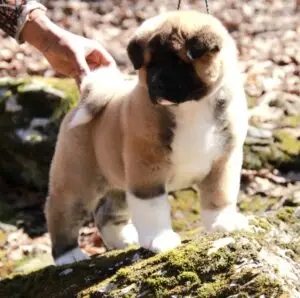
A well-bred, properly socialized American Akita from Apexx Akitas. Calm, confident, and deeply loyal to its family
The American Akita is not a golden retriever. It will not be enthusiastically friendly with every person or dog it meets. But a well-bred, well-socialized American Akita is a profoundly stable, trustworthy companion that consistently exceeds family expectations when placed in the right home.
Japanese Akita Inu Temperament
The Japanese Akita Inu retains more of what breeders describe as the “primitive” character of the original breed. This is not a criticism since it reflects the Japanese preservation philosophy, which prioritizes maintaining the ancient type above adaptation to modern family life.
Japanese Akita Inus tend to be:
- More independent and less driven by approval from their owners
- More sensitive to their environment and the people in it
- Highly intelligent but sometimes more difficult to motivate in training
- Deeply bonded to a small circle of trusted people
- More reserved some would say more emotionally private than the American type
Both types require an owner who understands that this is not a submissive, people-pleasing breed. Both types are best suited to experienced dog owners who can provide calm, consistent leadership and early socialization.
The Temperament Myth Worth Addressing
One of the most common misconceptions about Akitas in both types is that they are inherently aggressive. This is not accurate when applied to well-bred dogs from ethical programs.
Aggression in Akitas is overwhelmingly a product of poor breeding, inadequate socialization, or inappropriate ownership not a breed characteristic. The Akitas we produce at Apexx Akitas have been taken into shopping malls, public events, crowded streets, and school environments. The consistent reaction from the public is not fear but wonder. People are drawn to our dogs precisely because they project such calm confidence.
Temperament is largely determined before a puppy is ever born. That’s why choosing a reputable breeder who does health tests, selects for stable temperament across multiple generations, and invests in early development is the single most important decision you’ll make.
Registry and Show Standards: What Matters If You Want to Compete
If you’re considering showing your Akita, the registry distinctions matter enormously.
In the United States (AKC)
The AKC registers all Akitas both American and Japanese types. Recently the AKC have separated the breeds into two groups from the single designation “Akita.” The AKC standard now distinguishes between the two types for competition purposes in the US. Both types are now judged differently and according to their specific standards.
In practice, the American type dominates AKC shows in the US because the standard was largely written around American type characteristics, and the breeding population of American Akitas in the US is far larger.
In FCI Countries (Most of the World)
If you plan to show in Europe, South America, Australia, or most of Asia, the distinction is critical. The FCI recognizes:
- Akita (Group 5, Section 5) the American type
- Akita Inu (Group 5, Section 5) the Japanese type
These are completely separate breeds with separate classes, separate standards, and separate judging. A pinto American Akita entered in the Japanese Akita Inu class would be disqualified immediately. A Japanese Akita Inu without urajiro would similarly fail under its own standard.
In Japan
Only the Japanese Akita Inu is recognized in Japan, registered through the Akiho (Akita Inu Hozonkai). The American type has no standing in Japanese competition.
Health Considerations: Similarities and Differences
Both types share the genetic predispositions common to large, heavily-boned breeds. Understanding these health considerations is essential before you commit to either.
Shared Health Concerns
Hip Dysplasia affects both types at rates that exceed many other large breeds. OFA data shows approximately 24.8% of American Akitas submitted for evaluation are found to be dysplastic. The rate in Japanese Akita Inus is comparable. This is why OFA hip certification of both parents is non-negotiable in any responsible breeding program.
Elbow Dysplasia is similarly prevalent in both types, with OFA data showing approximately 15.3% of American Akitas failing evaluation. Again, not breed-specific to the American type since Japanese Akita Inus carry similar risk.
Autoimmune Disorders are a well-documented susceptibility in both types, including:
- Vogt-Koyanagi-Harada (VKH) Syndrome — the autoimmune eye and skin condition sometimes called uveodermatologic syndrome
- Autoimmune Thyroiditis / Hypothyroidism
- Immune-mediated skin disorders including sebaceous adenitis
Bloat (Gastric Dilatation-Volvulus) a life-threatening emergency affects deep-chested large breeds of both types.
Where Health Differences Emerge
Because the American Akita has diverged significantly in structure particularly in overall mass and bone density, some orthopedic stress considerations are amplified in the American type simply due to size. A 130-pound American Akita places greater mechanical demand on hip and elbow joints than a 75-pound Japanese Akita Inu.
This is not an argument against the American type it is an argument for rigorous health testing in American Akita breeding programs. The larger the dog, the more critical the OFA certifications become.
At Apexx Akitas, every breeding dog carries full OFA hip and elbow certifications, annual CERF eye examinations, complete thyroid panels, and cardiac evaluation before being considered for any breeding. This is not optional. It is the foundation of everything we do.
Which Type Is Right for You?
This is the question most buyers are actually asking when they research American Akita vs Japanese Akita. Here is an honest framework for making the decision.
Choose an American Akita If:
You want maximum physical presence. The American Akita is a genuinely commanding dog. If you’ve been captivated by bear-like power, a broad massive head, and substantial size, the American type delivers that in a way the Japanese type simply doesn’t.
You want a wide color variety. Pintos, brindles, silvers, blacks, reds, whites. The American Akita offers a remarkable range of coat patterns and colors. If you have a specific color in mind that includes pinto or black mask, the American type is your only option.
You want a dog primarily developed for family life in America. Generations of American Akita breeding have been oriented toward family placement. The best American Akita breeders have spent decades refining temperament for modern households.
You want easier access to quality breeders. In the United States, there are far more established, reputable American Akita breeders than Japanese Akita Inu breeders. Access to health-tested lines with documented histories is more readily available.
You plan to show in the US under AKC. The American type dominates domestic AKC competition.
Choose a Japanese Akita Inu If:
You are drawn to the primitive, ancient type. If what captivates you about Akitas is the historical Japanese breed, the National Treasure, the fox-faced elegance, the strict preservation standard, the Japanese type is the authentic expression of that heritage.
You want a slightly smaller but equally powerful dog. At 75-85 pounds for males, the Japanese Akita Inu is substantially lighter than the American type while still being a significant dog. This can be an advantage in certain living situations.
You plan to show under FCI standards internationally. If your show ambitions extend beyond the United States, the Japanese Akita Inu competes under its own FCI standard where the American type is judged separately.
You are a dedicated enthusiast of Japanese dog culture and breed preservation. The Akita Inu community in the US is smaller, more specialized, and often deeply invested in maintaining the authentic Japanese standard. If that appeals to you, it’s a rewarding community to be part of.
The Honest Caveat for Both Types
Neither the American Akita nor the Japanese Akita Inu is the right dog for every family. Both are powerful, independent, intelligent animals that require:
- Confident, consistent ownership. These dogs do not respond well to passive or chaotic households.
- Early and ongoing socialization. The window from 8-16 weeks is critical. Miss it and you’re working uphill for years.
- Strong leadership and clear boundaries. Not harshness but clarity. Akitas respect competent leaders and have little patience for confusion.
- Physical space and appropriate exercise. Neither type thrives in cramped, sedentary environments.
- An understanding of same-sex dog aggression tendencies. Both types can show this trait. Management is part of ownership.
If you’re a first-time dog owner, either type can be a successful placement. This is possible only if you’re guided by a breeder who provides real education and ongoing support. The breeder relationship matters enormously with this breed.
What to Know About Buying an American Akita in the United States
Because Apexx Akitas specializes exclusively in the American Akita, this section reflects our direct expertise.

What Sets Reputable American Akita Breeders Apart
The American Akita breeding landscape in the US includes dedicated, ethical programs and it includes people who produce puppies without meaningful health testing, temperament selection, or long-term accountability. The difference between those two categories is enormous.
A reputable American Akita breeder will:
- Provide verifiable OFA hip and elbow certifications for both parents not “vet checks,” but documented OFA evaluations you can verify yourself at ofa.org
- Perform annual CERF eye examinations on all breeding dogs
- Test for thyroid function and cardiac health
- Maintain multi-generational health records and track health outcomes in placed puppies
- Select breeding pairs based on temperament, health, and structure instead of convenience or availability
- Offer a lifetime return-to-breeder policy because ethical breeders take permanent responsibility for the lives they bring into the world
- Interview prospective families rigorously because a responsible breeder cares about where their dogs go, not just who will pay
At Apexx Akitas, we have maintained an 80%+ follow-up contact rate with puppy families, tracking health outcomes through senior years. This data informs every breeding decision. We have produced dogs that have competed at national levels, thrived in complex family environments, and lived healthy lives well into their senior years not by luck, but by design.
The Red Flags to Watch For
When evaluating American Akita breeders, walk away from anyone who:
- Cannot provide OFA certification numbers for both parents
- Claims “the vet said they’re healthy” in place of formal OFA testing
- Always has puppies available (volume breeding and quality are incompatible)
- Breeds multiple different breeds simultaneously
- Cannot or will not discuss health issues that have appeared in their lines
- Offers no written contract or vague health guarantees
- Becomes defensive when asked about health testing
Frequently Asked Questions: American Akita vs Japanese Akita
Are American Akitas and Japanese Akitas the same breed?
No, though they share common ancestry. In the US, both fall under the AKC “Akita” designation. Internationally under FCI standards, they are recognized as two separate breeds with separate standards, separate judging, and separate names (Akita and Akita Inu).
Which type is larger?
The American Akita is significantly larger. Adult males typically weigh 100-130+ pounds at 26-28 inches. Japanese Akita Inu males average 75-85 pounds at 25-27.5 inches meaningfully lighter and more lightly built.
Which has the better temperament for families?
Both types can make excellent family companions with proper breeding, socialization, and ownership. The American Akita, having been bred in the United States with family life as a primary consideration for generations, tends to be slightly more adaptable to typical American family environments. However, quality of breeding matters far more than type a poorly bred dog of either type will present challenges that no training can fully overcome.
Can you tell them apart easily?
Yes, once you know what to look for. The American Akita has a broader, bear-like head, accepts all colors including pinto and black masks, and is substantially larger. The Japanese Akita Inu has a more fox-like, refined head, comes only in red fawn, sesame, brindle, or white (with urajiro required), and is notably lighter in build.
Which type is recognized in Japan?
Only the Japanese Akita Inu is recognized in Japan by the Akiho. The American type is not accepted by Japanese registries.
Are pinto Akitas American or Japanese?
Pinto Akitas are exclusively American. The pinto pattern which is a white base with patches of color is not accepted in the Japanese Akita Inu standard and would be a disqualifying fault under FCI and Akiho standards.
Which type is more expensive?
Both types from reputable, health-tested breeding programs command significant prices typically $3,500-$5,000+ for American Akitas and $3,000-$6,000+ for Japanese Akita Inus (which are rarer in the US). Be cautious of significantly lower prices from either type, as they typically indicate health testing shortcuts.
What is urajiro?
Urajiro is the pale cream to white coloring required on Japanese Akita Inus of non-white colors. It appears on specific areas: the sides of the muzzle, cheeks, underside of the jaw, neck, chest, body, and underside of the tail. It is a defining characteristic of the Japanese type and is not a requirement for American Akitas.
Which type sheds more?
Both shed significantly, particularly during semi-annual coat blow periods when the undercoat releases in substantial quantities. The American Akita’s slightly larger size and plush coat may produce a slightly greater volume of shed coat, but the practical difference is minimal. Both types require consistent brushing and regular grooming.
The Bottom Line: Two Magnificent Breeds, One Critical Choice
The American Akita and the Japanese Akita Inu are extraordinary dogs. Both tracing their roots to one of the world’s most revered breeds, both carrying the Akita’s signature loyalty, intelligence, and presence, but diverged into two distinctly different expressions of that heritage.
The American Akita offers size, visual presence, color variety, and generations of development toward family life in the United States. The Japanese Akita Inu offers a closer connection to the ancient Japanese type, a more refined appearance, and a strict preservation standard maintained across generations.
Neither type is superior. They are different and determining which is right for you depends entirely on what you’re looking for, where you plan to show, and whether you’re prepared for the responsibility that comes with either.
What they share in common is this: the quality of your experience with either type is almost entirely determined by the breeder you choose.
A well-bred American Akita from a program with documented health testing, multi-generational temperament selection, and genuine accountability is one of the most rewarding dogs you will ever share your life with. A poorly bred Akita of either type is a heartbreak waiting to unfold.
Choose carefully. Ask hard questions. Demand documentation. Verify what you’re told.
And if you’re considering an American Akita, specifically a dog bred for presence, power, stability, and genuine family suitability we invite you to explore what we’ve been building at Apexx Akitas for over two decades.
About Apexx Akitas
Apexx Akitas is a dedicated American Akita breeding program based in Sussex, New Jersey, with over 20 years of experience producing champion-bloodline American Akitas with full OFA health certifications, documented temperament selection, and lifetime breeder support. We have placed 150+ puppies in homes nationwide and maintain an 80%+ long-term contact rate with puppy families.
Our breeding philosophy is built on three non-negotiable foundations: comprehensive health testing, stable temperament selection, and lifelong accountability. We do not mass-produce puppies. We produce Akitas that families describe as once-in-a-lifetime companions because that is exactly what we intend.
Phone: 732-850-5435 Email: apexxakitas@gmail.com Location: New Jersey | Serving Families Nationwide
Article author: Ron Durant, Apexx Akitas. 20+ years breeding champion American Akitas. 150+ puppies placed nationwide. Full OFA health testing on all breeding dogs.
Last Updated: February 2026