How Long Do American Akitas Live? A 20-Year Breeder's Honest Answer
Most breed charts say 10 to 13 years. Sheba, an American Akita from the Apexx bloodline, lived 15 years and 8 months. Her daughter Sadie is 10 years old and still guarding a child in a garden. Here is what longevity in this breed actually looks like, and what produces it.
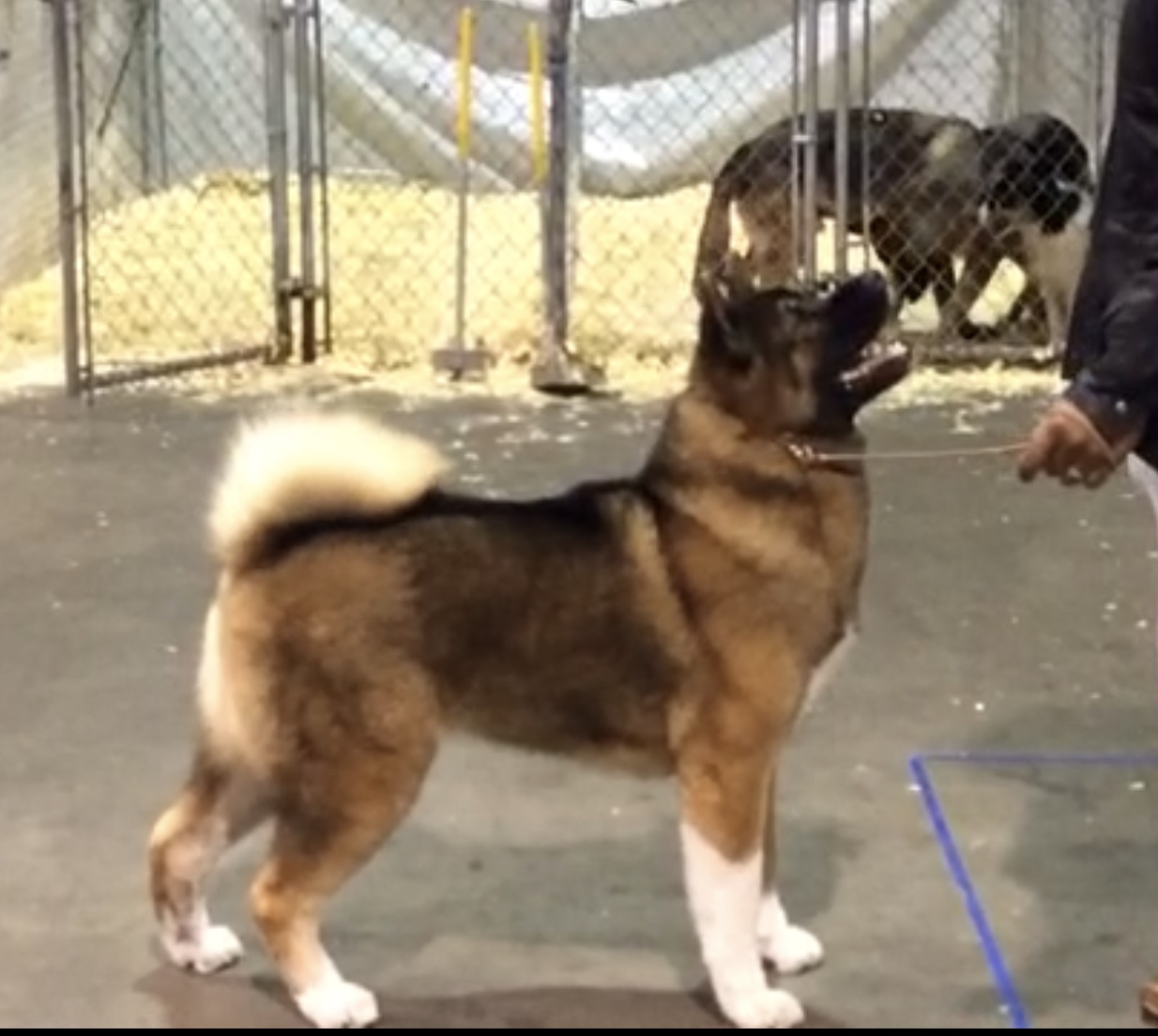
The question comes up in every serious inquiry we receive. How long does an American Akita live? The honest answer has two parts: what the numbers say, and what I have actually watched happen over 20 years of breeding and tracking placed families.
The numbers say 10 to 13 years. That is the standard range you will find on any breed chart, and it is accurate as a population average. But averages obscure what is possible when a breeding program gets it right from the beginning.
Sheba lived 15 years and 8 months. Her daughter Sadie is 10 years old and still following Lauren's little girl around the garden like she has a job to do. Sheba's other daughter, Apexx First Lady, is 8 years old and moving like a dog half her age. Chunky, Sheba's great-grandson, is thriving in Canada at 4.
Four generations. One bloodline. A documented record that no breed chart can replicate.
What the Breed Charts Actually Say
The American Kennel Club and most veterinary references cite 10 to 13 years as the expected lifespan for the American Akita. For a large breed dog in the 80 to 140 pound range, that is a reasonable average. Large breeds carry more structural load, have higher metabolic demands on major organ systems, and are statistically more prone to the orthopedic and cardiac conditions that shorten life in working breeds.
But 10 to 13 years is a population average that includes dogs from every kind of breeding program. Dogs from high-volume operations with no health testing. Dogs from programs that breed for color or size without regard for structural soundness. Dogs whose parents had undetected hip dysplasia, thyroid disease, or cardiac conditions that shortened their own lives and shortened the lives of their offspring.
When you remove those variables by starting with fully health-tested bloodlines and managing the dog's health thoughtfully across its lifetime, the ceiling rises considerably. Sheba is proof of that ceiling.
Why large breed lifespan varies so dramatically
The gap between a 9-year-old Akita and a 15-year-old one is not random. It almost always traces back to the same factors: the genetic foundation the dog was built on, the structural integrity that allowed joints and organs to function without chronic stress, and the health management the owner committed to over the dog's lifetime. An Akita that develops hip dysplasia at 4 is managing chronic pain and inflammation for the rest of its life. That burden shortens everything. An Akita from fully OFA-tested parents that maintains correct weight and receives regular veterinary care is not fighting that battle. The difference compounds over years.
Sheba: 15 Years and 8 Months
Sheba was the dog I built around. I selected her carefully for the qualities I wanted to carry forward in the Apexx program: correct structure, stable temperament, heavy bone, and the kind of presence that defines the true American Akita. She came in at 115 pounds at her prime and held her condition across her entire life.
She did not just live long. She lived well. The qualities that made her exceptional were not diminished with age. She was calm, watchful, and grounded in the way that only a well-bred Akita with a settled nervous system can be. Those qualities passed to her offspring. You can see them in Sadie today.
When Sheba passed, she went peacefully. That is the other thing that a sound genetic foundation produces. Not just more years, but better years at the end of life.
115 lbs at prime · Passed peacefully at 15 years 8 monthsSadie: The Legacy at 10 Years Old
Sadie is Sheba's daughter. She was born November 28, 2016 and was placed with Lauren Fram's family, where she has spent her entire life. She is 120 pounds. She is 10 years old. And she has not stopped working.
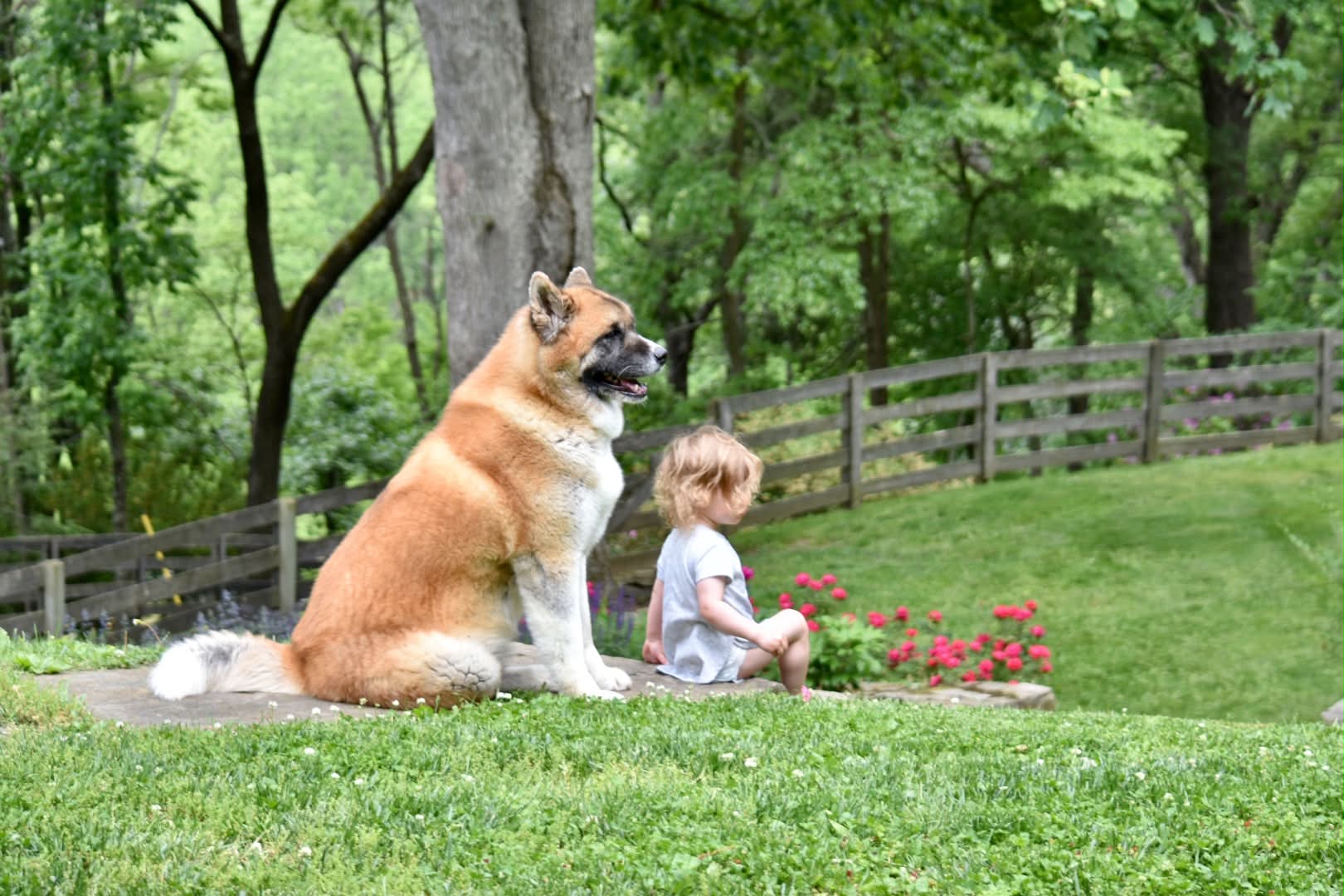
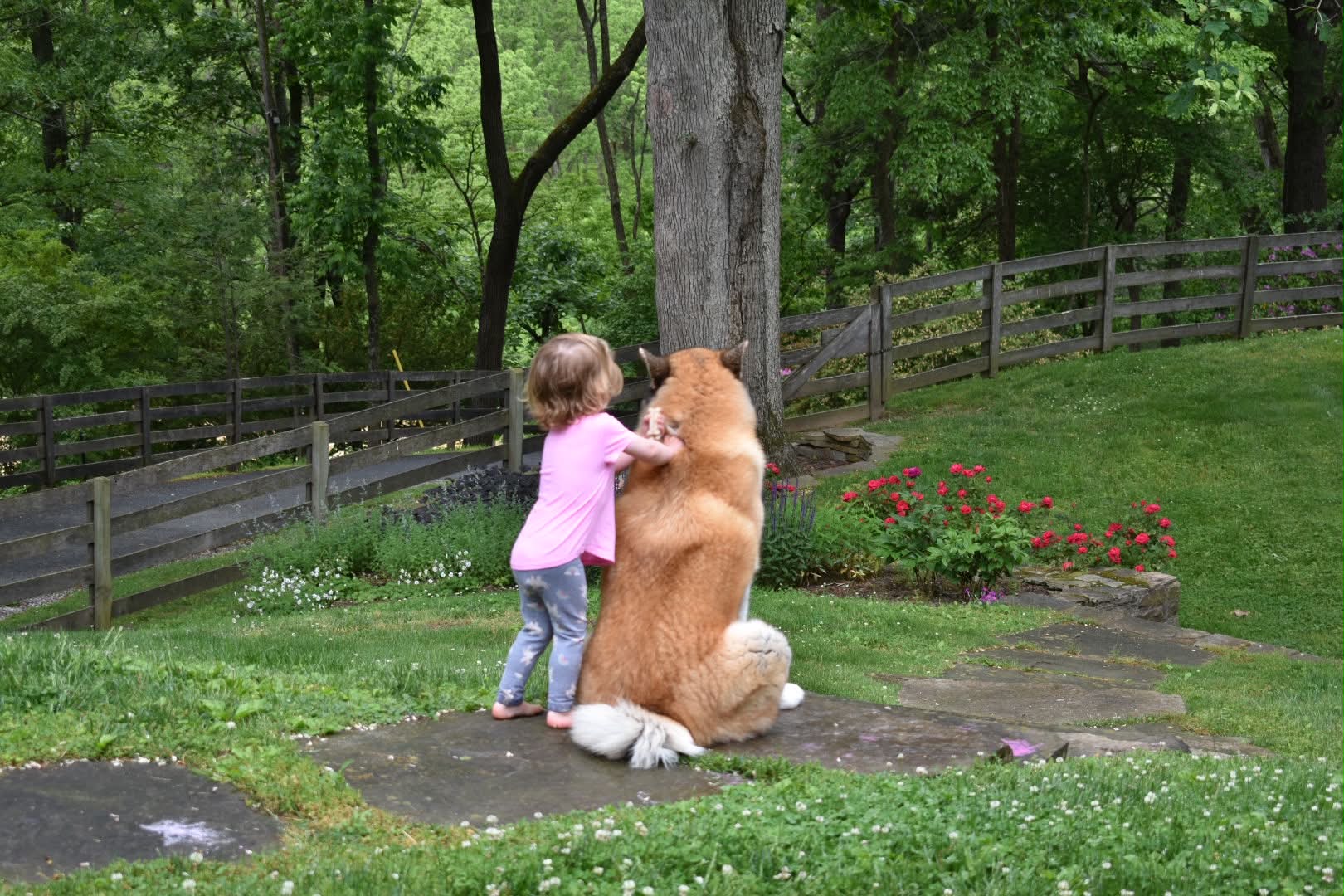
Four words. But look at those photographs and understand what they mean. A 120-pound, 10-year-old American Akita, calm enough to sit inches from a toddler, attentive enough to position herself as guardian without instruction, and physically sound enough to hold that posture with ease. That is not a dog managing chronic pain. That is a dog in the full expression of what the breed was meant to be, a decade into her life.
Sadie inherited Sheba's structural integrity and Sheba's nervous system. She was built correctly from the inside out before she was born. The decade of health and stability Lauren has experienced with her is the direct result of the decisions made at the breeding level, not after the puppy was already placed.
Apexx First Lady and Chunky: The Lineage Continues
Sheba's other daughter carries the same foundation forward. At 8 years old, Apexx First Lady moves with the energy and enthusiasm of a dog years younger. The longevity visible in Sheba did not appear in one offspring and disappear. It is expressing itself consistently across the lineage.
At 8 years old in a breed where the average tops out at 13, she is entering what should be the final third of a typical Akita's life. She does not look or move like a dog in her final third.
Sheba's daughter · Generation 2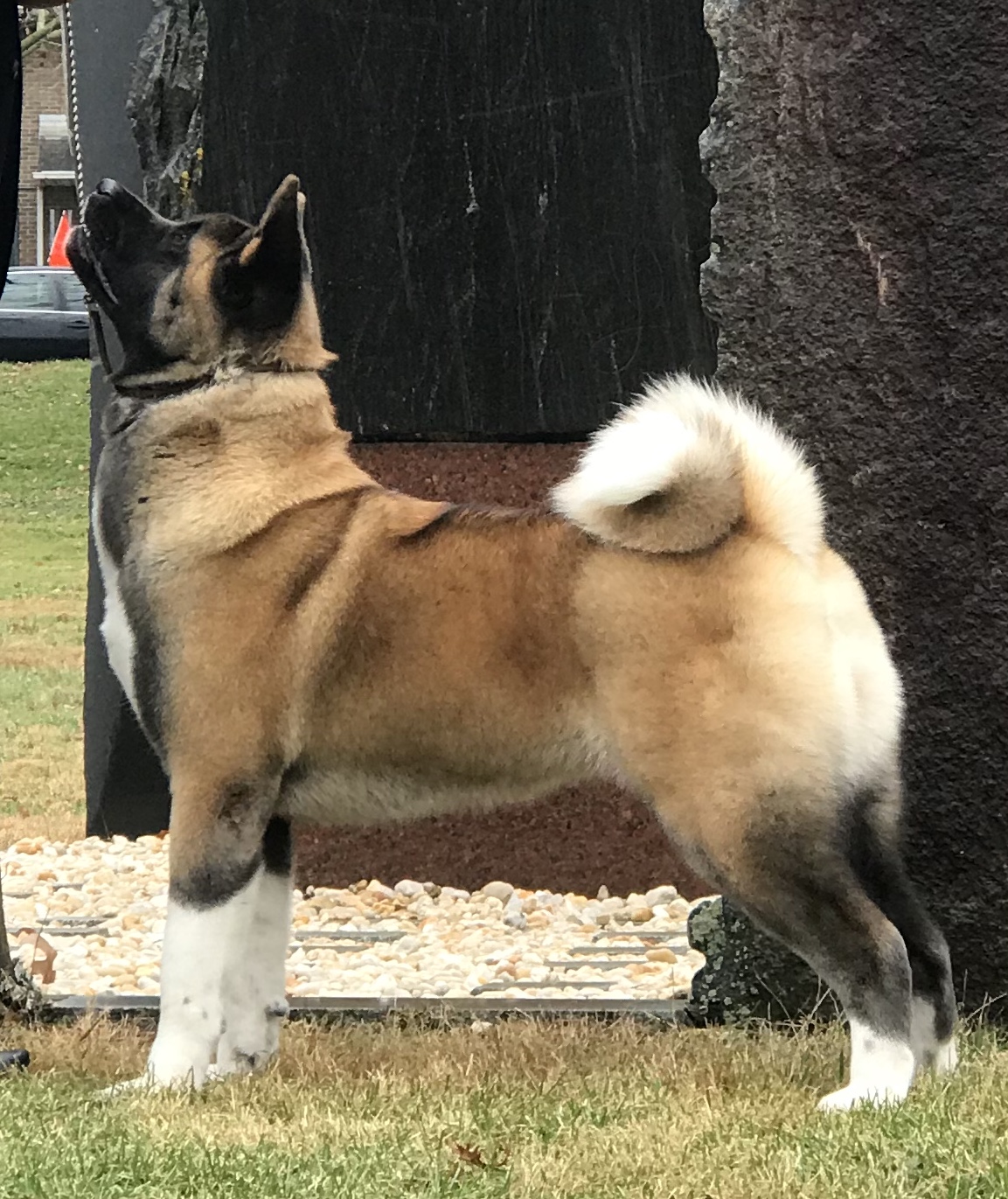
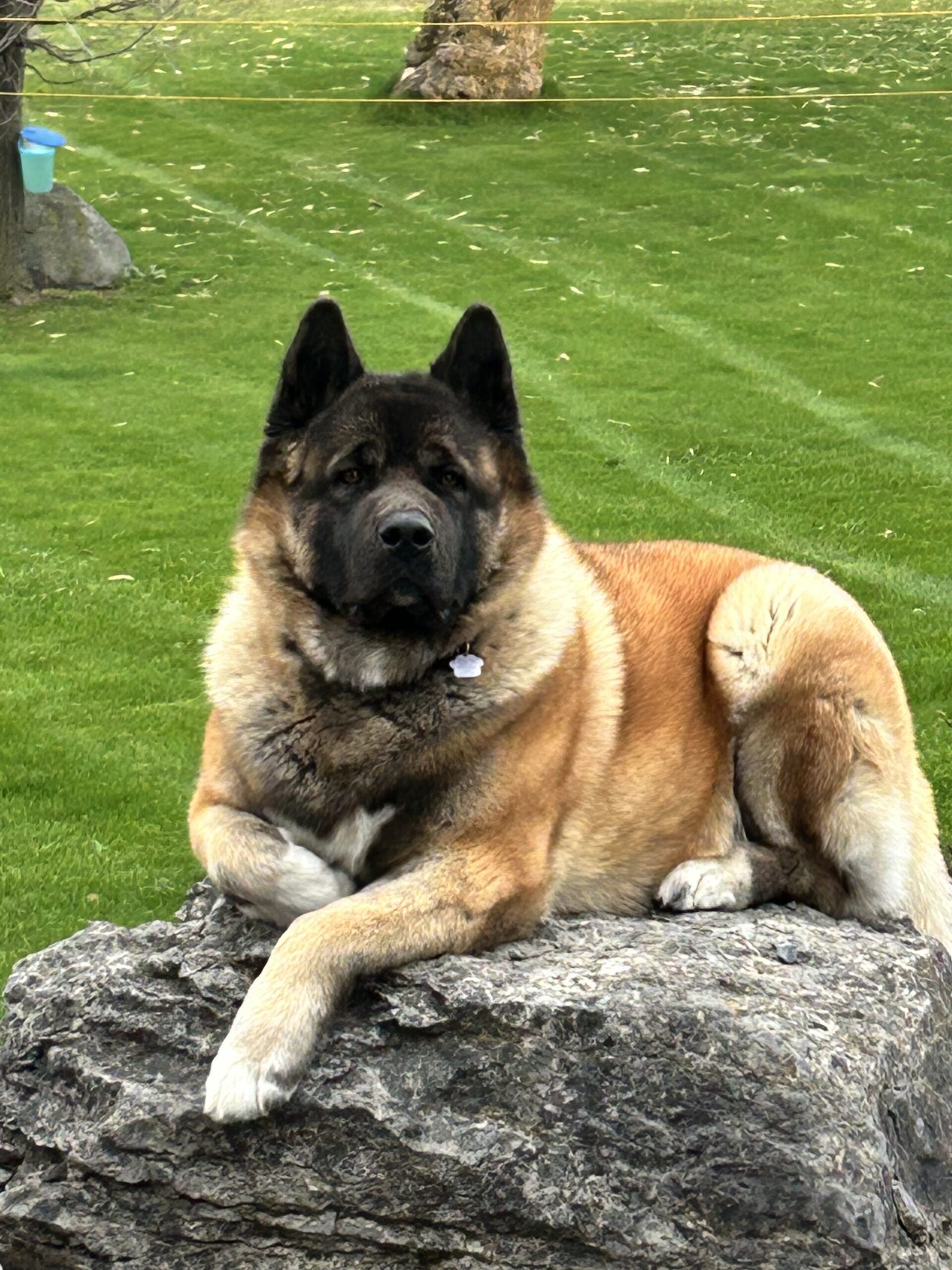
Four generations from Sheba, the lineage is alive and thriving internationally. Chunky is Sheba's great-grandson, now 4 years old and doing exactly what a well-bred American Akita should be doing at this age. He has decades of the same genetic foundation behind him that gave Sheba 15 years and gave Sadie a decade of guardian work in Lauren's garden.
The genetics do not diminish across generations when the selection decisions stay disciplined. Chunky carries what Sheba built forward into the next chapter of the Apexx lineage.
Sheba's great-grandson · Generation 4The Four-Generation Lineage: What This Record Means
No breed chart can show you this. A chart shows you what happens on average across thousands of dogs from thousands of programs with thousands of different standards. What I can show you is what happens inside one program that has held the same standard for over 20 years.
What Actually Determines How Long an American Akita Lives
After 20 years of breeding American Akitas and tracking the long-term outcomes of placed families, I can tell you the factors that matter most. They are not random and they are not luck.
This is where longevity begins. A dog whose parents both carried full OFA clearances for hips, elbows, thyroid, eyes, and cardiac function starts life without the inherited structural and systemic burdens that shorten it. Hip dysplasia that goes undetected in a breeding dog passes to offspring. Autoimmune thyroiditis passes to offspring. Cardiac conditions pass to offspring. Health testing exists to stop that chain before it starts. For a full explanation of each test, see our OFA health testing guide.
This is the single most controllable factor in a dog's lifespan after genetics. An American Akita carrying 20 extra pounds is placing constant excess load on hips, elbows, and spine that were designed to carry a specific weight. That chronic stress accelerates joint deterioration, increases cardiac demand, and shortens life. Maintaining your Akita at a lean, correct weight for their frame is not optional if longevity is the goal.
A large breed dog eating a low-quality, filler-heavy diet is not receiving the nutritional support its skeletal and organ systems require. Joint health, coat condition, immune function, and organ longevity all reflect diet quality over time. The difference between a dog eating a premium large-breed diet for 15 years and a dog eating cheap food for the same period shows up clearly in late-life health outcomes.
Annual wellness exams catch what you cannot see. Thyroid function in American Akitas can decline subtly before clinical signs appear. Cardiac murmurs develop quietly. Weight creep happens gradually. A veterinarian who sees your dog annually has a baseline to measure against. Conditions caught early are managed early. Conditions missed compound silently.
American Akitas need regular movement to maintain muscle mass and cardiovascular health, but high-impact repetitive exercise on hard surfaces accelerates joint wear in a large breed. Walking, moderate hiking, and controlled play on grass are excellent. Forced high-impact running on pavement daily is not. The goal is to maintain fitness without creating the cumulative joint damage that limits mobility in later years.
Chronic stress has measurable physiological effects in dogs. Elevated cortisol suppresses immune function, disrupts sleep quality, and over years degrades the same systems that longevity depends on. An Akita in a calm, consistent household with a clear social structure and a bonded family relationship is physiologically different from an Akita in a chaotic, unpredictable environment. Sadie has spent 10 years in Lauren's garden. That stability is part of why she looks the way she does at 10.
What You Can Expect at Each Stage of an American Akita's Life
Puppy to 2 years: Foundation building
The first two years are the structural foundation years. Growth plates are open until 18 to 24 months in large breeds, and the decisions made during this period about diet, exercise intensity, and joint load have consequences that compound over the dog's lifetime. This is not the time for forced long runs or high-impact activity. It is the time for controlled growth, progressive socialization, and establishing the habits that will serve the dog for the next decade. For a guide through the first critical period, see our first 30 days with an American Akita puppy.
2 to 6 years: Prime
A well-bred American Akita in its prime years is a remarkable animal. Full size, full coat, full expression of the temperament qualities that define the breed. This is the period that most placed families describe as the best years. Energy is managed, bond is established, and the dog settles into the role it was bred for. Sheba at 7 in the photograph at the top of this post is in this window. Look at the structure, the coat, the composure.
6 to 10 years: Mature
A healthy American Akita in its mature years remains active and fully functional. Some slowing is natural and expected. Recovery time after exercise lengthens. Sleep increases. But a dog from a sound bloodline with proper management at this age is not suffering. Sadie at 10 is in this window. She is not a dog in decline. She is a dog at the full expression of her protective nature, slower perhaps in body but unchanged in purpose.
10 years and beyond: Senior
This is where genetics and lifetime management diverge most clearly. An Akita from a health-tested program that has been well maintained reaches this stage with functional joints, stable organ systems, and the temperament characteristics intact. An Akita from an untested program carrying undetected genetic load may not reach this stage at all, or reaches it significantly compromised. Sheba reached 15 years and 8 months. That does not happen by accident.
Frequently Asked Questions: American Akita Lifespan
The breed average is 10 to 13 years. Dogs from fully health-tested bloodlines with proper lifetime management regularly exceed that range. Sheba, an American Akita from the Apexx bloodline, lived 15 years and 8 months. Her daughter Sadie is currently 10 years old and still active as a family guardian.
While the breed average tops at 13 years, well-bred Akitas from health-tested programs can live significantly longer. Sheba, from the Apexx bloodline, lived 15 years and 8 months, nearly three years beyond the top of the average range. Cases of 14 and 15-year-old Akitas are documented in programs that prioritize genetic health.
In order of impact: the genetic foundation from a health-tested breeding program, weight management throughout life, diet quality, regular veterinary care with early detection, appropriate exercise without joint stress, and a stable low-stress home environment. Genetics is the foundation everything else builds on.
Females tend to live slightly longer on average, consistent with patterns across most large breeds. However, breeding program quality and individual health management have a greater impact on lifespan than sex alone.
Start with a puppy from a fully health-tested bloodline. Maintain a lean body weight throughout life. Feed a high-quality large-breed diet. Schedule annual veterinary wellness exams. Provide regular but not high-impact exercise. Monitor for breed-specific concerns including thyroid function, hip and elbow health, and cardiac condition. Maintain a stable, low-stress home environment. These are the factors that separate a 10-year outcome from a 15-year one.
The conditions most likely to reduce lifespan in American Akitas are hip and elbow dysplasia causing chronic pain and inflammation, autoimmune thyroiditis affecting metabolism and immune function, cardiac conditions, bloat (gastric dilatation-volvulus), and obesity-related organ stress. Most of these have a strong genetic component that responsible breeding practices work to eliminate. See our full guide to American Akita health problems for a complete breakdown.
The Apexx Bloodline: Four Generations of Documented Longevity
Every Apexx Akitas breeding dog carries full OFA clearances for hips, elbows, thyroid, eyes, and cardiac function. Sheba lived 15 years and 8 months. Sadie is 10 and still working. That record did not happen by accident. Every placement comes with a two-year genetic health guarantee and lifetime breeder support.